
“There are two kinds of people: those who exercise regularly because it’s who they are and they can’t help it, and those who do it because they know they should.”
When my teacher in medical school said this, I took it as truth. I now see it as partial truth. It reminds me of what little I know of Ayurvedic doshas, an eastern medicine idea of inborn constitutions; the first kind of people above are vata dominant, always active, high energy. The second kind are the rest of us. That said, these ‘constitutions’ are not cut and dry; they exist along a multidimensional spectrum. I don’t know what Ayurvedic medicine says about maleability of constitution, but the older I get the more I think we are all a living paradox: We are who we are from a very young age (before we are even born, in my opinion), and we are constantly changing and evolving throughout our lifetimes.
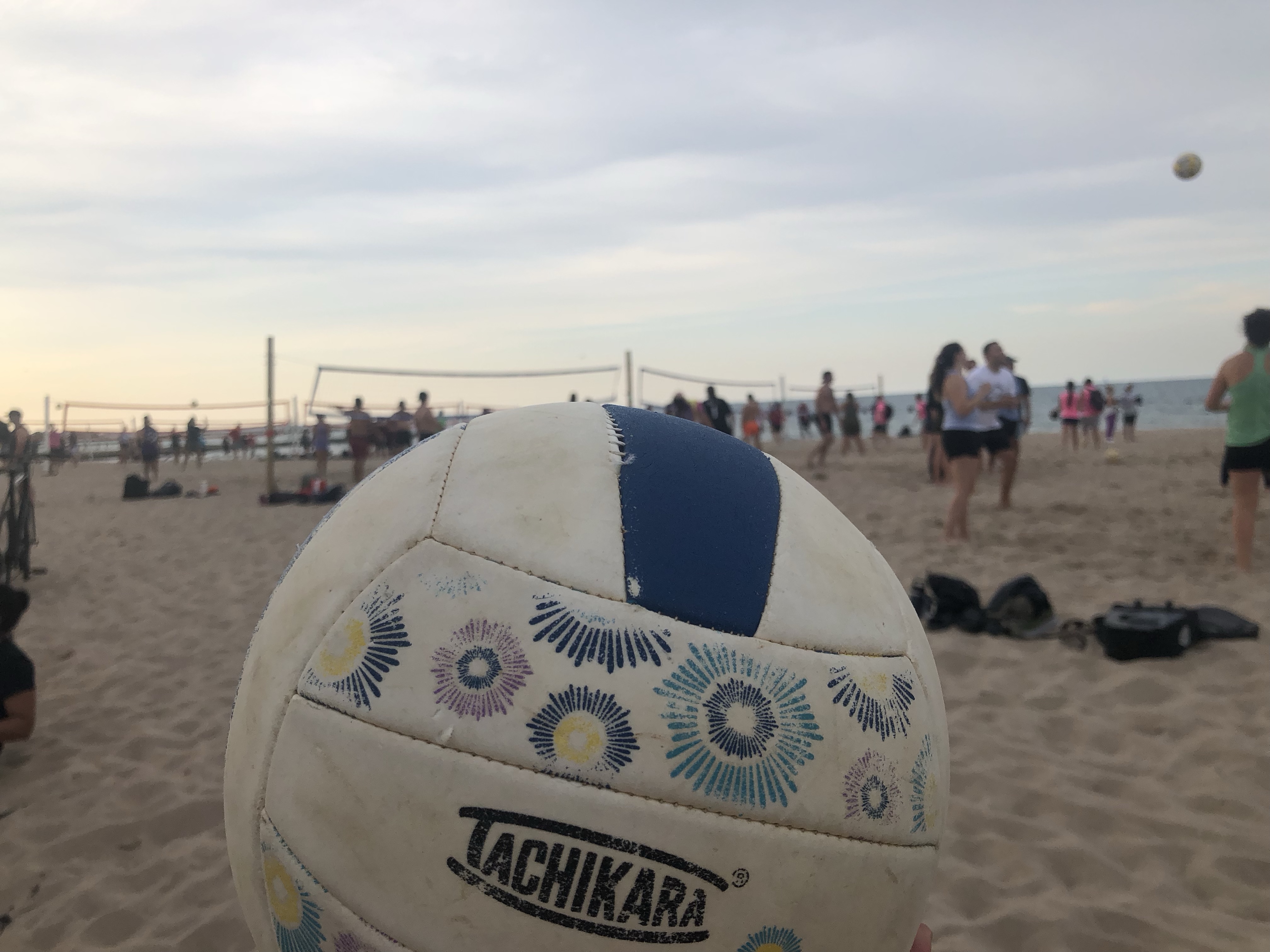
“You’re an athlete, Cathy.” Wut? My trainer Melissa stated it with a tone of irrefutable certainty. We had worked together maybe four months in 2014; she had observed me try and fail at many new movements, and also make noticeable progress along the way. Before that day I would have identified more as ‘mathlete’. In high school, classes were easy. Volleyball was hard. I participated fully in practice and drills, gave full effort in the weight room, all to be an okay player on the team. I did no other sports. But I kept playing at open gyms, college and med school intramurals, anywhere and anytime I could. To this day, I can still hold my own on a volleyball court. That sunny summer day running through her neighborhood, Melissa assigned me a new distinction, one I may never have considered. I have now proudly claimed it, and today my fitness program is firmly established and thriving. Since Melissa met my Ethos coaches six months ago, I have resumed learning, practicing, and training new movements, awakening dormant muscles and integrating them with what’s already strong and stable. My weight is unchanged, yet my clothes fit better. I’m stronger. I feel better about myself.
Consistency. Results. Progress. Tribe. My exercise pattern today is the best I’ve ever experienced. I wonder what it will look and feel like with another six months of training and beyond? After tearing my ACL in 2017, I know to appreciate any session that doesn’t end in injury. So how could my fitness be better? I must stay on the path, no matter how it winds and climbs. Surgery and changes at work disrupted my personal training schedule. So I rehab’d on my own at home. COVID prevented me from joining Ethos in 2020. So sibs and I did HIIT workouts at home over Zoom for three years. I can work out by myself; I know now that I do it exponentially better and have ‘way more fun with others. So that’s the plan–stick with the group that teaches me and holds me up. If I can do that, I’ll live to be STRONG OLD LADY, not frail old lady.
How would we describe American fitness? What is our exercise identity? ‘Bipolar’ and ‘ironic’ come to mind. On one hand we positively obsess over it all. If you live in any urban or suburban setting, you can practically fall out your front door and land in a gym of some kind. Sports apparel’s new fashion (genre?), Athleisure, now accounts for nearly 20% of online clothing sales. So you can at least look like an athlete when you walk around outside of the gym. On the other hand, according to the CDC, “60 percent of US adults do not engage in the recommended of activity,” and “approximately 25 percent of Americans are not active at all.” Well duh. Let’s take a look at just two correlates:
Infrastructure. American geographic sprawl necessitates transportation in the static sitting position, in cars, trains, and buses. Neither roadways nor transit culture make cycling or other self-powered locomotion appealing or feasible to anyone but the most determined, avid, and resourced. Most of us barely walk anywhere anymore, to the point of having to track daily step counts to goad us into getting up and moving at all.
Work culture. “Moreover, more than 80% of American jobs involve mostly sedentary activities,” statistics reported in 2021. This worsened for many with the pandemic, as remote work tied to a fixed computer video screen eliminated incidental movement within and between office spaces and in transit (walking to the train station or parking lot is still walking), reducing workday steps to the distance between bedroom, bathroom, and kitchen.
How can we make this better? Some simple, though not easy, ideas:
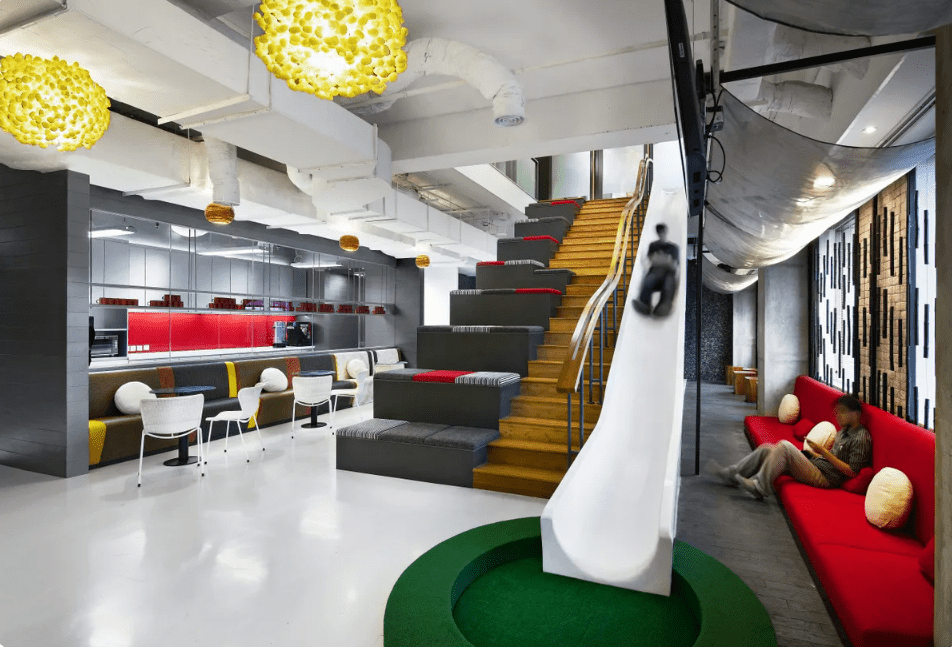
Stairs. Build them beautifully and out in the open, as centerpieces of our public spaces instead of last resort, emergency egress. Make it normal and the default to take the stairs instead of the elevator.
Get off camera. Do you really need that Zoom meeting? Do you need to meet at all? Whatever can be converted to a (concise!) email or voice call, do it. Hold folks accountable for preparation and brevity so all time spent meeting is valuable and productive. Then give them the time back so they can get away from their desks, accompish more tasks both personal and professional, and get more sleep, so they can be more motivated for the workouts they can now fit into their days.
Sit to stand desks. Make them standard in offices and reimburse workers to get them at home.
Give people balance boards and mini steppers as remote work onboarding gifts.
How else can we modify our systems and structures to lower the threshhold to get off our butts? What do you see around you that’s working already?
 Healing Through Connection
Pingback: Nutrition | Healing Through Connection