
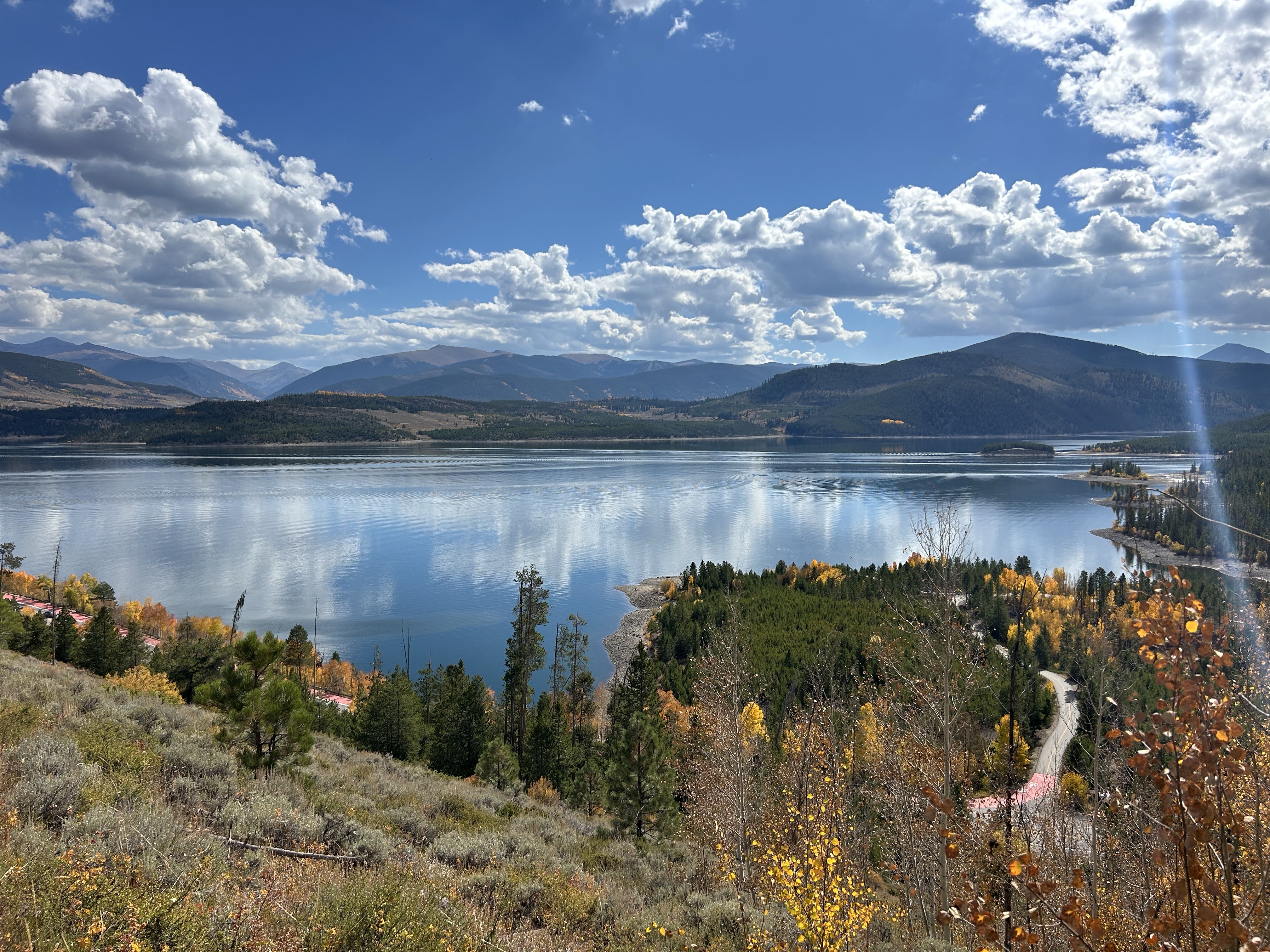
“I want to beg you, as much as I can, dear sir, to be patient toward all that is unsolved in your heart and to try to love the questions themselves like locked rooms and like books that are written in a very foreign tongue. Do not now seek the answers, which cannot be given you because you would not be able to live them. And the point is, to live everything. Live the questions now. Perhaps you will then gradually, without noticing it, live along some distant day into the answer.”
–Rainer Maria Rilke, letter to Franz Xaver Kappus, July 1903, from Letters to a Young Poet translated by MD Herter Norton, 1934
“Live the questions now.”
How would life be if we could tolerate uncertainty and lack of control much better than we do? If we could embrace the present moment of unknowing? If we could find peace in the way things are? What if we could ground in patience, confident that we can meet whatever lies ahead with all the experience, resourcefulness, and creativity we can muster?
And what if we actually ask better questions? Instead of stopping at “I don’t understand,” what if we get honest, curious, and deep? Finding out what we didn’t know we didn’t know is a special kind of epiphany. How often does this happen to us? If we ask a lot of open and honest questions to people of all different backgrounds and experiences, it can be a common occurrence.
What question(s) recur for you lately? Why? How do they feel as they occupy you? Light or heavy? Agitating? Stimulating? …Fascinating?
It’s late and I procrastinated again tonight, thinking I would write about something else. Funny how that pattern emerges, three weeks into this 30 day project this time. So instead of offering much more of my own analysis, I’ll share resources that help me to live the questions peacefully, joyfully, and in a perpetual state of fascination.
If you do not already follow Maria Popova’s blog The Marginalian, I highly recommend it. On the topic of living the question, she highlights Jacqueline Novogratz’s 2012 commencement address at Gettysburg College, in which she quotes Rilke and admonishes graduates, “We’ve become a society seeking instant gratification. We want simple answers, clear pathways to success… Life does not work that way. And instead of looking for answers all the time, my wish for you is that you get comfortable living the questions… Focus on being interested, not on being interesting.”
In her post “How Ignorance Fuels Science and the Evolution of Knowledge,” Popova introduces readers to Stuart Firestein’s book Ignorance: How It Drives Science, which is now in my audiobook queue. Science is driven by curiosity, which starts with the awareness of ignorance (see also Ian Leslie’s book Curious). She quotes Firestein:
“There are a lot of facts to be known in order to be a professional anything — lawyer, doctor, engineer, accountant, teacher. But with science there is one important difference. The facts serve mainly to access the ignorance… Scientists don’t concentrate on what they know, which is considerable but minuscule, but rather on what they don’t know…. Science traffics in ignorance, cultivates it, and is driven by it. Mucking about in the unknown is an adventure; doing it for a living is something most scientists consider a privilege. […] Working scientists don’t get bogged down in the factual swamp because they don’t care all that much for facts. It’s not that they discount or ignore them, but rather that they don’t see them as an end in themselves. They don’t stop at the facts; they begin there, right beyond the facts, where the facts run out. Facts are selected, by a process that is a kind of controlled neglect, for the questions they create, for the ignorance they point to.”
In this season of severe political polarization and tenuous relationships, I lean heavily on my strong question asking skills–they are tested and trained. I reference this skill often on this blog, and it still bears repeating. What do we not know? What assumptions do we make and how do they keep us from true understanding and connection? See below for the text of the tip sheet I keep bookmarked and share often. May we practice and strengthen this skill starting now, for all our sakes.
I Hold the Questions for Us because life is uncertain and we must still act. The more we can embrace and live the most meaningful, stimulating, and fascinating questions, the more likely we are to discover and cultivate true connection and healing.
—–
Asking Open & Honest Questions
by Jeanne Strong
Learning to respond to others with honest, open questions instead of counsel, corrections, advice, etc. can be a life-altering practice. With such questions, as Parker Palmer says, we help “hear each other into deeper speech”—a speech that might reveal a turning point in a life, an intuition about one’s health, or an insight into life’s purpose. For ourselves, the practice frees us from having to know “the answer” or solve “the problem.” It allows us to relax into our own humanity and the pleasure that comes from being connected to another.
But what is an open and honest question? The best definition is that the asker could not possibly anticipate the answer to it. So give it a try in your circles, in your marriage, with your friends and family and comment below on what you’ve discovered.
(Adapted from the Center for Courage and Renewal – www.couragerenewal.org)
10 tips for asking open and honest questions
- Ask yourself what assumptions you are making.
- The best questions are simple questions.
- Avoid questions with right/wrong, yes/no answers.
- Ask questions aimed at opening doors for the other person rather than satisfying your own curiosity.
- Ask questions that go to the person as well as the problem – questions about feelings as well as facts.
- Questions that invite imagery or metaphor are often helpful.
- Trust your intuition in asking questions, even if your instinct seems off the wall.
- If you aren’t sure about the question, be quiet, wait, and if it keeps surfacing, ask it.
- Watch the pacing of your questions. Questions coming too fast can feel aggressive.
- Avoid any storytelling, or behaviors that call attention to yourself.
 Healing Through Connection
This resonated with me. 💕
I have myself written blog posts about the importance of asking questions, especially in journaling and to yourself as it can help us find new ways forward.
Journaling your questions and answering the questions is a bit like self therapy and to me, when I do it and can be honest with myself, it’s been helpful.
LikeLiked by 1 person
Hi iHanna! Thank you for stopping by and commenting. 🙂 I’m so curious about your background as a journalist–do you walk around overhearing conversations wishing for people to ask better questions? I’m not a journalist and I do this all the time. ;P And YES: asking spontaneous questions of others, and then stopping to ask and answer myself, leads inevitably to deeper self-knowledge and insights of all kinds! Talking to people for sure, and journaling, possibly, are my two favorite things to do! ;P
LikeLike
Pingback: Holding On | Healing Through Connection