
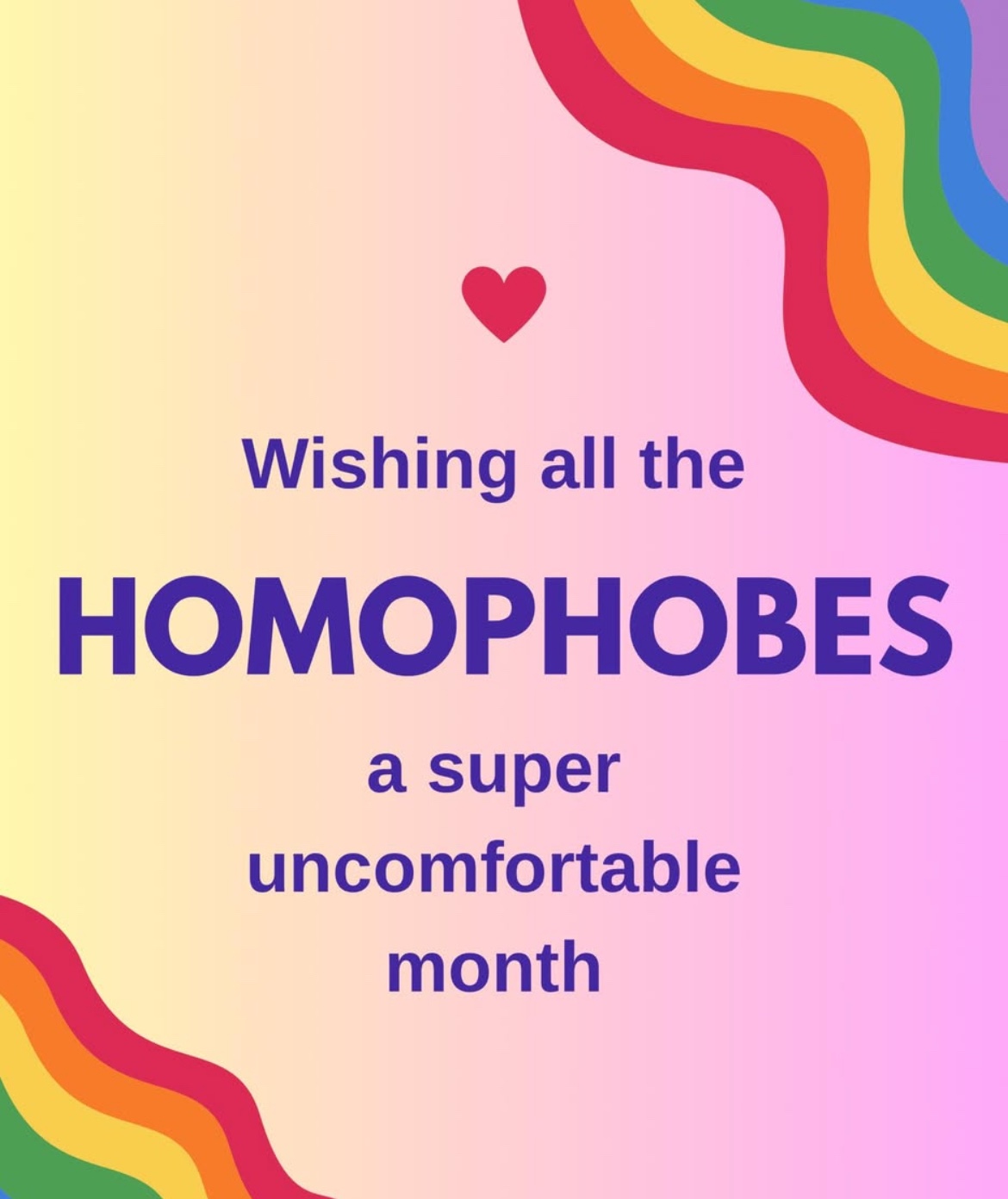
“Wishing all the homophobes a super uncomfortable month”
I see this meme on social media again this year, as June 1 marks the beginning of Pride Month. I do not endorse it.
What is the intent and goal of this expression? What is the intent and goal of the Pride movement? Does the former ultimately advance the latter?
The initial reaction of many progressives on seeing this message is likely affirmative–righteousness, a sense of tribal pride, a satisfying abstract finger gesture to all perceived as oppressors and abusers of LGBTQ+ people. And because it’s understated and almost playful, it also feels benign, something that could be laughed off as a joke. I see it as adversarial and counterproductive to the cause, as going low, not high, however lightly it is meant to land.
What is the knee-jerk reaction to deep-seated, visceral, relational, and other existential discomfort? We may avoid, deny, dismiss, reject, and in worst cases, lash out. I have lived adjacent to abusive relationships. When abusers’ discomfort is stoked, outcomes are not good for the abused. Poking the bear is not often wise. There is some evidence that violence and harm against LGBTQ+ people rises during June, which is not surprising. So it’s interesting that I see this meme posted by cisgender/heterosexual people I know, and not those I know who identify as LGBTQ+. This is just my own observation; I don’t know the actual demographic distribution of people who share this meme.
The best intention of this message, I think, is solidarity and allyship. The impact may be very different. I can imagine someone who feels uncomfortable, for whatever reason, with non-cis/het identity feeling rejected, shamed, and even hated by this message. What response is this likely to engender? How does that make anything better for anyone? How does it advance the cause?
Discomfort can be a very good and necessary thing. It signals a possible threat to our well-being. Like physical pain and our myriad emotions, discomfort calls us to attend to something in our environment. How we manage our discomfort determines many outcomes of our lives. Why would we wish discomfort on our fellow humans? Because we want them to suffer? Because we want them to empathize with something? What do we want from their discomfort?
If you’re uncomfortable with Pride Month, and/or with anything LGBTQ+ in general, I want to know more. What is that about? What informs that discomfort, and how does it affect your life? How does it affect your attitudes, speech, and actions when you encounter anything LGBTQ+? I don’t wish discomfort on you, and I accept that you have it; I may empathize with it, if I learn about your personal experience of it. I wish you were as comfortable as I am with all things sexual and gender-related. I also wish for you to get curious about your discomfort, to explore its origins, its costs–present and potential–to you and those in your life. I wish for you to imagine a life free from this discomfort–what would that feel like? What might that cost you? What would you need to take any steps in that direction? Is that even possible? I wish for your discomfort to be the birthplace of growth and connection, more than conflict and suffering–as any discomfort has the potential to be–for you and all those you’re uncomfortable with.
If we were all better at embracing our various discomforts (healthy eating, exercising more, being more honest with ourselves and others, having the hard conversations, etc.), at making it safe for one another to engage with and overcome them, how would that feel? How would our relationships and communities be? Right now we make it safe to respond to our discomforts with rage, blame, and dehumanizing. When I see people wishing discomfort on others, I’m disappointed.
We can do better.
 Healing Through Connection