
Tomorrow a new presidential administration takes office in the United States.
Wherever you are, whomever you’re with, whatever you’re doing, please be kind–everywhere and every day–but especially here, tomorrow.
I can’t say how long it took me to feel mostly back to normal after November 5, but it was sometime after completing 30 blog posts about the election and political discourse. Regular life resumed and my attention drifted away from politics… until now. I have continued to consume news sparsely, and with critical eye and ear. Still, like many of my progressive friends, I anticipate the next four years with tension and severe concern. I remember the last Trump administration as chaotic and disruptive–an intrusion on my daily life and consciousness–and I expect the next four years to echo that experience. I hold anticipatory stress and fatigue. I know many readers do not necessarily feel the same; I ask you to please hold space, empathy, and compassion for those of us who dread, regardless of how you judge us and the alarm we feel.
That said, I also feel a tremendous sense of opportunity and possibility. We–progressives, conservatives, and everyone else–get another chance to navigate together the unique jungle of a Trump presidency. I feel confident we can count on unprecedented words and actions, regularly occurring shock and dismay, and escalating emotion and rhetoric. To be clear, I expect this from both ends of the political spectrum, not just the people in office and their affiliates. We are humans, susceptible to triggers that provoke the worst in ourselves as well as one another–that trait knows no political identity.
So how do we choose to show up?
These images come to my mind:


Adversarial energy.
It’s a fight, we say. They are our political opponents. Everything is on the line–the economy, our personal safety, our civil rights, democracy itself–our very way of life (and consider that had the election gone the other way, these fears would be the same, just expressed by a different subset of people). Transitions of government should not feel this existentially threatening. And here we are.
How much agency do we each, as individuals, recognize and claim, to influence and impact this sense of adversarial doom and conflict? How much do I, one person, believe I can change how we all do the next four years?
“‘What can I do, I’m only one person?’ said seven billion people.”
I think I/we can do a lot.
First, assess our sense of threat and challenge.
These are distinct yet overlapping stress states, with divergent physiologic responses and consequences. In threat we feel fearful and anxious. Heart rate, blood pressure and blood sugar rise, pupils dilate; gut and immune function shut down. It’s fight or flight, live or die. Threat sensation makes us reactive and impulsive; cognition and judgment play minimal if any role in our thoughts and actions here. Challenge, in contrast, is a state of paradoxically calm activation. I think of it as how elite athletes feel before competition, or how I feel before giving a meaningful presentation. We anticipate with excitement and look forward; we lean in. Cardiovascular, endocrine, cognitive, digestive, and immune functions all remain unimpaired. We are alert and open of mind and perception. We feel stable, strong, flexible, agile, and resilient.
In most stress situations we feel both threat and challenge; the key is to recognize the ratio. If we feel more threatened than challenged, what do we need to modify that balance?
In my experience as student, athlete, physician, parent, friend, speaker, writer, and citizen, the better I recognize where my agency lies, the more my stress scale tips solidly toward challenge. With agency comes empowerment; both victim and perpetrator energy yield to creator vitality and vision. I see how I can help invent a better outcome and future rather than succumbing to or wielding war for it.
Second, decide how we want to show up.
Calm. Commited. Respectful. Mature. Professional. Fully in our integrity. Humane.
Present. Curious. Open. Seeking connection. Humble. Generous. Kind.
What happens when we encounter someone who emits these energies? It’s nonverbal and often ineffable; we feel it, even if we don’t recognize it consciously. Then we mirror it–especially, I think, if that person has status or authority over us (think boss, teacher, parent).
If I choose a fighting stance or the hard and unyielding posture of enemy, how does that immediately affect my counterpart’s nervous system, thus determining how they show up to me? I think we can all recall scenarios of internal fight or flight sensation that either escalated or diffused based on the vibrations and actions of those with power over us.
If you have any influence, any status, any power–potential or real–over anyone, please consider how your energy affects those around you.
And I would argue strongly that we all have this power, know it, like it, want it or not.
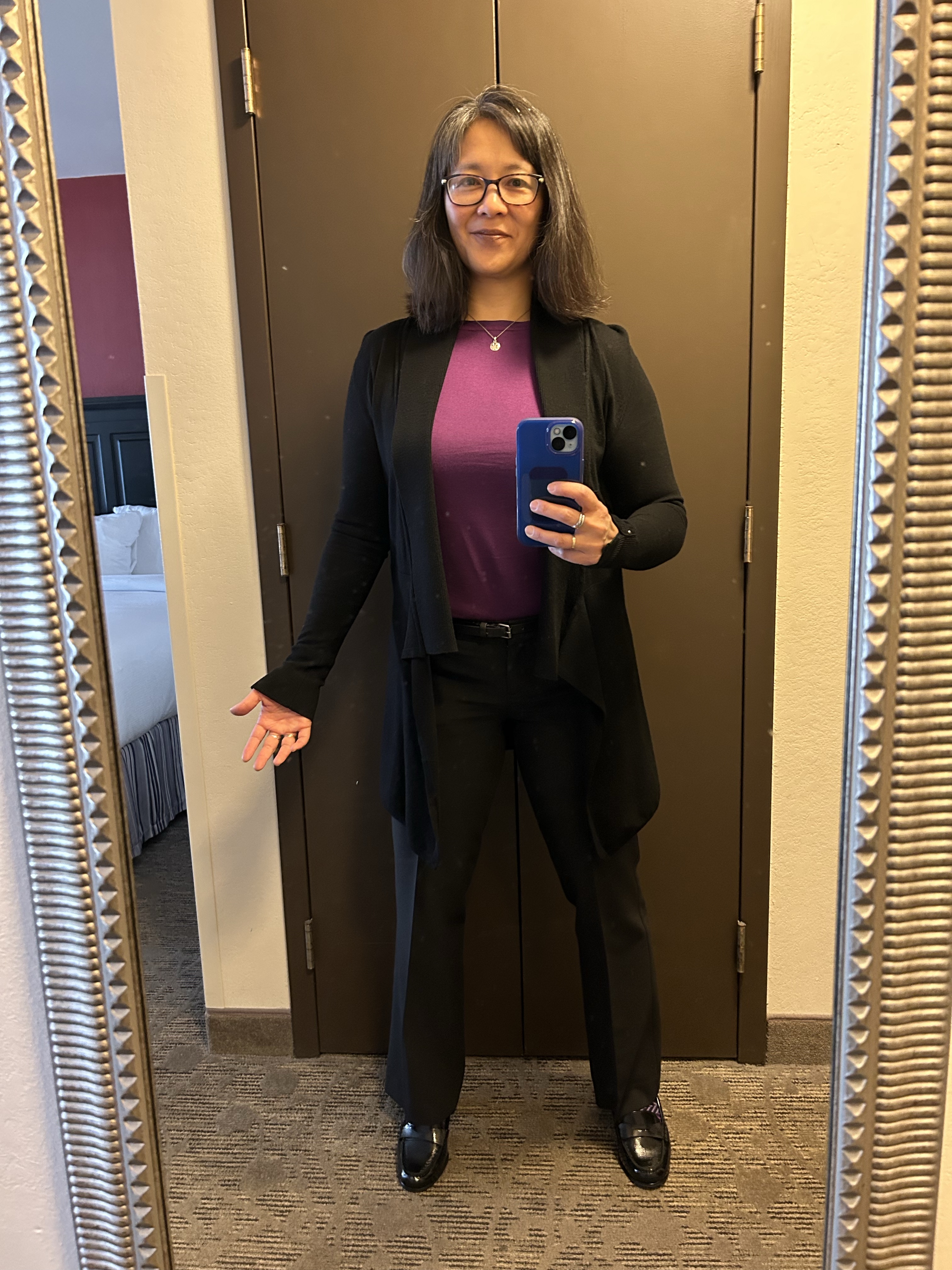
Today, this image represents the stance I choose, the energies above that I aspire to effuse:

It feels vulnerable, no question.
But make no mistake, it is not weak.

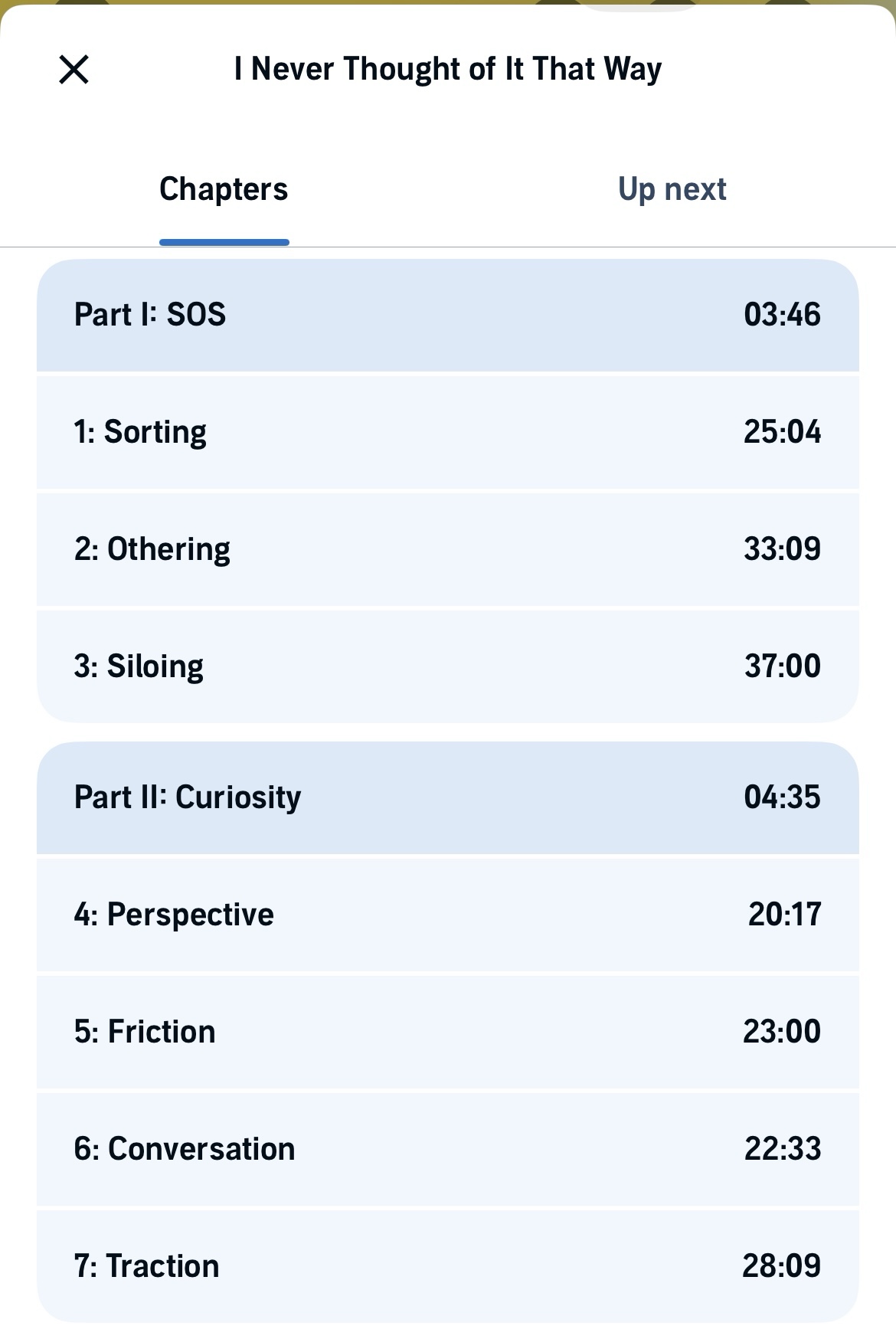
Pam Kirst over at Catching My Drift and I have started reading/listening to Mónica Guzmán‘s I Never Thought Of It That Way: How to Have Fearlessly Curious Conversations in Dangerously Divided Times, or INTOIT(W) (pronounced ‘intuit’), as she refers to it. It’s a book of attitudes, skills, and practices, not unlike my favorite book ever, The Art of Possibility. “INTOIT” is the catch phrase that reminds us how to show up in these ‘dangerously divided times’ to de-escalate and diffuse antagonism, to cultivate, maintain, and strengthen our connections. This book and its author speak directly to my personal activist heart–it’s about talking to people, Hallelujah! And let us be clear–respectfully, Mónica–curiosity in political conversations (or any conversations of conflict) is not fearless; it is courageous. It requires self-awareness, self-regulation, and both objectively and subjectively effective communication skills, executed despite that threat stress sensation.
Later this winter, Pam and I may discuss our reflections of the book live on Instagram. Stay tuned!

What are the values we perceive as violated by those in power? What values did our advocates violate, in our ‘opponents” perspective?
What do we not know?
What assumptions do we make about our ‘adversaries’, and how do they impair understanding, stoke division, and thus perpetuate conflict?
What do we need to influence others to show up more curious, open, humble, generous, and collaborative?
I think we need to be these things ourselves first.
Like I said, vulnerable.
And thus courageous.
Brave. Curious. Humble.
Strong. Stable. Generous. Kind.
Committed. Discerning.
Do no harm. Take no shit. So maybe 🤲 and also 💪 and 🖖.
My stance may change over time, depending on how I can manage my own state of alarm and distress. It’s possible to be respectful and kind playing contact sports. I commit to practicing and training the attitudes and skills that help me show up to any encounter in ways that align with my values of Agape love and connection, so I may have the fewest relational regrets at the end of my life.
I intend to lead by imperfect and dedicated example.
What stance do you choose?
 Healing Through Connection

Certainly a jungle, and first signs are that it will a far more dangerous jungle than the first one. I’m deeply worried, and I don’t live in the US.
LikeLiked by 1 person
Thank you, Mick… The more headlines I see, two days in, the more alarmed I get. Practicing my breathing, realizing walking my talk may be harder than I ever anticipated this time around. Wishing us all our best selves to step forth… 😦
LikeLiked by 1 person
Yes, wishing you the same, Cathy.
LikeLiked by 1 person