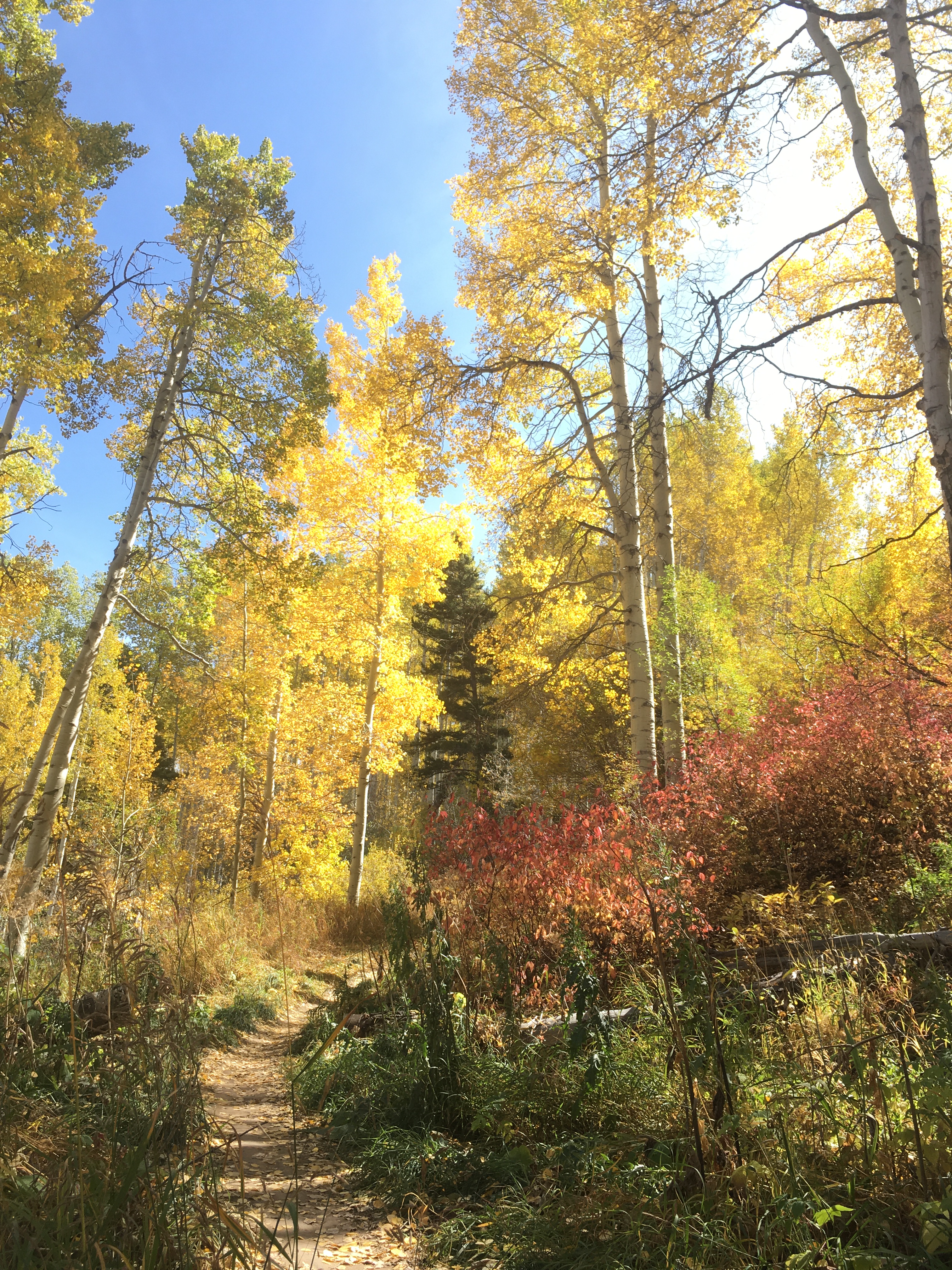
I’m leaf peeping, reflecting, and writing all kinds of other things! 😄
*sigh*
It’s that feeling of settling deep and cozy into truth, calling, meaning, and connection—with self, others, and nature, all intertwined in ways that at once feel so simple and obvious, and also unfathomably complex and beyond true comprehension or expression… It’s why we humans create, why we make art, I’m convinced—forever attempting to both capture and share that vibration, that movement, that utter resonance that makes us feel most *alive*!!
How lucky that I get to come to the mountains (because they really do call me) for this experience. And I’ll practice entering this mind space/state more often, wherever I am.
Hope you can find it when and where you need it, too.
Onward.
ODOMOBaaT.
Peace, friends. 🙏🏼🥰🌟
Strawberry Lane Trail, Vail, CODillon Reservoir, Dillon, CO
It’s more like that movie Everything Everywhere All At Once.
When I review biometric and lab results with patients at the end of a Day of Care (our practice’s name for the full day executive physical), results often correlate with what people tell me about their habits and circumstances in the past year, or even the past several days. Sometimes, though, one or more results do not align, and we have to stop and consider why. Occasionally this leads to additional testing and we actually find something that needs to be treated. But most of the time it’s not clinically significant and it’s okay to monitor for relevant signs and symptoms and repeat the test annually as per routine. It’s life.
But we humans fixate. Whether it’s weight, glucose, cholesterol, or some metric on a wearable device, it’s easy to get caught up in ‘the data’ and seek the one central variable (or latest technological solution) that we can address solely and thus yield the result we want. Expert scientists devise studies that control for all variables but one, intervene, collect the data, and make correlations into conclusions. There is definitive value in these experiments, and we should absolutely continue rigorous, evidence-based study and practice of medicine and public health.
And, we healthcare professionals must also step back often and look at whole systems–individual humans (body, mind, and spirit), humans in family and community, and local and global economies–not just snapshot data in vacuums. Weight, glucose, cholesterol, body fat, and cognitive function, among other things, often move in tandem. The good news is that the lifestyle advice we give to optimize all of these is all the same. The general principles are definitely not rocket science, and I think we can safely stop spending time, energy, and precious resources proving ad infinitum that good sleep, physical activity, whole foods, and healthy mindset and relationships are good for us.
That said, if it’s that simple, why are we not all already doing it? Because simple in theory too often becomes complex in practice, and we tolerate complexity less and less in our modern, instant gratification-seeking world. I borrowed a sign from a colleague early in my career: “Move more. Eat less.” Simple–deceptively and delusionally so. Now I see these words and want to reply with a scoff and an expletive–as if it’s just that easy. And yet we get so many messages that everything should be easy; that if it’s not easy then we’re doing it wrong. This supplement, that diet, this other meditation app, and any number of new cutting edge products–online, shipped to your door tomorrow!
If our goal is to elevate health and wellness and prevent disease, it’s not only our individual actions that matter. How do our behaviors intersect with, and how are they driven by, in entropic and synergistic combination with our environment and things we cannot control? In integrative medicine when inflammation is assessed to be high, a trial of elimination is often recommended. My colleagues point first to caffeine, alcohol, added sugar, dairy, and gluten: Eliminate them all for a month or so, and see how you feel. Many people report feeling significantly more energy, relief from digestive symptoms, clearer cognition, and myriad other benefits. One might interpret this as the result of removing ‘toxic’ substances from the body, which may be at least partially true. But I posit that it’s likely also due to elevated attention, intention, and mindfulness around eating, which likely cascades to subtle alterations in other health domains such as sleep and exercise. Nothing in a system happens in a vacuum–everything affects everything, directly or indirectly.
Look no further than COVID lockdown in 2020. The vast majority of corporate executive patients in my practice experienced marked improvements in almost all health metrics by the end of that year. They had eliminated work travel, business dinners, long commutes, and at least some office politics. Earnings projections and all manner of professional expectations were scaled back and down. For this privileged population, life acquired a drastically new balance of better sleep, more consistent movement, more quality time with loved ones, and net fewer calories consumed per week. After an elimination diet, patients are instructed to reintroduce foods one at a time in small quantities, to determine reactions and and thresholds. This makes sense, and can also be misleading because whatever makes us feel badly is often not just one thing. Corporations have varied in their reintroduction of prepandemic practices essentially reverting to prepandemic state. Many of my patients’ 2020 health gains have regressed commensurately.
So in practice, what can any given individual tweak in their daily routine or immediate environment to make healthier behaviors easier and more consistent? How can we change the default systems settings so we don’t have to exert such heroic intentional energy fighting our status quo habitat to be well? I still think we need to take a harder and more honest look at our global institutions, traditons, and default practices, especially those driving corporate culture. This is exceedingly difficult and complex, ‘way beyond the scope of an internal medicine doc’s weekly blog.
But I have a plan starting this week: Look for the bright spots. This idea comes from Chip and Dan Heath’s 2010 book Switch: How to Change Things When Change Is Hard. In this post-COVID era of deep psychological and social ambivalence, who’s doing well? Which organizations or teams have figured out an apparently optimal dynamic balance of in person and remote work, productivity and accountability metrics, morale, cost management, and overall integrated systems coordination? Who’s doing allostasis–maintaining stability through change–well? It’s almost never just one thing–it’s everything everywhere all at once but likely in small, cumulative, integrated ways, sometimes at the periphery and sometimes central.
Looking at whole systems can feel so daunting, especially when we get really humble and honest and see just how intricately webbed everything is–how even a small change in one domain can domino and propagate across a whole network. It can freeze us in incertainty and fear. Or it can free us to experiment–in an ‘uncontrolled’ rather than ‘controlled’ way–because too often we have no control and must act anyway. We can experiment mindfully, transparently, humbly, accountably, and flexibly. Small tweaks can establish new standards, which lead organically to subsequent adjustments downstream. A realiable cycle of assessment, action, learning, and application can help prevent getting stuck in rigidity and attachment to status quo well beyond its functional efficacy.
Life is change, an uncontrolled trial of human nature in variable and dynamic context. Everything Everywhere All at Once, all the time. We can breathe through the overwhelm, and look from both ground level and ten thousand feet. Any one thing matters both a lot and not very much in any system of systems–one of my favorite paradoxes!
So let’s get out there and BE and DO what we can! Take responsibility and own our attitudes and actions, respect others, and live in alignment with our values and integrity. What else can we ask of ourselves than that?
There has never been a better time to be menopausal than now.
It has taken 20+ years in practice, and living it first hand, to truly understand the experience. For those who don’t already know: This sh*t is real. I feel almost apologetic to all of my women patients for whom my advice to date has fallen flat, even as I have done my best to earnestly listen and understand. Now I feel the struggle in my own body and I get why it is so hard to explain or tolerate. But I could not know what I did not know; there is no substitute for learning through living. Thankfully, the current state of menopause science and culture has turned an important corner. We finally talk about it openly, normalize it, and study women as a unique and whole demographic unto ourselves, and not in comparison to men. This is my first post summarizing my understanding and recommendations to date.
By ten years ago, I had noticed two primary attributes of my women patients who sailed through menopause, compared to those who suffered the most. First, they were at peace with the whole idea. Menopause presented no threat, did not undermine their personal identities or attitudes about youth, beauty, etc. Second, they had their health habits in the five reciprocal domains established well in advance: Sleep, exercise, nutrition, stress management, and relationships.
That said and notwithstanding, each woman’s menopause experience is acutely unique and influenced by myriad more factors than simply personal habits. Genetics and external circumstances together probably drive as much or more of our menopause ‘outcomes’, in complex intersections with our own agency and behaviors. I will not discuss habits or personal practices in this post. Rather, I offer 1) a distilled description of the experience so that my women patients and peers may feel seen and understood and the men in their lives might also get an inkling, and 2) some resources I have found helpful personally and for patients, both men and women.
The Experience (aka The Shitshow)
Altered metabolism and body habitus The most prevalent and distressing symptom of menopause in my practice is weight gain and mass redistribution. We thicken around the belly and get squishier in general, even if our lifestyle habits have not changed. I think many of us accept this to some extent–unless we have been naturally thin our whole lives, it’s not surprising to see and feel the slide into a widening body shape around age 50. But for a great many women this is incredibly tormenting, because we have exerted heroic time, energy, and resources to barely maintain the middle aged body we had to start with. Look no further than America Ferrera’s monologue from last year’s Barbie movie to see how the pressures of body shape and social norms of youth and beauty make the changes of menopause such an insidious source of pain, shame, and self-loathing for so many women, not to mention just feeling generally lesswell in our bodies altogether.
Sexual changes Vaginal dryness, low libido, and pain with sex rank highest among the sexual complaints I hear from my perimenopausal patients. The last couple of years I have asked my men patients specifically about how their partners’ menopause experience influences their own sex life and overall relationship, and the conversations have opened up more meaningfully than I could have imagined. I want to acknowledge here, with great sincerity and appreciation, the quiet and earnest concern and compassion these men express for the women they love. So often men feel flummoxed and helpless, wide-eyed bystanders living in the wake of erratic and recurrent storms wielding only flimsy umbrellas, watching their partners brave wild winds and waves, wondering when it will all calm the f*ck down. Relationships weather the tumult of menopause how they will, many with torn sails and damaged hulls when waters finally recede.
Compounding the direct negative changes in sexual health and function, all of that body shame described above looms large and dark. Sexual relationship is sensual at its core, and when a woman feels poorly in and about her body physically as well as psychologically, sensual connection, both to self and partner, becomes exponentially harder. As a culture we are finally allowing women to talk about this openly, and we all, women and men alike, benefit from the awareness.
Sleep disturbance I have known for a long time that two things make everything else feel ten times worse: dehydration and sleep deprivation. Sleep can get severely deranged in menopause, both in its central nature and also from vasomotor instability–hot flashes and night sweats. Of the five health domains, sleep can be the hardest to manage because we feel the least in control of it. Both men and women tell me there is hardly a worse feeling than being exhausted and still not being able to sleep. Consider when you have been chronically sleep deprived: How well did you handle stress? How effective, patient, and loving could you show up for those you lead at work, and for your family at home? How clearly could you think and focus, accomplish life tasks each day? Now imagine all of this, on top of feeling suddenly like a fat, unattractive slug who can’t even enjoy an orgasm to relax. Problems and threats often loom larger and scarier at night, and the struggles of menopause are no exception.
When I think of menopause in just these three simple, intersecting aspects (there are so many deeper and more complex consequences of this life phase), I have to marvel at how we women hold it all together so remarkably well every damn day.
Some Resources (I have no financial or other interests in any of these entities)
The Menopause Society I consider this to be a standard source of evidence-based, clinically sound information and advice. There are sections for both healthcare professionals and patients. It’s just dry and requires time and patience to navigate. I use it like the WebMD of menopause.
Let’s Talk Menopause This resource is new to me and I will continue to explore. It looks promising as a credible source for information, experience, and a diversity of advice. The podcast features interviews with practicing physicians on topics relevant to our daily lives.
Dr. Jen Gunter I have followed Dr. Gunter for years and she is a badass. Seasoned OB/gyne physician, gifted writer and author of The Menopause Manifesto (which I have not yet read but my colleagues recommend highly), her advice is evidence based and she sells no products; she simply writes and shares information on social media.
Esther Perel I have followed Esther Perel for many years, since I listened to her book Mating in Captivity and watched her TED talk on the psychology of infidelity. I recommend patients to peruse her website for articles and courses on intimacy, communication, and relationship.
Stacy Sims Exercise physiologist and researcher Stacy Sims has advocated for many years that “Women are not small men.”(TM) I am not deeply familiar with her premise or programs, but my colleagues in menopause domains respect her and recommend her work. She is also easy to follow on social media.
The Betty Rocker Bree Argetsinger is consistently empathic, compassionate, encouraging, and realistic about menopause and all its implications for health. She shares extensive fitness, nutrition, and mental health articles and programs, all presented in readily digestible and actionable portions. You can also follow Bree on Instagram.
Dipsea, Quinn, and Romance in General We don’t always have the bandwidth to overhaul our sleep, exercise, nutrition, stress, and relationship patterns. And sometimes sexual health and connection just needs a little spicy nudge to get going. I have written about Quinn and referenced others’ writing on romance fiction as vehicle to sexual re-awakening and un-inhibition. The advent of these platforms, as well as the rapidly rising popularity and accessibilty of romance audiobooks and their creators (authors and voice actors alike)–which women and their partners increasingly experience together–elevate women’s sensuality, and thus sexuality, at any age and in any body. The romance community leads the long overdue movement of sex and body positivity in the West. Thank goodness.
If we women live long enough, menopause is inevitable. We each get to choose how we will approach and travel our individual journeys, and I’m so gratified to see a wide, deep, and diverse community of helpers emerging to cheer us on. Increasingly I advise addressing decision making as first defining goals and trade-offs. What do we want, and what are we willing and not willing to do to get it? I recommend reassessing often and honestly, and recruiting the most valuable support and feedback we can access.
This post serves as my first personally curated patient information handout on menopause. It is certainly far from comprehensive, and will undoubtedly update and evolve over time. There are so many valid and effective resources out there, and I thank colleagues, patients, and friends alike for pointing me to so many of them.
We’ve come such a long way, and have so long yet to go. So let us celebrate the wins and march onward together, yes? The only way out is through. The best way through is together.








 Healing Through Connection