Walk a Mile

DSC_0440

NaBloPoMo 2018:  What I’m Learning

These last 5 years, I have had the privilege of caring for designated leaders of all kinds—business leaders who also lead their families, their faith communities, their professional societies, and myriad other entities. I have studied and presented on the intersection of health and leadership, the reciprocal relationships between self-care and care of others.  Each day I ask probing questions of my patients’ habits of thought and action, and they answer with honesty and candor.  It’s particularly fulfilling when I hear, “Huh, that’s a good question, I’ve never thought of that before.”  In those moments, I feel I bring value beyond interpreting blood pressure and cholesterol results.

I’ve been interested in leadership for a long time, and had opportunities to lead in various small ways through the years.  In January 2018, I was given a more visible title and designation than I had ever had—YIKES.  I was surprised and unsuspecting, though not totally unprepared.  And, like parenting, nothing can quite prepare you fully for the experience.  I spoke to a leader in my organization about a year ago, who expressed loneliness in his position.  I admit that I half dismissed the idea, thinking there should just be a way to balance collegial, friendly, and leader-led relationships.  I think I was about a week into my new role when I fully, viscerally, understood his perspective and humbly admitted my own loneliness.  I felt guilty and a little ashamed for my reflexive disregard for his confession of vulnerability—because even if I did not fully dismiss his experience, I did judge it.  And that speaks more to my own fear of loneliness and isolation than it says anything about him.

Thankfully, I did not wallow in guilt or shame for long.  “How fascinating,” I thought.  Being judgmental like that is not consistent with my core values.  These ten months have been a practice in navigating and managing that loneliness—cultivating relationships in new ways to maintain connection while simultaneously practicing the required discretion in information sharing.  Often I have felt profound humility (and now more embarrassment than shame) at how I thought I knew so much about effective leadership, mostly from the point of view of being led, and only sometimes as a leader myself.

DSC_0645

This fall Brené Brown saved me from further self-flagellation over my lack of skills and understanding of what it takes to be a good leader.  The thing I admire most about her is how she walks the talk of vulnerability and courage.  She shares her mistakes, missteps, and learnings so openly, and anyone who reads her books or sees her presentations gets to profit from it all.  I will always remember where I was, because I laughed out loud in sheer relief, when I heard her read from her latest book, Dare to Lead:

Over the past five years, I’ve transitioned from research professor to research professor and founder and CEO.  The first hard and humbling lesson?  Regardless of the complexity of the concepts, studying leadership is way easier than leading.

When I think about my personal experiences with leading over the past few years, the only endeavors that have required the same level of self-awareness and equally high-level ‘comms plans’ are being married for twenty-four years and parenting.  And that’s saying something.  I completely underestimated the pull on my emotional bandwidth, the sheer determination it takes to stay calm under pressure, and the weight of continuous problem solving and decision making.  Oh, yeah—and the sleepless nights.

I thought, well, if Brené Brown still had stuff to learn after assuming a new leadership role, then I’m doing okay!  I am both freed from self-imposed, unrealistic expectations of perfection, and also still responsible for continuing to practice self-awareness, humility, and honesty.

I have learned to look harder at the cynical stories I tell about my leaders, and seek to understand better the divergent and competing interests they must balance every day.  I can withhold judgment of their motivations until I have more information, and if I’m not entitled to all the information, I can decide how much I trust my leaders to act in my best interests, or at least in the best interests of the organization.  I can hold myself accountable to my own standards of honesty, candor, and integrity.  I can ask and challenge, inquire and resist (or accommodate), all with curiosity and respect, and making the most generous possible assumptions of others.

How lucky am I to have this remarkable learning opportunity?  To practice the skills I have observed, admired, and studied in others for so long, to own them.  I have walked a mile in these new shoes.  I have a few shallow blisters for the journey so far.  But the shoes are the right size, and the leather is softening.  I’m still feeling fit.  The path will wind and climb, and that’s okay.  I don’t walk alone; I have mentors and role models walking ahead and by my side.  So bring it!  We’ got this.

My Sleep Evolution

DSC_0524

NaBloPoMo 2018:  What I’m Learning

How often do you look back and really appreciate how far you’ve come in a short time?  It could be a skill, an understanding…  Maybe lightning struck and you made a sudden, significant transformation, or maybe it was a slow, plodding trudge to the current state.  For me it started out small and organic, and grew with increasing momentum toward a sort of AHA! confirmation today.

I can honestly say that 5 years ago I did not pay much attention to sleep.  I have always been a night owl, often staying up late reading or writing.  When I started this blog, I routinely published posts around 2:00am.  But when I started talking to patients in more detail about their health habits, I started to learn the importance of sleep.

Here is the timeline of my Sleep Evolution, c.2014-present day.  Where along the arc live your thinking  and habits on sleep?

Personal Evolution

  • 2015: Regularly staying up past 1:00 or 2:00am posting to blog
  • Feeling the cost of this in my body more and more
  • 2017: 11:00pm bedtime commitment kept on and off, not staying up as late, as often posting to blog
  • Early 2018: Recommit to 7 hour goal after accepting new leadership role at work. “Put your own mask on first before helping others.”
  • (Read) Gretching Rubin’s Better Than Before, in which she lays out the evidence for the Foundation Four habits, in order of importance: Sleep, Exercise, Nutrition, and Order (decluttering)
  • Recommit (again) to protecting my own sleep because this helps me maintain healthy habits of exercise and nutrition (this was a small epiphany of the obvious)

Professional Evolution

  • 2016: Observation: Young healthy men who eat healthy and exercise but who have elevated glucose levels tend also to sleep less than 6-7 hours per night, average.
  • Start structuring patient interviews around “The 5 Realms of Health”—Nutrition, Exercise, Sleep, Stress, Relationships
  • Presenting to groups on physician health and well-being using the same framework for self-care
  • Patients asking, “Should I get up an hour earlier to work out or stay in bed?” Not sure how to answer
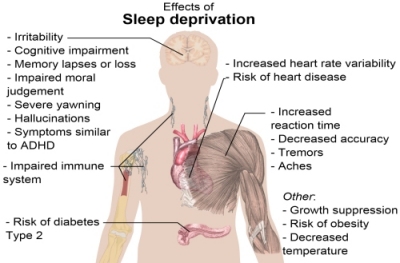
  • Reading more about myriad downstream effects of chronic sleep deprivation
  • 2017: Start calling them the “5 Reciprocal Domains of Health”
  • Understanding that though the 5 habits affect one another inextricably, sleep deprivation impacts all of the others disproportionately negatively
  • 2018: Resolve to tell patients: Stay in bed.  Because you can only sleep when you’re sleeping, and you can always move more while you’re awake
  • Start to wonder if I should reprioritize the list–rather than Nutrition, Exercise, Sleep, Stress, Relationships, maybe Sleep, Exercise, Nutrition, Stress, Relationships?
  • (Read) Gretching Rubin’s Better Than Before, in which she lays out the evidence for the Foundation Four habits, in order of importance: Sleep, Exercise, Nutrition, and Order (decluttering)
  • Decide to change the order of my list
  • (Read) Brené Brown’s Dare to Lead, in which she labels “rewarding exhaustion as a status symbol and attaching productivity to self-worth” as one of 16 examples of ‘armored leadership,’ whereas ‘daring leadership’ “models and supports rest, play, and recovery.”

What makes this the most exciting for me, though, is to hear real results from others.  I spoke to an acquaintance today, a fellow leader.  About a year ago he decided to take control of his sleep habits.  He started going to bed at a regular time, minimizing screen use at night, and making a nightly wind-down routine.  He adopted a brain dump practice with a diary at the bedside to keep ideas, challenges, etc.    Now he notices that he is able to focus better in the mornings.  He feels more alert, more relaxed in his outlook, and more resilient to acute stressors.

Most importantly, his relationships at work are improving.  A couple of times a week he notices a transformation in his interactions.  When frustrated with another’s mistakes or lack of engagement, he used to come at them with criticism and blame.  These days, he is able to notice this escalation in real time, and redirect his thoughts, words and actions to come alongside others instead, staying in curiosity and compassion.  With better sleep he is able, in real time (the key), to see how his needs are not the only ones worth meeting.  He can hold the space to ask what the other person needs to engage and perform better.  He sees more clearly opportunities to be his best self, to reach those around him at a deeper level.  This fosters self-fulfilling confidence in his leadership skills, not to mention trust and loyalty among his direct reports.

All of this simply from better sleep?  I imagine he has also done work in other domains (stress management, relationships).  But they are reciprocal domains, remember, so as habits in one area improve, others soon follow.

What benefits do you notice when you get enough sleep?

Here are some articles that explain more about consequences of sleep deprivation and how to foster better sleep habits:

You Need More Sleep. Here’s How to Get It, Harvard Business Review

The Simplest Way to Drastically Improve Your Life: Get More Sleep, New York Times

How to Get a Better Night’s Sleep, New York Times

Time to go to bed.