
Be Respectful

NaBloPoMo 2021:  Do Good, Kid

I can just see every writing teacher cringing to see ‘Be’ as my verb in this action mantra.

I just cannot think of a better way to express this fundamental admonition.  It’s like the cheer we all know from high school—instead of ‘aggressive’, it’s, “R.  E-S.  P-E-C-T-F-U-L.  Be. Respectful.  B-E Respectful!”  Ha, the two words even have the same number of letters so the rhythm transposes perfectly.  Hmmm, maybe we can start a movement from the sidelines here.

In the grocery check-out line.  At the Target returns desk.  On the phone with customer service.  Driving.  With your in-laws, your coworkers, your spouse, your children, your direct reports, the building custodian. With your kids’ teachers.  With elected officials.  With people who disagree with you on issues that matter deeply to you.  With the person aggressively disrespecting you to your face.  With the authoritarian police officer using excessive force, the boss acting out of sheer prejudice, even malice.  With the militant supremacist throwing rocks and spitting at you.

Why be respectful? Because it’s the best way to show that you see the other person as also human, equal in worth to yourself, even if they don’t feel or think the same about you. They may say they do—don’t we all say it? It’s not socially acceptable to say out loud that we think someone is beneath us—at least not in public, or ‘polite society.’ Is there actually even such a thing anymore, polite society? Every year it seems easier for people to demean one another out loud, viciously, violently, in public, with no politeness whatsoever, and no consequences. I think every one of us needs to query ourselves truthfully about how much we really value and believe in equality, and get honest about where we don’t: Own it. Stand up and accountable for it.

But if we are sincerely convinced that we see all humans as equally valuable, that we harbor no occult supremacist ideals, then the least we can do is be respectful toward one another in all of our interactions. It may even serve as a prophylactic, keeping us from speaking or acting on our latent negative biases, if we simply commit to practicing respectfulness.

Disrespect is the first arrogant step down the slippery slope of dehumanization, and that descent leads straight to relationship hell.

Choose Your Cohorts Wisely

Who do you want in your boat out at sea?

NaBloPoMo 2021:  Do Good, Kid

Who are or have been the most influential people in your life?  Did you choose them for that purpose, or did they just happen to you?

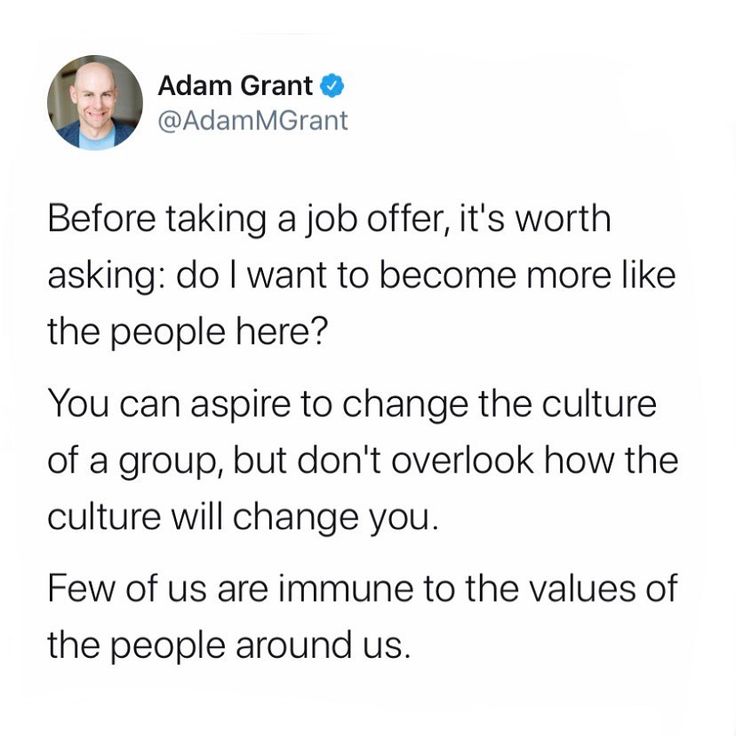
Looking back on clinical rotations throughout medical school and residency, I still smile or shudder.  We had fun and learned eagerly on my general pediatrics team, when the attending regularly took us outside for teaching rounds.  On another rotation, we missed teaching conferences for hospital rounds all month, and every day was moral drudgery.  The culture, explicit and implicit, of any group, large or small, determines the bulk of the experiences among the people in it.

We do not choose our families of origin, nor our acquaintances of proximity early in life.  In adolescence, forces beyond our comprehension push us in and out of social groups, often at high mental and emotional cost.  If we are lucky, we find and can stick with people who stimulate us, challenge us to think and learn, and help us discover our best selves.  Who did you have growing up who did this for you?

At some point as adults, we need to take responsibility for our social contacts.  If I hang out with people who overeat and overdrink when I really want to lose weight and get healthy, I need to ask myself some important questions. It’s not that they intend to sabotage my efforts at self-care.  They are who they are and do what they do for their own reasons.  But I cannot underestimate their influence on me when I’m with them.  The human need for acceptance and belonging is primal, and manifests primarily in group norms.  No matter our fervent intentions and strong core values, given enough time and exposure, we are all at risk for succumbing to the pressures of conformity.  So when we have an opportunity to select our tribal membership(s), such as for work, it’s better to be clear about what kind of culture we value, and whether our choices align with that standard.

The older I get, the less energy I have to waste. How will I spend this precious resource—my time and attention? What value can I bring to my relationships, and how will they feed me in return? Straight up social reciprocity is a natural human trait, but I’m aiming higher. I want to be my best self and make a meaningful contribution, and I seek others who want the same. Once we find each other and recognize that shared, greater goal—that higher ethos—our mutual return on investment in relationship becomes synergistic and exponential, and benefits more than just ourselves. We are better, together, for society at large.

Focus, goals, and personalities evolve over a lifetime.  Mutually enriching relationships in a previous life phase may wane in significance over time.  Or we may grow closer with age, flourishing in parallel rather than divergence.  I think either is okay, if it’s done with awareness, intention, and grace.  Cultivating meaningful relationships is a lifelong practice in these three skills.  If we find and run with others committed to this lifelong training, then we may all realize the fruits of its mastery–or at least of progress–faster, and hopefully with a little less suffering and a lot more fulfillment.

Judge Judiciously

NaBloPoMo 2021:  Do Good, Kid

The person who cuts you off in traffic is not (necessarily) an a**hole; nor is the person who voted for the other candidate (necessarily) stupid, evil, or out to destroy the country.  These are judgments we make, knowing nothing else about people, driven too often by a toxic cocktail of negative emotion and prejudice.  I wrote a few days ago about resisting early closure and asking more and better questions, in order to come to better conclusions—to make better judgments.

What good does it do us to judge quickly?  It feels decisive and righteous, for one thing.  It can make our decisions easier and faster when we don’t stop and question our assumptions and biases, or examine the influence of our own emotional baggage.  We get to dwell in the comfortable, if somewhat distorted, status quo of our own worldview, perhaps oblivious to the unintended impact of all that we ignore and dismiss.  This works for a while, maybe.

But we’ve probably all experienced that humbling moment when we realize how a snap judgment led us seriously astray.  What did it cost us?  Perhaps we lost a great job opportunity, or damaged a relationship that we care about.  Did we ruin a negotiation?  Maybe we lost someone’s trust, which we may never fully earn back. 

I’m not saying we should never make judgments.  Decisions must be made, after all.  Hiring, firing, mergers and acquisitions, voting, marriage—all human relationships and collaborations require us to dance, sometimes in elaborate steps of give and take, call and response, and iterative, reciprocal disclosures and choices. I think drawing premature, oversimplified conclusions closes more doors than it opens, especially in our minds.

So when is judgment required and important?  What makes judgment ‘good’?  I think it’s when our core values are at stake and at play.  I witness someone lying because telling the truth is costly or painful.  I know that another person says they believe one thing, and yet their actions speak differently, for whatever reason(s).  Does a given decision before me align with my core values of honesty, integrity, fairness, inclusion, kindness, and generosity?  If not, I can judge the action, and not necessarily the person who makes it, as dishonest, lacking integrity, unfair, exclusionary, unkind, or selfish.  If I make a judgment, I should be willing to defend it with conviction.  In my mind that means employing both evidence and sound reason, not just escalating emotions—unless, of course, I am aware that my judgment comes from exactly the latter.

This is an all too human foible that we would all do well to recognize.  When we see someone judging suddenly and severely, we can ask, ‘What core value, belief, or identity do they feel being violated here?’  This type of judgment can rarely be reasoned away with evidence to its contrary.  Read The Culture Puzzle by Moussa, Newberry, and Urban, Why We’re Polarized by Ezra Klein, and The Power of Us by Van Bavel and Packer, to see how our various strongly held identities trigger intense emotional hijack when we feel them to be threatened.  Under such conditions we slide into tribalist survival mode, aggressively attacking our perceived attacker, elephants loose, operating in fixed rationalization the whole way. 

If we can take a few deep breaths and withhold our own judgment for a moment, exercise some curiosity, empathy, and compassion, and not take their words and attitude personally (especially if they are judging and attacking us), perhaps we could see them as a fellow human, get a glimpse of what really matters to them, and appreciate why they’re so riled up. Maybe we could even learn something new. We can de-escalate. And once we do that, we can render wholly unnecessary our need to judge in return. How liberating.