The Leadership Skill That Matters Most

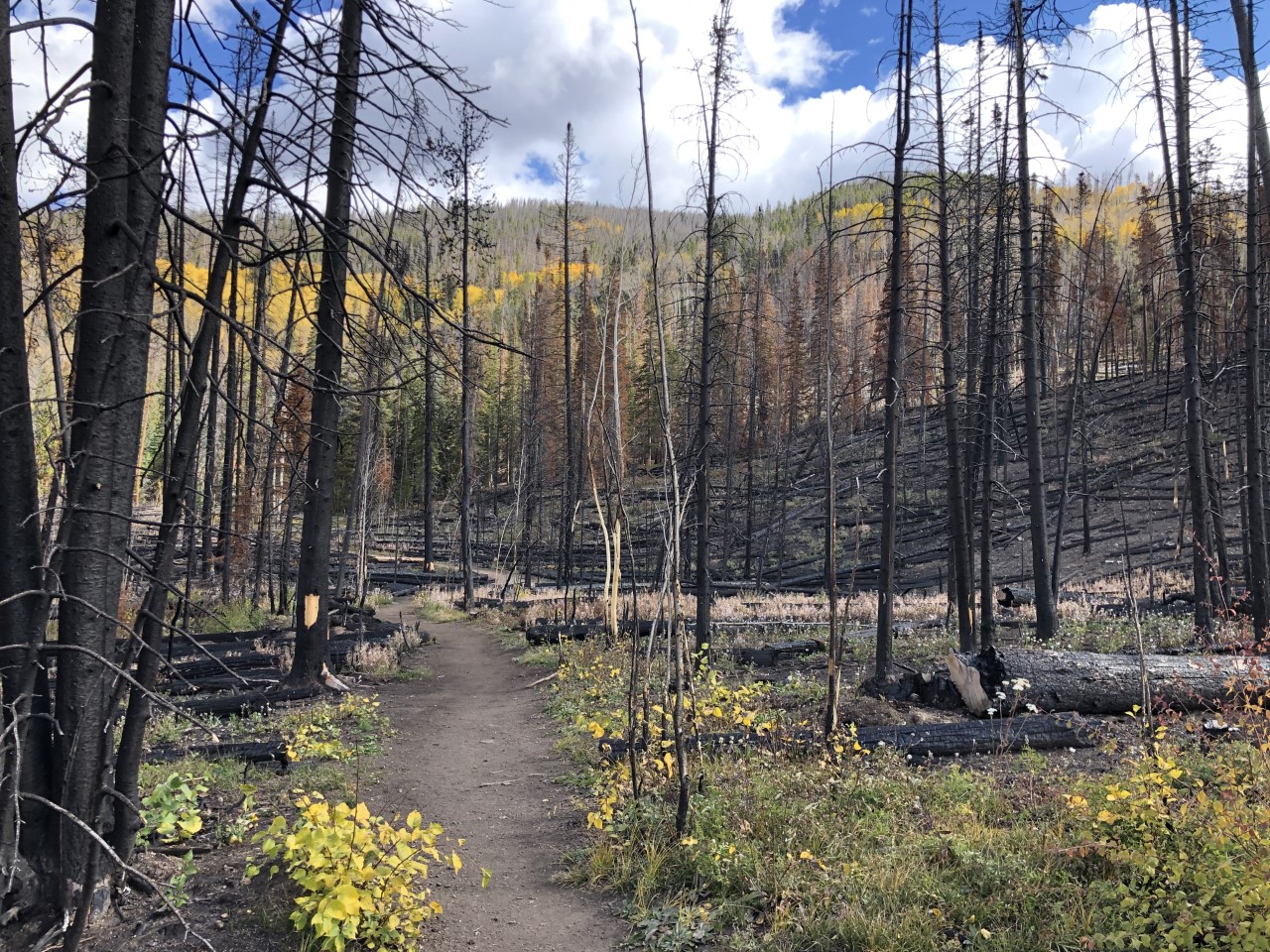
Photo from my patient who prefers to remain anonymous 🙂

Ask more and better questions.

Here’s how:

Whenever you’re about to make a statement or directive, pause. Ask yourself, “What do I not know?” Be honest and humble, or prepare to be humbled. The mark of an excellent leader is the willingness to be schooled from ‘below’ for the sake of mission and team.

Once your ingnorance is identified, formulate a question. As well as you can, make it an open and honest question, the hallmark of which is that you truly do not know the answer and you are not attempting to lead it. Pause again. Is your question truly open, meaning it cannot be answered by yes or no? If so, proceed. If not, revise to a truly open question.

Listen to the answer without interrupting. Do not speak until the other person has stopped talking for at least two seconds. Resist the temptation to issue your previous directive anyway. Follow the thread of curiosity, however thin or faint, to explore what else you don’t know. Done well, one OHQ leads to multiple subsequent OHQs, often branching and diverging to adjacent arenas all interconnected and mutually influential to the central issue.

It can get overwhelming fast, and I suspect many of us do not engage in this kind of query because the emergent morass of complexity feels so daunting. Rabbit holes are to be avoided in leadership think.

If we ask more and better questions, however, we don’t get rabbit holes. We get ecosystem.

I do this every day interviewing patients. Regardless if it’s weight, blood pressure, blood sugar, insomnia, or depression, nothing occurs in a vacuum. Only by exploring the state of every domain of health (work, sleep, exercise, nutrition, stress, and relationships) can I see fully the interconnected origins and impacts of the issue I need to address (often multiple issues at once). Often about thirty minutes into the interview I say, “Wow, that’s a lot.” I sit with my patient a bit stymied at the muddle. Then we talk about their goals, their values, and what lights or dampens their spirit. Reliably, by the end of the day long exam, we get to an action plan that is both brutally realistic and fully aligned with their highest aspirations. It feels inspired an empowered, forward motion already initiated for the coming year.

The best questions help us survey the jungle, its density and pitfalls. It is only after querying the morass and seeing its wholeness that we can know where to act most incisively and effectively. We know we asked excellent questions when the answers provide the map that leads us through the jungle together and with confidence.

Humility. Honesty. Transparency. Safety. Clarity. Accountability. These are the imprints of leaders adept at asking more and better questions. Consider any organization in your experience; I bet these leaders stand out. How would you describe their presence? How do you feel when you’re with them? What effect do they have on the team and its operations?

In case it’s not already obvious, this practice of asking open and honest questions benefits all relationships. In a world of soundbites that continually overgeneralize and oversimplify, stoking judgment and othering, the more we can retain and protect our humility and curiosity, the more we can ask more and better questions that foster understanding and empathy, the better the world will be. We all lead. Let’s do it better, yes?

Inclusive Leadership

Crystal, Eric, Dwight, Tim, Cory, Arianna, Kasey, and Molly.
Ethos leaders lifted with the rest of us today.

Seven Ethos coaches, clinicians, and owners took the 11:00am total body strength class with us civilians today. It changed the vibe altogether. They’re just like the rest of us (but they lift heavier weight); they are human. They believe in their work and mission to make us healthier. They walk the talk. They motivate me to keep going.

Last week I attended a creativity gathering where the facilitator disclosed personal stories as he reflected our own disclosures back to us. He made it safe for us to be open, to explore the origins of our passion with the group. He was one of us, even as he led us from the front.

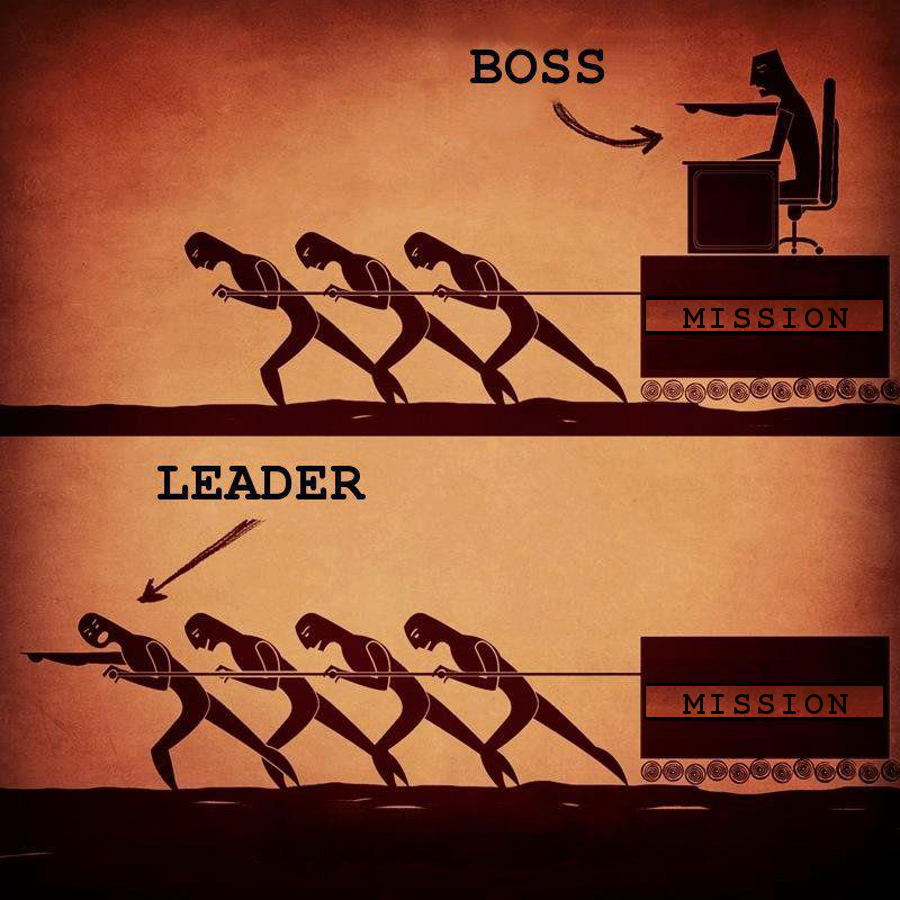
From the internet; anyone know the original source?

Consider leaders whom you trust, who make it safe to admit mistakes, give honest feedback, and present constructive criticism to make the team better. What qualities do they embody to create a culture where we can each and all flourish? I have some ideas:

Walk the Talk

Lead by example. If I’m asking you to tell the truth, I had better do it first. If I’m asking you to be curious, open minded, non-judgmental, and a team player, how can I expect it of you if I don’t model it as your leader? We all know lip service when we hear it. Even if I struggle with the skills I aim to model, seeing me put forth the effort signals my integrity. We respect and follow leaders who exhibit humility and grit.

Get On the Ground

I try never to ask anything of a team member that I would not be willing to do myself in their place. We don’t trust leaders who separate themselves from those they lead by keeping their hands clear and clean from the dirty work on the ground, directing from far and on high. Disconnected leaders more likely lack empathy and understanding; they may be less likely to consider the real and direct impact of their decisions on others. You cannot know me until you meet me in my context. You can lead me more effectively if you know me. So get down here with me, see what I see. Feel it with me.

Be Present, Check In

While pulling the rope of mission onward, with the team, from the front, we leaders can really be with the people pulling with us, at our direction. We can observe their dynamics, feel the vibration on the ground. What’s going on in their lives outside of this pulling? How are they affected by the nested environments of organization, profession, and geopolitical tumult? When we ask these questions we must be fully present, honestly curious. People can tell when we’re not listening and don’t really care. It doesn’t take much to engender or erode trust and camaraderie; and it’s a significant act/practice of self-regulation, to turn off our inner diaglogue and attune fully to the person in front of us, on their terms. The rewards of making this connection, regularly and repeatedly, are priceless and lasting.

Ask More Before Directing

Leaders must problem solve. How many relevant questions do our leaders ask, and how well do they understand the full scope and complexities of the problems, before they start commanding and controlling? I observe not many. The best leaders ask the most open and honest questions. Their curiosity is genuine; their problem solving starts with query and connection before bias and assumption. Good questions answered honestly inevitably lead to more questions; insights emerge and the best solutions arise from clarity and comprehension of the whole, interconnected picture.

Own Your Shit

Accountability of leadership is key for organizational effectiveness, and everywhere I see it lacking. Leaders are human just like the rest of us. They make mistakes. They juggle competing interests and navigate complex environments of personnel, finances, and public relations, among others. The moment they dismiss, deflect, blame, or whine, our trust frays. We don’t need martyrs. We just need leaders who can look us in the eye and say, “I fucked up. Here is how I will make it right.”

What else? What kind of leadership are you experiencing, admiring, tolerating, and bemoaning today? How can we each be better leaders from any chair in our orchestras, to make a useful contribution?

It completely slipped my mind to post here last night! I was too excited for the end of my workweek and felt compelled to write jar smiles, as it had been a few days. It’s like a mild addiction, writing those little love notes. Happy Friday, friends.

Holding Courage

“There is no courage without vulnerability. Vulnerability is not weakness. It’s the ability to show up and be seen. It’s the ability to be brave when you cannot control the outcome.”
–Brené Brown

What was the last thing you did that really required courage? What was at stake? What risk were you taking? What was the outcome? Would you do it again? What would you do differently, if anything? What did you learn?

How does that experience inform your future?

At this moment in history, it is up to us citizens to model courage in connection for our elected leaders. Are we up to the task?

Maybe we don’t see it as courageous to engage with people who voted the other way. Maybe we see it as futile, a waste of time, even beneath us.

I submit that we are afraid. We are afraid to be wrong, even a little. And now I’m thinking about more than just election debate. I think about any cause I champion that provokes resistance or opposition. What if that opposition is valid, even a little? What if my ardent zealousness masks a flaw in my reasoning, a potential unintended consequence of harm in my focused crusade for an intended benefit? When fear blinds us to the nuances of a problem, when we deny the inherent and inevitable complexities of modern human systems, we get rigid. We oversimplify and dig in, and our thinking narrows. Openness, curiosity, and creativity evaporate; flexibility and collaboration soon follow. Overcoming this fear takes courage.

It takes courage to recognize that we may not have the whole story, that we may not see or understand all relevant perspectives of an issue. The fear of being wrong, the shame of it keeps our minds closed. Then when all we do is yell at and dehumanize one another in ad hominem soundbites, we reciprocally destroy any incentive for anyone to admit they have anything to gain or learn from us–we burn bridges from both ends.

“Everybody’s right, and only partially.” What if we hold this mantra at least sometimes? When I remember it, my shoulders relax. I loosen my grip on ideological swords; I lift the visor on my suit of armor and look around, my view extending from the tip of my nose as far as the horizon. Acknowledging the partial validity of an opposing position does not negate mine, though it may feel that way. That expanse of unknown perspective threatens my certainty. What if my position does not actually uphold my values? What if I learn something ugly about myself? What will I do then?

If there is no courage without vulnerability, then how can we foster vulnerability?
Defined by Oxford Languages, vulnerability means “the quality or state of being exposed to the possibility of being attacked or harmed, either physically or emotionally.” Intentionally seeking opposing views, opening our own views to challenge and criticism, is vulnerable. It feels deeply uncomfortable and goes against all our natural instincts of survival in the face of threat. But when else do we choose this state freely and willingly? When do we put ourselves out in the world without hesitation?

We do it when it’s safe. Or, safe enough. It’s that simple. We need to make our interactions safe for us all to put down the weapons, take off the armor, and see one another’s soft parts. Simple does not mean easy–not by a long shot. And it can be done. We can question and challenge our least generous assumptions, then modify them. We can look for shared values and goals and start our conversations there. We can ask open and honest questions at least three to five times more than we make statements.

Presence, openness, curiosity, humility, kindness, non-judgment, generosity–showing up with these qualities in front makes us vulnerable to attack. Ironically, when we come ‘armed’ like this, we make it safe for others to be vulnerable with us. This is when true healing connection occurs; this is how we heal our world.

Who will go first?
Who do you see doing this already?
They are the leaders we need to follow.

I Hold Courage for Us, my friends. We all have it within us–in spades. Let us all uncover and bring it out in one another, shall we?