
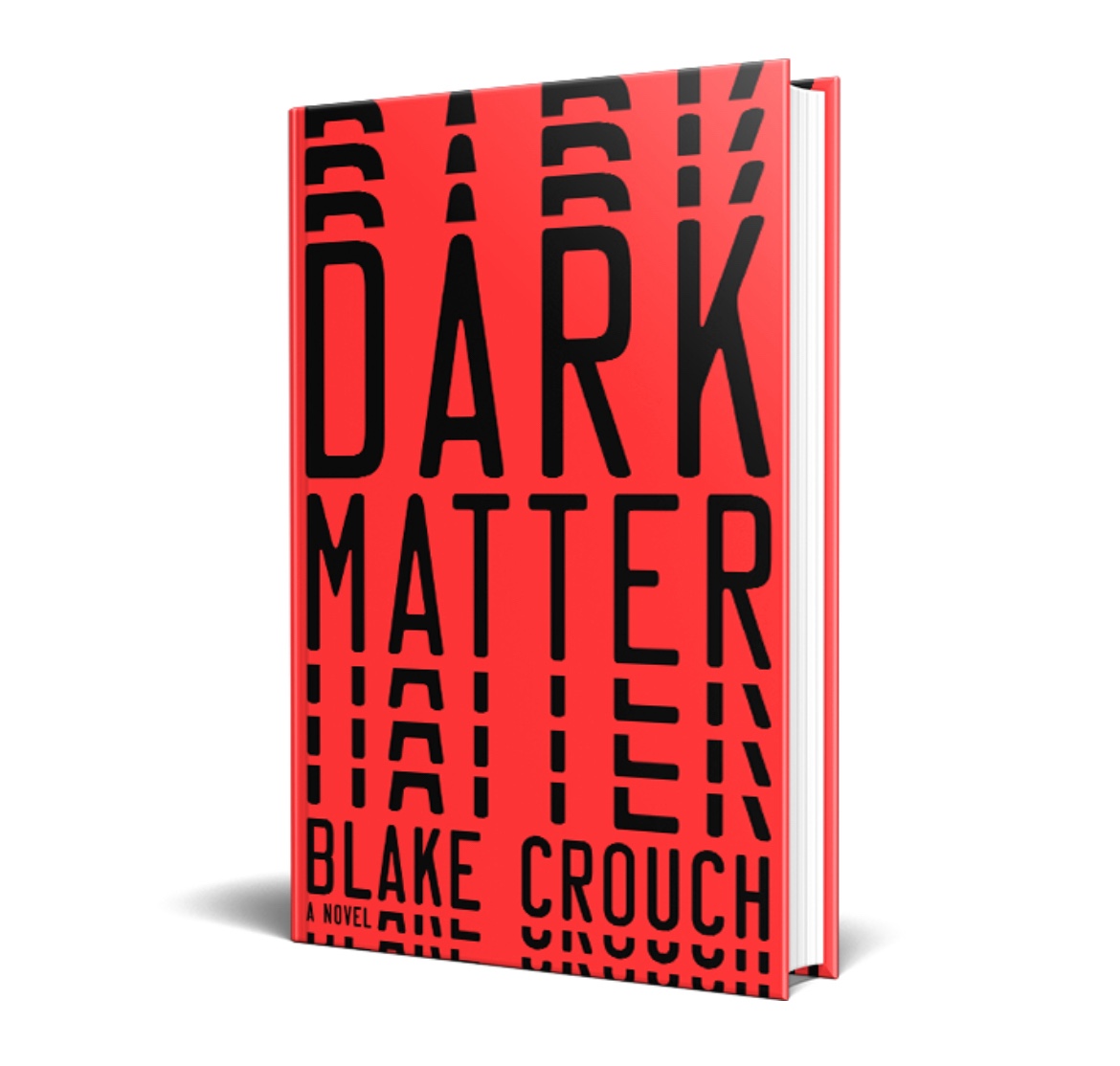
Please note: Spoilers ahead!
—– —– —– —– —– —–
“Are you happy with your life?”
Those are the last words Jason Dessen hears before the masked abductor knocks him unconscious.
Before he awakens to find himself strapped to a gurney, surrounded by strangers in hazmat suits.
Before a man Jason’s never met smiles down at him and says, “Welcome back, my friend.”
In this world he’s woken up to, Jason’s life is not the one he knows. His wife is not his wife. His son was never born. And Jason is not an ordinary college physics professor, but a celebrated genius who has achieved something remarkable. Something impossible.
Thus goes the introduction on Blake Crouch’s website to Dark Matter, one of my new favorite books of 2024. I had heard of neither book nor author before Book Club chose this title, and now I will explore more! I don’t generally gravitate toward science fiction, though Project Hail Mary by Andy Weir is also one of my favorites… Maybe I will reconsider my preferences? Regardless, Dark Matter is so much more than just science fiction, which is why I love it!
The essential premise: Jason, the protagonist, made the seminal choice at age 27 to be with Daniella, with whom he had an unplanned pregnancy. For fifteen years now they have been married and raised their son Charlie. Jason teaches physics at a local college and Daniella teaches art. They have an ordinary life. In a different universe, the one where he chose his career over Daniella, he creates the impossible device that allows him to travel between universes. This version of him, “Jason2,” infiltrates Protagonist Jason’s world, switches places, and takes over his life with Daniella and Charlie. Protagonist Jason spends the rest of the novel trying desparately to get his life back, even though he had never really thought of it as something he would choose, over and over again, to sacrifice everything to save. How many of us would see our lives this way, as the life we would fight to the death for? What would it take for us to think/feel like this? This is the kind of question that the book evokes for me, and I could not be more intrigued.
Acceptance
I found myself wishing Jason had realized and accepted sooner that he was thrown into a concurrent, alternate reality–of his own creation. Maybe this is just because it was so obvious to the reader/listener? I marveled at how easily I myself accepted the premise, and how apparently little empathy I had for his initial grief and disbelief. Yikes. I just wanted him to move on from denial and start solving the problem. But we humans all require time and space to come to terms with severe emotional and cognitive trauma, right? Monitoring my own emotions while listening reminds me to be more patient and take others’ perspectives more often. That is the value of fiction, I am still learning.
Imagine the set of any and all possible life paths, both behind and in front of you, based on any decision, occurrence, or circumstance you have ever been in, from before you were born. It is literally infinite and unfathomable. The drawing below would be basically a solid block of black with a thin meandering green line on the left, and a solid block of green to the right, too many paths to differentiate visually. Every path could intersect with every other at any possible fork and convergence, because every unit of time has an infinite set of possible concurrent events to create any given reality. I find this idea easy to accept–exciting, even–though I can’t quite wrap my head around the actual scale of infinite possibility. I don’t feel a need, though; just the idea that it’s simply bigger than I can possibly imagine is enough; I can shrug, move on, and live whatever is in my present moment, but with this fascinating awareness that anything could turn out any way, based on any miniscule change at any time, in anything! Wow!

Assumptions
Jason experiences the multiverse nexus as a corridor with an infinite length and infinite number of doors. Each door leads to one alternate universe in real time. Soon after realizing that Jason faces literally innumerable alternate lives to attempt re-entering, not knowing whether any will be the one life he actually lived and which Jason2 has usurped, I felt both a little despondent and moderately excited. Mostly I just prepared myself for a colossally dystopian ending. But I also wondered how he (or I, in his shoes), would handle this reality. That extreme uncertainty, coupled with a visceral drive to attain what we most want, most need, live for–how would that manifest in our thoughts and actions in any given situation? How would our assumptions until that point be rendered utterly irrelevant, and how would we respond? How could we possibly know or decide what assumptions to make going forward?
I assumed the doors were all arranged randomly–that Jason had no control whatsoever of what he walked into over any given threshold–hence my utter pessimism that he could ever find his way back to his one lived life. I assumed total victimhood for the protagonist in this eleven hour audiobook. But of course that was not the case–that wouldn’t be a very engaging novel, would it? So if we live any aspect of our lives this way in the real world, how engaging is that?
Agency
Midway through the novel, Jason learns that he can, after all, exert some control over which life lies behind the door he opens, and he finally lands in his own universe. A whole new set of mind bending challenges and plot twists ensues, repeatedly forcing him to alter what flimsy, seat-of-the-pants plan he may have concocted in the last five minutes. But the shift in mindset from powerless to powerful is palpable and forceful. I could feel the expanding energy and mass of hope, by way of agency, on Jason’s behalf; my inner cheerleader got even more animated, if that’s possible.
How can we access our own agency more/better? How often do we conduct our lives in a default state of victimhood, inadvertently assuming we have little or no power? I think of systems here–rules, regulations, protocols and ‘the way we’ve always done it’. I also think of relationships–boundaries separating the professional from the personal, organizational hierarchies–basically, limiting conventions and social norms of any and all kinds. What could happen, how could we make things better, if we just asked a little more often, “What can I do here?” This question elicits at least five different sets of answers, just by putting the emphasis on a different word. “What can I do here?” is a different question from “What can I do here,” “What can I do here,” etc.
I’m not saying we should all carelessly flout the status quo everywhere we go. Whether we accept, acquiesce, nudge, challenge, revolt, or exit, recognizing that we choose to do so is the key–because most of the time, it is a choice. We may feel obligated, forced, and powerless by finances, commitments, social norms and other things. But the conscious recognition of our own free will, no matter how small it feels, grounds us in agency, and thus in our power. We can choose to ignore, question, invite, invent, and create. Every decision carries risks, costs, and benefits; it is up to us to determine our goals, discern what trade-offs we are and are not willing to make to achieve them, and then act.
Appreciation
Am I happy with my life? HELL. YES. I marvel every day at my good fortune; every weekend when I sit down to write this blog, I feel that ‘pinch me’ giddiness that I get to do it. And when I’m in the mountains, forget it, the euphoria defies expression.
This book made me realize my appreciation of my life more intellectually. I say that I ‘hate’ living in Chicago, mostly because I felt obligated to choose it over moving back to Colorado. I wish and plan to move back one day, and have made a life now wherein I already go back often, which probably makes me appreciate it that much more, right? I wonder sometimes how life could have turned out if I tried harder to go back–or if I had made any one of a multitude of different choices in my past. But those thoughts never last long. I know life would have been different, and not necessarily better or worse. And it’s not all up to me–much of life happens to, around, and with me, not by me. So this whole ‘my life is a choice’ thing is simultaneously absolutely true and also not at all–another magnificent paradox!
Once again I come to rest–physically, psychologically, and relationally–on mindfulness. This practice of being with things the way they are, including how I feel about them, without judgment or resistance, is absolutely the most liberating mindset I have found yet. The stronger my practice, the more peaceful I feel, and then the more easily I can discern and identify where my agency, and thus my power, lie. How awesome that a science fiction book about violating the multiverse can deepen this insight!
The Dark Side
Do you believe that we all have the capacity for both unlimited greatness and bottomless corruption? I do. Maybe not all of us for both/all extremes, but I do think that under duress or in extraordinary circumstances, we all have the capacity to do things we would never imagine or expect. Crouch suggests this toward the end of Dark Matter, when multiple versions of Jason emerge, each having traversed his own uniquely traumatizing journey through the multiverse in search of home, all with the singular goal of getting his life back, and each with varying degrees of compunction for acts of violence, including murder, to achieve that end.
While I cannot prove or disprove what capacities for greatness or corruption each of us harbors, I believe that holding open the possibility makes me more empathetic and compassionate toward others when I see them behaving in destructive ways. I often see the meme that says people are fighting battles we know nothing about, admonishing us to be kind. In my observation, we too often respond to one another with judgment long and far before kindness. Our culture punishes transgression without compassion or rehabilitation, perpetuating trauma, isolation, and cyclic patterns of pain begetting pain. ‘Greatness’, however we define it, can also come with severe costs, including sometimes our better judgment and character–as exemplified by Jason2.
I wrote about this idea two years ago, on my 49th birthday, having listened to The Midnight Library by Matt Haig, another book that eloquently explores choices, regrets, acceptance, and peace. There must be a multitude of stories on this concept constellation, each a unique, instructive knot on humanity’s strong floss thread of resilience, creativity, perspective, and connection. I still hold my Book of Regrets, but it feels less heavy today. Self-compassion practice gives it wheels, so I may roll with it rather than carry it like a yoke. I’m grateful to Book Club for leading me to Dark Matter, a cosmic opportunity to revisit multiple existential questions at once, to explore for myself and among friends what really matters, how I want to be, what I choose to attend to and do.
I’m currently listening to The Code of Us by Liv Evans, performed by Jodie Harris and Steve West. I already know I’ll want to write about it; I’m prepared for my heart to be broken and my mind to be bent, reshaped, and expanded. I look forward to deepening of my sense of connection to humanity, and to stimulating further my consideration of artificial intelligence and the inevitable, accelerating march of technology.
Thank you for reading all the way to the end, Dear Reader. I highly recommend this book, and welcome any discussion of its impact on you.
 Healing Through Connection