Unknown's avatar

About Catherine Cheng, MD

I am a general internist in Chicago, Illinois, mother of two, almost native Coloradan, and Northwestern alum. I want to leave the world better for my having lived, by cultivating the best possible relationships between all who know me, and all whom I influence. Join me on this crazy, idealistic, fascinating journey! Look for new posts on the 10th, 20th, and 30th of each month. Opinions posted here are entirely my own, and in no way reflect the opinions or policies of my employer.

The Value of Comradery

I’m having a party!

Well, not really.  I’m inviting colleagues to convene on video in the name of professional community and connection, so it’s almost a party.  It’s also my homework!

These six weeks I get to take Stanford’s inaugural online Physician Well-Being Director Course, along with over a hundred other physician leaders.  What a privilege and pleasure!  I’ve already learned so much, and we’re only one third of the way through.  I may have made a new friend—we bonded over our shared tendency to stress eat, and that we are both using the Noom app to overcome it.  It happened during a breakout session to sample a Comradery Group.

Turns out there is clear evidence that community building, done intentionally and purposefully, promotes clinicians’ overall well-being.  “Well, duh,” you might say (I have).  Why did this have to be studied formally?  But I get it now.  When there is objective evidence for direct benefit and a positive cascade (well physicians tend to have higher engagement, higher patient satisfaction, happier teams, and systems that thrive—relationally as well as financially), healthcare organizations are more likely to invest resources to execute the well-being programs shown to work. 

In a Comradery Group, the objective is more than just venting.  It’s about finding meaning, fostering growth, and supporting one another through empathy, querying, and sometimes even challenging—all in a psychologically safe environment.  Groups meet to discuss particular topics and are admonished to stay on task.  There is usually a facilitator.

I have always found communing with colleagues nourishing—particularly across specialties.  More and more, we toil in silos.  Advancing technology accelerates complexity of both diagnostics and therapeutics at breakneck speed in almost every field.  Everybody can barely keep up with their own work, let alone understand what’s happening in anyone else’s.  And with in-person conferences and other professional gatherings banned for the past year, our sense of community wanes further and faster.  Our disconnection propagates insidiously, and we will all pay in the end, physicians and patients alike.

So what better moment to tend and strengthen our connections?

I have a few colleagues from internal medicine, OB/gyne, ophthalmology, and orthopaedics ready to gather in meaning on Microsoft Teams.  Can’t wait can’t wait!  The first rule of Comradery Group is that what’s said here stays here; holding confidence is key to connection and trust.  We can set other rules at our (first) session.  The homework assignment is only to experience a group once, but my secret hope is that my colleagues will get enough from this meeting to consider doing it again (and again!). 

I’ve proposed some sample topics below.  I’d love to discuss any of them, and I’m sure my friends will suggest others.  Take a look—how could you adapt these questions to your own profession?  How are you and your colleagues at risk for burnout, and how do you imagine Comradery Groups could help?

Here’s something new for the blog:  If you answer one of the questions in the comments, I’ll share my own answer to the same in reply (or a separate post!).  Please also feel free to offer a different question, one that holds meaning and importance to you.

Times are hard and complicated.  We humans are social creatures.  The better we can maintain and strengthen our ties to one another, the less we will suffer—no—the more we will flourish

Onward, friends.  We are all we have.

  1. How has doctoring the past year through a global pandemic impacted your professional and personal outlooks?
  2. What lasting lessons from the past year do you want to keep front and center?
  3. What do you want most from your colleagues in other specialties?
  4. How would you change medical education?  Why?
  5. How have you seen medical culture evolve over your career, for better and/or worse?  How has this impacted your personal experience of your work?
  6. What concrete changes have you made to the way you do things, over the years and the past year?  What do you miss and not, about the way things used to be?
  7. What makes a hard day at work?  An easy day?  A good day?  A bad day?
  8. What is your preferred leadership style, as both a leader and one who is led?
  9. What is the value of DEI initiatives at work?  What are the barriers?  Pitfalls?
  10. What’s foremost on your mind right now for your own well-being?  How are you upholding it?

Smarter Than Fish

Husband took up fishing in med school.  He and two of our friends got really excited; I heard all about why/when one should use spinner baits, and what spoons are for.  At one point they invested in fish finders—small sonar devices with crude digital displays.  “Isn’t that cheating?” I asked.  Now Hubs is more into fly fishing.  It’s more challenging (and thus more rewarding), apparently.

“It’s a contest to see who’s smarter: Us or the fish.”

One day in conversation with my favorite teacher, he shared with me a theory that I have adopted:  Earth is the organism; humans are the pathogen; viruses are Earth’s immune system, attempting to eradicate us.  “It’s a contest to see who’s smarter:  Us or nature.”

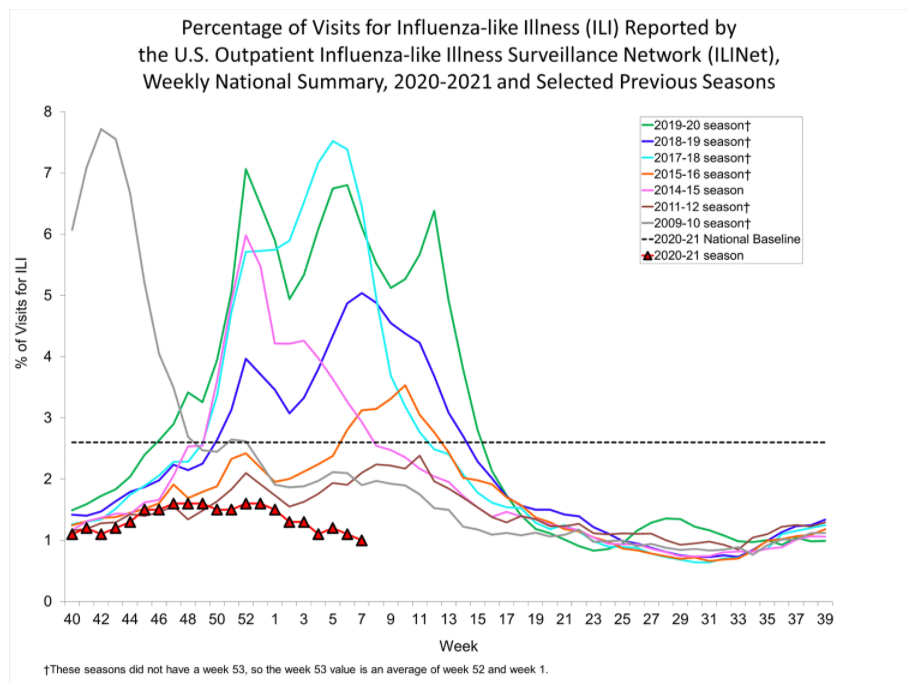
CDC, 2-28-2021

This past year, influenza cases around the world appeared to decrease dramatically, likely due to all of our precautions to prevent COVID infections: masking, distancing, and vigilant handwashing/sanitizing.  I wonder, having denied the flu virus many millions of new hosts through which to mutate and spread, whether we have disrupted the annual flu cycle, at least for the short term?  Have we won against flu?  Only time will tell.  But if we’ve traded flu for COVID as our annually recurring seasonal respiratory (and systemic) disease, then score a big one for Earth and its protective warriors.

The Johnson administration embarked in 1966 on a mission to eradicate measles in the United States.  They thought they could do it by 1967; it took until 2000.  We are an arrogant pathogen.  But by 2014 measles had returned in widespread outbreaks, and I’m skeptical that we can ever really eliminate it.  Earth’s immune system is resilient, and it plays the long game. 

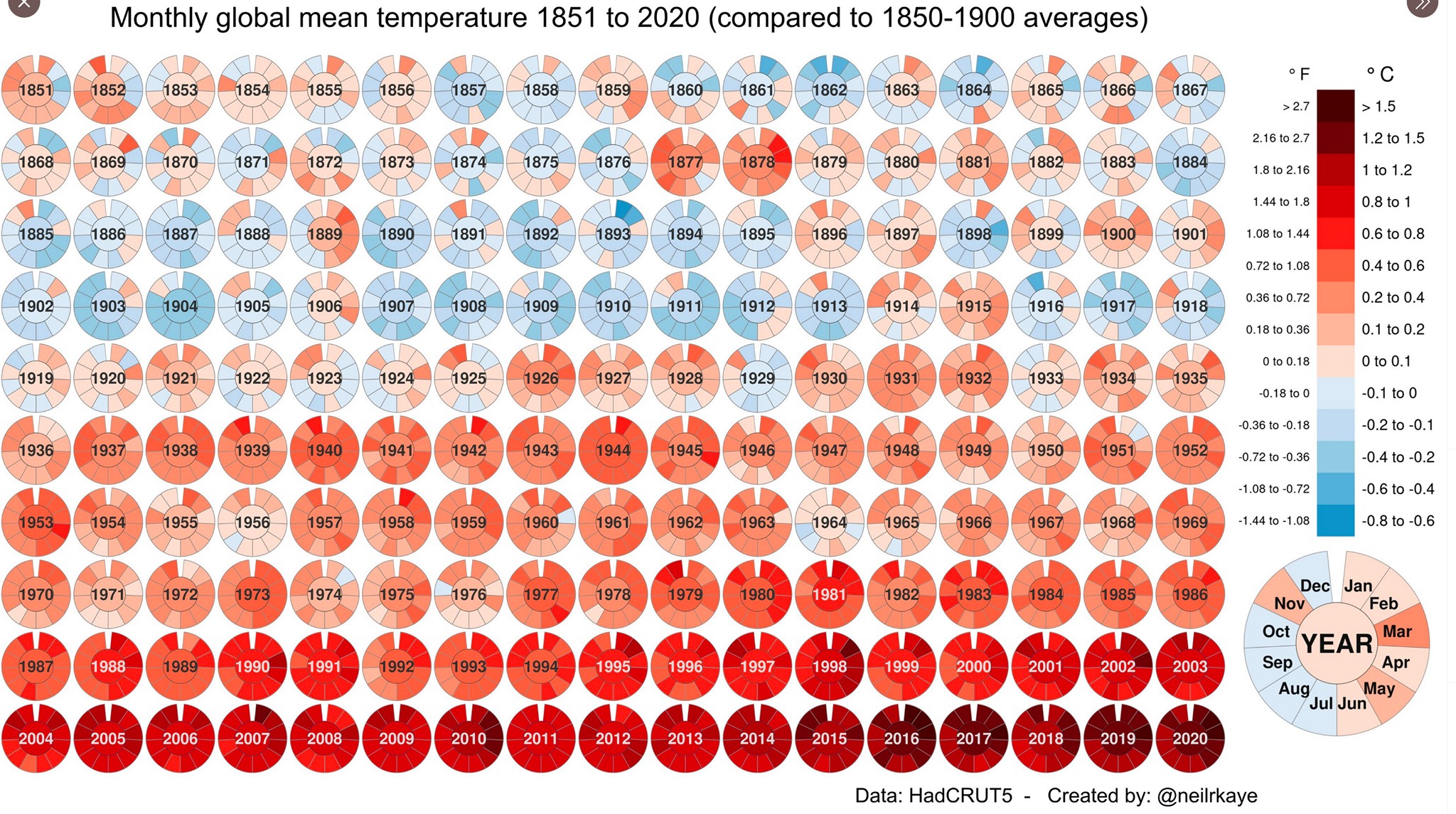
Neil Kaye, UK, January 2021

Scientists correlate climate change with rising emergent pandemic frequency and severity.  Global warming accelerated in the latter half of the 20th Century.  Everybody who acknowledges this, even those who don’t want to address it, agrees this is due to human activity.  Just since 2000 we have seen outbreaks of SARS, swine flu, MERS, Ebola, and Zika, all but one of which were novel, and all before COVID decimated (and continues to decimate) us. Who’s chasing whom, here—who is smarter—humans, viruses, or Earth herself?

Let’s assume the dinosaurs’ demise resulted from a fantastic meteor strike and its subsequent catastrophic climate sequelae.  Planet Earth survived that whole morass, and we puny humans evolved.  We grew frontal lobes big enough to command and control our environment.  And now we thrive, only to eventually kill ourselves and as many species as we can take with us in our titanic self-annihilation.  Earth will survive us, too, and good riddance.

So here is the natural order of things, in my humble opinion:  Earth is smarter than viruses, which are smarter than humans, who may or may not be smarter than fish.

The Intention-Impact Gap

Years ago I had a hard conversation with a Black classmate.  He explained to me the experience of being Black in America—what it was like to worry about his own safety and that of his loved ones every day, of seeing innocent Black men killed at the hands of police, the history and ongoing oppression of racism, both overt and implicit…  It was overwhelming.  I said, “I can’t imagine what that must be like…”  At the time I honestly meant it as an expression of humility.  In retrospect, I could (should?) have said, “I know I will never experience what you experience, AND as I think about what you have shared with me, I AM imagining what that must be like, and it’s overwhelming.”

Though I had intended my words to be connecting, he told me in no uncertain terms that they had the opposite impact.  Really, he asked?  You really can’t imagine what it would be like to send your son out every morning knowing he could be profiled by police?  You can’t imagine your family being captured and sold into slavery, separated mercilessly on an auction block, or hunted, mutilated and murdered for simply being different?  How can you not imagine it?  Where was my sense of shared humanity, he demanded? My declaration of “I can’t imagine,” far from showing caring or understanding, signaled to him my unwillingness to relate.

At first I felt defensive and misunderstood.  Why was he rejecting me when I honestly thought I was being supportive?  I had to think about it a while, and really listen for what he was saying.  It was painful and humbling to realize that he was right, at least partially.  I could imagine all of those things, but maybe I didn’t want to.  Maybe it was too uncomfortable, and I exercised my privilege of not having to think about it, because it didn’t affect me personally?  Maybe it made me feel helpless?  Maybe I knew on some level that I harbor racist and prejudiced biases and ideas?  My classmate was teaching me the difference between empathy and sympathy.  Brené Brown makes the distinction thusly:  “Empathy fuels connection, while sympathy drives disconnection.”  I had intended the former; my impact was the latter.

I can own this now, years later.  I practice more mindfulness around my words.  I watch for my impact—is it what I intend?  If something I pitch lovingly lands hurtfully, then I need to examine my actions, and maybe even my (deeper) intentions.  I don’t control how someone receives my message, and I can also do my best to express myself the most honestly, authentically, and clearly.  I hardly ever say, “I can’t imagine” anymore.  Because if I want to support someone, I must imagine.  The person needs to know that I’m doing my best to relate—to connect.

Today when someone says they “can’t imagine” my experience, I notice my own discomfort—these words feel ambiguous at first.  So I need to look around.  What is our relationship?  What is the context of our encounter?  What story do I tell about their intention?  How does my story impact their impact on me?

As communicators in relationship, if we are truly committed to fostering connection and community, then we must step up to an important challenge.  We must all mind the intention-impact gap, as both senders and receivers of any given message.  Marc Lesser recommends:

  • Notice how you are impacted by other’s words. In particular when you feel hurt or vulnerable, do you assume intention? Does blame arise? Can you experiment with being more curious?
  • Notice how your words impact others. Pay attention to when you sense that there may be a gap between your intention and the impact of your words. Can you be open and explore how to align your words, intentions, and their impact?

When did you last fall into the gap?  What did it cost you, your counterpart, and/or your relationship? 

How can we each and all help one another mind (and bridge) the gap?