The Power and Potential of Blind Spots

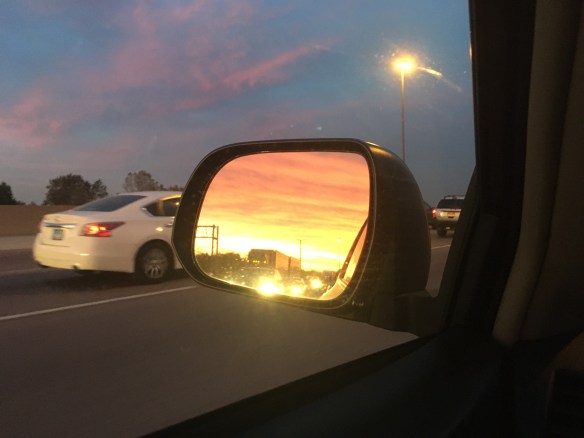
Sunset 10-25-2019

Whoa Nellie, what a week.  How are you?  What’s vexing you most right now?  What’s holding you up?

A 651 KB PDF sits portentously in my work inbox.

It’s the report of the 14 people who completed surveys for my 360 leadership evaluation.  What a fantastic learning opportunity (assuming the feedback is concrete and actionable)!  I had planned to do it last winter, and then I procrastinated.  And then the pandemic hit.  At home and not seeing patients, I debated whether to bother people with such a frivolous ask.  I decided to proceed because as a leader, what better chance and reason to get real time feedback than during a crisis?  And will there be a better time in the coming months?  I am grateful to/for the 14 respondents.

My biggest fear is that I will be blindsided, and then frozen, by unexpected and severely negative feedback.  I’d say I have a moderate case of imposter syndrome.  So this report carries, in my lizard brain, a high risk of confirming every insecurity I harbor about my leadership, personality, and value to my (any!) organization.  *deep breath*

Johari Window

https://www.communicationtheory.org/the-johari-window-model/


Thankfully I am more than my threat-vigilant self; I can receive feedback calmly and rationally.  And, I have support.  One of my LOH classmates introduced me to the Johari Window model the other day.  How have I not come across (remembered) this model before now?  Into the first of the four panes, my ‘Arena’, I put aspects of my leadership style that are known to both myself and others—strengths and weaknesses.  A second pane, my ‘Façade,’ comprises things known to me but that I conceal from others.  These can include deep seated fears, insecurities, traumas, and other emotional baggage.  I bet many of us underestimate the influence and consequences of façade traits on our leadership style and results.  My 360 will show what lives in the upper right pane, my ‘Blind Spot(s)’—what is known to others and not known to me—hence the risk for being ‘blindsided.’  Finally, the parts of my leadership that are as yet unknown to both myself and to others are simply labelled ‘Unknown.’  I have renamed this quadrant ‘Potential for Supported Learning and Growth.’

The best possible result from this 360 exercise is a new, clear, and useful awareness of my leadership Blind Spots.  In her book Insight, Tasha Eurich asserts that true, effective self-awareness embraces and processes both the self-known and other-known domains, and their intersection.  I plan to map out my Johari Window for both strengths and weaknesses before opening my report.  Then I can organize them into broad categories as a framework for approaching the results, and see how well they reconcile (or not).

But beyond professional leadership in my little clinical practice, how else can I apply this self-awareness framework?  How can this exercise inform larger, more global  relationships and culture?

Racism

In July, 2016, I wrote this post about racism and listening for peace.  I’m glad to have documented my thoughts and experiences over the years.  Rereading it now, I can see how I have both sustained and evolved my attitudes on addressing racism.  I still respect all points of view, at least partially.  But I am now more willing to take risks and engage in the hard conversations, to show that I have the capacity to address complexity, to hold tension between divergent and opposing perspectives.  I used to fear being misconstrued as a member of an antagonist monolith.  I am less afraid today to confront such assumptions that others may make of me (and I of them), to invite dialog, to withstand the discomfort of digging in and exchanging in earnest.  This includes with those whose ideology I oppose, as well as those with whom I align.

A principal value of inviting divergent dialog, like the 360 evaluation, is to reveal my Blind Spots.  For instance, even as I think of myself as ‘not racist,’ what behaviors have I that actually are racist, or at least ignorant and complicit?  How can I be more anti-racist?  What can the mirror show me that I can act on and improve, to make a positive difference?

For more on the vital importance and dire need for more of this kind of engagement and self-reflection, read David French’s piece from this morning, “American Racism: We’ve Got So Very Far to Go.”

For an excellent example of how Blind Spots manifest publicly, and how this can instruct us, read John Pavlovitz’s excellent essay on how Drew Brees slammed straight into the mirror as blind as any of us.

We can all map out Johari Window panes for our racism and anti-racism, just like leadership strengths and weaknesses.  Then we can shut up and listen to our Black friends and colleagues, learn in earnest about how racism really is built into and manifests in every aspect of our national heritage and culture.  We can speak up and act when we witness racist thought, attitude, behavior, words, decisions, and policies.  Each of us, in small and still significant ways, can lighten the burden our Black peers carry—we can and should share the work of dismantling our oppressive and marginalizing, racist systems.

It all starts with awareness—the closer to 360 the better.
What Calls You?  How Will You Answer?

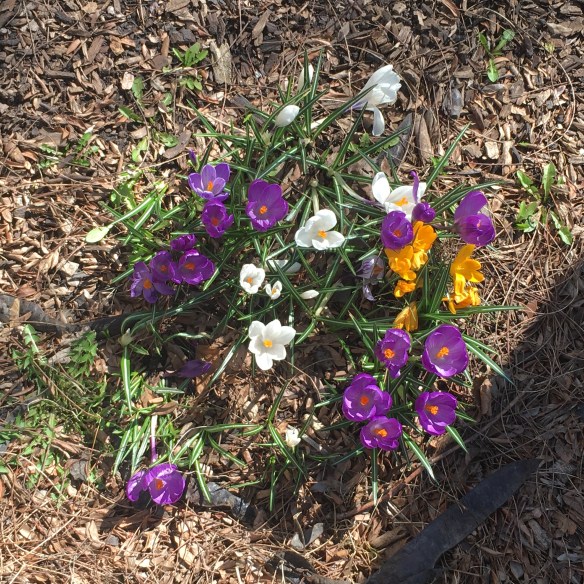
IMG_4307

What a long, strange, heartbreaking trip it’s been, and there is no end in sight.

As if a global pandemic and 100,000 lives lost in the US alone were not enough, the inescapable reality of systemic racism and police brutality is now on full display and we must engage.  Anyone paying attention is right and justified to feel fatigued, frustrated, and at the end of their rope.

Each of us experiences all of this from our own unique perspective, informed by our personal and ‘tribal’ experiences to this point.  And we also share a genuinely collective experience in many ways.  It is the ultimate human paradox, no?

In the end, I always come back to our universal need for meaningful connection–love, really–as the light that will show us the way through.

For me, two main questions arise that I feel are the most important to answer at this point in history and my own life:

  1. What am I learning about my own biases, prejudices, assumptions, and attitudes in this time?  Corollaries:  When do I notice those tendencies arise?  What is that about?  And how do they affect my words and actions, and thus all of my relationships?
  2. With this ever-emerging awareness, how can I commit to being a contribution?  How will I, in this time of severe personal and societal disruption and upheaval, help to connect and heal rather than to divide and destroy–what specific, concrete actions will I take?

Asians occupy a strange Middle Space of racial identity.  We are ‘white-adjacent’—we enjoy some privileges similar to whites in America.  We also suffer some prejudice—more so since the 2016 presidential election, and much more so since the COVID-19 pandemic.  It’s all so complex.  I think I knew before, but now it’s crystal clear: Asians have a unique role to play in dismantling systemic racism and supporting Black Lives.

This article on Amy Cooper, the white woman who called 911 to falsely report that Christian Cooper, a black man, was threatening her life, captured the challenge well:

“What the Amy Cooper situation reveals to me is what instances of racism in America always reveal: There’s a level of self-examination and self-awareness that white people are not doing that they must do. There’s something that white people, even the ones who believe that they hold no biases, that they wield no power, must admit to themselves and begin to unpack. They are complicit — and even participatory — in the system of white supremacy. Individual white people may not believe they are, but their ability to tap into that system is always within reach.”  (emphasis mine)

For the most part, I enjoy enough privilege to not worry about my safety or that of my husband or son when we go out in public (though I have lately).  But as the coronavirus has now reminded me, Asians really don’t have access to the system of privilege that white people do.  So, my work is to find those specific, concrete actions that will advance anti-racism, primarily that against black people.  Because Black Lives seem to matter the least right now, and none are free until all are.  We Asians have some reckoning of our own to do, because we as a group do participate in and contribute to anti-black culture.

So now I commit to learning more by following writers like Professor Ibram Kendi.  I will listen to and read the stories posted by my black colleagues on social media, such as this one and this one.  I will look for opportunities to ‘upstand’ when I witness racist behavior in public or online.  I can follow groups who walk the talk, like Asians4BlackLives.  And I can find other resources to engage and participate in, like the myriad ones listed on President Obama’s Anguish and Action page.

This inner work is difficult, slow, and profoundly uncomfortable.  But it must be done for the outer work to have meaning and efficacy.  I believe we can overcome systemic racism and oppression.  And as always, we must do it all together.


Rallying for Reentry

IMG_3205

We’re baaaaaaack…  Sort of.

After ten weeks sheltering and working mostly remotely, the primary care team I lead will phase back into regular office hours this week.  What a long, strange trip it’s been!  And it’s nowhere near over!  But the next chapter begins, and we are ready.  We return with limited staff, all spaced, masked, and sanitized.  We have planned for weeks and done our best to anticipate hiccups and pitfalls.  Now it’s time to dig in and execute.  Exciting!

And maybe a little scary?  We will have minimal face to face appointments in the beginning, but as with businesses and services across the country, we will ramp up over time.  How will this affect and be affected by coronavirus infection and illness rates going forward?  What will flu season look like, while we continue mitigation efforts for COVID-19?  Despite the multitude of models, nobody can say for sure.  And still we must move.

So what’s a leader’s role here?  How can I best serve my team as we step boldly back onto the path, besides planning and execution of operations and logistics?  Now more than ever, I must be both clear and adaptive about my leadership—its meaning, influence, and potential.

This weekend some strong feelings emerged to center, ground, focus, and guide me.  Interesting, isn’t it, for my professional peace to rest so surely on emotions?  The cognitive knowledge that my own leaders have my back gives me confidence and reassurance—I trust them.  I trust us all to flex and adapt as our collective situation evolves.  One could argue that trust itself is, by nature, more limbic than rational.  And such is the human condition—we are emotional beings who think, not the other way around.

So I embrace and anchor to my positive emotions.  I can moderate turbulence with solid intellect and steady spirituality.  I believe good leaders do this visibly and vulnerably—they lead by example.  Right now we all need to manage through a morass of complex feelings—to identify, accept, and allow their passage through us.  This is how we take care of ourselves and each other, and get the work done.

IMG_3442

Pride

I could not be more proud of our team.  Like so many cohesive teams in an emergency, we pulled together, reorganized, and mobilized like champions.  Computers were set up at home, schedules rewritten, tasks redistributed, and personnel reallocated.  Folks overcame fear and anxiety, at times severe, to help other departments, learn new skills, and grow into leaders themselves.  They made connections across the health system and broadened perspectives that will now benefit our whole team.  We supported one another through semiweekly touch points, instant messaging, photos, stories, and some tears.  I have no doubt that we can not only navigate but crush this crisis arc, and emerge a stronger, even more cohesive version of ourselves.

Protectiveness

As clinical director, I appoint myself chief cheerleader and den mother.  Through various channels, it’s my job to keep a finger on the pulse of morale and engagement.  And while I hold the team up to its own standards of integrity and accountability, I also keep a vigilant eye for assailants from outside.  As we prepare to reopen, I consider how I will protect my team from abusive patients.  I think the risk is low, but what if someone refuses to mask or submit to temperature screening?  What if they become aggressive or belligerent?  Our team has cultivated empathy and compassion, especially for patients who feel anxious and sick.  Still, I will not compromise our safety for someone’s angry outburst or agitation.  We have a plan for handling such situations that will never tolerate physical confrontation or humiliation.

Loyalty

We’ve been through a lot together the two years I have been back on this team.  Turnover was high in 2018, and engagement low.  We’ve since built a culture based on connection and accountability, and this complex work continues—culture work never ends.  Technically I hold an interim position; I am a steward.  But I will not leave until the right successor is identified and groomed.  I’m in for as long as this takes, as long as I am able, as long as the team will have me—I will not abandon ship.

Conviction

Our team has a particular, holistic approach to patient care and relationship.  In order to live this approach for ourselves, we defined our core values a year ago:  Kindness and compassion; connection and collaboration; fun, joy, creativity; and accountability.  I see now that we have an opportunity in this moment to further clarify our mission and vision.  Nothing like a global, existential pandemic to make us reorient and reclaim our raison d’être!

Vision and Execution:  It is the leader’s role to manage both—to host the ball and move fluidly between dance floor and balcony, as Ronald Heifetz and colleagues say.

Let’s get this party started.