November 5:  Peer Coaches Make Me Better

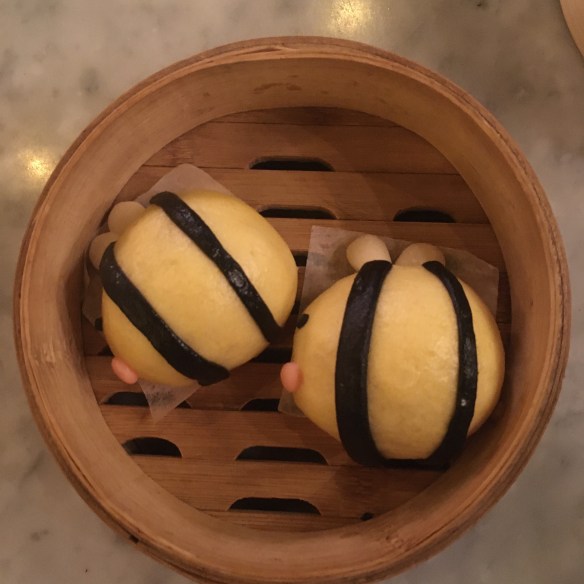
bee bao

NaBloPoMo 2019

When you’re working through a challenge, who helps you?  What is it about them, how are they most helpful?  How not?

Through the years I have learned what I can get from certain people.  I know to call this person when I need validation, that person when I need a devil’s advocate.  I also know which people to avoid altogether—those who cannot be trusted with my vulnerability or confidence.

But when I need to hold space and tension with an issue, to patiently look at it from different angles and process the perspectives, I look to my peer coaches.  I feel gratitude and gladness for these friends today, after my LOH group had our monthly peer coaching call.  As we progress through our 10 month leadership training, we take tenets and skills home from each retreat to practice.  Monthly Zoom calls have no agenda, other than to reconvene, share, and mutually support.  Every time I come away appreciating just a little more how nothing in life—work, personal things, social context—can really be separated from anything else.

These friends are not my first or only coaches, however.  In 2005 I started working with Christine, my life coach.  Every session, 14 years later, is still transformative.  How is this possible?  Curiosity.  Christine coaches every call squarely and unwaveringly from this perspective.  It was not long before I realized how powerfully this method could alter my own encounters with patients.
10-22-19-2

The best coaches have no preformed or decisive answers.  They have the uncanny ability to ask the best questions–Open, Honest Questions (OHQs)–which then lead clients to their own best answers.  They help frame and reframe problems.  They point us to alternate perspectives and help us open our minds to narratives other than the ones we too often grip so desperately.  It was my second year in practice when I started asking coaching questions to patients, and I have never since feared any symptom, syndrome, or answer.  When there is no clear diagnosis or answer for someone’s distress, I can just keep asking until something helpful emerges.  Most often it’s not a single piece of information that gives clarity; rather, it’s the story that materializes.  Coaching skills help me help my patients find and tell their stories of health and wellness, illness and pain, agency and action.

Here are the tenets of true Open, Honest Questions, from the LOH syllabus:

  • The best single mark of an honest, open question is that the questioner does not know the answer and is not leading toward a particular answer.
  • Ask questions aimed at helping the other person come to a deeper understanding (help them access their own inner teacher).
  • Ask questions that are brief and to the point without adding background considerations and rationale—which make a question into a speech.
  • Ask questions that go to the person as well as the problem or story—for example, questions about feelings as well as about facts.
  • Trust your intuition in asking questions. Inviting metaphors or images can open feelings, new lines of thinking, and unexpected possibilities.
  • Try to avoid questions with yes-no, right-wrong answers.
  • Avoid advice disguised as questions.

My best friends are my peer coaches.  And now I have my LOH cohort-mates.  We make no judgments about one another’s circumstances, feelings, or experiences.  We make the most generous assumptions about our motives.  Our role in each other’s lives is almost never to give advice; rather it is to hold space, listen reflectively, offer moral support, hold up core values, and help one another query thoughtfully and honestly.
IMG_1918

Questions asked and reflective statements made on the call today:

  • If you left work tomorrow with enough money to be unemployed for 6 months, what would you do?
  • How does it feel to speak (your issue) out loud?
  • When you think about current state compared to past, how does it feel physically in your body?
  • Sounds like you’re working on a core tension.
  • What do I/you want now?
  • What’s roiling around in you?
  • Who around you can get creative with you?

We each bring diverse questions and challenges to each call.  But somehow we always relate deeply, and listening/querying helps us each learn from every other.  Today I saw central themes emerge around identity, contribution, voice, and meaning.

In the end, I think there are few things more important in life than meaning and connection.  These are the gifts from my peer coaches, and they always make me better, no question.

IMG_2645


November 3:  (Sun)light Makes Me Better

IMG_2975

NaBloPoMo 2019

Happy Standard Time Change, friends!

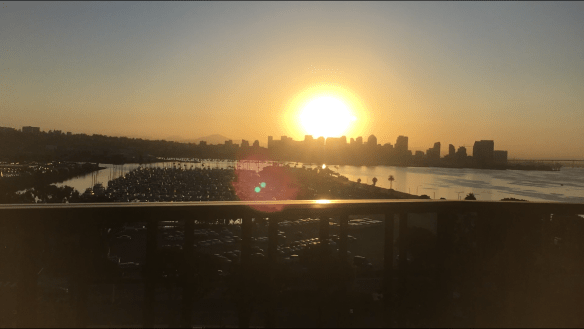
How do time changes affect you?  What about the shorter days here in the higher northern latitudes this half of the year?  I don’t have seasonal affective disorder, but no question, the absence of light affects me.

I grew up in Colorado (really, I know you could not possibly know by reading this blog), taking the sun for granted the whole time.  Blogging makes me read more, which makes me more honest.  I’ve been bragging to my friends lifelong about 320 days of sunshine per year in Colorado; turns out it’s more like 245.  But it’s still more than the US average of 205.  (Arizona has 299; Chicago has 189.)

IMG_2976

Utterly anomalous, then, that I decided to go to Northwestern for college.  I already wrote this summer about my campus visit—rain, rain, and more rain.  I never saw the sun that whole weekend.  But maybe it was the lake, viewed from the student center, that called me—that vast blue expanse, a smooth surface concealing untold life and tumult beneath.  There was no other school for me; I was meant to be there, sun or no sun.

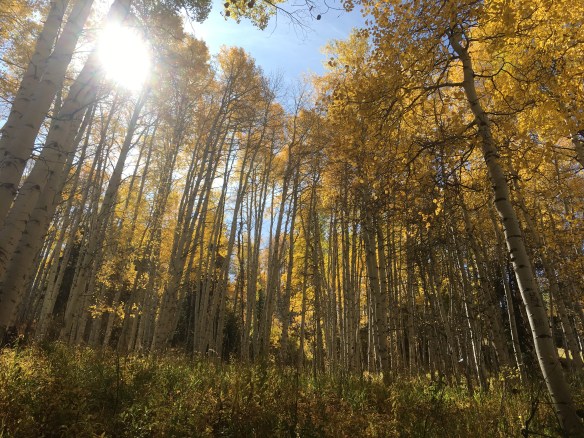
Fall quarter freshman year, recalled now by a typically skewed mid-life memory, was a BLAST.  Independence, new friends, beautiful campus (deciduous trees with fall colors other than yellow, YAY!), being a small intellectual fish in a much bigger, much more diverse and interesting pond—I was in heaven.  Going home for Christmas, once I overcame the stark reality that life had clearly continued without me (what?), was also joyous. I caught up with old (HA! ‘old’ at age 18) friends and curated more items to bring back to school.  Life was sweet!

IMG_2977

So two weeks into winter quarter, I really had to wonder why I felt so down.  Mopey.  Low energy.  Sad.  Not severely, but noticeably.  I remember the moment, walking south on Sheridan Road in front of Tech, the giant engineering building (third largest building under five stories after the Pentagon and the Kremlin, they told us on the campus tour—found no reading tonight to verify this).  I looked up at thick gray-white clouds blanketing the sky.  I saw everywhere bare branches, orange and maroon leaves long gone, and only dirty snow, ice, concrete sidewalks and holey asphalt on the ground.  I had not seen the sun since returning to school, and I realize now as I write, there was simply no color anywhere outside, other than the bright neon Columbia jackets my friends and I wore in those days.  So of course I felt sad!  I think that was the day I started hating the climate here.  After that I never worried about my mood in the winter, grumpy as it was.

Fast forward about 17 years:  Winters were taking their toll: waking to blackness every morning, getting two little kids ready and out the door by myself, working indoors in a windowless office, and coming home again in the dark to the same little kids, hubs, and chores.  Maybe I was getting more cranky than I realized (she says innocently)?

My infinitely patient and loving husband was, finally, completely and justifiably fed up.  For Christmas, perhaps out of desperation, he bought me a dawn simulator, which may have saved our marriage.  It’s basically an alarm clock dimmer, which you can set to gradually turn on a bedside light to simulate the rising sun.  For the past decade or so, pitch black mornings outside have given way to a soft, emerging glow of light in my bedroom sanctuary.  By the time the audible alarm sounds, my surroundings are already warmly lit by the full spectrum bulb that came with the device—it really is kind of like dawn.  And I kid you not when I say that I am a much happier person all day—all year—for it.

IMG_2973

Since this realization, I make sure to get by a window every day in the winter, even on cloudy days.  Any light is better than none, and it makes a huge difference for me and everyone who comes in contact with me.  With age I have also gotten better at noticing how my environment affects me.  It’s a slow and continuous awareness.

The sun always shows itself eventually, my friends.  Maybe you’re like me and a dawn simulator or light box could improve your life.  It makes me think, though—meanwhile, how can we all be a little light for one another?

IMG_2978


NaBloPoMo 2019:  What Makes Me Better

IMG_2639

My friends, it starts again woohoooooo!

National Blog Posting Month occurs every November, a 30 day daily blogging challenge apparently founded in 2006, inspired by National Novel Writing Month, or NaNoWriMo.  I think this will be my fourth attempt, and it gets easier and more fun every year!

This year’s theme originates from a sense of both gratitude and anticipation.  Increasingly I feel compelled to do more, contribute more, help more.  When I look around I am consistently humbled by those who go before me, on whose broad and strong shoulders I stand.  So I dedicate this month to all of you.

IMG_2646

November 1:  Role Play Makes Me Better.

I was converted to the Church of the Necessity of Role Play in 2003.  I had previously belonged to Tribe of Full-Socket Eye Roll at Role Play.  That year I had the privilege of attending a Stanford Faculty Development Program series.  It was a 7 week clinical teaching program for physicians.  Every week we practiced a specific teaching skill, on camera, then had to watch ourselves and critique our own and one another’s performance.  Even though each ‘encounter’ was only a few minutes, and we were all pretending, it felt real enough to translate into concrete behavior changes in real life—for all of us.

Since then I have always employed role play when teaching motivational interviewing (MI) to medical students.  At first I played the noncompliant or resistant patient, and had students take turns trying MI skils on me.  When I noticed myself feeling defensive and belittled in that role, I realized what the students were missing, and how it could enhance their empathy.  So I started having them take turns playing both patient and physician.  That was an epiphany for us all.  When I attended the Harvard Lifestyle Medicine Conference MI session in 2015, I experienced yet another layer of important experiential learning.  In dyads, we not only took turns playing patient and physician, but we practiced both directive and MI styles of counseling.  The contrast on both sides of each of those interactions solidified in both my cognitive and limbic brains why MI is a superior counseling method for behavior change.

This week at ICCH I innocently volunteered to play the physician in yet another role play.  Little did I know what I was in for.  I should have seen it coming, as the workshop title was “Teaching Medical Students How to Deal with Challenging Patient-Physician Encounters.”  I, unknowingly, stepped into a scenario of recurrent asthma exacerbation brought on by stress, due to domestic violence.  I felt anxious with a circle of international colleagues watching, and also confident that I could enter the play encounter the same as I aspire to enter a real one—present, open, grounded, kind, loving, and smart.  The physician teacher who played my patient stayed solidly in character and immediately drew me in with her slumped posture, dejected facial expression, and barely perceptible voice.  And she, like so many victims of violence, was not giving it up easily.

I had to conduct a medical interview as well as a psychological one, at times alternating between them.  I wanted to get at what I suspected (first generalized stress, and then clearly violence at home), but we had just met, and she really wanted to get out of the hospital.  Her fear was obvious; but she held its cause close to her chest, like the rest of her, until she could trust me.  I approached with general words at first, “Anything else going on lately?”  I kept my questioning as open ended as possible, and tried to leave space for her to answer.  Nothing.  Then I confessed my own inner dissonance:  “I feel like there’s something else…”  When that didn’t work, I continued with the general history.  No other chronic medical problems, no surgeries; allergies that can trigger her asthma, but no recent exposures.  You have 4 young kids, a full time job, a house to take care of.  Are you partnered?  Yes, married, to Bob.  Pause; a breath.  Then, “How does Bob treat you?”  Pause.  Why do you ask me that?  “I’m asking about abuse.”  And then it opened.  How did you know?  “I’ve been doing this a long time…  And someone close to me was abused.”  Do I look like her?  “You remind me of her.”

She was mortified that I would tell anyone.  How could I possibly help, then?  There were longer silences as I, frantic on the inside and slow breathing on the outside, racked my brain for solutions.  The harsh reality eventually settled on us both:  Neither of us could do much about her situation in that moment, her asthma attack was resolved, and the longer I kept her away from her family the worse I might make everything for her in the near term.  We agreed that I would look for ‘stress management’ resources, and I would give her my phone number.  And I would discharge her later that day, back to her violent husband, who had promised he would never hit her again.

It was so real.  I was almost able to forget about the audience.  I was personally invested in the health and well-being of this one person in front of me.  I imagined if she were a real patient.  Would I actually give her my phone number in this moment?  Absolutely I would.  We had to start somewhere, and I was the only person who knew, who could connect her to resources for help.

After it ended, I felt pretty drained.  We had both been tearful at times.  I also felt proud to have gotten through—both the exercise and to my patient.  I connected.  And even though I had no immediate solutions, I had established a relationship that had hope for helping a person who really needed it.

I have not encountered this scenario in real life in a while—that I know of.

I hope I’m not missing something, somewhere, for somebody who needs me.  Yikes.

Role play makes me better.  It reminds me to always beware my blind spots, to keep practicing, and to remember the deep humanity of every person I meet.