Practice, Practice, Practice

Practicing mini, spoonful pancake ‘cereal’ making

NaBloPoMo 2021:  Do Good, Kid

What skill do you really wish to perform better?  What have you already mastered?  What is/are the difference/s between the two?  What skills really matter in life?

Skiing, volleyball, piano, mindfulness, painting, violin, swimming, sewing, writing–what else comes to mind?  When we think of elite athletes, performers, and practitioners, how do we picture them?  What do we imagine their daily lives look and feel like?  Medicine is referred to as a ‘practice,’ even for our most emeritus professors.  When it’s your job, you train and drill for excellence and mastery—like a professional.  Read bestselling author Liz Gilbert’s Big Magic to see what it took to finally trust her writing to make her a living.

But what about other stuff?  What if nobody’s paying you money, accolades, or even attention for doing something that’s important to you to do—maybe things like self-awareness and –regulation, critical thinking, and all things leadership?  Seems to me that you have to be pretty intrinsically motivated to stay on the treadmill of these skills.  And hobbies like Hubs’s fly fishing or my sibs’ marathoning—what’s behind that drive for ascendancy and achievement?  And what is the payoff for all that practice?

First, when we practice in mundane conditions, we develop the muscle memory to apply when challenge or threat escalates.  This is the fundamental mechanism of repetitive drills and exercises—passing, setting, serving, blocking, sprawling, hitting, footwork, ad nauseum.  We chunk individual mechanical movements, integrate them in innocuous and clunky simulation, smoothing and polishing along the way, all so that when competition comes around and stakes are high—it’s not so safe anymore—we can bring both calm, confident intuition and excited, anticipatory alertness to meet the task.  When I practice asking open, honest questions in friendly, everyday conversations, I’m far more likely to exercise curiosity and slow judgment when encounters turn tense and relationships are at risk.  Looking back on a spate of intra- and interpersonal challenges in recent years, and then back farther at the past decade-plus of self-development study, I can see how slow, steady practice has progressively manifested as confidence, competence, and overall relational success.

Second, when we give ourselves the space (physical, mental and other) and time to practice regularly—to make proficiency consistent, autonomous, and masterful—eventually we get to play. During unfocused chord progression exercises, a new melody emerges from the amateur composer’s subconscious. While repeating a basic skill at an advanced level, a player noodles, creating a new method that others then adopt as standard technique. Routine from practice affords exploration and experimentation. We progress from rote imitation to original invention by way of stubborn accomplishment. It’s starting to feel this way for me—that all of this study now gives me the confidence to assert my own ideas for what constitutes a life well lived—Duh-HA!

…Or, practice simply heightens our own enjoyment and personal reward. Either way, life is better, no?

So what practice inspires your commitment today?

Listen to Connect

NaBloPoMo 2021:  Do Good, Kid

When you see the doctor, how long can you speak before being interrupted?  How long can someone speak to you before you interrupt them?  What kind of listening is happening in these situations? What do these disruptions do to the flow of conversation?  Of relationship?

This post took off as a call to Always Seek Stories, then Find All of the Stories, then Listen More Deeply, and then Listen to Understand, before finally landing on connection—it’s where I always land, isn’t it?  What am I after here, what is the bottom line?  I really just want us all to truly hear one another.  Right now we declare, opine, profess, criticize, and judge far too often.  We filter our inputs through bias, anger, tribalism, and passion; we meet others with guard up and weapons drawn, ready for a fight.  What we need from each other is to sit down, shut up, and listen.

It can be exhausting, though.  Because to really listen deeply and hear, often what is not being said, is a master practice in slow, patient presence—in self-control and regulation.  It is a quintessential requirement of true empathy and friendship, to put our own concerns and inner chatter aside and open fully to another person’s experiences and expressions—especially the subtle ones.  Is this even in our nature?  Perhaps it was when life was much simpler—when all we had was each other and nature, and survival was only and ever about just being, whether alone or together, doing or resting—when tribal life had fewer layers and levels, and our attention had only a fraction of the distractions we have today?  Back then, individual survival depended fundamentally on survival of the group, so interpersonal cohesion and cooperation was literally a matter of life and death.  One could argue the same is still true; we are still humans, an innately social species.  But it seems, at least in the United States, we increasingly see our own individual survival as threatened by people around us (especially people whom we perceive as different in any way) rather than sustained.

Mom and son plan her move from the home he grew up in to assisted living.  He will drive in from another state for the big day.  She declares (demands?) that he should come a day earlier than they agreed, but does not say why.  He feels impatient and tells her no.  Wife asks husband to help her move a new rug to its final position on the floor—tonight, please.  He says no, it’s not flat enough yet, and it will take too much time.  What are the deeper requests and needs beneath each of these appeals and rebuffs?  My friend is the son; I am the wife.  We reflected together recently on what our loved ones may have felt that they did not say, what lenses we each wore in these conversations, and how they filtered (and/or distorted) our responses.  He may go earlier to help ease mom’s anxiety about a big life transition; Hubs and I moved the rug after I explained that I wanted our houseguest to feel more comfortable.

Listening to connect means more than attuning to other people.  It includes monitoring and studying our own inner ‘weather report’, as I read it described somewhere.  If I’m feeling cloudy with a chance of lightening, that may distort my perception of whatever enters my atmosphere, compared to when I’m sunny.  If I listen and hear myself first, I can calibrate my inputs as well as outputs.  I may decide to steer clear of storms I see brewing in others, until my own ether is less reactive. 

By tuning my own strings, I can play better harmonies more nimbly.  I feel confident in my ability to attune to others; I can drop wholeheartedly into the movement of melodious exchange, in resonance with other instruments in the orchestra.  When I relax into simultaneous presence to self and other, I narrow the distance between us.  We become one in collective, each individual contributing something unique, independent, and inextricable at the same time.

Thanks for following along this past week, friends!  Hope you enjoy reading these posts as much as I’m enjoying writing them!

Choose Your Cohorts Wisely

Who do you want in your boat out at sea?

NaBloPoMo 2021:  Do Good, Kid

Who are or have been the most influential people in your life?  Did you choose them for that purpose, or did they just happen to you?

Looking back on clinical rotations throughout medical school and residency, I still smile or shudder.  We had fun and learned eagerly on my general pediatrics team, when the attending regularly took us outside for teaching rounds.  On another rotation, we missed teaching conferences for hospital rounds all month, and every day was moral drudgery.  The culture, explicit and implicit, of any group, large or small, determines the bulk of the experiences among the people in it.

We do not choose our families of origin, nor our acquaintances of proximity early in life.  In adolescence, forces beyond our comprehension push us in and out of social groups, often at high mental and emotional cost.  If we are lucky, we find and can stick with people who stimulate us, challenge us to think and learn, and help us discover our best selves.  Who did you have growing up who did this for you?

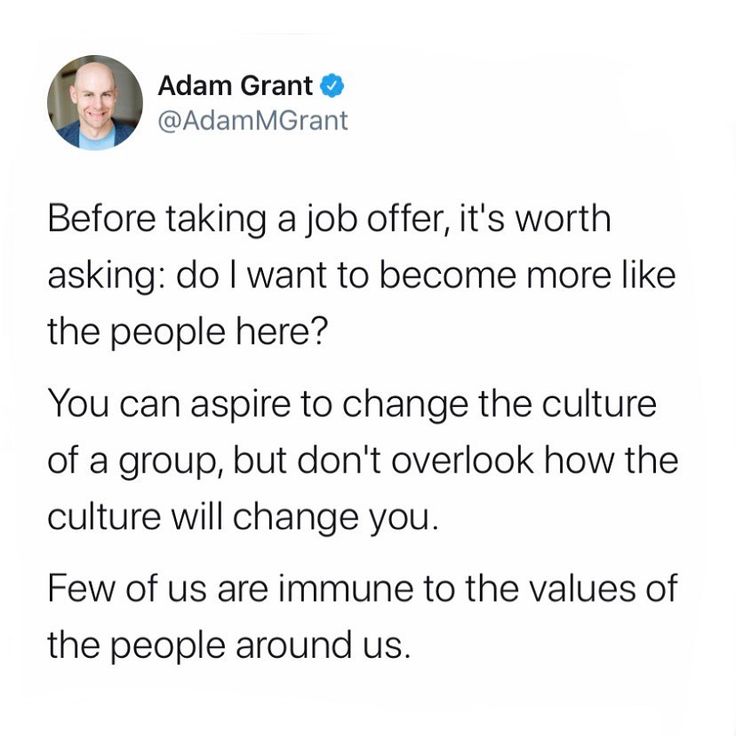
At some point as adults, we need to take responsibility for our social contacts.  If I hang out with people who overeat and overdrink when I really want to lose weight and get healthy, I need to ask myself some important questions. It’s not that they intend to sabotage my efforts at self-care.  They are who they are and do what they do for their own reasons.  But I cannot underestimate their influence on me when I’m with them.  The human need for acceptance and belonging is primal, and manifests primarily in group norms.  No matter our fervent intentions and strong core values, given enough time and exposure, we are all at risk for succumbing to the pressures of conformity.  So when we have an opportunity to select our tribal membership(s), such as for work, it’s better to be clear about what kind of culture we value, and whether our choices align with that standard.

The older I get, the less energy I have to waste. How will I spend this precious resource—my time and attention? What value can I bring to my relationships, and how will they feed me in return? Straight up social reciprocity is a natural human trait, but I’m aiming higher. I want to be my best self and make a meaningful contribution, and I seek others who want the same. Once we find each other and recognize that shared, greater goal—that higher ethos—our mutual return on investment in relationship becomes synergistic and exponential, and benefits more than just ourselves. We are better, together, for society at large.

Focus, goals, and personalities evolve over a lifetime.  Mutually enriching relationships in a previous life phase may wane in significance over time.  Or we may grow closer with age, flourishing in parallel rather than divergence.  I think either is okay, if it’s done with awareness, intention, and grace.  Cultivating meaningful relationships is a lifelong practice in these three skills.  If we find and run with others committed to this lifelong training, then we may all realize the fruits of its mastery–or at least of progress–faster, and hopefully with a little less suffering and a lot more fulfillment.