Romance

Hmmmm… This will be interesting–what’s already good and what could be better?

What does the word ‘romance’ evoke for you? Be honest. I wonder how many of us feel a little sheepish, shy, or embarrassed? That we like it, want it, wish for more of it–to receive or to give? Would anyone describe American culture as romantic? Chinese (hard no)? French, Italian, Spanish? Indian? German? What do we mean when we say a culture is romantic? Okay here we go, let’s see what comes out tonight:

How do I already do romance well?
–I embrace the book genre–jumped in the deep end last year, no floaties, haven’t come out, have no plans. I’m making it easier for anyone who talks to me to ‘admit’ that they also consume, devour, and relish it, without shame or regret. I’m a convert, and I’m doing my part to normalize it to the general public. I stand up to those who judge.
–I’m open to all kinds of romance, in all its forms. I wrote to a friend this year, “(The unconventional romantic relationships in these books) validate my desire to question and challenge social norms that stifle the wide diversity of human relational needs, including sexual ones, and how they may evolve over time. These novels help me stay out of the ‘shoulds’ and recognize that health and happiness in any given relationship is defined by the people in it, much more than society’s gaze on them.” Romance helps me stand in solidarity.

How could I do romance better?
–I think the last time I did something romantic may have been before I had kids. I can be more intentional. Better late than never.

How do we romance well as a society?

Alive, well, and strong. As I write this, “Red, White, and Royal Blue” plays on an adjacent window on main-stream TV. It’s a male/male, enemies to lovers story with achingly vulnerable heroes, full open mouth kissing, and sex scenes as steamy as American general TV will allow, based on the 2019 novel by Casey McQuiston. We’ve come a long way, baby.
Stories are how we relate. We ask our elders about their meet cutes, and romanticize them through the rosey lenses of nostalgia. Ideals of romance thrive in our imaginations and acts of love all over the world, every day, between humans regardless of distinguishing features. They thrive despite forces out to choke and beat them out of some of us. Our romantic ideals keep us hopeful.

How could we do it better?

Keep making progress. Looking back in history, we see periods when people were more and less free to express their romantic love for each other than we are today. Human generations live in tiresomely redundant cycles, and we too seldom recognize the ironies that constrain us–puritanical and hypersexualized, taboo and underground, struggling for authenticity and smothered by conformity. Artists know the truth. Hand them the brushes and the bullhorns; hold them up as they speak for us, risking themselves, until we find our stronger, more inclusive and loving collective voice.

I have learned this past year to dramatically expand my definition and application of romance, romantic love, and romantic ideals, in all dimensions of life. I don’t mean throwing away logic and rationality and just submitting to lust and hedonic pleasures. Rather, I advocate for embracing and accepting humans’ fundamental drive for meaningful emotional connection in all its forms. The sooner we fully address these needs up front and out loud, in private and public, the sooner our rational minds are freed to solve problems, rather than futilely suppressing complex feelings and relationships.

ONWARD.
Presence

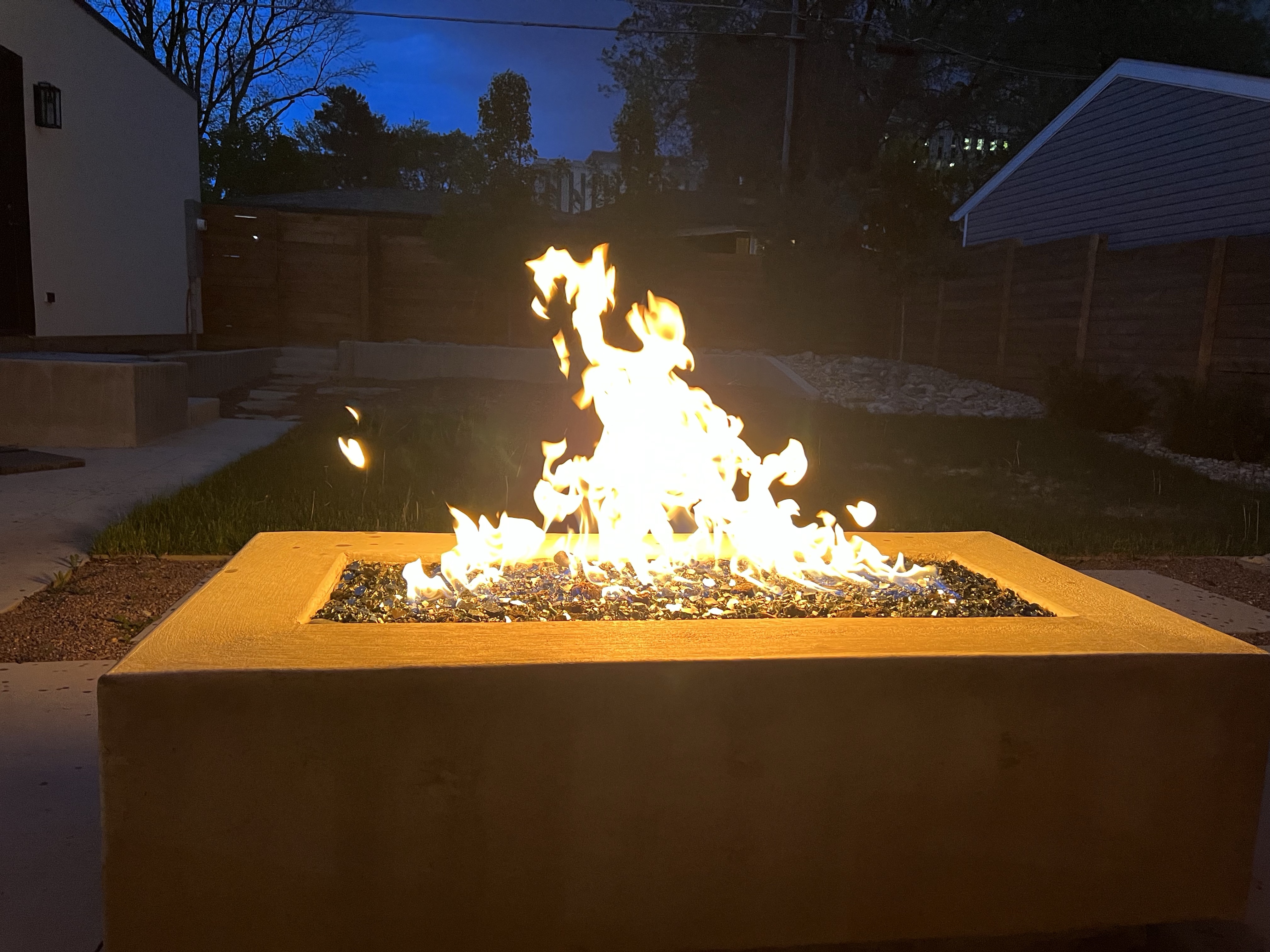
Photo by James K Min, Denver, CO, 2023

It is not the same as appearance.

Presence is energy.  Like sound, it has a frequency and an amplitude.  Like light, it has a wavelength.  Presence is sensed; it is felt

What does your presence feel like to others?  How does it change according to context, mood, and other factors?  When are you aware of it yourself, and how do you modulate it, if at all?

Whose presence do you crave?  Who soothes, comforts, uplifts, encourages, and quiets you, simply by being with you?  Whose presence do you carry even when you’re apart, because it helps?  How do you do it?  Whose presence do you avoid?  Why?  What do these people teach you about yourself?

How do I already presence well?
–I make eye contact; I shake hands enthusiastically.  I’m relaxed, open, and friendly.  I can have a conversation with practically anyone, as long as we share a language.  I am comfortable with people in general, which makes people comfortable with me.
–I’m a fantastic hugger.
–“I’m mostly peace love and light, and a little go fuck yourself.”  My friendly and open personality does not make me a pushover.  I do not tolerate disrespect or abuse, of myself, my family, or my work teams.  I call it out civilly and if the behavior continues, I consider carefully and end relationships without regret.
–I’m good at 看臉色 ‘kan lian se’ literally ‘seeing facial color’ in Chinese—meaning to attune to people’s nonverbal cues.  I can adjust my posture, tone of voice, facial expressions, and language to match my counterparts. 
–Most of the time I think I balance confidence/competence well with humility.  Strong back, soft front.  If this is how people experience me, then I’m happy.

How could I show up better?
–People have told me I come on too strong, that my energy is too high.  I can be loud and animated.  I gesticulate.  I could do better sometimes attuning to my surroundings and toning it down as needed.
–In certain situations and with certain people, my confidence wobbles.  I second guess myself and may come across as weak, unsure, unreliable.  I can get tongue tied and flustered.  This makes me easy to bully and manipulate.  It happens much less frequently with age, but I still feel vulnerable to it sometimes.  Deep breathing in the moment helps a lot, and also lengthening my spine.

How do we evaluate presence as a society, and what makes it good?

Smiling Strangers.  “You’re so friendly, Cathy, you must be from the Midwest,” said the boy from the East Coast, just as I’m thinking people here look at me like I have two heads when I’m friendly.  In Colorado, however, people still smile and say hi to perfect strangers in public.  It just makes my day, really.  Do these folks realize how much their smiles mean to me?  To anybody?  Do you yours?

The Helpers. Nurses. Social workers. Teachers. Therapists. Charity workers. Volunteers. Moms. Doctors. Who else, especially in your life right now? Come to think of it, is there any profession or work that could not be thought of as helping? We may not always be in a good mood. We are too often exhausted, spent; too many of us are burned out right now. And still, we show up. We help. At our best, when our presence connects us in sincere service, it makes us all better.

How can we be present better to one another collectively?

Love First.  If we have any love in us, how can we pull it up and out, put it in front, and show up for ourselves and others leading with it? Easier said than done. And we won’t be able to do it all the time. Let’s try harder anyway, ya?

Attune and Differentiate. Know yourself. Honor yourself. Show up all you. We can each own all of our strengths, our optimal resonance frequencies, our brightest light. Stand up straight and strong. Then, decide which petals of our identity flower to lead with, discern the context and respond appropriately. This is not about hiding parts of ourselves, rather mindfully showing up to connect, however it works best for us and those around us.

Lead and follow by example: Amplify. When you get feedback that your presence helps someone, take the compliment graciously. When someone’s presence benefits you, let them know. Positive reinforcement–rewarding desired behaviors–is one of the most effective ways to help the behavior recur. Look out for the good, amplify it–the sound and the light.

Honest, mindful, authentic presence. How much better could everything be if we were to offer this more often to more people, ourselves included?

Leadership

ACK! Late start on this one, friends, stayed at book club late!

When do you think about leadership? How much do you consider yourself a leader? Assuming you lead in some way (and we all do), how do you approach it? How important is it to you? How much do you care about your leadership?

My leadership strengths:
–I am a student of leadership. I study it, evaluate my own performance, seek feedback, and constantly strive for improvement. I attune to those who lead me and evaluate their performance also, and my standards are high and clear. My leadership stance is learner before teacher, collaborator before authority.
–I am decisive, clear, fair, and transparent as much as possible. I am direct, rather than passive or aggressive.
–I monitor my biases and check in with those I lead, as well as fellow leaders.
–I really try hard to own my shit and walk my talk; I apologize and correct readily.

How could I lead better?
–I think I often lean too far into my default tendencies. Call it yellow/green from Insights Discovery, ENFP in Myers-Briggs, or Abstract-Random in Gregorc Mind Styles; it all pretty much looks the same. In my thinking mind I recognize other’s styles, and I’m not sure I adapt well in engagement, for optimal collective decision making and interactions. I certainly don’t think consciously about what others’ styles are and then modify my presence and approach intentionally–I think good leaders do this.
–I could observe other leaders for strengths I don’t have, and emulate them. I could query them for perspectives, thought processes, and decision methods. These are also the people who could probably offer me the most helpful feedback.
–I could seek more opportunities to support those who lead me, by giving them honest, loving, concrete, and actionable feedback. No matter our place in the hierarchy, we can lead and be led by anyone we encounter.

Where do we experience good leadership in society?
Illustration of individuals and their attributes is beyond the scope of this post.
Where do you experience excellent leadership, and how do you identify it?
How can you, today, provide positive reinforcement of positive leadership behaviors in those around you–and not just those with a title, power, and authority?

I think this is good place/time to provide a resource list:
Leadership On the Line, Heifetz, Linsky
Organizations as Machines, Organizations as Conversations, Suchman
Leaders Eat Last, Sinek
Dare to Lead, Brown
Think Again, Grant
Drive, Pink
Managing Transitions, W and S Bridges
Improvise!, Dickins

How could leadership at scale be better?

Train relational leaders formally. Leadership is not just about financial strategy, quarterly earnings, and operations. It’s about organizing people in complex networks of relationship. It’s verbal, as well as visual and vibratory. Formal training in self-awareness, self-regulation, emotional intelligence, and effective communication should be required in interative learning episodes at every level of promotion, in any organization.

Reward long term team success ahead of short term financial metrics. Qualitative and quantitative, cumulative, longitudinal assessments of relational success include turnover, 360 evaluations, absenteeism, and others. This goal requires leaders and led alike to tolerate and engage in uncomfortable conversations. The best teams do this early, often, and well.

Improve almost any strength listed these 30 days. Honesty, integrity, accountability, perspective taking, polarity management–what if all leaders received regular training and continuing education on any of these, with opportunities to simulate, role play, exchange stories, and compare challenges? What if we supported designated leaders both in their inner and outer relational work?

Leadership may be where I feel the most optimism for humanity. We know the relevant attributes and skills, the environments and structures that facilitate and sustain excellent leadership. We all have the capacity to learn, practice, and train any of these skills, no matter our place in any hierarchy. Organizations that invest in the emotional intelligence and training of their members thrive. There is still time. We can do so much better.