
The Joyous Liberation of Radical Acceptance

Happy Happy 50th Birthday to me!

I’ve been 50 for over two weeks now and could not be happier about it! Do I obsess about my age? Maybe. But whatever, I’m having a great time and it’s all because I’ve lived long enough to acquire some wisdom, and may yet live a while longer to exercise it all. What a privilege and a joy.
Middle age. Awesome.
I’m like a vintage car now. If I wanna keep driving smoothly, I’ gotta invest in the maintenance. My value continues to grow, and I can revel in some positive attention I get for being my real, colorful, sparkly, strong, BOOBS OUT, middle aged self.


Why is aging so difficult to accept? Why do we resist so fiercely?

Maybe we equate acceptance with resignation? Is it a conventional fallacy, like if we admit that we are ‘old’ then by definition we are decrepit and obsolete, that only young people have value in and contribute to society?

Maybe it’s how we define ‘old’? Is 50 old? Is 30? 80? Is it a number, a mindset, a set of abilities? Does it matter?

Patients often ask me what they should expect to be able to do and not–usually physical things–based on their age. It’s impossible to answer, as each person is unique; and it’s not just about chronological age. It’s about what’s worth doing for each of us. What are your goals, how important are they to you, and what trade-offs are you willing and not willing to make to achieve them? What factors would alter these calculations? What are you willing to risk? What will you regret if you don’t get what you want, or hurt yourself (and/or others) in the pursuit?

What do you need to get to peace with your age, and the state of your body, mind, relationships, and life expectancy? Where can/do you still act with energy and power, despite new and cumulative constraints? What’s great about the now, and how can you maximize that, amplify and spread it?

Resist. Deny. Reject. Oppose. Deflect. Energy spent on these diversions is counterproductive, wasted. It keeps us tethered to exactly the thing we refuse to acknowledge. Opposition and denial are unidimensional and static. When I fight against an unwanted reality, it’s all I see, my sole focus–even as I actively deny it–how hilariously and tragically ironic. I show up tense, defensive, in fight or flight survival mode–often without knowing, or in metadenial–denial of my denial. I get nowhere and I’m all uhnappy about it. We are funny, we humans.

When I accept the thing, I can put it down, let it be. Even if I disagree with and dislike it, even if it causes me pain. Unburdened from carrying it (even as I deny carrying it), I can loosen my neck and shoulders, look up, breathe deeply and ask, “Okay, what now? What next?”
And here is where the magic happens.

Acceptance is dynamic. It liberates. When I stop denying, rejecting, and opposing, then I’m free to question, explore, discover, choose, invent, experiment, connect, and move.
Acceptance is the birthplace of possibility.

Anger, jealousy, self-loathing, grief, sadness, conflict, uncertainty, other people’s inexplicable behavior, your aging body: Allow it. Embrace it all. Hold it lightly and loosely or put it down, or just nod respectfully and leave it. We can choose this: to suffer less by simply accepting first. We get to decide then, consciously, what orientation to any reality is most consistent with our values, goals, joy, fulfillment, and peace. We do this by seeking the best questions instead of the usual ones. Make them open ended and relevant to you, now, here, as well as to your future best self. Talk things through with people who love you for who you are, who don’t judge, who accept you, whom you trust, and who will also hold you accountable.
Self-acceptance is fundamental and essential for a life of peace, and no less vital are true belonging and deep, honest communion with others.

OH I finally get it, I think! For so many years I have grappled with this paradoxical and counterintuitive idea that acceptance is the foundation of peace and change, and today I think I reached a new overlook on the climb. Acceptance is not resignation or wallowing; it is not tacit endorsement of what I don’t want. It is simply being with what is, including how I feel about, dispelling my self-delusions about the current reality. It is also understanding that that reality can and likely will change, and though I may not have control, I have agency: I can absolutely influence the direction of that change. And I don’t have to be grumpy and adversarial while I act–I can choose to do it all joyfully. How exciting! I am ready, let me at it!

Revel Now to Fuel Your Future

Photo by Brian Gelbach, Minnesota, August 2023

When you get a head cold, do you ever wish you had appreciated better when you could breathe through your nose? 

What do you take for granted, that you’d miss and regret if it disappeared?

Our family had quite a rough patch from about 2018-2022, and this past year things really turned around.  I still have a little post-stress reactivity (a second of dread whenever I get a text or call from the kids), but it’s much better.

Then last week I had another scare, an x-ray showing what looked like a hole in bone—a lucency, as it’s called.  Despite opposite effort, I allowed myself to catastrophize.  Osteosarcoma, I thought—an uncommon and aggressive bone cancer (it would not actually present this way, I realize now, but hey, I was hijacked).  The thought cascade unfolded rapidly: urgent specialist referral and imaging, surgical biopsy, treatment—surgery, radiation, chemotherapy.  Recurring appointments, treatment side effects, and physical, psychological, and relational pain.  I’d have to cancel my vacation this week, find coverage at work (or take a leave again), maybe stop working on the book, and, gasp, stop going to the gym.  Kids’ activities and future would be affected—would they have to move/stay close to home for college?  And the absolute worst-case scenario—death—what would that be like?  Interestingly, this semi-unintentional exercise actually helped me calm down.  It reminded me of when Daughter had an anaphylactic food reaction with the babysitter.  I had to meet them at the Emergency Department without killing myself in a car accident on the way, so to center myself I imagined the worst—her death.  In a moment I realized that though it would be horrible, I would be okay—because I had to, for Son.  I breathed deeply, drove mindfully, and arrived physically and psychologically intact.  We simply do what we must do.

I have faced multiple life-threatening situations at home, in addition to witnessing all manner of death in my work.  Maybe that’s how I can balance my emotional reactions with a more rational response?  I have seen enough times how good can turn to bad on a dime, and it makes me cherish the good while it lasts—really revel in it.

Before I got confirmation that the x-ray last week was, in fact, normal, I had already come to a sense of peace about whatever may come.  I thought to myself, ‘Well, good thing I really soaked up everything awesome about life until now, saturated myself with it and shared the joy as much as I could.’  I found myself with very few regrets, which empowered me to meet uncertainty with calm, confidence, and strength, and not denial or false optimism.

It’s not that I dread the future, expect serial crises, or harbor some kind of victim mentality.  I just understand the unpredictable randomness of life and accept my total lack of control in most situations.  Reveling in the good now protects me when any hard times do come later. I feel deep satisfaction and contentment to remember all that was good before, and that I knew it at the time, truly appreciated it.  That warm, radiant energy feels stored like solid rocket fuel, stable and dense, ready to call forth for emotional and relational thrust when I need it. 

What can you revel in now, that will replenish your existential fuel for the unknown future?

Below are some of my current revels.  May you, readers and friends, feel your own daily delights emerge with light and coherence in these waning days of summer.  May you immerse in the awesomeness and feel it buoy you through whatever life brings.

Shaneiaks meet in person!

With Heather Pressman, Denver, CO
Happily hydrated at 9000 feet, 25% humidity

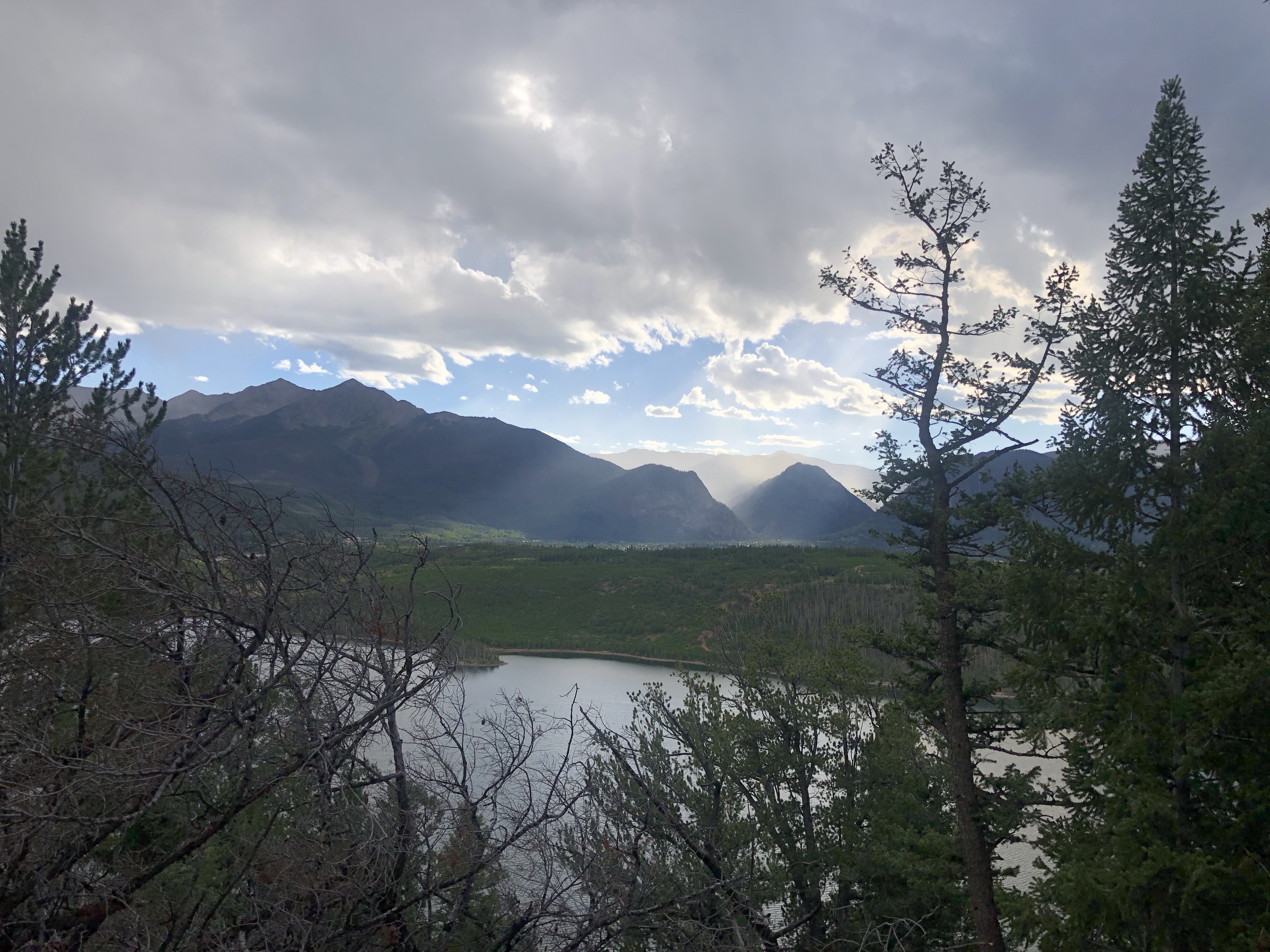
Alone time in the mountains

Breckenridge, CO
Washi tape card making–first time in many months

Breaking Point

“Dr. Cheng, I feel dizzy.”

We’ll call him Joe. I miss Joe. I met him in his early 60s, a pleasant, dapper, rotund man with a jovial demeanor and well-groomed mustache. He was always on time to his appointments and came with crisp reports on his subjective state of health. Whenever I saw Joe on my clinic schedule, I knew at least that part of my day would be good.

Joe lived a conscientious lifestyle. He paid attention to food and movement, and cultivated relationships that held him up in life. When I think of Joe, I remember feeling unworried about his habits and longevity. So it bugged me that his blood pressure was never well controlled. On maximum doses of four medications, it was consistently 140/90 (ideal is 120/80 or less), and it just would not come down. Luckily for me, his previous doctor had done all of the appropriate work up, including sleep study, kidney imaging, stress testing, etc. Eventually they decided together that this was as good as it would get, and Joe would just focus on doing the healthiest things he could every day and get on with life. I concurred.

So when I got the call months later that he was dizzy, my heart sank. We agreed he would come in that day and we’d figure out next steps. I was prepared to call the emergency department and my cardiology friends to let them know I was sending him over for a cardiac event. But on arrival he didn’t look ill or unwell, just moved a little more slowly. His mood was great, though, maybe even better than usual. I asked him why, what had changed? “I retired!”

His blood pressure was 90/60. He was still taking all four of his blood pressure medications, like the diligent patient that he was.

Back then, in a typical primary care practice seeing a patient every 15 minutes, I did not consistently ask deep questions about people’s work stress and meaning, like I do now. Turns out, Joe had a lot of mental stress at work. He managed it well, though–never lashed out at people, never let it affect his performance. Colleagues threw him a big party and he retired feeling satisfied, looking forward to his next life chapter. And it wasn’t until later that he realized how much his work had cost him in health. Over the next several days, we learned that he only needed a low dose of one medication to keep his blood pressure in the 110/70s. The dizziness went away. I think he was getting ready to go on a cruise. I left the practice soon thereafter, and I don’t know about Joe now. I hope he’s still happy and well.

I remember this story so clearly because until recently, it stood out as unique–that my patient could correlate such a dramatic improvement in a crucial vital sign and a leading risk factor for heart disease to retiring from a stressful job.

Not so unique anymore, though. This year, no fewer than four of my patients have experienced the same thing, but in the opposite direction. Having never had high blood pressure before, they all called me with new symptoms: headache, fatigue, full body tension, and just feeling off. Before calling, they thought to monitor their blood pressure, and all of them reported consistent home readings well above 150/90. And they all knew exactly when it started, all correlated with severe work stress escalation. Adjuvant factors included increased travel, longer work hours on global calls, less time for exercise, and continued business eating. It’s all a downward spiral, for sure, and I submit that the underlying cause, the change that makes four people present suddenly in these six months, is our post-pandemic work environment. While I welcome the increased flexibility and autonomy of a hybrid office model, I’m not sure the net effect is good for us long term. Work-life boundaries have perforated, if they even still exist at all. Given the volume of articles in business periodicals progressing from ‘quiet quitting’ to overt labor force decimation, it’s quite clear to me that we have not invented a kinder, more effective work culture. More and more I hear and feel an ‘us versus them’ gulf growing between workers and leaders–yet another relationship domain affected by polarization. It’s as if the short term, profit driven, make money at any cost prepandemic ethos, suppressed and reassessed (I thought?) during three years of acute obligatory disruption, became an abscess that has now ruptured and resurged–exploding like ‘pus under pressure,’ as we say. Organizations scramble to restore anteCOVID earning and productivity status, still measuring success and achievement with the same metrics as before nature showed us how vulnerable we and all of our systems are. We have learned nothing.

All of these patients are now taking at least one blood pressure medication, pulling hard on their stress management skills, and maybe reassessing whether staying in their current roles is worth the cost to their health and relationships. We connect regularly and I always ask, how much longer can you keep this up? How will you know when enough is enough? What will you do then? I don’t recommend that people quit their jobs–that is not my place. But I ask the important questions, lovingly and bluntly.

What does it cost us indeed, as a society, to be killing our workers this way? When will we recognize that sacrificing people in the short term actually wrecks collective success in the long term? When will our culture value people over profit? I hold leaders accountable for their relational output at work, and I also recognize that they–as we all–are simultaneously agents and victims of our complex adaptive systems. Culture does not change easily.

If I have any hand in it, however, more of us will move closer to challenging and changing the most toxic aspects of business culture, one organization, one team, one person, one interaction at a time.