
Tribe, Community, and Mission to Connect

berries figs regina 9-2019

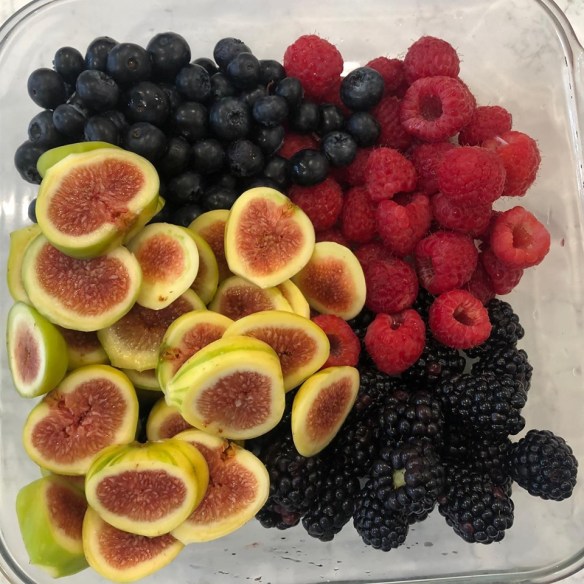
Fruit for Regina’s sweet galettes.  These are tiger figs, available at Trader Joe’s. 🙂

Friends, don’t you love those synthesis/cohesion moments when all of a sudden something important to you—a passion, a core value, a project—is validated from multiple angles?  That happened for me this weekend and I am positively giddy from it!

Tribe

My new group of medical students promises to be just as engaging and fun as every other I’ve had, yay!  They are only three rotations into their third year and already wise beyond their training.  This month we discussed tribalism.  They considered stereotypes, barriers to overcoming them, and how they might lead by example.  And they identified experiences in which such barriers are already breaking down.  “Finding your people” came up as both an aspirational as well as a potentially divisive ideal.  We discussed the benefits of ‘We’re Great!’ and the risks of ‘They Suck’ attitudes.  The conversation did not veer into political arenas, but it crossed my mind.  I tried to point out how the skills of professionalism we address in medical training apply well beyond the bedside and medical teams.  Our tribal memberships can save us and also keep us from living fully.  I’m so grateful to have these reminders on a regular basis.

Community

Some of you may notice I reference Ozan Varol increasingly this year (see coda below for why I think he’s so great).  I started following him in the winter after reading his post on why facts don’t change people’s minds.  This summer I joined his Inner Circle, a private forum of diverse and like-minded folks who subscribe to Ozan’s newsletter and wish to connect.  Yesterday Ozan generously hosted a conference call for three of us to get feedback on current projects.  At 2:00pm Central Daylight Time, I logged on from Chicago.  I met Ozan and his wife in Portland, OR.  J, a Canadian, called in from the Dominican Republic, where she has lived the past 24 years.  C, an organizational psychologist interested in humane-ness in the workplace, logged on from Germany.  And R, an education leader working on emotional intelligence workshops for schoolteachers, called in at 12:00am from India.  C, R, and I presented our projects and everybody gave generous, honest, and encouraging feedback to help us all do and be our best.  I could hardly contain my enthusiasm, gesticulating wildly and barely staying in the webcam frame sometimes.

I wrote to Ozan afterward:  “I’m still wrapping my brain around what you have done here–stimulated so many people to think more critically and also openly… Convened a community of us all and given us a forum to interact, at our own pace and in our own words, from around the world… and invited us to help one another, to contribute to lives that we would never otherwise touch…  What a privilege, a pleasure, and an absolutely ecstatic experience!!!”

Mission to Connect

I think it’s fair to say that part of Ozan’s mission is to connect people.  But not just for the sake of connection—to make us all more thoughtful, curious, and collaborative beings.  A man after my own heart!

Maybe my passion for such connection stems in part from my immigrant roots?  Today my daughter and I embarked on another food adventure at home:  Onigiri and chong you bing (but ours are much easier than the linked recipe!).  The former turned out to be less labor-intensive than I expected, so we made a bunch, both salmon and chicken versions.

onigiri chicken

Tonight’s teriyaki chicken onigiri selection

My Korean-American friend of 20 years, Regina, posted photos of her own culinary accomplishments today—savory and sweet galettes.  Mei and I may try those next!  Our ensuing text thread included my laments about the unhealthiness of onion pancakes (but oh, salt, fat, and starch—yummo!).  Her kind reply: “Making food together with your kids, carrying on food culture, bonding, it’s a win-win!!”  I knew I loved her for good reason.  And how lovely that we have stayed in touch all this time!  If not for that, I could never have recruited her to join my work team this year.  And holy cow, talk about a win-win!  Her kindness, generosity, curiosity, openness, and conscientiousness have elevated the team even higher than we could have dreamed—Thank you, Regina!  What a blessing our connection has been for so many.

My new German friend C is thinking of launching a blog to explore humane-ness and its effects and importance in the work environment.  She thinks maybe next year.  Yesterday Ozan and I both encouraged her to start now.  Asked whether I would follow, I said HELL YES.  Not only will writing about her topic develop her ideas and thesis faster; the interface with fellow readers and writers on a blog, the opportunity to join a community of thinkers, and the connection with folks from who knows where, doing who knows what amazing things, may very well yield untold treasures of relationship and development—as it has for me—so why wait?

Tonight my heart bursts with gratitude for membership in such thriving, complex, diverse and overlapping tribes.  I treasure the various communities that welcome me and give me a chance to contribute.  And my mission to make as many and meaningful connections as possible between all people stands validated and sustained once again.

Onward, my friends.  As Simon Sinek says, Together Is Better.


Ozan about

Why Ozan’s So Great:

  1. Humility.  So many bloggers and podcasters are so full of themselves.  It’s obnoxious.  They may have expertise and knowledge, maybe even wisdom.  But I cannot get past my aversion to their ego.  I have no such issue with Ozan. 🙂
  2. Goldilocks content.  The blogs are the perfect length!  Enough words to make his point eloquently, and not so many that I lose interest before the end.  He contacts subscribers at just the right frequency–weekly emails and biweekly podcasts.  And the newsletters are also the perfect blend of blog, quote, and other interesting material.  So many other authors inundate the inbox that I first ignore and then unsubscribe.  Ozan has really found the perfect touch.
  3. Resonance.  Though Ozan’s podcast topic is failure, what he really addresses is humanity in all of our complexity and fascinating ironies.  I LOVE that!  And he does it nonjudgmentally, always from the perspective of curiosity and learning.  I really respect that–the generosity of spirit and growth, exploratory mindset.
  4. Consistency and reliability.  Ozan is clearly disciplined and intentional when it comes to this work (and so I imagine he is also this way in life).  His podcast script has a reassuring cadence and authenticity to it.  When he says he’ll reply to all messages, he actually replies (that is what most impresses me about him–his responsiveness and how he makes me feel like I matter).  He says he will update us on something and then he does.  All in all a truly stand up and stand out guy among so many!

 

Good Doctor and Good Mom

IMG_3823

What do you sacrifice in pursuit of your dreams?

What does your calling cost you?

What are the returns on your investments?

* * * * *

Last week I mentioned Dierks Bentley’s, “Woman, Amen”, a song I love.  After listening to it for many days on repeat this past week, I decided to tour his nine albums this weekend.  His songs vary in topic and form, and at the same time he has a consistent style and vibe.  I like it.  Yesterday I heard his song, “Damn These Dreams”:

Now honey I know you miss me, I feel it when you kiss me

Trust me when I say every goodbye hurts

Well damn these dreams

Playin’ my heart just like a guitar string

Pullin’ me away from you and everything I really need

Well damn these dreams

Chasing that same old whiskey melody

All up and down these Nashville streets

It’s hard to look true love in the eye and leave

Damn these dreams


Instantly I remembered two other songs with similar themes:


Goodbye Again”, by John Denver:

Other voices beckon me, and for a little while

It’s goodbye again, I’m sorry to be leaving you

Goodbye again, as if you didn’t know

It’s goodbye again

Have to go and see some friends of mine

Some that I don’t know

Some who aren’t familiar with my name

It’s something that’s inside of me

Not hard to understand

It’s anyone who’ll listen to me sing

…Lying by your side’s the greatest peace I’ve ever known

But it’s goodbye again…


And “I Play the Road”, by Zach Brown Band:

…She says daddy where to you go

When you leave me all these nights

With a suitcase and guitar in your hand

Kissing me and mom goodbye with a tear and a smile

Where do you go? 

Daddy where do you go?

I play the road

And the highway is our song

And every city’s like the same three chords

Been helping us along when the story’s told

And the crowd is done and gone

Shaking off the miles and trying to make it home

…Mile after mile… 

Baby, I’m comin’ home

Years ago, I think it was either Dana Carvey or Martin Short who said something like one can only tolerate the life of a comedian because s/he simply cannot do anything else—they must do comedy.  If anyone can find the reference, please share!

* * * * *

As it is in music and comedy, so it is in medicine.  For many of us, we simply must do it; we have no existential choice.  These songs describe well our pain and conflict when we take call or have to work on weekends, or miss the kids’ school and sports events, and spend hours at home on the medical record or answering pages.

I recently read an article, “A Good Doctor or a Good Mom, Never Both”.  Early in this physician mom writer’s career, an elder colleague told her, “’You can be a good doctor, and you can be a good mother, but you can never be both at the same time.’”  The author disagrees, saying it’s either/or, never both, ever.  At once hearing Bentley’s song, I felt a moment of panic, mortified that I’m destroying my family for my job.  Am I totally selfish for choosing this career, and are my priorities so distorted that I so often put work before my family?  Have I chosen to be a good doctor and a horrible mom?

Thank goodness for Simon Sinek who, in his 2014 book, Leaders Eat Last, referenced a 2011 study that showed “a child’s sense of well-being is affected less by the long hours their parents put in at work and more by the mood their parents are in when they come home.  Children are better off having a parent who works into the night in a job they love than a parent who works shorter hours but comes home unhappy.”  This idea has saved me from countless episodes of self-flagellation and guilt.  It was so instantly redeeming that I recall the exact moment I heard it—I was at the airport, traveling solo, likely for a work related conference.  I can’t say I’m ecstatic every evening coming home, but I generally feel satisfied by a fulfilling day doing something I love.  I can confidently report that my husband feels the same.

I’ve attended one swim meet in two years.  I miss any school event that occurs during the workday.  I still get lost walking the maze that is the kids’ school, though we (they) have been there over a decade.  But I get to choir and orchestra concerts, and dinner potlucks.  I know my kids’ friends and am friends with their parents.  The kids’ teachers think they feel loved by us.  I think I do okay.

My kids hear me on the phone with patients and colleagues.  They know it takes time and understanding to take good care of people.  I’m confident they see and feel how meaningful this work and these relationships are to me.  And the science is pretty cool, too.  I would never pressure my kids to go into medicine, but I would not be surprised if they did.  I would absolutely encourage it, if it gives them the joy it gives me.

“You can be a good doctor, and you can be a good mother, but you can never be both at the same time.”  I respectfully agree and disagree.  You can absolutely be both, often at the same time.


Inclusion and Belonging

IMG_0927

What do diversity and inclusion mean to you these days?

Honestly for me, they mean different things depending on the context in which I think about them.  Cathy the Cynic thinks diversity initiatives too often feel trendy and superficial, like a knee-jerk response to the social pressure to check a box.  Cathy the Optimist believes that those who direct such initiatives honestly see the communal value in a truly diverse and inclusive work environment.

A wise friend recently pointed out to me that inclusion can be a challenge even in a homogeneous group.  “You could have 25 white men in a room and everybody may not feel included.”  So, he said, perhaps we should work on inclusion first, and diversity will come more naturally as a result.  Brilliant!  If we make it safe for everybody to be themselves, no matter who they are, then they feel free to bring their best, authentic selves—it’s a win-win for each individual and the organization.  An inclusive work culture supports and values each person for their unique contributions.  In such an environment, diversity is achieved because people value their differences as much as their similarities.  They live in curiosity and awe, always in a learning stance.  Inclusive cultures seek more perspectives, experiences, expertise, and backgrounds—they cultivate depth and breadth in the humanity of their workforce.  People from divergent walks of life seek to join such cultures, drawn to vibrant cohesion, synergy, and creativity.

This idea marinated in my mind for some weeks until an article from the Wharton School of Business crossed one of my online feeds last Thursday.  It says diversity and inclusion are not enough; we need to cultivate a sense of belonging in our workplaces.  The article quotes Sam Lalanne, a senior vice president of Global Diversity and Talent Management at Citigroup:  “…whereas diversity often gets linked to numbers and percentages, belonging ‘is about how you feel’ when you’re at work. ‘Do you feel valued? Do you feel like you should be there? Do you feel that your insights, commentary and perspectives matter?’”

“Rebekah Bastian, a vice president of culture and community at Zillow Group, said that the superior business outcomes often associated with having diverse teams can’t be achieved without a sense of belonging. It’s not enough to simply include people at the table, she said, but to ‘amplify everyone’s voices, clear barriers … and appreciate each other for our unique backgrounds.’ Both she and Lalanne said that a sense of belonging means that people can bring their full selves to work, and not feel like they’re a different person there than at home.”

A different person.  So what I described above as inclusion is really what these leaders define as belonging.  We want each person to feel they belong in the work tribe, that their presence and contributions are valuable and worthy, as themselves.  When we include, from our hearts, each person in their wholeness, only then will they truly belong.  And that is the sweet spot where teams thrive.

So what do we do?  How do we create such loving cultures of true belonging?  According to panelists quoted in the Wharton article (and we all know this), it comes from the top:  “Lalanne also commented on the importance of ‘tone at the top’ toward fostering a sense of belonging. ‘Our CEO, Mike Corbat, has really pushed us on our diversity, inclusion and belonging agendas. And it really comes from, what does he preach, what comes out of his mouth, how does he execute against the things that we see around us.’”  Simon Sinek calls us to live our values with clarity, consistency, and discipline.  So if you’re a leader who talks about diversity and inclusion, about belonging, then we workers have to see you, to feel you, living these values out loud and in front of us.

Belonging is more about how we are toward each other than how we act or what we do, which is inclusion.  This is the key to successful ‘diversity and inclusion’ initiatives—they must be sincere.  Humans are intuitively social animals.  We smell insincerity and reject it, because it is unsafe.  We cannot trust it.

A garden of belonging must be grown organically.  There are no shortcuts.  It takes time, and the gardener must tend it regularly.  Young seedlings require protection from weather and predators.  She must bring in pollinators and other helpers—one person cannot do it all.  So we can all pick up a trowel and participate.  We look to our leaders to set the path, and when we see the shining hope of our collective destination we follow willingly, eagerly, and together.