I am a general internist in Chicago, Illinois, mother of two, almost native Coloradan, and Northwestern alum. I want to leave the world better for my having lived, by cultivating the best possible relationships between all who know me, and all whom I influence. Join me on this crazy, idealistic, fascinating journey! Look for new posts on the 10th, 20th, and 30th of each month.
Opinions posted here are entirely my own, and in no way reflect the opinions or policies of my employer.
Taking a break from COVID, racism, equity and other heavy things this week, my friends. It’s too much, what with RBG’s recurrent metastatic cancer and John Lewis’s death. I’ve been glued to my phone and computers all week, reading, digesting, observing, integrating, posting, connecting and conversing. I had at least three important ideas for the blog, and they all need to marinate longer.
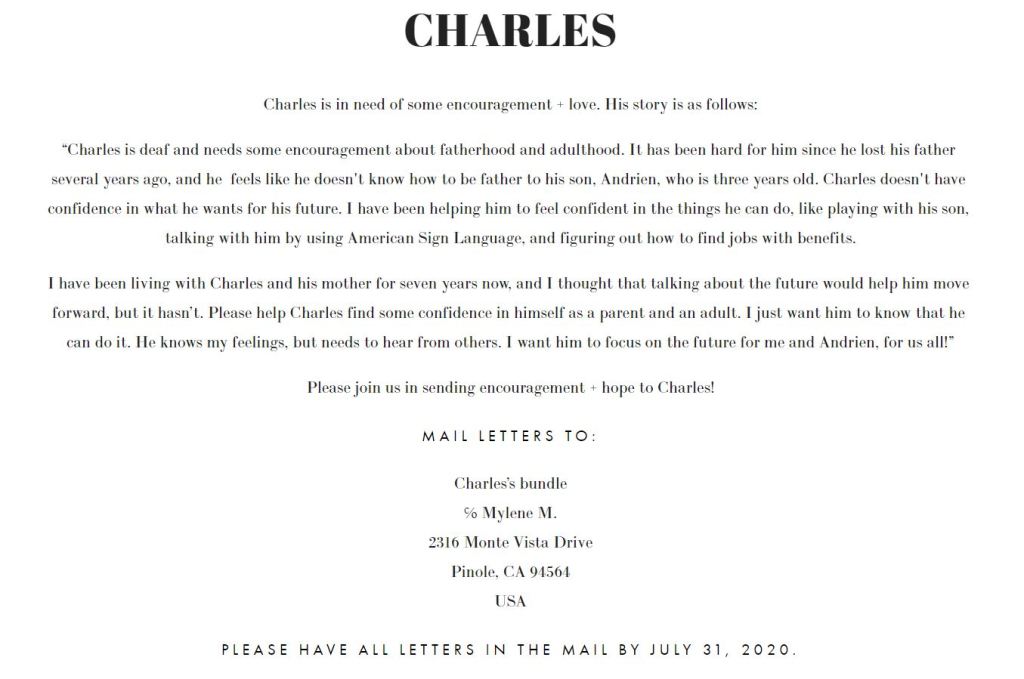
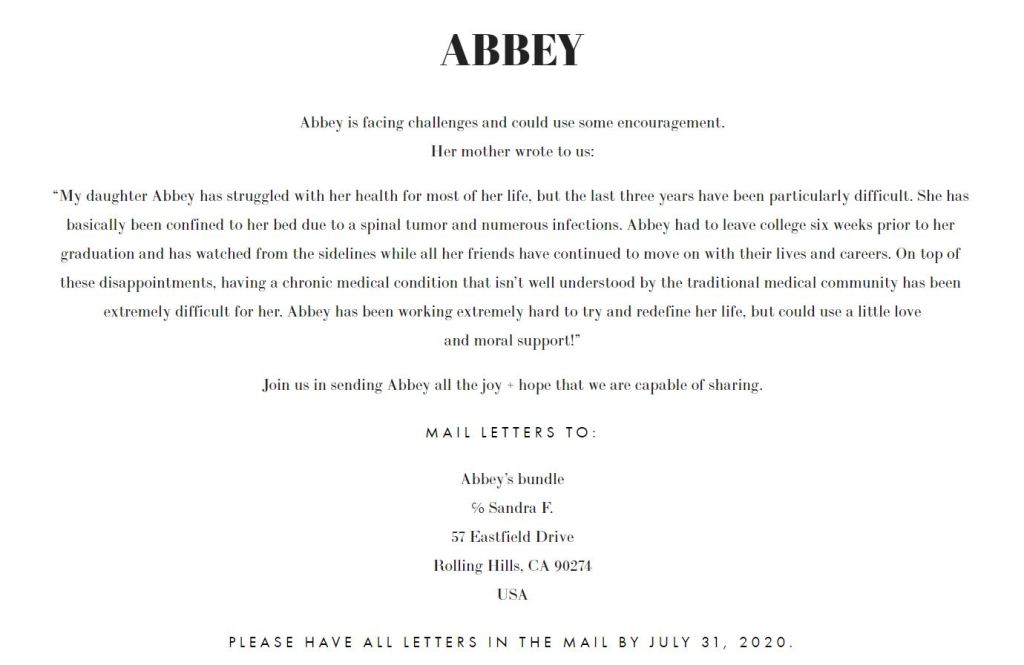
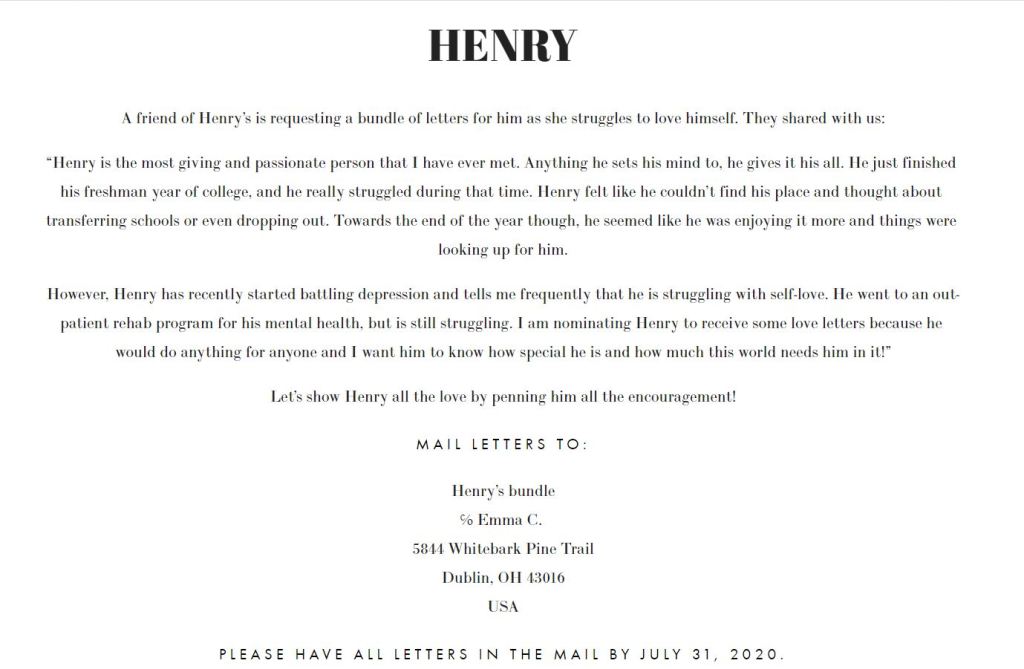
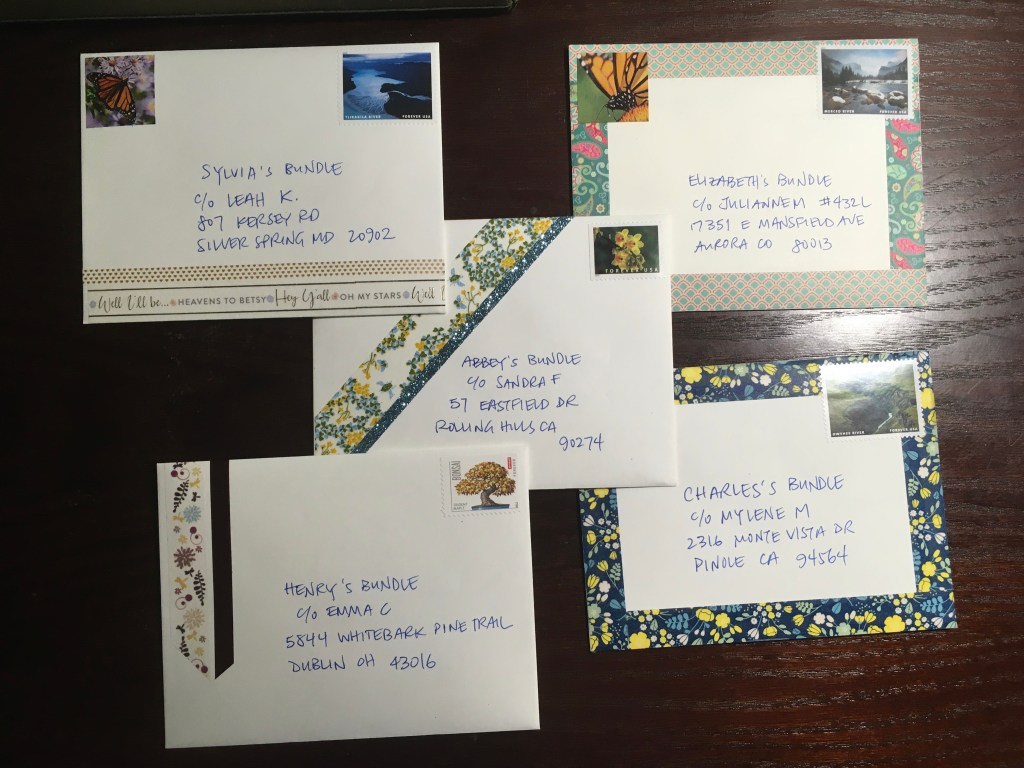
But I still had to write! I owe letters to three friends, and they can wait. What needed doing tonight were five love letters to strangers.
Sometime this spring, while sheltering at home, I discovered More Love Letters. Their mission is simple:
Deliver hand written letters to people who could use some extra love via snail mail.
People submit nominations for letter recipients, and every month the MLL team selects five to post. Each recipient’s nominator writes a heartfelt request, and supplies an address. Letters are requested to be postmarked by the last day of the month (but I bet they’d take some tardy ones, because they are sent with love?). Tonight I wrote my second ever set of love letters, on washi tape stationery, of course. I may have more cards and tape than I will use in my lifetime, so I’m more than happy to share! Maybe next month I will include a blank card and envelope as a gift for the recipient to pass along—I’ll even put a stamp on it!
In this time of tumult and conflict, of heaviness and stress, reaching out to offer some light to others heals me. They will not know who I am (well, unless they happen to read this post, I guess), and I will not get a card back in reply. I get to write some encouraging words that might brighten someone’s day. But I do it for myself as much as for them.
Maybe you could use a mutual pick-me-up, too? Each one took less than five minutes. The words came easily, organically, and happily. “Holding you in light,” “Sending love and support,” “Wishing you everything you need in this crazy time.” Easy peasy, written sincerely–it feels so good. You don’t have to write to all five nominees—do what moves you. Maybe you’ll be inspired to also drop a note to your best friend, your colleague who’s challenged, or someone who recently crossed your mind, who’d probably love to know you were thinking of them.
Now is exactly the time to connect, don’t you think?
Oh and I have no financial or other interests in this organization. I just love that they encourage connection and snail mail, two of my favorite things.
Friends, I’m sad. I will not go home to Colorado next month. The family went already last month; it was a glorious 15 hour road trip each way from Chicago, with 7 amazing days in the mountains, my favorite place on earth. Because we had planned to be abroad that week, back in January we made plane reservations for a five day trip to my home state in August. And now I will cancel.
Cancelling a trip home is a big deal for me. But I cannot ignore the glaring imbalance of risk and benefit here. It’s a personal, emotional decision, but not without reason.
Trust
First, I agree that flying during this pandemic can be safe. It depends critically on everybody doing their part, namely masking up and staying on the ground if we feel sick or have a recent known exposure. I do not trust everybody to do their part. I don’t know who will lie on a symptom checklist or suppress a fever with medication in order to fly while ill. I don’t know who will pull their mask off right next to me for the duration of the flight. Sure, the airline can ban them from flying after we land, but I still have to sit next to them for three hours, wondering about their infection status, fuming at their apparent disregard for my safety and that of everybody on the plane.
Shock and Awe
Second, I have never seen a disease like this. The spectrum of illness spans from totally asymptomatic to 100 days in hospital, intubated and proned, on ECMO (heart-lung bypass) and dialysis, limb(s) amputated, before finally dying. Every organ system can be affected, including the brain. COVID patients in the ICU require sedation and paralytics to control agitation, psychosis and flailing. Some suffer catastrophic strokes. Upon discharge, if they survive, months of rehab still don’t guarantee any return to normal. It’s been only six months since the disease emerged; we have no idea what long term consequences or complications lie down the road for these patients, no matter what their illness course.
Statistically, my family and I have a low risk for complications and death if we are infected. We are young and healthy. Populationally, the old and infirm have the highest mortality risk. This is also true for flu. And, healthy young people die every day from COVID, just like they do during flu season. And death is not the only horrible thing that happens to COVID patients. Symptoms can last weeks to months, including cough, shortness of breath, profound fatigue, diarrhea, and mental slowness. There is no way to predict 1) who will get infected or 2) what their disease course will be. It could be anything, and there is no good or reliable way to affect the outcome. You could be totally fine or suffer long and hard before dying. And the mental and emotional tolls of suffering in isolation, for the patient as well as their loved ones, are the ultimate insult added to injury.
I have profound respect for this virus and this disease.
Regret
Third, it’s a five day vacation. We were just there a month ago. This is not essential travel. My kids are my life. If one or, God forbid both, of them got sick, or if my husband and/or I got sick and died, or if I infected my patients—if anyone, family or not, ended up suffering because I decided to take this trip—my soul could never rest.
In the end one question always helps me: Of the worst case scenarios at the end of each path at this fork, which would I regret more? I will be sad to not go home this time, yes. But I don’t know how I could take the responsibility of getting someone infected because I wanted to take a five day vacation and made us all get on a plane in the middle of a wildly uncontrolled pandemic. There is no question here.
The sadness is real, though. And it’s not just about the trip. It’s about life turned upside down, everything we took for granted—our safety and security—threatened. It’s about the immense uncertainty, the suffering all around us, the lashing out and fighting from stress and tension, the chaos. How will we know what do to about school? When will life be the f*ck normal again?
Clarity
All of that said, there is still a very bright side.
This is temporary. Life will likely not ever go back to what it was, but it will feel normal again, someday. It will take some years, all things considered. In the meantime, we are fully in control of our mindset and response in this moment.
‘Mindfulness’ has become a trendy buzz word, almost cheapened such that I hate to even write or say it. But the evidence is all but irrefutable for its benefits, especially in times like these. The practice is essentially to be with what is, right now, including how you feel about it, with acceptance and nonjudgment. So much easier said than done! And yet, in truly mindful moments, peace and clarity ultimately descend (or transcend, I should say). To look around at the chaos and suffering, and accept it as just the way things are, is the first step to managing it all. Living fully in the present moment allows us to distinguish clearly what we can control from what we can’t. We can claim and exercise agency over the former, and let go the latter, thereby suffering less and maximizing energy and resources to effect positive change for ourselves and others.
To really free ourselves from the anxiety and uncertainty of the present moment, to know what to dotoday, while we attend to the now, we must paradoxically also cast ourselves into the future. We must take the long, infinite view. What really matters today? What from today will really matter next year, and in five, ten, or fifty years? Will the disruption of remote learning for my privileged kids this year really make a difference when they are my age? Likely not. Will missing essential nutrition and social contacts, and parents’ unemployment this year, for kids in marginalized communities, matter later? Absolutely. Many of us will be okay no matter what. Many more of us will not. The disparities we see today cast long shadows into the future, and we must attend to them in current policy and guideline decisions.
We are all in this together, and what we each do affects everybody. This fact is inescapable. There will be more suffering and death, no matter what we do. Somehow we each must make our own peace with the risks, find freedom and joy, and exercise empathy and social responsibility, in the face of it all.
In this crisis we are called to be our best selves for one another. That ultimately includes individual, short term sacrifices for the greater good. I can give up my little vacation to help keep everybody healthy. I wash my hands like I have OCD. I keep my distance around people I don’t live with. And I wear. my. mask. I protect you, you protect me. Let’s all do our part, shall we?
This weekend I reflected in gratitude at my LOH experience in the past year. After resonating with Dr. Suchman’s moving keynote at a physician health conference in 2018, I sought him out to express thanks. He encouraged me to apply for the program. Then he coached me twice on getting institutional support, something I had never done before. All through the program, he and Diane Rawlins, two of the best teachers I have had (and that is saying a lot), led us all through ten months of complex conceptual learning and skills practice. Even better, they helped us synthesize and integrate learning between sessions, applying concepts through practice in our natural habitats, knowing we could report back to the group to debrief and trouble shoot before heading back into ‘the trenches.’ LOH runs annual reunions, refreshers and mixers during which attendees from different cohorts can meet, bond, and both expand and tighten our community of lifelong learners. In the time of COVID, alum meetings have occurred about every two weeks over Zoom, from the comfort of our homes all across the country. The more I think about it, the more I wish everybody had this kind of safety and support—this loving learning lab and community—to acquire scary new skills that, when practiced, benefit many more people than just us learners.
I imagine this may be what participants in the White Men’s Caucus feel. Read all about it in Four Days to Change, which I started and finished in about three sittings. –No really, read this book. It provides a unique and profoundly important perspective on the true meaning of inclusion, that is, white men absolutely need to be included in leading and benefiting from systemic change for equity, not just passively doing the changing for others’ sake. During the Caucus retreat, white men are both challenged and supported to dig deep into their own privilege. Inescapable mirrors of truth and profound discomfort, and also of love and compassion, surround them for four days. They are expected to feel tremendous guilt and shame, both natural emotions that occur on the path of self-discovery and humility. But rather than weaponizing these feelings, facilitators love the attendees through them, shepherding them through the emotional (shit)storm to a place of self-compassion and forgiveness. This is where their outward humility, openness, and sincere advocacy for inclusion and diversity take root—because they experience it first hand from their teachers and peer learners. Leadership is hard enough, but leading initiatives in diversity, equity, and inclusion is a whole other dimension of complexity. How can we expect any leader, white male or otherwise (but white males especially), to do it well alone, without a core peer group willing to hold their feet to the fire with both love and conviction?
I wrote earlier this year, “Practicing inclusion INCLUDES the OWG (Old White Guy) ‘oppressor’! If we talk only about him needing to include others, while we make him feel excluded himself, how can we ever expect to enroll him in our cause or even behave in the way we ask? We do how we feel. And when we feel threatened and marginalized, especially from a place of loss, we act accordingly.”
Michael Welp writes in Four Days, “(My mentor) inspired me when he (said), ‘The only way to touch other white men is through love.’ His words have always stayed with me. However, the overall pattern observed in my dissertation was that white male diversity advocates disconnected from other white men and drew most of their support from white women and people of color. They were frustrated and angry toward other white men.”
Imagine people of your own tribe, a tribe you may lead in good faith, suddenly confronting you about biases and prejudices that you never knew you had, telling you how you’re harming people all around the tribe, and that you have to change it all now, adopt a new set of beliefs and initiatives today, and they will accept nothing less than your complete and unquestioning compliance because you are simply in the wrong. Would you respond better if they came at you with such accusations and demands, or came alongside you with a grave and critical invitation to curiosity and learning together, for the good of the whole tribe, yourself included? Which approach is more likely to yield tangible results in the near term? Which one is more likely to still engage you in the long term?
We can learn important lessons from addiction medicine. Patients succeed in rehab with a lot of grit and commitment. They also benefit from the unyielding support and dedication of treatment staff and various environmental safety precautions. But relapse rates are high (40-80%) in no small part because the safety and support so crucial to getting sober in rehab too often simply do not exist in an addict’s natural habitat.
The converse was found to be true among American servicemen who fought in the Vietnam War. Up to 20% of them were found to be addicted to heroin while overseas. But upon return, only 5% of those who recovered relapsed. After rigorous study (by a well-respected woman researcher, whose results and report were initially questioned and even derided—but that’s for another post), it is now widely accepted that the environment plays a key role in our behaviors, habits, and ability to change. Soldiers in Vietnam, as James Clear writes, “spent all day surrounded by cues triggering heroin use: it was easy to access, they were engulfed by the constant stress of war, they built friendships with fellow soldiers who were also heroin users, and they were thousands of miles from home. Once a soldier returned to the United States, though, he found himself in an environment devoid of those triggers. When the context changed, so did the habit.”
The system often dictates, or at least strongly influences, how we perceive, think, behave, and relate. And we are the system, every one of us. By assimilating to the dominant white male culture, even as we see ourselves as resistors, we perpetuate it. But when we resist by only opposing our white male counterparts, without also enrolling them in the resistance movement as equals, we also undermine our own progress. Everybody deserves the safety and support to do their own personal Reckoning, Rumbling, and Revolution, as Brené Brown describes in her book Rising Strong. Real positive change is grounded in vulnerability, humility, and courage. If we really expect our white male leaders to change in ways fundamental and profound enough to advance equity in any meaningful way, they need the safety and support to reckon and rumble with their resistance, their rage, their fear, culture, identity, relationships, memories, realizations—all of it—with people they can relate to and who can hold them up fully, who will not turn away from or against them. As I wrote last week, more and more I see that perhaps only other white men can truly do this.
To be clear, this post is not an apology for white male supremacy and the vast suffering this mentality has wreaked all throughout history. I just think it’s important, and too seldom attended to, that white men also suffer in and from the culture they dominate. And in order to really change this culture for the better, we all need to support one another, white men included.