Husband says he sees November as stressful for me every year (for the tenth year in a row now), referring to the 30 days of daily blogging. I don’t want to admit it, but it’s at least partially true. It shows in my eating habits, I didn’t quite have my edge in the gym yesterday, and there are likely other consequences. I’m not losing sleep these last couple years, which is a drastic improvement from before. And I’m still cooking regularly now, which is also better! So it’s not bad news at all; this is good stress. It’s probably a 95% challenge, 5% threat sensation, and 10/10 meaning. It’s already two-thirds over, and I think these posts could be some of my best writing yet. Win-win-win!
One of the biggest challenges the last 20 days (starting 10/31) has been fully articulating an idea that may have only occurred to me within 12 hours of posting. I feel I have met that challenge well, and I’m proud of the output so far as it is honest and offered wholeheartedly.
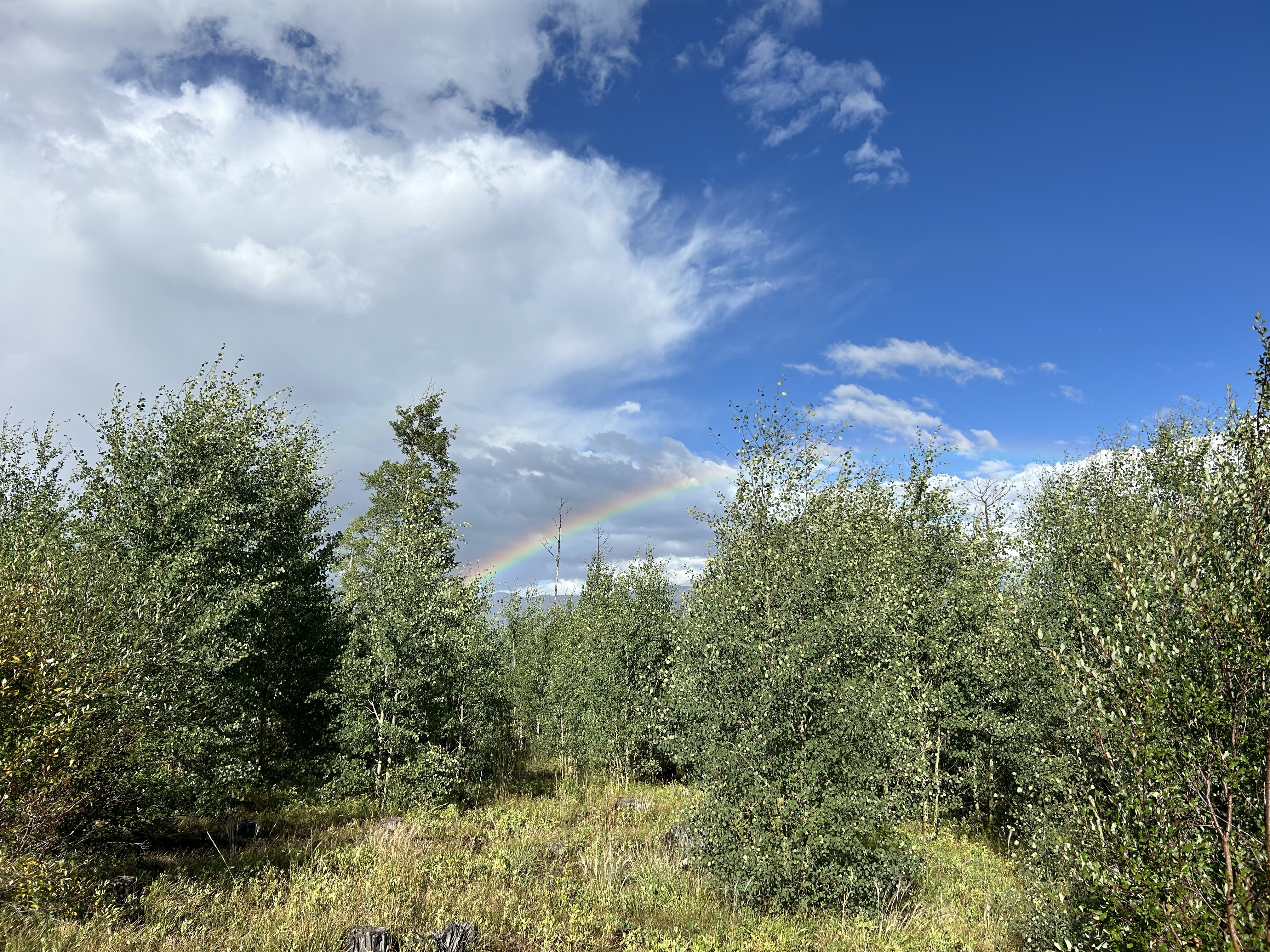
My first solid idea for tonight’s post came to me while eating dinner and listening to What Is Health? by Peter Sterling. It was so exciting and also quite complex, so I procrastinated. It needs to marinate a bit more. Then the universe sent me the Instagram story in the photo above from my friend James. It reads:
Unconditional love really exists in each of us. It is part of our deep inner being. It is not so much an active emotion as a state of being. It’s not ‘I love you’ for this or that reason, not ‘I love you if you love me.’ It’s love for no reason, love without an object.” –Ram Daas
My immediate response to James: “OMG YAAAASS!!! What if we all tapped into this deep well of Agape just a little more every day!?!? [Home Alone face emoji, smiley surrounded by hearts emoji] James replied, “Yes, what if?? What’s stopping us?” We agreed that conversation is best saved for our next in person communion. I shared the story on my own account with a similar admonishing question, feeling a full body rush of joy, optimism, and possibility.
We tend to think of love as an emotion. We probably experience it as such at least some of the time–a limbic sensation that comes over us and then dissipates–a signal of something to pay attention to, something that matters to us. But I learned recently that love is more of a drive, like hunger or thirst; it manifests consistently, if in waves, impelling us to behave and relate in ways that advance our own survival. Romantic love drives us to partner and procreate. Pair bonding and parental love drives us to tend to our progeny so our genes may live on for another generation. So if we think of it this way and apply it to relationships in nested scale (family unit, village, state, nation, all of humanity), how does that alter our perspective?
To me, it all suddenly feels so simple. We are all here to love one another, to help us all survive and thrive. We are all someone’s child. Many of us are someone’s sibling, someone’s parent. I hope we are all someone’s good friend. We all share this planet, this lifetime. We are all here. Now. Living. Doing our Best. So when I’m tired, I can relax and rest in this one simple idea: Love.
What if we accept Ram Daas’s premise? What if unconditional love really is part of our deep inner being? And what if we fully accepted, acknowledged, and manifested this just a little more every day? How would that feel? What would we do as a result? How would we be? I feel at peace. I feel confident that we can figure it all out, whatever it is, ODOMOBaaT–one day, one moment, one breath at a time. I smile more. I approach people with ease and friendliness, as if any person I meet could be my next new good friend. I am my favorite self.
So I Hold Love for Us tonight, friends. It took 20 days for it to emerge this month. I wondered when and how it would come up; it was #6 on my pre-NaBlo prep list of 30 things to Hold. How does it feel when you Hold Love? Where and when is it easy and difficult? How and what do you do when it’s really hard?
Friends, when we can muster it, I have an invitation:
The next time we have a thought that starts with, “I don’t understand…” let us take a deep breath, get quiet, and actually try to understand. I think most of us stop well short of this effort, especially in conflict. If we all did it just a little more, though, some of our most severe divisions could lessen by a lot.
“Years ago I had a hard conversation with a Black classmate. He explained to me the experience of being Black in America—what it was like to worry about his own safety and that of his loved ones every day, of seeing innocent Black men killed at the hands of police, the history and ongoing oppression of racism, both overt and implicit… It was overwhelming. I said, ‘I can’t imagine what that must be like…’ At the time I honestly meant it as an expression of humility. In retrospect, I could (should?) have said, ‘I know I will never experience what you experience, AND as I think about what you have shared with me, I AM imagining what that must be like, and it’s overwhelming.’
“Though I had intended my words to be connecting, he told me in no uncertain terms that they had the opposite impact. Really, he asked? You really can’t imagine what it would be like to send your son out every morning knowing he could be profiled by police? You can’t imagine your family being captured and sold into slavery, separated mercilessly on an auction block, or hunted, mutilated and murdered for simply being different? How can you not imagine it? Where was my sense of shared humanity, he demanded? My declaration of ‘I can’t imagine,’ far from showing caring or understanding, signaled to him my unwillingness to relate.”
“I don’t understand how whole swaths of people could vote against their own interests.” “I don’t understand how half the country voted for hate.” “I don’t understand why ____ people get so offended at _____ words.” “I don’t understand why (they/you) get so emotional about _____ .”
I can’t imagine, I don’t understand–both expressions signal a separation, a disconnect. They come across as insensitive, unempathetic to those who seek to be understood (“I did not vote for hate–that is your projection on me.”) At worst, they convey condescension and disdain. Expressed among those who similarly cannot imagine and do not understand, these phrases further solidify our us-them tribalist sentiments. Dissenting in this context, suggesting how we might imagine or understand, can feel extremely unsafe.
Here’s what we know about humans: We are emotional first, especially under stress. We reason and rationalize second. We all do it. Not that the rationalizations don’t make sense or are not valid. Disconnect arises when we assume ourselves to be totally rational (delusion #1) and others to be totally irrational (delusion #2). We think our own beliefs, positions, and behaviors ‘make total sense’ and others’ do not because they are inconsistent or, well, rationalized. We fail to recognize the inconsistencies in our own ‘reasoning’. The truth is, all of our beliefs and conclusions make sense to ourselves.
If you think you do understand someone else’s distress, check and see if it’s only in your thinking brain. If you can imagine in cognitive and practical terms but cannot imagine how it feels when somebody describes their fear, hopelessness or other emotions in a specific context, then there’s likely more work to do.
More from 2021:
“At first I felt defensive and misunderstood. Why was he rejecting me when I honestly thought I was being supportive? I had to think about it a while, and really listen for what he was saying. It was painful and humbling to realize that he was right, at least partially. I could imagine all of those things, but maybe I didn’t want to. Maybe it was too uncomfortable, and I exercised my privilege of not having to think about it, because it didn’t affect me personally? Maybe it made me feel helpless? Maybe I knew on some level that I harbor racist and prejudiced biases and ideas? My classmate was teaching me the difference between empathy and sympathy. Brené Brown makes the distinction thusly: “Empathy fuels connection, while sympathy drives disconnection.” I had intended the former; my impact was the latter.”
My point about imagining and understanding is empathy–the ability to understand and share the feelings of another. Sympathy is feeling for someone in distress–it keeps a distance that is palpable. We have to look into one another’s emotional minds with our own to find a deeper level of understanding and connection. It’s incredibly vulnerable and uncomfortable, hence the avoidance.
I Hold Understanding for Us. It’s a lot of work. It requires us to get both humble and vulnerable, which our culture shuns. If we are ever to heal our political divisions and reclaim a high-functioning democracy, however, we must practice.
Image text: “When you need courage May the fibers of your spine and heart connect in strength and power”
Chengerism, as quoted by Daughter: “OMG Mei, I have the BEST friends!”
Wonderful New Friend had me over to her house yesterday. She offered to go out for lunch, and all I wanted was to be together and talk. We could have eaten cheese and crackers and I would have been happy. So I sat at her kitchen island and she proceeded to pull together the most delicious and satisfying lunch I had all week. We chatted about the kids, the holidays, and our respective homes’ oscillating states of livable pigsty. When we moved from island to sofa, we got into it: “So, the election. Let’s talk.”
OH there was so much! We both vote Blue, and joke that we are the same person: eldest daughters of immigrant engineer dads and nurse moms. Healthcare professionals. White-adjacent women of color. Paper and journal and pen fanatics. And we share many of the same political views, but not all. In the three hours we spent together yesterday, two invaluable insights emerged for me: 1. I really do have the best friends–people who can challenge my assumptions and make me think harder about everything, all in love and to help me grow 2. Part of my role and contribution to political discourse may be to advance healthy allyship.
Google’s AI overview of the term: Allyship is a social justice activism term that describes the actions taken by people in positions of privilege to support marginalized groups: Definition: Allyship is a lifelong process of building relationships with marginalized groups based on trust, consistency, and accountability. It’s an active practice of unlearning and re-evaluating one’s own privilege and working to operate in solidarity with marginalized groups.
I have written about allyship before, and I have another post drafting for later. Tonight I pull the existing catalogue together from 2016 to 2024, so I have it consolidated to reference hereafter. I imagine my own allyship posture and movements will evolve over time, as everything does. Looking back helps to frame where I came from and where I’ve been, and hopefully shows me where I still need to learn and improve. …Wow, there are many more than I realized! Titles and brief exerpts, for my benefit more than yours below. Rereading tonight, I still stand by each piece, and I’m glad I have written it all down through the years.
I Hold Allyship for Us because when we ally with one another, we can do great things. “The only way out is through.” The best way through is together.
Thank you for reading! Onward, friends!
Holding the Space: Beyond ‘Agree to Disagree’, or, A Discussion of White Male Privilege Once we agree to disagree, what then? Where do we go from there? I still believe strongly in the existence of white male privilege, and [my friend] still strongly does not. Let’s assume that both he and I—indeed most of us—are, in fact, kind, decent, compassionate, and intelligent people. Let’s assume also that we all seek productive and positive relationships with others. What, then, are the best and worst manifestations of our respective beliefs? I think it’s an important question. How could we Hold the Space for the answers?
The Status of Women, 1999-2019 What happens for men when women speak Feminism? I intend to ask this question to more men in my life from now on. What do you hear as Feminism? Where do you think it comes from? What do you think women are trying to accomplish by talking about equity and representation? What moves a man to ally with women in this movement? What keeps him from doing so? What are the risks, costs, and benefits for us all when he does and does not?
What I’m Learning About Equity Another new WEL friend, Dr. Dawn Sears, has already taken this idea to heart and made an impact in her community, elevating women’s and men’s awareness of gender disparity in medicine, and helping them fight it together. Check out her powerful presentation to colleagues here, full of evidence as well as unsettling personal stories. In it she directly and kindly addresses the men in the audience, informing and inviting them to join the fight, for all our sakes. She names the contrarian men who have held her up on her professional journey, defying gender bias and paving their own HeForShe way for others. She includes men in order to enroll them in the movement. I encourage all to view the talk—find out how you, as colleague, patient, and all around good citizen, man or woman, can help improve the system for us all.
Sexism and Apologies 2020 What I have learned (perhaps again) in this time, however, is that relationship discord, even just the possibility of it, is what distresses me the most. How will I be perceived for voicing my concerns, for advocating for my peers and teams? How will a negative perception undermine my effectiveness? Will it cost me my seat at this table or others? Does any man ask himself these questions?
This Is the Work We are all called to face our discomfort head on, to stand up and take responsibility. We can no longer escape the harsh reality of choice that we all must continually face: Do what’s Right or do what’s easy. Let’s assume for a moment that it really is that simple—all qualifications moot. It may be unrealistic to expect ourselves to choose Right every time…because qualifications. But aaaaarrrgh we do not do it nearly, nearly enough. Nothing will change without a critical mass of us choosing Right, much more of the time, for a very long time to come.
After discussion with participants he notes, “’Notice that the guys who bring the skills less emphasized in the culture can more quickly identify how the culture works against them. You might imagine the same experience for women and people of color.’ …It’s even more critical in today’s global world that we as members of the dominant group understand our water.” I can’t wait to keep reading and see hearts broken open, as Parker Palmer says, to the power and potential of inescapable interconnectedness.
Even the ‘Oppressor’ Deserves Safety and Support During the [White Men’s] Caucus retreat [led by Michael Welp, author of Four Days to Change], white men are both challenged and supported to dig deep into their own privilege. Inescapable mirrors of truth and profound discomfort, and also of love and compassion, surround them for four days. They are expected to feel tremendous guilt and shame, both natural emotions that occur on the path of self-discovery and humility. But rather than weaponizing these feelings, facilitators love the attendees through them, shepherding them through the emotional (shit)storm to a place of self-compassion and forgiveness. This is where their outward humility, openness, and sincere advocacy for inclusion and diversity take root—because they experience it first hand from their teachers and peer learners. Leadership is hard enough, but leading initiatives in diversity, equity, and inclusion is a whole other dimension of complexity. How can we expect any leader, white male or otherwise (but white males especially), to do it well alone, without a core peer group willing to hold their feet to the fire with both love and conviction?
Why Identity Matters “You have a Chinese face,” my mom said to me. I was ten years old, maybe twelve. I can’t remember how it came up. But the message was twofold and clear: 1. What makes you different from almost everybody around you is visible. You cannot hide it, you cannot escape it. 2. People will judge you for it, so like it or not, to them, you represent us—your family, your ethnicity, all people who look like you. Once again I find myself in this strange, middle, white-adjacent space, considering how I can and should use my unique identity for the greater good. How does an anti-racist message land differently/better/worse when I express it? How do my white colleagues hear me differently/better/worse from/than my Black and other underrepresented minority colleagues? Do I have a bridge role to play here? Or should I keep my head down and my mouth shut (this is unlikely)?
White Male Allies: Please Do This Advice from the doctor carries more weight and influence than from the spouse. Teen peer more than parent. And fellow Cis-Het-Christian-White Male (CHCWM) more than anyone else. So men: how are you helping? It’s more effective if you come alongside rather than come at. Berating, lecturing, or shaming fellow men to take a hard left from their stereotypes, implicit biases, and internalized misogyny hardly ever works. Rather, use your influence more quietly. Lead by example with your words and actions to the slow off-ramp of self-awareness, self-regulation and movement toward gender equality. Be gentle. Plant the seeds. Water, water, light, fertilize, water, light, water.. and eventually we can repot. Scale your influence by connecting with other exemplary leaders. Culture change occurs mostly from the top down, and CHCWMs are the CEOs of American culture.
The Complexity of Allyship So, what are the questions to ask when we consider upstanding and allying? How does this affect me directly? Indirectly? How do I feel about it? What do I think about it (because these are different)? How does this affect people I care about, whom I respect and admire? How does this affect all of our relationships, professional, personal, financial, and other? What do I not know? What core values of mine, of the community, are violated here? How can I best uphold and live into those values in this context? What other questions do I need to ask?