Rally

DSC_0598

NaBloPoMo 2018:  What I’m Learning

In my first practice it was common for whole families to be my patients.  Grandparents, parents, children, grandchildren, cousins, and other webbed relations.  My fondest memories of those years revolve around witnessing the love, tension, and ultimate cohesion of these complex units of humanity.

One day Grandma came for a routine follow up visit.  We reviewed her blood pressure, glucose, and cholesterol numbers.  She wanted to lose some weight.  Everything was stable, but something seemed off.  I could not put my finger on it, and when I asked if everything was okay she said yes.  This scenario repeated maybe once or twice more over some months, and slowly we agreed she was depressed, though I’m not sure if I ever used that word.  There was no trigger, no event.  She had not had a history of depression.  She was just down, she did not know why, and she could not make it go away.

Grandma came from a culture and a generation that did not feel comfortable doing talk therapy.  She was also reticent to take prescription anti-depressants, even if they might help her feel better.  But she was happy to see me more regularly, just so I could keep track of her medical problems and make sure she was okay.  We reviewed the same list each time: fatigue, low mood, anhedonia.  No suicidality, biometrics stable.

Sometimes I would also see Son, Daughter-in-law, or Granddaughter.  I would ask them how Grandma was doing.  They never used the word ‘depressed,’ but they described how she was ‘kind of down,’ ‘sad,’ ‘going through a hard time.’  And then they would tell me what they were doing about it.  Someone would always be at Grandma’s house, keeping her company.  Sister would invite her out to lunch.  Granddaughter would take her out shopping.  Everybody attended to her just a little more, rallying around her, and nobody ever talked about why.

Grandma herself rallied, and her depression lifted over time.  In Chinese the expression for this is equivalent to having ‘walked out’ of it, like depression is a long tunnel in the mountain.  What a privilege to bear witness to this phenomenon—the family saw Grandma walking in a dark place, and they moved in a little closer, each with their own candle, lamp, or torch.  They helped light her way, and they all walked out with her together.

I had a shit day today, mostly of my own making.  Cramming in too many things, all scheduled too close together, trying to do too much, falling down on multiple levels, and adversely affecting multiple people around me.  I almost bailed on a chance to be with an amazing group of people tonight, out of exhaustion and self-loathing.  But these were my friends and I had not seen many of them in several months.  I felt quite listless at the beginning of dinner, not unlike I imagine Grandma felt.  But as I communed with my tribe, reconnected, and met a new friend, I started to feel better.  The yummy duck helped, too.  They could intuit a shadow on me.  And with gentleness and respect for boundaries, my friends rallied around me.  It was not pity or sympathy.  It was genuine empathy and wishes for my well-being.  So I rallied, too.

Things feel overwhelming more often now than before.  The anger, bickering, blaming, and self-righteousness I see, hear, and feel all around (and within) me really gets under my skin—ha, literally, I guess.  I know this will never be a permanent state; I will feel better tomorrow.  It’s also an interesting opportunity to observe how I’m walking the self-care talk—including the self-compassion part.  Fascinating.

Well friends, that’s what’s on my mind tonight.  My patients save me by teaching me.

I’m going to bed.  So I can rally some more tomorrow, and maybe help someone else do the same.

My Sleep Evolution

DSC_0524

NaBloPoMo 2018:  What I’m Learning

How often do you look back and really appreciate how far you’ve come in a short time?  It could be a skill, an understanding…  Maybe lightning struck and you made a sudden, significant transformation, or maybe it was a slow, plodding trudge to the current state.  For me it started out small and organic, and grew with increasing momentum toward a sort of AHA! confirmation today.

I can honestly say that 5 years ago I did not pay much attention to sleep.  I have always been a night owl, often staying up late reading or writing.  When I started this blog, I routinely published posts around 2:00am.  But when I started talking to patients in more detail about their health habits, I started to learn the importance of sleep.

Here is the timeline of my Sleep Evolution, c.2014-present day.  Where along the arc live your thinking  and habits on sleep?

Personal Evolution

  • 2015: Regularly staying up past 1:00 or 2:00am posting to blog
  • Feeling the cost of this in my body more and more
  • 2017: 11:00pm bedtime commitment kept on and off, not staying up as late, as often posting to blog
  • Early 2018: Recommit to 7 hour goal after accepting new leadership role at work. “Put your own mask on first before helping others.”
  • (Read) Gretching Rubin’s Better Than Before, in which she lays out the evidence for the Foundation Four habits, in order of importance: Sleep, Exercise, Nutrition, and Order (decluttering)
  • Recommit (again) to protecting my own sleep because this helps me maintain healthy habits of exercise and nutrition (this was a small epiphany of the obvious)

Professional Evolution

  • 2016: Observation: Young healthy men who eat healthy and exercise but who have elevated glucose levels tend also to sleep less than 6-7 hours per night, average.
  • Start structuring patient interviews around “The 5 Realms of Health”—Nutrition, Exercise, Sleep, Stress, Relationships
  • Presenting to groups on physician health and well-being using the same framework for self-care
  • Patients asking, “Should I get up an hour earlier to work out or stay in bed?” Not sure how to answer
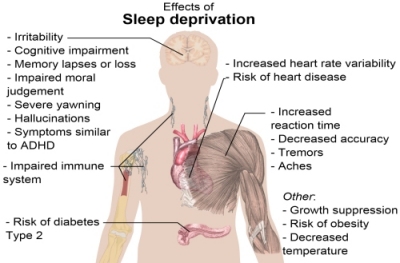
  • Reading more about myriad downstream effects of chronic sleep deprivation
  • 2017: Start calling them the “5 Reciprocal Domains of Health”
  • Understanding that though the 5 habits affect one another inextricably, sleep deprivation impacts all of the others disproportionately negatively
  • 2018: Resolve to tell patients: Stay in bed.  Because you can only sleep when you’re sleeping, and you can always move more while you’re awake
  • Start to wonder if I should reprioritize the list–rather than Nutrition, Exercise, Sleep, Stress, Relationships, maybe Sleep, Exercise, Nutrition, Stress, Relationships?
  • (Read) Gretching Rubin’s Better Than Before, in which she lays out the evidence for the Foundation Four habits, in order of importance: Sleep, Exercise, Nutrition, and Order (decluttering)
  • Decide to change the order of my list
  • (Read) Brené Brown’s Dare to Lead, in which she labels “rewarding exhaustion as a status symbol and attaching productivity to self-worth” as one of 16 examples of ‘armored leadership,’ whereas ‘daring leadership’ “models and supports rest, play, and recovery.”

What makes this the most exciting for me, though, is to hear real results from others.  I spoke to an acquaintance today, a fellow leader.  About a year ago he decided to take control of his sleep habits.  He started going to bed at a regular time, minimizing screen use at night, and making a nightly wind-down routine.  He adopted a brain dump practice with a diary at the bedside to keep ideas, challenges, etc.    Now he notices that he is able to focus better in the mornings.  He feels more alert, more relaxed in his outlook, and more resilient to acute stressors.

Most importantly, his relationships at work are improving.  A couple of times a week he notices a transformation in his interactions.  When frustrated with another’s mistakes or lack of engagement, he used to come at them with criticism and blame.  These days, he is able to notice this escalation in real time, and redirect his thoughts, words and actions to come alongside others instead, staying in curiosity and compassion.  With better sleep he is able, in real time (the key), to see how his needs are not the only ones worth meeting.  He can hold the space to ask what the other person needs to engage and perform better.  He sees more clearly opportunities to be his best self, to reach those around him at a deeper level.  This fosters self-fulfilling confidence in his leadership skills, not to mention trust and loyalty among his direct reports.

All of this simply from better sleep?  I imagine he has also done work in other domains (stress management, relationships).  But they are reciprocal domains, remember, so as habits in one area improve, others soon follow.

What benefits do you notice when you get enough sleep?

Here are some articles that explain more about consequences of sleep deprivation and how to foster better sleep habits:

You Need More Sleep. Here’s How to Get It, Harvard Business Review

The Simplest Way to Drastically Improve Your Life: Get More Sleep, New York Times

How to Get a Better Night’s Sleep, New York Times

Time to go to bed.

Who’s On Your Pit Crew?


Who helps you succeed?

Who checks in with you regularly and gives you feedback on your performance?

Who rushes to your side when you need help?

Who can tell not only when you have a lugnut loose but also how to help you tighten it again?

Who is on your pit crew?

I can’t remember the first time I started using this analogy.  I do recall, of course, it came about in a patient encounter.  For a long time now I have consistently asked patients about their emotional support networks, their connections.  As I get older, I feel increasingly aware of and grateful for all the people at every phase of life who have helped me learn, improve, succeed, and become.  Nobody succeeds alone—really, all but a rare few of us can even survive alone.

My friend Jeremy Topin, a critical care physician, husband, and dad, writes a heartfelt and honest blog about life as all these things—because he is at once all of them and more—there is no way to truly separate one role from another in life.  His recent post on depression among physicians reminded me of the pit crew idea.  Medical culture does not encourage pit crews for its workers.  It’s evolving, painfully slowly, and I hope to have a hand in that evolution.  But for now, far too many physicians and other caregivers suffer burnout, depression, anxiety, and other work-related heaviness in silence, and it can cost us our lives.

Thankfully, many of us have intact and well-functioning pit crews.  46% of physician respondents to the most recent Medscape survey reported talking to friends and family as a coping mechanism, second only to exercise, and right above sleep.  I count my trainer, my therapist, my life coach, and my Counsel of Wisdom, my closest friends, as my core crew.  I have become more and more open about having a therapist and a coach—ya gotta walk the talk if you’re going to be credible about your work.

Full disclosure, I am not a car racing fan.  Pretty much all I know about pit crews is from Disney’s “Cars” and admiring Lightning McQueens’ motley one.  But that’s how it happens, right?  We acquire and accumulate relationships and connections along the winding way in life.  Who knows when or where it might happen?  I met mine in school, in the exam room, at meetings, and I was introduced by mutual acquaintances.

As I consider further, though, having a pit crew is only part of the success story.  Research shows us time and again that serving on someone else’s pit crew fulfills a profound human need, also.  I suggest works by Adam Grant and Kelly McGonigal if you wish to read more about this.  But maybe you don’t need to read or hear the research evidence to understand this concept?  How does helping others help you?  On whose pit crew do you serve?  To whose Lightning McQueen are you Mater or Luigi?

If your pit crew is sparse, people who study and do this work recommend finding something meaningful or someone you love to serve.  It could be something simple and non-committal, like serving at a soup kitchen or collecting winter coats for shelters.  It could be reading or playing piano at a senior center.  Or it could be mentoring a junior colleague over many months or years.

Imagine a music teacher who accompanies her cello student at recitals.  She plays piano, fingers and hands moving lightly and nimbly over the keys as her protégé plays her heart out during each performance.  I went to my son’s school this afternoon for a music concert, where this pit crew idea struck me again.  I don’t know if the accompanists were the performers’ teachers, but that’s how I saw them, as they were all clearly middle aged adults playing alongside teenagers—surely they had some wisdom to impart in this relationship?  It occurred to me that ‘accompanist’ may not fully accredit these adults’ roles in the kids’ lives.  The music they contributed not only supported the students’ performances.  These adults integrated their music making with the primary performers’, lifting it beyond where it could go alone.  They contributed their own advanced skills and supportive presence to help these young people succeed.  It was a team effort.  And that’s the point, I think.

How widely could we apply this pit crew metaphor?  How does it resonate with you today?  How else is your life like a racecar driver’s?  What’s exhilarating about it?  How is it faster and more intense than other drivers’?  Is that okay with you?  How much longer can you sustain this work, and what do you need to maintain the joy and reward?

Lastly, what did you think of this post?  It’s much more stream of consciousness and impromptu than I’m used to.  I’m trying to get more efficient with my time—three hours per post finishing at 2am on a weeknight is no longer an option.  Your feedback is welcome!

One more weekly post and then the 30 day marathon that is NaBloPoMo, my friends!  Woo hoooooo, ONWARD!