
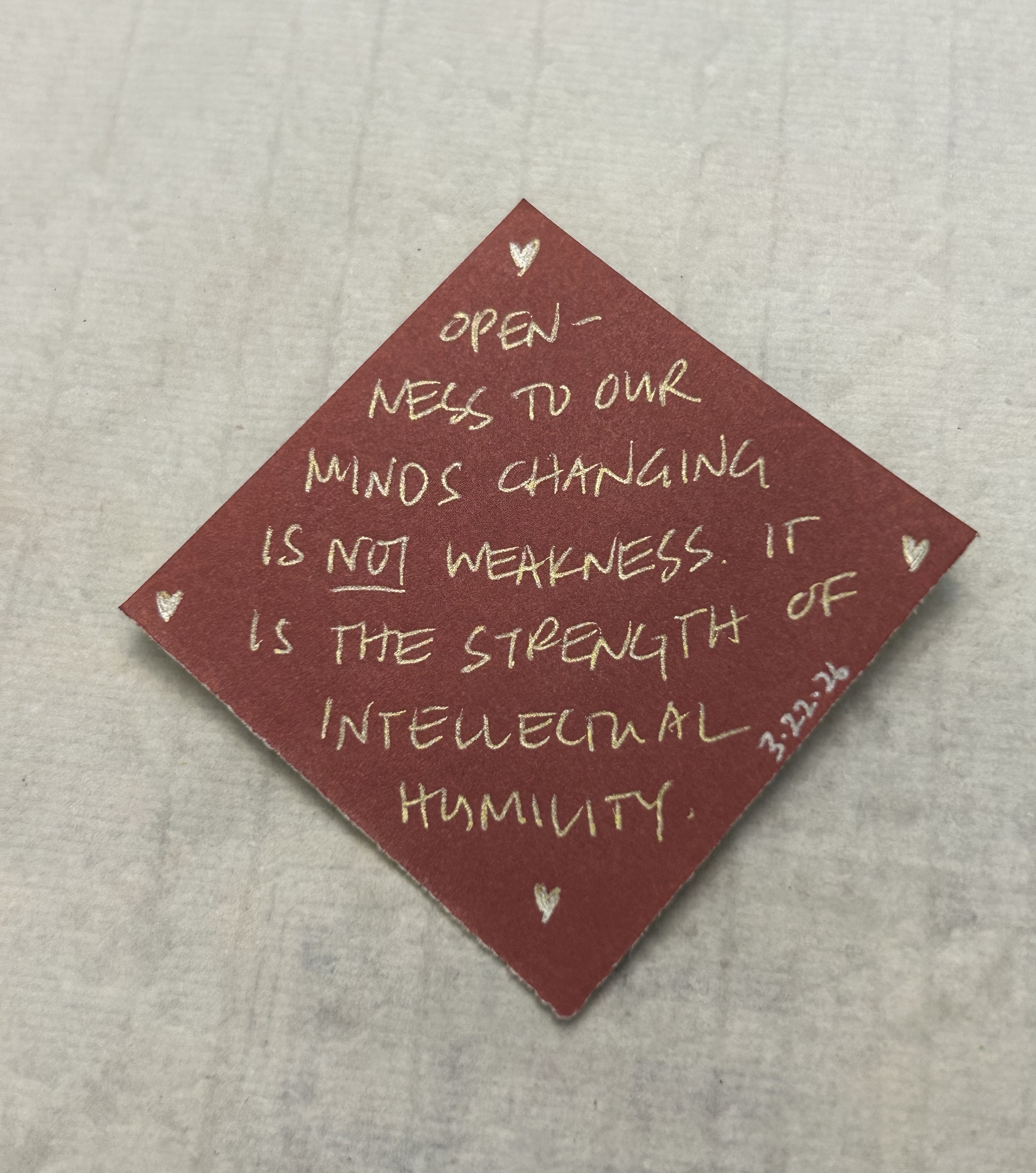
How do you come to really understand and know anyone, then overcome differences?
Many of my friendships have begun remotely–on Facebook, this blog, interest groups, even on the phone. But they do not solidify until we meet in person. It is the natural progression of relationship, to be in each other’s presence. The energy is profoundly different, the connection tangible and tactile.
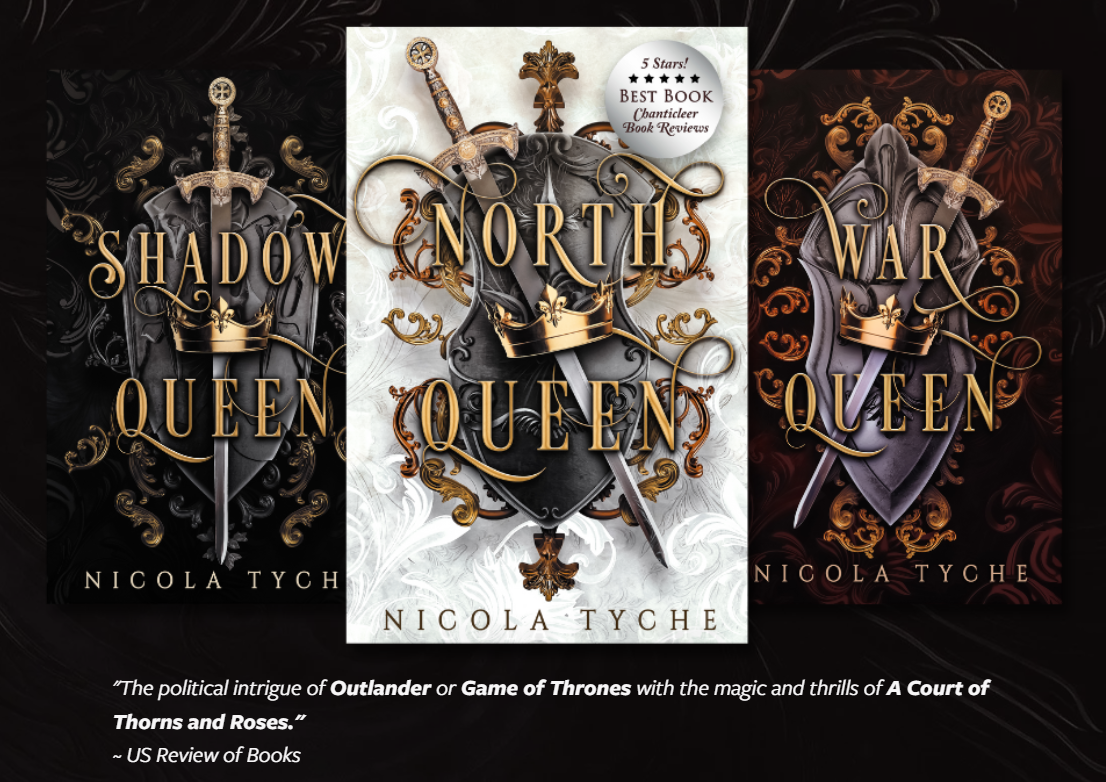
Throughout the Crowns Trilogy, relationships develop and transform through repeated in person meetings, between lovers, adversaries, allies, strangers, and family members. Communication occurs through letters and messengers, posture and political actions, but it is the face to face encounters that challenge biases, build trust, and solidify alliances. Repeated rupture and repair in indispensible relationships, committed and restored in person through words, expressions, or acts, reminds us that there is no substitute modality for true connection.
Physical proximity is not enough. Connection requires emotional and psychological presence, the offering and acceptance of attention, and the mutual willingness to engage in good faith.
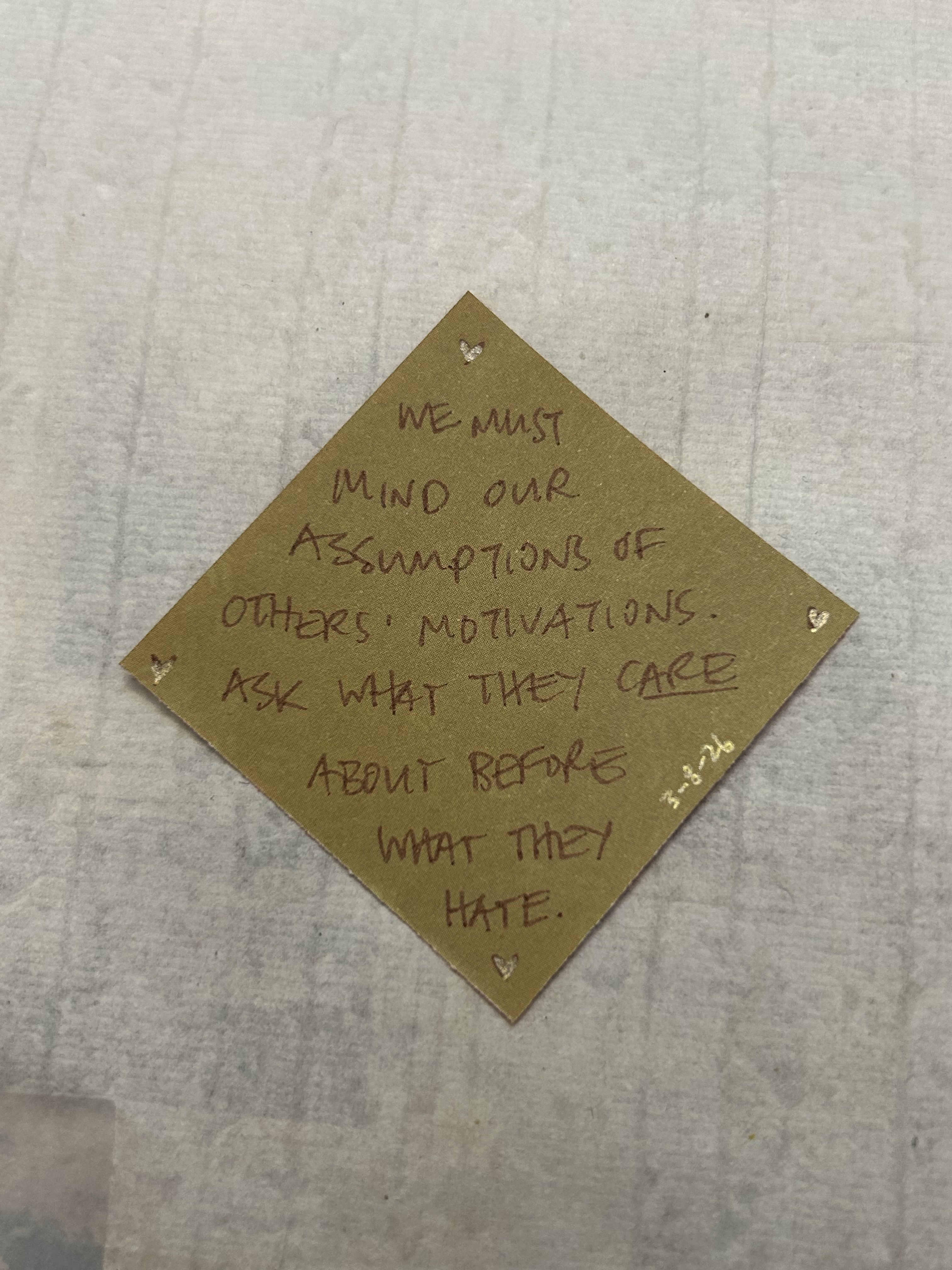
The main characters in Crowns overcome traumatic and tragic barriers to connect, and save their kingdoms, driven by two primary motives: Love and Peace. Why can’t we do the same? Norah, Mikhail, Alexander, and Soren engage one another and also themselves with intensity, ambivalence, and serious conflict. But they keep showing up, never abandoning their commitments to do the necessary bridging work for the people and causes that matter most to them. Consider how the following patterns apply to your encounters with people who disagree with you, politically or in any other domain. Can we practice these for the sake of love, peace, and saving ourselves from one another?
Multiple meetings. Important issues almost never resolve in one try. Anyone who leads knows this. The larger and more complex the organization or issue, the more iterative the solutions necessarily must be. Sustainable progress only occurs when participants practice transparency, honesty, and accountability. This requires vulnerability, courage, and a willingness to compromise over time. Sometimes meeting is unavoidable, such as in family or workplaces. We can choose to stonewall or refuse to engage in this case, but that is not an option for connection and conflict resolution. Concerted effort in repeated negatiation and exchange in good faith–diplomacy–is a life skill.
Cultivating connection. All of the above does not emerge immediately. We humans sense threat and danger acutely. It takes multiple meetings to prove safety and earn trust, during which commitments are honored and confidences kept. This is how relationships are built. I identify with Norah in Crowns because she is so often the one initiating and sustaining contact and engagement, and she almost never declines invitations offered by others. She exercises patience, persistence, and celebration of any progress, as do I.
Mutual respect. Over and again, Norha, Mikhail, Alexander, and Soren recognize and acknowledge their rivals’ strengths and merits. They and the supporting characters exercise objectivity in assessing one another’s achievements. When in the other’s domain, each learns and adheres to customs therein, even as they disagree with the beliefs behind them. There can be no peace or lasting conflict resolution without mutual respect.
Commitment to possibility despite heavy resistance. Countless times others tell Norah that peace is not possible, that war and death are inevitable, that people and systems cannot change. They cling to wariness and stubborn disbelief, rigid negative assumptions and prejudices as if they are immutable truths. But she holds possibility in front, with the primary assumption of and commitment to preserving shared humanity. Because of her advocacy and mediation, spanning the boundaries of belief and experience, the others eventually, begrudgingly, recognize and acknowledge the limitations of their prejudices and come around. Her idealism overcomes their cynicism and wins the day.
In the end everything has a cost.
Polarization, division, and mutual adversarial attempts to vanquish the opposition, at their worst, cost lives, whether through small violent confrontations or full on war. Social, operational, and economic costs also escalate, with lasting deleterious effects.
What does bridging work cost? For us regular people, it costs our comfort, for sure. It takes time, energy, and even resources to acquire and practice the skills. What would bridging work cost elected leaders, in addition? What if they all sat down in person, face to face, one on one, more often and earnestly?
What are the costs of not bridging our differences? I have heard too many stories of relationships torn apart by unresolved disagreements; the loss and grief are real and tragic. Openness in relationships also suffers, causing people to self-censor honest expression for the sake of ‘keeping the peace’–a fragile and hollow peace. These psychological and relational costs are exactly what fester and fray our social and personal fabric.
We all get to decide what benefits of bridging work are worth what costs to ourselves. I am convinced that in order to elect leaders who possess the skills and capacity to engage regularly, respectfully, and in good faith, we must be willing to do so ourselves, as citizens. It is now the era when we regular people must lead by example.
Because if not us, then who?

 Healing Through Connection