Attune and Differentiate:  One Week’s Synthesis

IMG_0226

Friends, don’t you just love when an idea you resonate with recurs in your consciousness from disparate sources in short order, further deepening its meaning?  I share three pieces with you this week, which all deepened my commitment to embracing the paradox of attunement and differentiation.
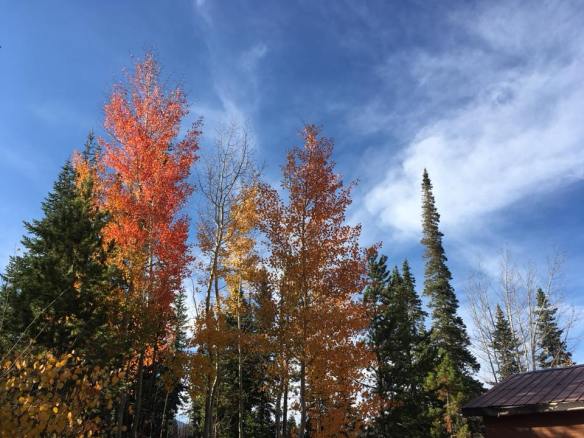
CO fall 2018

First, I listened again to Brené Brown’s Braving the Wilderness.  I highly recommend this book to help us all, conservatives and progressives alike, to engage (not avoid) one another this election year with a lot more compassion, civility, and mutual respect.  Throughout the book Sister Brené shares personal stories as well as evidence from her research that define true belonging, which I think of as another expression for self-actualization and self-transcendence.  In her words:

True belonging requires us to believe in and belong to ourselves so fully that we can find sacredness in both being a part of something, and standing alone when necessary. But in a culture that’s rife with perfectionism and pleasing, and with the erosion of civility, it’s easy to stay quiet, hide in our ideological bunkers, or fit in rather than show up as our true selves and brave the wilderness of uncertainty and criticism.

Attune and differentiate:  these two practices are not only not mutually exclusive, they are essential and integral for whole person and societal health and well-being.  Read the book to adopt her four practices to advance true belonging, for yourself and for all of us:

  1. People Are Hard to Hate Close Up. Move In.
  2. Speak Truth to Bullshit. Be Civil.
  3. Hold Hands. With Strangers.
  4. Strong Back. Soft Front.  Wild Heart.

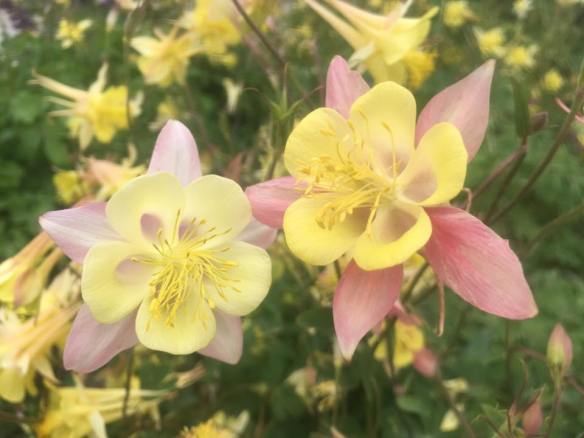
Sister columbines

Second, I met Massimo on Ozan’s last Inner Circle Zoom call.  He is a designer and facilitator from Italy—thank you again, Ozan, for connecting so many of us all around the world!  Massimo has launched a blog, which resonated with me because he also advocates finding your voice (differentiating) as well as finding a community of belonging (attunement) as a reason to write:

…Meet new people and to interact with them

Learning adventures can make you feel on a solitary path, too much unbalanced on the input, reading and digesting side without much interaction. Expand your network, look for more interactive exchanges with whom might provide an alternative, critical point of view compared to yours. Exposing your opinions leads self-selecting people to network and resonate with you. Find your tribe. We need many and none at the same time. You need different communities where to manifest and explore your interests. On the other hand, you need to better focus on creating those which are more fertile ground to nurture your continuously changing interests and aspirations.
IMG_7689

Third, I read David Brooks’s article in The New York Times on the ethos of Scandanavian education.  Eloquent as usual, he synthesizes a complex set of ideas into language we can all understand:

19th-century Nordic elites…realized that they were going to have to make lifelong learning a part of the natural fabric of society.

…(Their system) is devised to help (students) understand complex systems and see the relations between things — between self and society, between a community of relationships in a family and a town. 

…Nordic educators also worked hard to develop the student’s internal awareness. That is to say, they helped students see the forces always roiling inside the self — the emotions, cravings, wounds and desires. If you could see those forces and their interplay, as if from the outside, you could be their master and not their slave. 

…Their intuition was that as people grow, they have the ability to go through developmental phases, to see themselves and the world through ever more complex lenses. A young child may blindly obey authority — Mom, Dad, teacher. Then she internalizes and conforms to the norms of the group. Then she learns to create her own norms based on her own values. Then she learns to see herself as a node in a network of selves and thus learns mutuality and holistic thinking. [See Changing on the Job by Jennifer Garvey Berger for more on this theory of adult development.]

Scandanavians…have a distinctive sense of the relationship between personal freedom and communal responsibility.

(Meanwhile, in the United States…) If you have a thin educational system that does not help students see the webs of significance between people, does not even help students see how they see, you’re going to wind up with a society in which people can’t see through each other’s lenses.

IMG_1804

In 2020 more than ever, we need to cultivate much stronger relationship skills.  We must identify and honor our core values and stand up for them, even when attacked by those closest to us—perhaps even especially then.  How we honor our best selves determines how we honor others.  When we show up at our most honest and authentic, we can call forth the same in others to meet us.  We can relate as fellow humans, inextricably connected, mutually interdependent, and all in it together.  Once we realize this, we can know in our hearts that we truly belong to ourselves and to one another, and we can more easily get on with the world’s most important work—connecting humanity in health, safety, and love.

Be a Connecting Node

DSC_0520

How would you describe American political culture today?

What about the culture at your workplace?

In your family?

Are dissenting voices welcomed?  How do those in authority wield their power?  Do the led have a say in decisions and policies that affect them?  Are their needs and interests taken into account by those who lead?

What role do you play in each of these systems?  How do you contribute to the function, dysfunction, morale, and relationships in these interconnected, overlapping, inextricable and sometimes tenuous systems?

How much of these cultures do you own, do you take personal responsibility for?

I have written before about the interaction between a system and its individuals.  In each of the systems I name above—our nation, your workplace, your family—you are a single individual, a node [a point at which lines or pathways intersect or branch; a central or connecting point].  You are connected, directly and indirectly, to every other node in all of your systems.  Thus, you connect each of your overlapping systems to every other one.  So do I.  This is how we are all connected, every single one of us, and our planet.

Thus, what you do affects me, even if I have never met you, even if we live on different continents, in separate generations, speaking mutually unintelligible languages, and vice versa, for all of us.

Octavia Butler said it best:

All that you touch
You Change.
All that you Change
Changes you.
The only lasting truth
Is Change.
God
Is Change.

So how do you change what you touch?

Do you make it better than it was?  Does the change you make make you better in return?

If the only lasting truth is change, then what do we want tomorrow to look like?  What about next year?  What kind of world do we want our grandchildren and their grandchildren to inherit?

Are you a node that connects, using your power and love to thicken the ties between your adjacent nodes and systems, making them stronger and more resilient?  Who is healthier, stronger, and happier for you having touched them?  How have they then extended that health, strength and joy to others?  How have you resisted destructive forces and stood in the way of systems disintegration?  Whom have you protected?  What did it cost you, and what did you gain?  What have you earned?  How will you persist?  What and who hold you up?  On which nodes do you lean, from which do you draw strength, and how then do you pass that strength on?  How do you influence and co-create the culture around you this way?

Or are you a destructive, severing node?  How do you go around blowing up connections, weakening relationship infrastructures?  Maybe you don’t see it this way. Perhaps you see your work as culling, pruning, removing extraneous nodal debris, clearing the path for a more righteous supersystem to rise.  What does this cost you?  Is the benefit worth the price?  Who are your coconspirators in this effort?  How do they change you for your connections to them?  How do you expect your connections to other destructive nodes to evolve?  What is your impact on your systems cultures, being this way?

I suspect we all possess both poles of nodal potential.  Probably most of us go about our days in relative mindlessness, speaking and acting as our surroundings and culture dictate, by convention and custom.  We suppress the inner dissonance that arises when our personal instincts run counter to prevailing winds of rhetoric.  We fear losing connections if our personal nodal identity reflects a different light or sounds a different note from the collective thrum.  The status quo feels easier to uphold.

I posit to you today that our systems are disintegrating fast, eroded by myriad destructive nodes, spreading like slime mold on a global petri dish.  I argue that our collective political culture suffers much today from these destructive nodes, and connector nodes struggle to nurture ties and maintain relationships.  In such times, we may feel tempted to give in, to allow our inner rage monster to tantrum, to succumb to swelling, destructive, disconnecting culture.  Indeed, it is hard to resist.

And yet, we continue.  We march on.

Culture is created and maintained in each day to day interaction between all members of a system. Any individual may choose, at any time, to maintain the status quo or make a shift. It is the accumulation of multiple small shifts, simultaneously and in series, that moves a system to a new, improved state.  Each day we awaken, we have a choice—an infinite series of choices—to make a shift toward connecting and strengthening our intertwined systems.

Do not wait for someone else to go first.  Make the choice yourself, today, right now.  Be a connecting node.  Speak and act, post online, and show up in person, irrefutably, as a connector.  Make your touch productive and generative, inclusive, empowering, and communal.  See how this changes how others show up to you, and how that changes you for the better still.  Then watch the slime mold recede before your eyes as connector node energy amplifies and restores balance.

Slime molds recur.  Connecting nodes hold the line.  We need you.

What I’m Learning About Equity

IMG_1804

My friends, I am humbled this weekend.

A year ago I agreed to present on culture change to the inaugural WEL cohort, a group of 18 amazing women physician leaders.  I had no idea at the time what an honor and privilege this would be.  This would be the last in person meeting of their 18 month training on Wellness, Equity, and Leadership.  Having just completed my own 10 month leadership training, I empathized acutely with the bittersweet bonding and pending farewell among these sisters.

For two days I received infinitely more than I offered, and I saw again how membership in a mutually respectful, supportive, and empowering tribe can transform any individual from star to superstar.  Truly, these women were superstars before this tribe was formed; but whereas before we probably only needed dark sunglasses in their presence, now we need welder’s masks.

Gender, race, socioeconomic status, mental health status—these factors among others are all subject to unconscious bias and thus discrimination, in all arenas of society.  These WEL women will have a hand in changing that for the better, of this I am certain.  I’m so proud to know them all.

The night before my presentation, I messaged my friend who has helped me think more deeply about these issues in the past year.  I wrote, “It reminds me of your idea of approaching inclusion first, which I now see as wide psychological safety.  As you said, there can be a room full of white men and all may not feel included. And in my mind, that precludes true, open and honest collaboration and productivity.  It prevents any forward movement toward diversity or equity. When we don’t feel safe we revert to scarcity and survival thinking.  We look out only for ourselves.  Nothing good happens here.”

What about the one Old White Guy (OWG) among women, how does he feel?  Dr. Clif Knight, Senior Vice President of Education for the American Academy of Family Physicans and WEL steering committee member, owned this distinction this week.  He reported his recent self-identification as ‘a HeForShe.’  My heart leapt for joy.  Later I took him by the lapels and shook him (gently), practically yelling that I was so excited, and wished for him to recruit all of his OWG friends to the cause.

I thought again about my friend above, also an OWG.  I know him to be kind, generous, respectful of women and a genuine ally.  What about his idea of working on inclusion first?  After a long, deep conversation with one of my new WEL friends, with whom I’m also thinking about equity issues for Asian-American physicians, a new insight dawned on me, and I wrote to her: “Practicing inclusion INCLUDES the OWG ‘oppressor’! 😱  If we talk only about him needing to include others, while we make him feel excluded himself, how can we ever expect to enroll him in our cause or even behave in the way we ask? We do how we feel. And when we feel threatened and marginalized, especially from a place of loss, we act accordingly…”

Another new WEL friend, Dr. Dawn Sears, has already taken this idea to heart and made an impact in her community, elevating women’s and men’s awareness of gender disparity in medicine, and helping them fight it together.  Check out her powerful presentation to colleagues here, full of evidence as well as unsettling personal stories.  In it she directly and kindly addresses the men in the audience, informing and inviting them to join the fight, for all our sakes.  She names the contrarian men who have held her up on her professional journey, defying gender bias and paving their own HeForShe way for others.  She includes men in order to enroll them in the movement.  I encourage all to view the talk—find out how you, as colleague, patient, and all around good citizen, man or woman, can help improve the system for us all.

Once again I thought about my friend.  I wrote to him again:  “I wonder if I inadvertently made you feel excluded, or at least ‘other’d’ when I asked you to read Feminist Fight Club*.  DUH, the intended audience for that book is women.”  He was gracious and encouraging in his response, and I look forward to continuing our conversation for a long while.

Tonight I feel wildly optimistic.  So many strong, visible, articulate, creative, powerful and loving people all over the place, all working to make the world better for all of us, WOW.  We will make a difference, my friends.  We are not only allies; we are accomplices.  If we go together, we can do anything.

Onward, friends.  We’ got lots to do.


*He made an earnest, good faith effort, and did not finish the book.