What Does Meaning Feel Like In Your Body?

I recently had the privilege again to meet with a group of bright, hard-working medical students.  Their college mentor, my friend and colleague, invited me to lead a discussion on meaning and stress.  She saw them, only starting their second year, already losing sleep and well-being over choosing a subspecialty (they do not have to declare until 2 years from now).  I recognize a similar anxious urgency in my own son, who applies to college this fall.  My friend and I wish for all of these young people to suffer less and really enjoy the journey of learning and integration, so we sat them down for a chat.  As usual, I learned at least as much from our conversation as the students did.

We discussed the Meaning to Stress Ratio, a framework I started using with patients years ago.  In essence, I posit that if your experience of meaning/personal fulfillment at work outweighs your experience of stress, then it is likely a sustainable situation.  We can afford to pay high amounts of stress if the work has enough intrinsic value to us.  Many students seem hesitant to choose certain specialties for fear of stress (hours, responsibility, risk), among other things.  Some are even prepared to forgo their true interests and passions, and commit to fields with better, lower stress ‘lifestyle’. 

My friend and I, sitting in the circle of students like a couple of Cub Scout den mothers, tried our best to reassure and encourage her students that they, like we who went before them, would figure out their true places in good time.  Our goal was to give them both moral support and some concrete tools to navigate the journey more lightly.

“What does meaning feel like in your body?” This question occurred to me while preparing for the session. I had never thought to ask it, to anyone, before now. For years I have asked patients where/how they feel stress in their bodies. The intent is to strengthen self-awareness and identify smoke alarms of sorts, so people can take steps to head off unhealthy consequences of excess stress and rebalance self-care practices. And though I ask patients about sources of meaning and personal fulfillment in work, I never wondered what meaning actually feels like, physically. How fascinating!

I thought to ask now because these students are still searching for meaning in their work (lives), while many of my patients have long since identified and pursued it.  If body signs of stress are smoke alarms, perhaps body signs of meaning are smoke signals.  They draw us in the direction of what needs us, and what we need.  Students reported sensations like ‘energized,’ ‘light,’ and ‘revved,’ and feelings of satisfaction, contentment, peace, and inspiration. They described being in flow.

In the end, we agreed on three practices for my future colleagues to develop as they find their rightful place in our profession.  I write this as a message to those students—Onward in solidarity:

Know your body signs.  Check in with yourself physically on a regular basis.  What body systems agitate and/or crash under stress?  How does this manifest in your behaviors and performance?  Your relationships?  When do you notice the opposite happening, what does that feel like, and could this be a sign of meaning?  Once you know your signs, what will you do when you notice them emerging?  How can you set your personal marathon course with pee stops and goo stations where you need them?  How do you feel at your highest and best, and what helps you get there?  How can you get more of that?

Maintain strong boundaries and observe.  There will never be a shortage of people, mostly older doctors, telling you why you should or should not choose this field or another.  They will project their own biases, disappointments, pride, and traumas onto you, ostensibly to help you, but I suspect it’s a version of self-soothing for them.  Do not let them enter your psyche; they may not have your best interests at heart.  Rather, look around for the people who exude joy at work.  Find the ones with whom everybody loves to work, the intense yet relaxed, the energized, light, satisfied, and peaceful ones.  Interrogate them about what makes them click at work, and see if it resonates with you.  Observe yourself in their presence—do you vibrate at the same frequency?  What does that tell you?

Cultivate relationships with those who/m: 1) you admire, 2) seem to balance meaning and stress well (then probe their practices), 3) sincerely care about you and your well-being, 4) will give you honest and loving feedback/reflections/observations about you/r attitude and impact, and 5) will stick with you through the hard times and hold you up—and whom you would support in kind.  These are the people who earnestly call you out and forth, who help your best self shine, sometimes through your own BS.

I’ll find a way to translate these principles for Son, as he writes his college essays. If only I could breathe peace and excitement into his lungs, and suck out the anxiety and pressure. For now I can at least be one of those loving mentors, standing by with Gatorade and cool towels when he swings by me this lap and the next, and the next.

Deep breaths, my friends.  Find your pit crew and trust the process.  You’ got this.

Strategies to Get Through

How do you keep going when life gets really hard?

Lately I’m having to pull daily (sometimes hourly) on mantras that hold me up, and I’m also learning from my friends’ examples.

Are We Okay Right Now?

Previously, in life-threatening situations when I was stunned and dumbfounded and also knew I had to hold it together for others, this was the question that got me unstuck.  Obviously we are not totally ‘okay’ if it’s a crisis.  But when I compare current state, right this minute, to worst case scenario (which could happen, hence the crisis) and we are not there yet, then I can take a breath, regain my wits, and take the next necessary step.

One Breath

People say, “One day at a time.”  But so much can happen in one day.  That interval is too long.  Everything can change in a moment—of misunderstanding, of misspoken word, of impulsive action.  We do things in a moment and it’s 来不及后悔—literally ‘cannot regret fast enough’—we can’t take it back, the damage is done.  So one moment at a time is even sometimes too long.  “One breath at a time” seems more helpful.  If I can get one breath’s distance from my impulses, maybe I can make a better choice of words, actions, expression or attitude.  Depending on what’s going on right now, I can be elastic—taking everything One Day, One Moment, or One Breath at a time.  When I can get up to one whole day, it reminds me to be grateful and revel in the good.  When I take one deep breath, in this minute when we are mostly ‘okay,’ I can also find the good, and then a way to keep going.

Show Up Loving

My friend Donna gets it.  When we share our challenges and struggles, we show up loving for each other.  Donna also teaches/reminds me to show up loving to myself.  Because when I show up anywhere or to anyone in self-loathing, nothing good happens.  This doesn’t mean I absolve myself of responsibilities and accountability.  I do not stop striving for learning, excellence, and progress.  It just means I allow myself to be fallible and imperfect—to be human.  When I do that for myself, I’m far more likely to do it for anyone I encounter.  I can take another person’s perspective more easily.  I can show up loving to them, and also hold them accountable, as I do myself.  It’s a win-win, even if it’s hard and painful.

I’m taking a break from the blog for a while, friends.  Hopefully not too long, and not total silence.  Maybe I’ll find a way to post shorter pieces, and/or maybe just not as often?  I’ll figure it out.  Thank you for reading all these years, and for your engagement and support.  Peace to you all.

Cultural Perpetuity

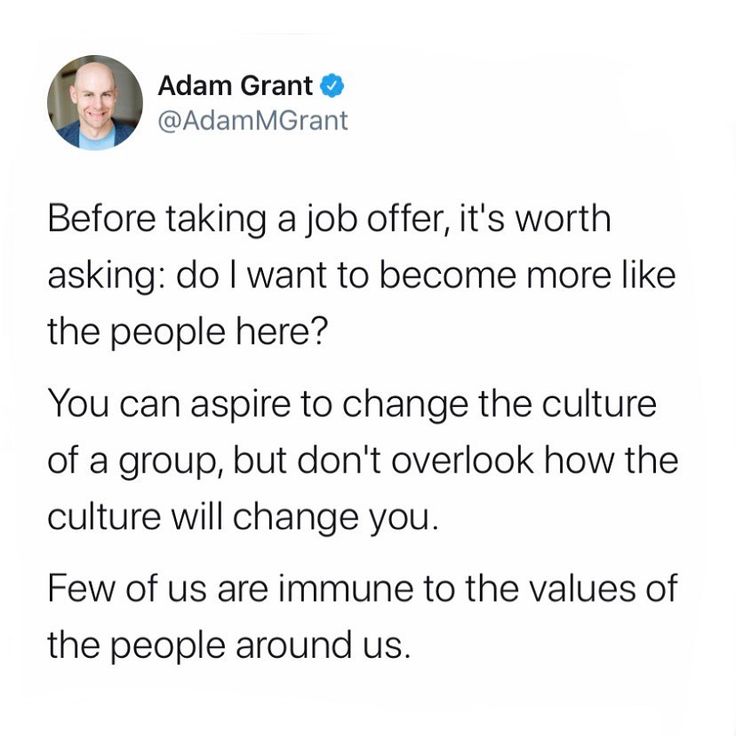
What kind culture do you wish to perpetuate?  What specific actions, policies, behaviors, and outcomes would it manifest?

I learned the term ‘cultural perpetuity’ this past week, from a thought-provoking article on how Maslow’s Hierarchy was influenced by and also misrepresented Blackfeet Nation teachings:

  1. Self-actualization. Where Maslow’s hierarchy ends with self-actualization, the Blackfoot model begins here. In their view, we are each born into the world as a spark of divinity, with a great purpose embedded in us. That means that we arrive on earth self-actualized.
  2. Belonging. After we’re born, imbued with a divine purpose, the tribe is there to love and care for us.
  3. Basic Needs & Safety. While in Maslow’s model, we find love and belonging only after attending to our basic needs and safety, the Blackfoot model describes that our tribe or community is the means through which we are fed, housed, clothed, and protected. The tribe knows how to survive on the land and uses that knowledge and skill to care for us.
  4. Community Actualization. In tending to our basic needs and safety, the tribe equips us to manifest our sacred purpose, designing a model of education that supports us in expressing our gifts. Community actualization describes the Blackfoot goal that each member of the tribe manifest their purpose and have their basic needs met.
  5. Cultural Perpetuity. Each member of the tribe will one day be gone. So passing on their knowledge of how to achieve community actualization and harmony with the land and other peoples gives rise to an endurance of the Blackfoot way of life, or cultural perpetuity.

I also listened this week to the Building an Anti-Racist Workplace episode of Adam Grant’s podcast WorkLife.  It’s an insightful, enlightening, and empowering interview with John Amaechi, whose work I will now explore further.  In their discussion on allyship, Amaechi points out that we upstand against racism and sexism not just to help our individual friends or coworkers, but because we uphold certain core values.  Thus, we speak and stand up to defend and disseminate a certain culture—to perpetuate it:

Adam Grant (21:43):
I wanna talk a little bit about sort of the- the ally perspective here. Just thinking about my own failures in anti-racism and other people who I know, recognize the problems and care about the problems, but haven’t done much about them, I keep coming back to this literature on psychological standing.That sense that, you know, it’s- it’s not my place, it’s not legitimate for me to speak up because I’m white. What are your thoughts on overcoming it and getting those people who are by-standing for those kinds of reasons on board?

John Amaechi (22:13):
There’s a couple of things that I’m trying to do. One of them is to stop the alignment of allyship with black people as individuals and start the alignment of allyship with their own principles or with their organization’s values. So racism is an incivility. Sexism is an incivility. I do not require sisters nor a mother, nor a wife to be against sexism and misogyny because it is an incivility. If I’d intervene on something that’s racist, it’s not on my behalf or another one of my black colleagues. It’s because it’s an incivility against the values that people say they share. Today it’s not about an individual. It’s about standing up for your values and understand that you don’t need to have a black person in your team for that to be important because the presence of a black person has never been required for racism to occur. The presence of a woman has never been required for sexism to occur. As men, we know that the absence of woman reveals sexism and misogyny.

What culture do you lead?

In my role as interim clinical director of a small practice, I see myself as a steward.  My best contribution to most places I inhabit is to highlight and foster relationship and connection.  At work, this manifests as effective teamwork, high engagement, and positive morale.  Last year as we recruited for a new medical assistant (MA), I got to listen on the phone as our current MAs interviewed a candidate.  Through my own questioning, the candidate’s responses were short and sedate.  Then each MA on the team met with her, describing with energy and conviction how they live out our core values of collaboration and accountability, as well as our mission of providing compassionate, holistic patient care.  With each encounter, I heard the candidate’s responses lengthen and deepen.  I heard her own energy and engagement rise to match that of the team.  It was one of my proudest moments as director—I could see (hear) and feel how far our culture of connection has come, and how it could persist after I pass the baton to the next director.

What is the dominant (perpetual) culture in America?

Do not underestimate the complexity of this question, and its profound implications.  The first answer is, of course, it depends whom you ask.

For far too many, the dominant American culture is white male supremacy.  For the past year, I myself find it inescapable.  Increasingly, every time I consider what to post to this blog, or jeez, every day and in almost every domain, the primacy of white men pervades my consciousness like smog on a hot, humid day.  Let me be clear:  White men are not each and all bad; I do not assume every one is a racist sexist, even the actual assholes.  But whenever American systems are examined, we find that they are primarily designed, favored, empowered, and perpetuated by and for white males—it’s baked into our societal structures, hence the terms ‘systemic’ and ‘structural’ racism and sexism.  If you are a white male, it may be hard for you to see the barriers that have not impeded your life journey (Amaechi discusses this in the podcast as well).  You may have answered that dominant American culture is one of success with hard work, of equal opportunity, and of individual freedom.  Of course that is a culture we’d all love to perpetuate.  How could we achieve it for everybody?

What culture do you work to perpetuate?

I think it’s about the values and commitments we hold highest and manifest most in our daily activities.  What do our daily encounters say about our priorities?  What do we want more of, and thus work for every day, for ourselves, our friends, our colleagues, patients, parents, and children?  I want mutual respect and unqualified acceptance.  I want sincere valuation of diversity and real, wholehearted inclusion and integration of that diversity—of thought, experience, wisdom, and perspective—into a coherent, synergistic mosaic of strengths, engaged in service of elevating every individual to their highest potential.  I want to perpetuate a learning culture, one that operates with a growth mindset, founded on kindness, generosity, humility, curiosity, and resilience. 

None of this happens automatically; even well-established gardens of inclusive culture require regular tending.  I have to renew my commitment every day, in every encounter.  I fall down regularly.  And I give thanks every day for loving companions who help me up.  I try also to appreciate the challengers, to see them as allies rather than enemies or hindrances.  That is walking my talk, no?  To value those whose goals and values don’t align with my own, to find a place for them—for everybody—in my world?  I’m strengthening my practice of self-assessment.  How did I walk the talk today?  How can I do even better tomorrow?  The more concrete and specific, the better—words, actions, and attitudes.  It’s my own version of “trudging the road of happy destiny.”

On that note, I leave you with two more resources that hold me up this weekend:

First, Hank Azaria’s conversation with Dax Shepard and Monica Padman on the Armchair Expert podcast.  They discuss addiction, privilege, and racism, among other things.  What an inspiring example of vulnerability, courage, humility, connection, and lifelong learning and growth.

Second, a Forbes profile of Sharon Salzberg, 4 Ways Loving Kindness and Mindfulness Can Change Your Life.  You may read them and think, “Duh, I know that.”  But ask yourself, how does your knowing translate to doing

We have our whole lives to practice.  As Simon Sinek says, the goal is not to be perfect by the end; it is to be better today.