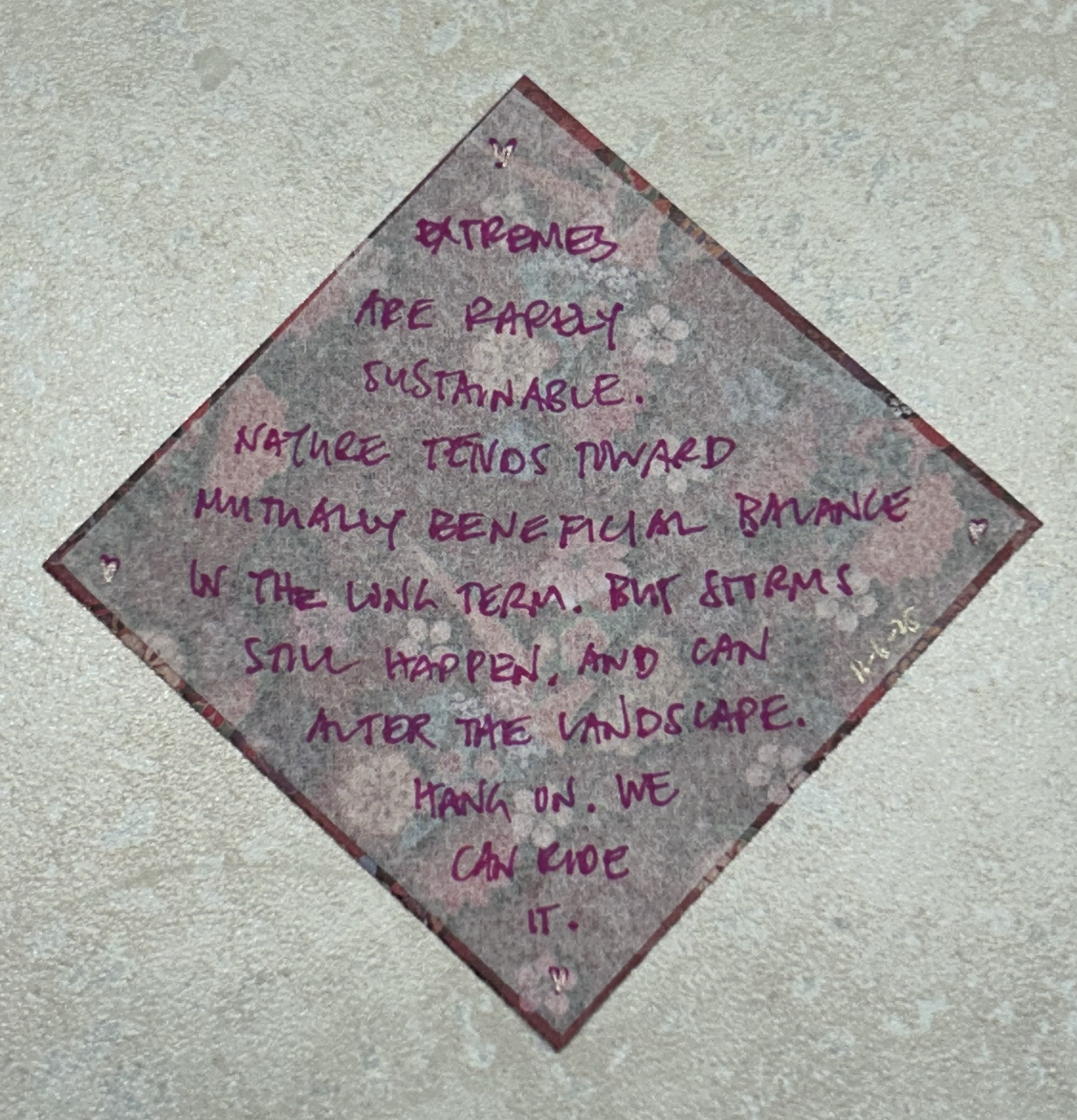
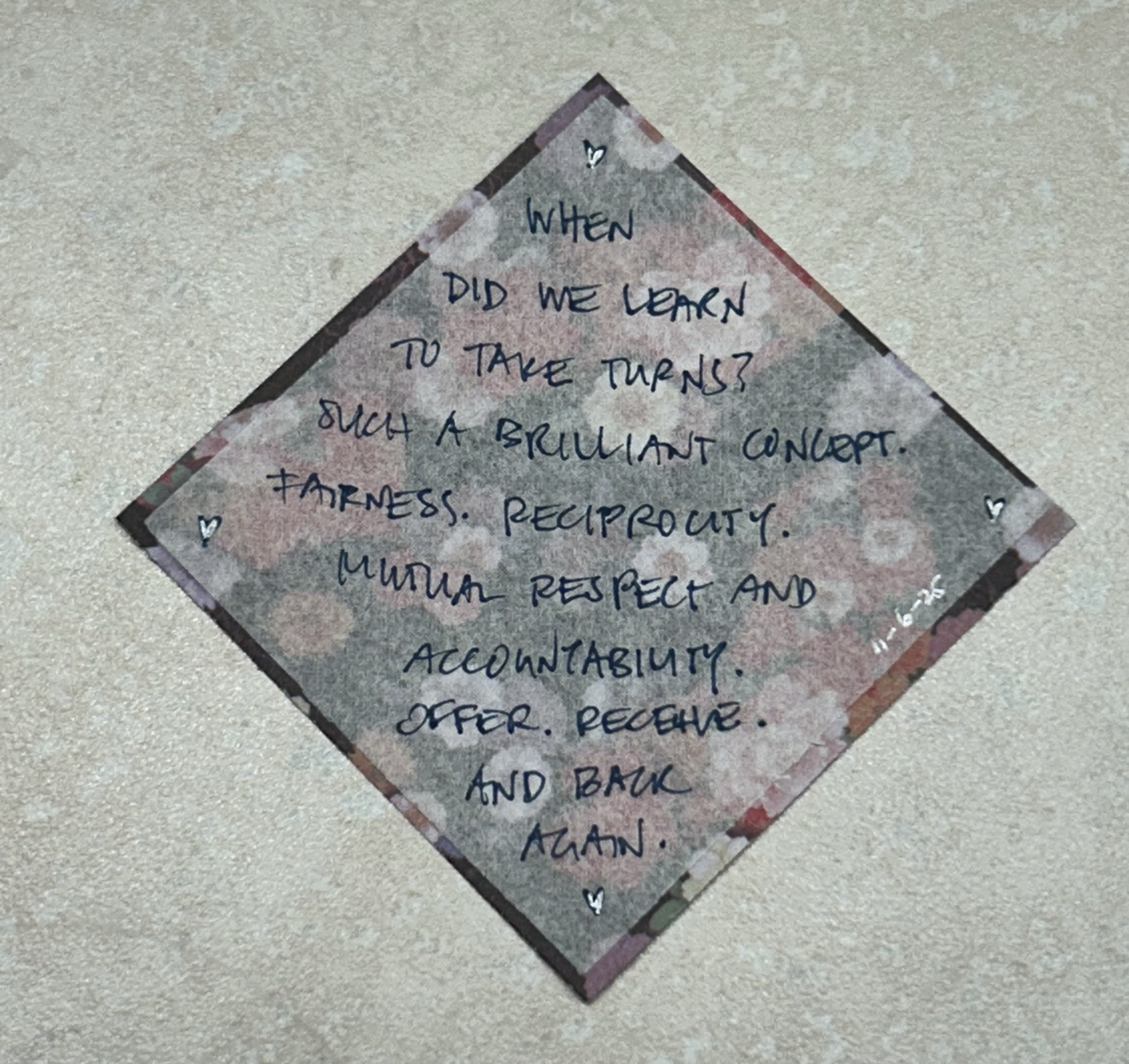
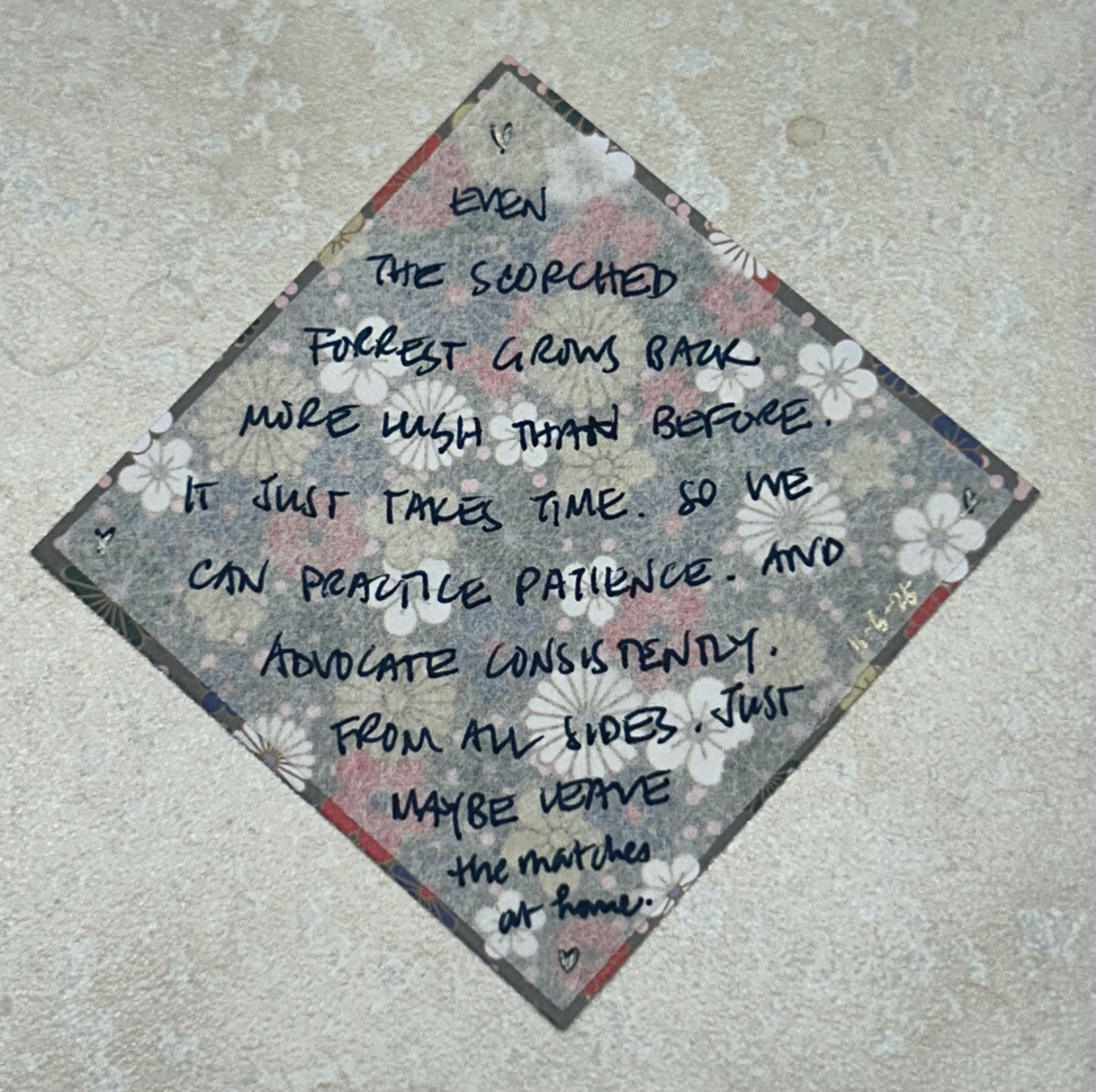
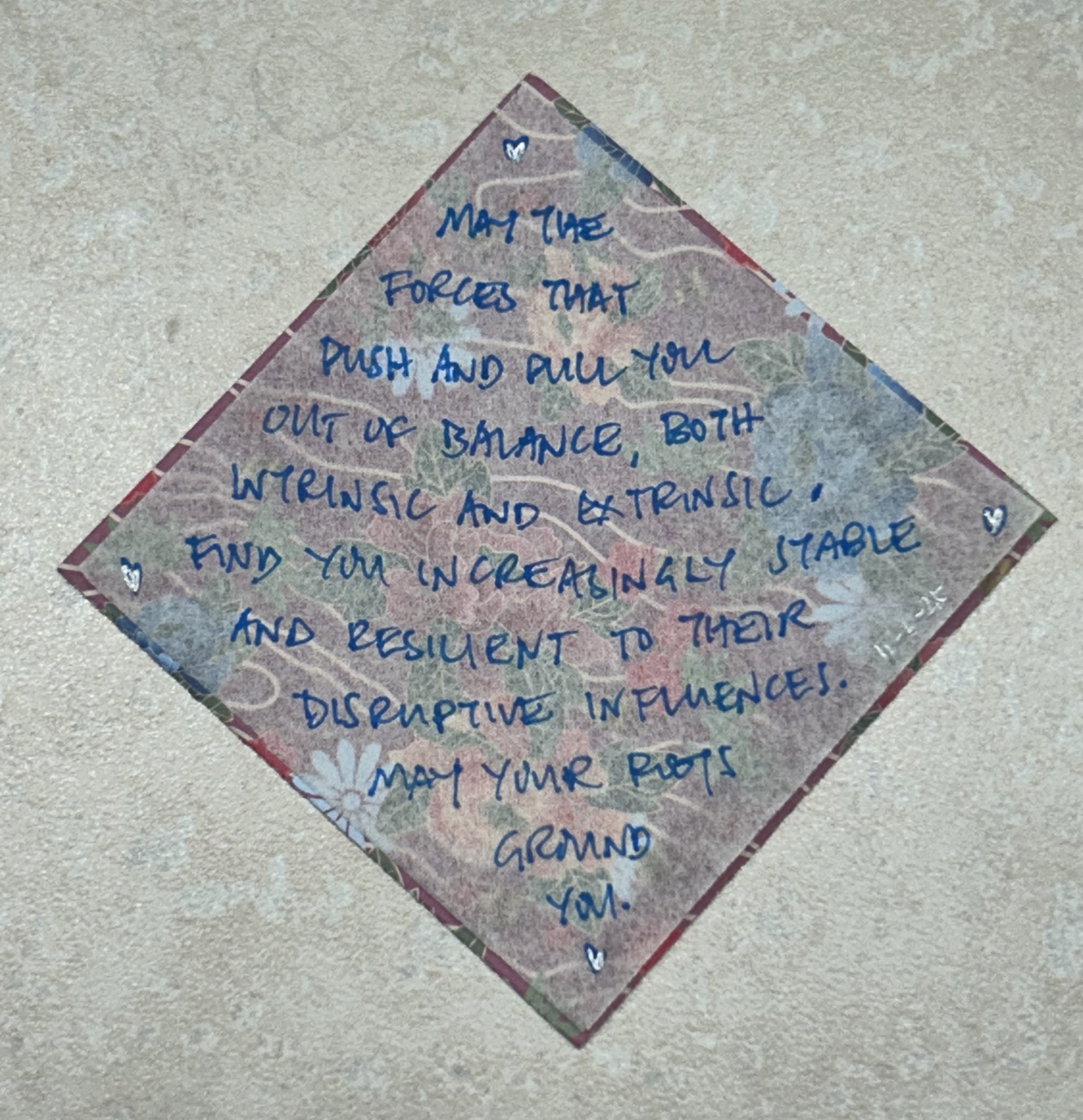
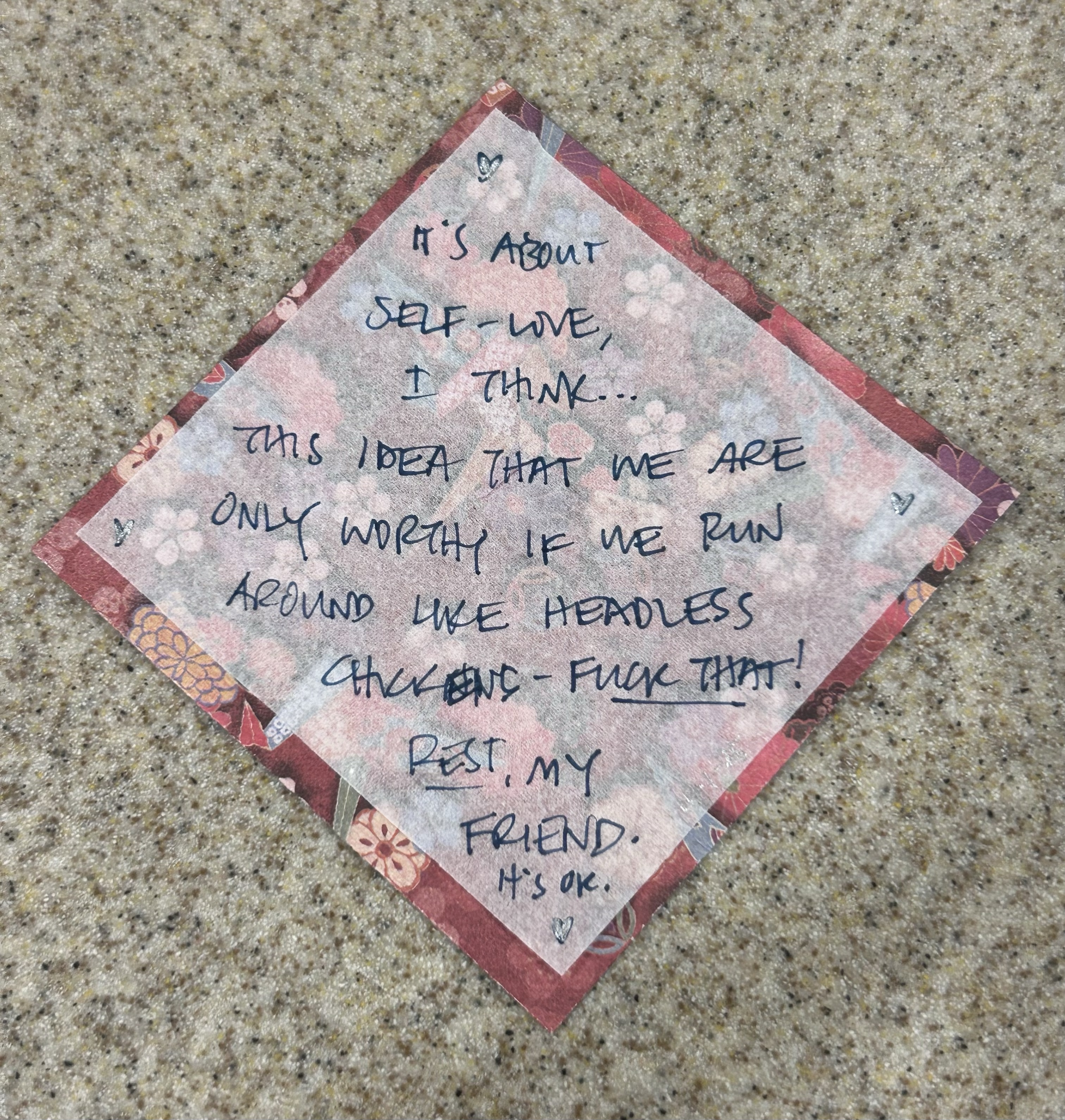
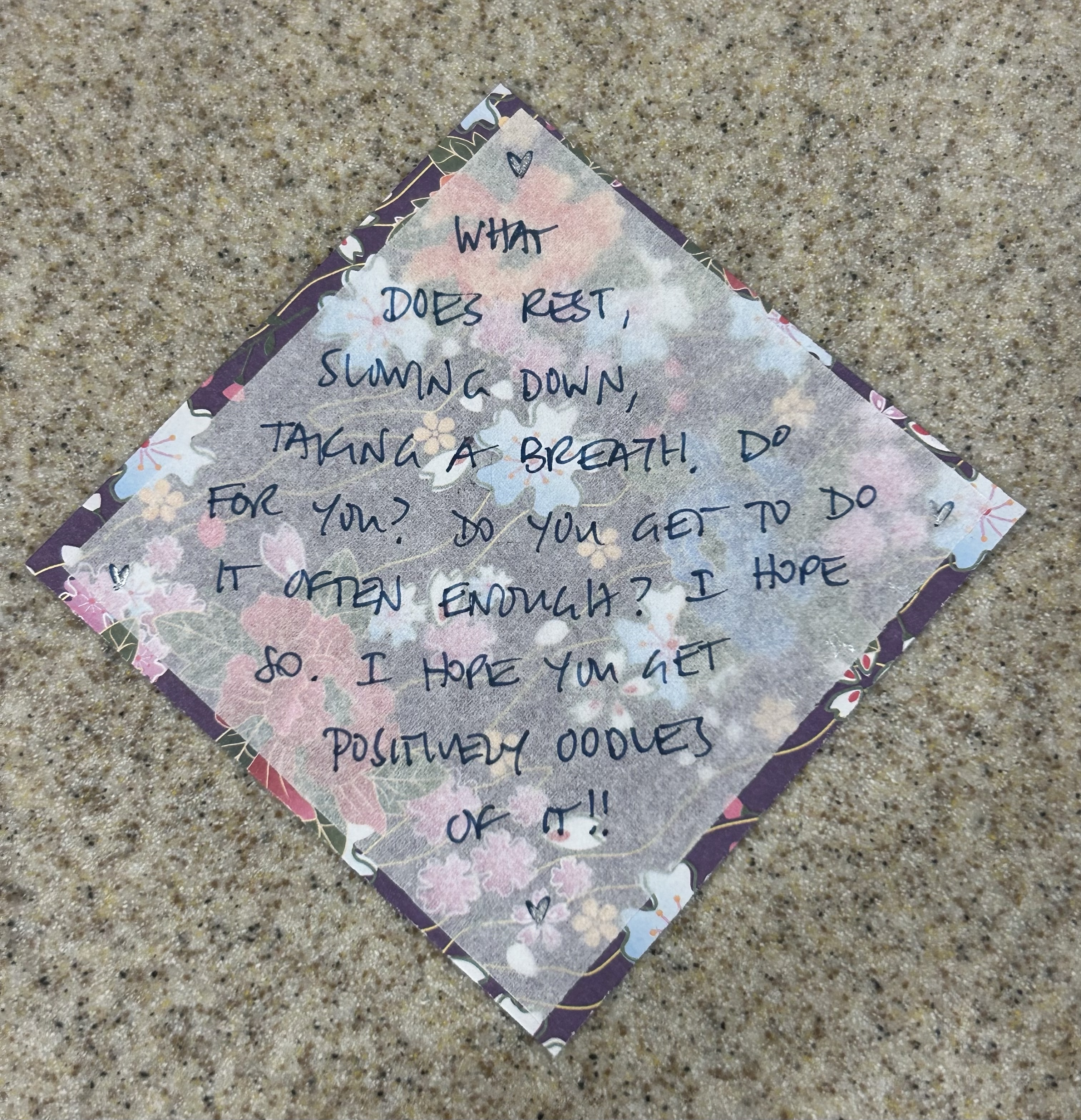
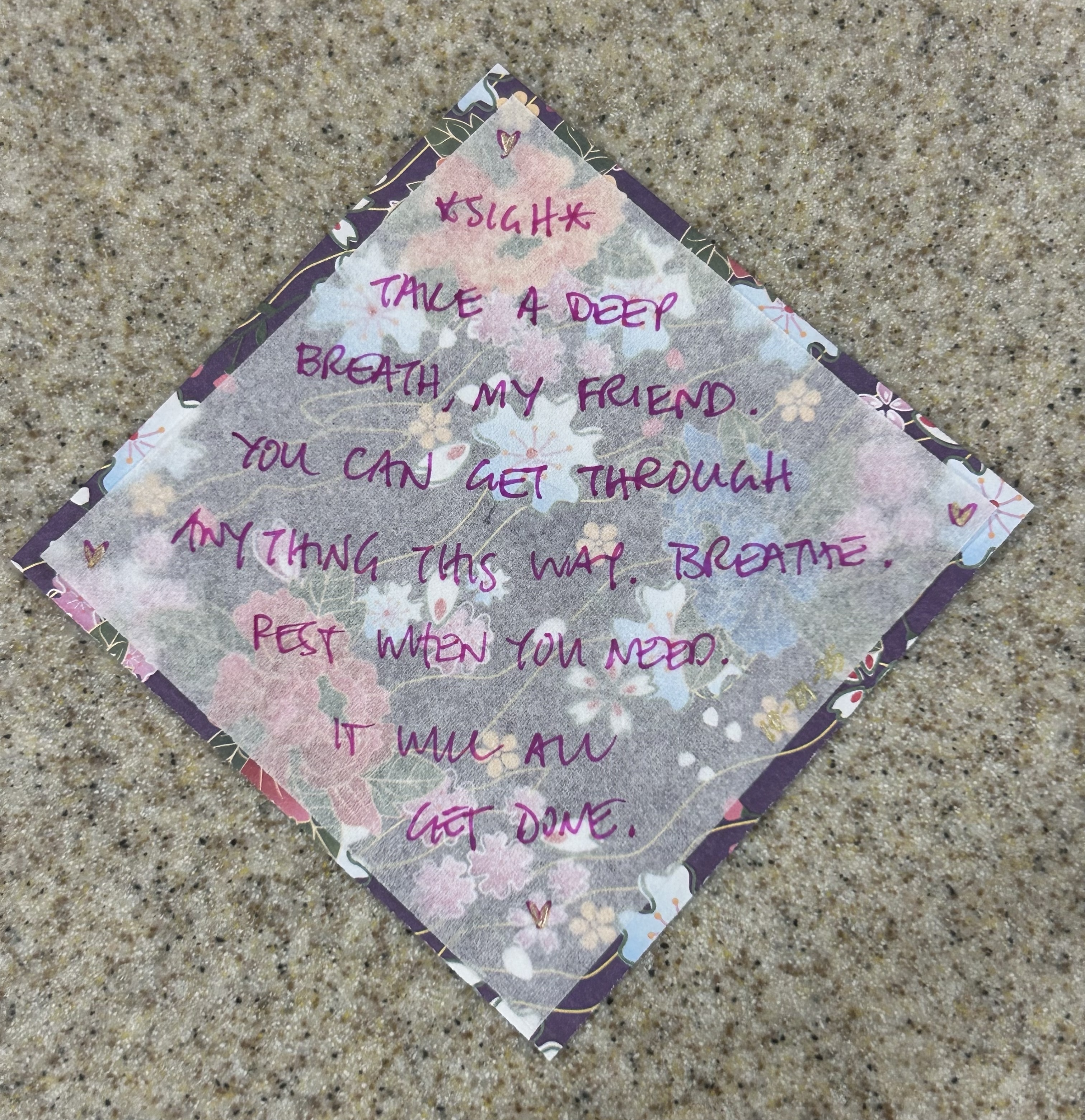
Me, about my Inner Work: “I’ve done all the work I can do with shovels. Now I need drills.” Astute and honest friend: “Or brushes.”
These last several weeks, new insights about my recurrent emotional patterns have emerged in rapid succession. The mind and body know when it’s time to go deeper, when there is bandwidth, I think. And the more I learn about myself, the more there is to learn, about both myself and the methods of learning. The work is infinite, and sometimes we can take a lighter touch.
Talk therapy, coaching, and books can all help us on our way to self-discovery, -understanding, and -regulation. As Christine reminded me recently, I can hold it all loosely. The Work I have done to date makes me generally calm, open, and relatively equanimitous. I should ask those who know me whether thay agree. I still feel physical effects of agitation, and I tolerate them much better. I notice when an uncomfortable encounter lingers on my psyche, and I explore it without the judgement and anxiety I once did. I recognize the feeling of resolution after working through it, and give myself space to debrief that arc of conflict from trigger to conclusion. Each instance teaches me again and anew.
What books have helped you on your self-exploration journey? See some of my recent ones below. I read more slowly these days, giving myself more time to question, explore, and reflect.
So maybe I don’t actually need drills now (yet? ever?). Maybe brushes, yes–all different kinds. Soft and strong, large and small, brooms to watercolor, wielded with knowledgeable if not expert hands, at appropriately chosen excavation sites, with teams of open, curious, and collegial explorers whose goal is to discover, consider, and tell plausible, informative, relevant, and useful stories, and hold them all loosely and lovingly. And what a perfect season now, both this time of year and this time in my life, to wade a little further into the Work. Nice and slow, gentle and kind, curious, humble, honest, and with integrity. That feels right.
Many years ago I sent fun and functional wall decorations to Tom and Janet’s kids for Christmas. I had apparently neglected to include a gift message at the online checkout and still, my friends knew it was from me.
How do your friends know you? How strangers? Colleagues and rivals? What is the essence of you that lingers after any encounter? Is it what you hope or want? Is it how you know yourself to be? Who would you ask, and what do you feel in your body at the prospect?
What impact do we each wish to have on the world, now and after we’re gone? I think it’s okay if we don’t have a particular wish or plan for it. But let’s be clear: Each and every one of us makes a mark, intentional or not. Because we all matter, truly, each and every one of us.
It occurred to me this weekend what my signature likely is. It emerged like a warm light I’ve always carried that just got a little brighter, a little bigger, catching and holding my attention, waking me from a much needed and now completed psychological (existential?) nap. Small and mighty, as so many great insights are–that little popcorn epiphany has now nudged me to pick up Book work again. I can’t remember when I had put it down, but it was the right thing to do at the time. And now I shall try again. I think I’ll have a lot more fun this time around. So wish me discipline, perseverance, openness, humility, and full ownership of my awesomeness, please? That’s the only way this thing gets out into the world, after all.
What can I hold for you, dear reader? Let’s help each other out, yes? Onward, my friends. We’ got stuff to do.
How do you see and experience your masculine and feminine sides? Consider your strengths and vulnerabilities–how do you relate them, if at all, to gendered aspects of your personality, behavior, and biases? How would others answer these questions about you?
I’ve thought about this idea sporadically for many years, from writing my residency application essay to interacting with fellow physicians in different specialities, to caring for patients in corporate leadership roles grappling with gender stereotypes and biases. It’s complex and fascinating, intuitive and also worth parsing intellectually. The language can be so charged that having a truly open and curious, non-judgmental and exploratory conversation about it is often challenging. Many thanks to my friends who engage and exchange with me so willingly and generously.
This post will live in the questions more than seek answers. I intend to describe and explore, and invite you to do the same. As I consider what to include here, I feel open, calm, welcoming, warm and giddy with potential connection. I wish for a convening, not just of people–readers of this blog–but of the diverse aspects within any one of us. I hold space for fluid and dynamic integration, for easy flow of energy in an infinite, three-dimensional loop of experience that adapts to context, needs, and goals for individuals and collectives alike.
Does this description feel feminine to you? It does to me, and it aligns with how feminine, or yin 陰 energy is often described. The other night as I discussed non-adversarial advocacy with dear friends, I felt the energy of proactivity, purpose, mission, and leadership–what many would align with masculine, or yang 陽 traits. When I think of me at my best, I strive for ‘Strong Back, Soft Front,” integrating these apparently opposing or dissonant vibrations into something coherent, adaptive, and beneficial for myself, my relationships and my contributions to spaces I inhabit.
If we define masculine and feminine as ‘energies,’ then I think we can agree that all humans, regardless of gender, possess both. They manifest in infinite combinations depending on myriad factors. Both energies serve us, and their healthy integration elevates our relationships and effectiveness exponentially, compared to when they are imbalanced.
In the graphic above, add ‘dominating,’ ‘homophobic,’ and ‘misogynist’, and ‘hyper-‘ to ‘competitive’ on the list of words describing Masculine Imbalance. Consider both men and women who exhibit these traits, yourself included, and the contexts in which they occur. In my residency essay I explicitly stated my awareness of medicine as a male-dominated profession, and that I wanted to avoid exhibiting negative male traits as I navigated my career, while also standing up for my own beliefs and ideas. I also intended not to let my naturally caring and agreeable nature be taken advantage of. Now look at the descriptors of Feminine Imbalance, and think of when/where in your life you observe these traits in yourself and others. If we are honest, I think we can recognize parts of ourselves in all of these words, in certain contexts and relationships.
These traits and their integration are especially important to me in leadership. The best leaders do the inner work to integrate both receptive and assertive, nurturing and directive, caring and accountable, soft and strong aspects of themselves, so they may manifest all of it in cohesive and holistic presence for the benefit of all. These leaders are both attuned (feminine) and differentiated (masculine): They sense the emotions and needs of those they lead and still maintain focus and direction to move us together from the front. For an excellent discussion of an example from fiction, watch Cinema Therapy’s episode, Aragorn vs. Toxic Masculinity. It’s an excellent twenty minutes to spend.
“These forces are complementary and present in all phenomena. In some situations, one force might be more dominant. However, this balance may shift depending on what is needed at the given moment.
“Yin: Yin is characterized as negative, passive, and feminine. It represents the energy of the Earth and moon. It is often described as receptive, dark, cool, soft, still, and contemplative.
“Yang“: Yang is portrayed as positive, active, and masculine. It represents the energy of the sun. It is often described as energetic, expansive, and warm.
“It is important to remember that while the yin and yang (are) opposite of one another, it does not mean they are oppositional or in conflict. Instead, they can be thought of as balancing energies that complement one another.”
Where do our masculine and feminine traits and presence serve us well? Where are they a liability? How is this a function of how we balance (or don’t) the energies we manifest? When I need to stand firm and call BS, I can do it lovingly, from a place of caring–attuned differentiation–balanced masculinity. This is different from and related to differentiated attunement, where I am open and receptive to others while also maintaining my own separate, independent identity–balanced femininity.
Whether we describe these energies, traits, and tendencies as masculine/feminine, yin/yang, or in other terms altogether, my wish is for us all to be more aware of and intentional about the energies we maintain, emit, and absorb from one another. I wish for us to practice Strong Back, Soft Front. May we all Attune and Differentiate. Consider thinking Both AND when presented with any dichotomy. Integrate the polarities, seek the win-win.
I intend to write more about masculine/feminine, male/female dynamic and relationship. It’s so interesting and also fraught; I look forward to the challenge of expressing the nuances and complexities clearly and invitingly. Let’s see how it goes!