
NaBloPoMo 2021: Do Good, Kid
Friends, this is SO exciting, I’m growing a successful sourdough starter!!
I scoffed at the pandemic sourdough craze for two reasons: 1. I hate fads, and 2. I hate labor intensive cooking. Then this summer I binged Michael Pollan’s works, and got inspired to make bread from the “Air” episode of his Netflix docuseries Cooked, based on his book of the same title. He made bread making, such an intimidating undertaking, feel accessible and rewarding. I started experimenting, throwing together flour, water or soymilk, lots of baking powder, and then whatever else moved me. Early attempts included coriander muffins, ginger-maple-buckwheat pan bread, cornbread, and pumpkin loaf. No yeast and slack measurements resulted in varying levels of rise and density, and overall happily edible success (mostly)!
I started thinking maybe a sourdough starter would be a fun, next-level project. It’s only flour and water, so failure would at least be inexpensive, and success could open up a whole new world of home cooking! Wouldn’t it be awesome to make something of us, our family, including the microbes that inhabit our house, namely those under the kitchen sink? And then have that something feed us and others, perhaps for years or even generations?
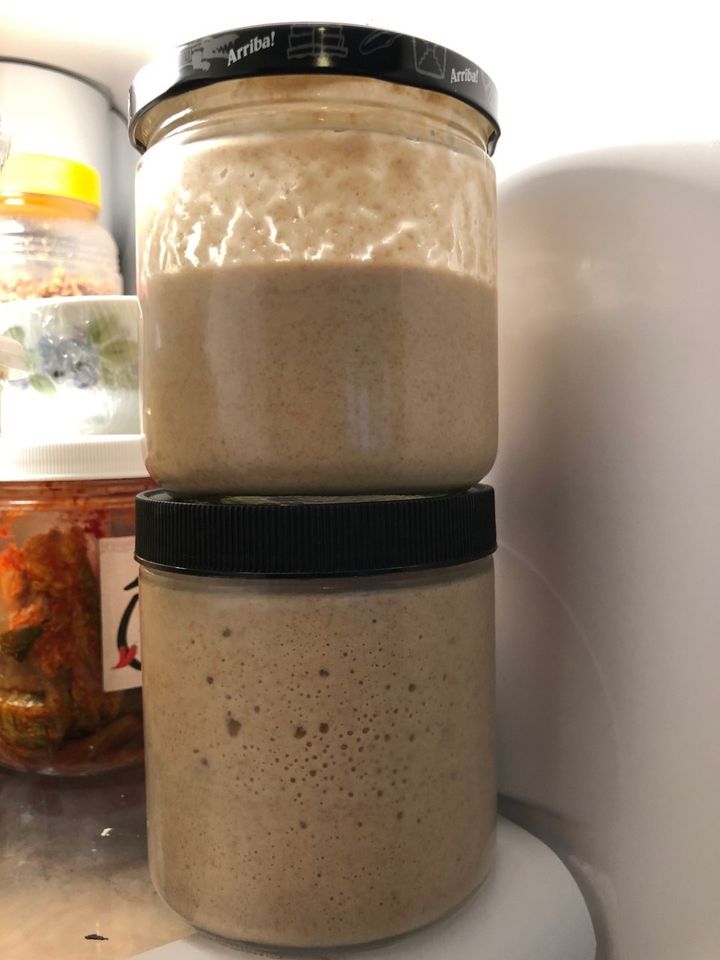
Ta-daaaah, I’m so happy to report that as of Day 7, it’s alive! Sven, as Daughter named it, reliably doubles in volume between twice daily feedings, and emanates a sweet, fruity fragrance. Scooping out a portion every day to ‘discard’ (save in fridge), then mixing in more flour and water, is a messy proposition (I really dislike messy). But it makes me so happy to see it growing and thriving–giving.
This week, in a flash of cosmic inspiration, I apprehended a greater meaning for ‘Feed Your Starter’ as a life action mantra! Sourdough starter is a natural leaven—something that makes dough rise. Oxford Languages also defines leaven (n.) as “a pervasive influence that modifies something or transforms it for the better.” A simple internet search of ‘sourdough recipes’ yields pages and pages of baked foods that this humble slurry of flour, water, and microorganisms transforms, into foods transcendent to just flour and water alone. Sourdough bakers, I’m learning, are an ardent and dedicated tribe, always seeking the perfect crumb or ear. They are passionate.
Sometimes people ask, “What really gets your motor running?” or, “What gets you up in the morning?” In other words, what starts you? What boosts you, helps you rise, gives your life more complexity, aroma, flavor, and texture? And how do you keep it, this starter of yours, alive? What’s your feeding schedule and routine?
Starters are such great metaphors! Let’s say it’s your WHY. It is unique to you, its creator; a product of everything about you. You tend it, nurture it, protect it. Feed it often and well, give it a hospitable environment, and it grows—bigger, faster, stronger. If life gets such that you need to cool the growth, shelve it for a while, it’s okay with that, too. It can happily relax in the back of your fridge for months until you take it out again. Then, when you’re ready, a little time and attention reawakens the bubbly fervor as if nothing happened. It can endure for generations, inspiring people you may never meet to keep making delicious, beautiful things for all to enjoy, that benefit all.
A sourdough starter can activate and enhance so much more than a loaf of bread—just as your WHY can inform, inspire, and elevate any number of Hows and Whats in your life and others’.
And you can share it! In this way, it resembles Simon Sinek’s idea of the Just Cause. One of the five criteria to have a just cause is inclusiveness—everybody can participate. Whenever you feed your starter, you take a portion off. You can throw it away (it’s actually called the ‘discard’) or use it; books of sourdough cooking include myriad ‘discard recipes’. But how much better to give it away? Invite someone else to join in this beautifully messy and loving labor of making something? They can take it home—feed it, nuture it, protect it, grow it—make it their own. And now you’re connected.
I think that’s why I’m so excited about my starter. To me it represents abundance, growth, progress, and connection. The thing I love most is that in another week or so, I can confidently give some to my mom and my sisters, and we’ll all share something really special, something that brings us close in yet another way. I’ll make things with it to share with my friends, and if they wish to adopt their own descendant, I will be more than happy to oblige. So I’ll keep feeding Sven joyfully, just in case.


 Healing Through Connection