Girl Balls

Cojones.

Why use we such a ubuiquitous male genital expression for strength and courage?

And no female ones?

Consider the female gonad. When you rip open a new wound on yourself every month for decades on end, ready and waiting each time to overtake an entire body, orchestrating the coordinated and prolonged creation and delivery of an entirely new and unique sentient being, which the body then must sustain for months longer with only its own nutritional synthetic power, how is it that you are still not crowned the queen of all organs of strength, capacity, and resilience?

“Balls out”, we say, when we hold up boldness and assertiveness–but only when referring to men. Do we only see it when men are heroic and daring? What about when women take dauntless risks, so often on behalf of others? How do we express our admiration for this? BOOBS OUT, I say, when I want to validate a woman’s right to assert her power, agency, and independence, out loud and in front. But it doesn’t do the conviction justice. “OVARIOS,” my friend suggested, when it came up in conversation years ago. Hell yes. I’m still waiting for this to catch on.

Of course strength, courage, and resilience are not always manifest by taking impulsive public action in the face of immediate threats to survival, ego, or status. For how many generations have women held collective humanity up, well after birthing it, serving as tireless caregivers, counselors, mediators, peacemakers, scapegoats, punching bags, breadwinners, and confidants? What countless family and professional units would outright unravel and disintegrate, and then the fabric of society follow, if not for the ovarios deep in the weave?

I write this post not to devalue men or their contribution to society. Their role and relevance are unquestioned.

But please, friends, let us elevate and amplify our praise of women, yes? It is well past time, and there is plenty of room to share on the pedestal.

For a heartfelt rendering of women’s strong, stoic resilience, check out my colleague’s post on her Smiling Grandma.

Onward in solidarity.

Grief Bacon

What are your favorite words or phrases, in any language?

Daughter taught me Kummerspeck recently–literally grief bacon. It’s the German compound noun for the weight one gains from emotional eating.

How awesome is that?

I posted the word on Facebook the other day, and a loving friend of German descent commented, “I hope you are reveling in the bizarre household-nature of German compound words, and not suffering from Kummerspeck.” I replied that I have indeed experienced Kummerspeck before (possibly also now, not sure), and that “I *love* German precisely because by having words for such mundane and yet significant experiences, the language, and thus the culture, validate them and make us feel not alone for having them.”

In med school we learned Mittelschmerz–middle pain–the pain women feel from ovulation, which happens 14 days prior to menstruation (the middle of a typical 28 day cycle). Now I also love Drachenfutter–dragon fodder–‘apology gift (given to a spouse)’. And everybody knows Schadenfreude–joy in others’ misery; but I like Freudenfreude–joy in others’ joy.

In Chinese I particularly love shang nao jin, 傷腦筋, which literally means to wound (shang) the mind (nao jin–‘brain nerve’). It’s used to express when one is exhaustingly vexed by a problem. Similarly, when we say someone is dong nao jin, 動腦筋, moving the mind, we mean they are actively, even agilely, thinking. I also love shuai, 帥, which is usually translated simply as handsome. But the connotation encompasses more than just physical appearance. There is something attractive, masculine, strong, graceful, respectable, and maybe even alpha, all included in the one word, one syllable expression. Chinese language is extremely efficient.

Here are some British expressions I love, which really make me want to live there for a while someday:

Barmy, barking mad, and off your head — crazy

Fiddly — fussy, requiring an annoying amount of close attention

Faff — to make a fuss over nothing

Cheeky — amusingly irreverent (I also love irreverent itself–the word and the way of being)

Dodgy — dishonest, unreliable, potentially dangerous, low quality, or just ‘off’ in some way

Loo — the best word in the whole world for bathroom

Isn’t this fun?? Won’t it be fantastic if everybody writes about their favorite phrases in the comments below? C’mon, it’ll only take a minute!! 😀

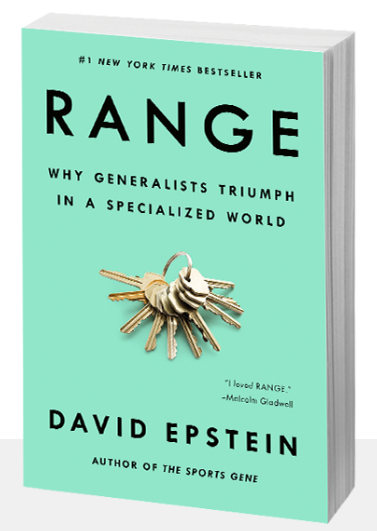
Range

One of my favorite books of 2019; read to see how NASA crowdsourced solutions to their most vexing problems, and other amazing true stories of the value of meandering.

I am a doctor. I do medicine. This is my identity.

Yes, and no.

“Did you always want to be a doctor?” Hell no. I resisted mightily the Chinese-American pre-med stereotype. And no, my parents never pressured me. But then sophomore year of college, I became a dorm health aide. I got a tackle box filled with cold medicine, cough syrup, ibupofen, bandages, scissors, tweezers, rubbing alcohol, etc. Dormmates sought out my fellow aides and me for help with hangovers, food poisoning, splinters, and colds. I taped condom packets to my door. Every month we convened in the student health service basement for case review and didactic education, led by the physician and nurse who ran the program. I was hooked. After that, I could not not be a doctor. Damn.

So I did all the things: Went straight through, taking all the classes and exams, following the well-trodden, traditional path to today. I regret nothing that I did to get here. I also wish I had meandered a little more, taken some more time, maybe… travelled more, seen more, and done more, before committing at age 19 to the rest of this professional life.

So I encourage my kids to study abroad, to take strange, interesting jobs, gap years, to suck all the learning out of every divergent experience they can get, all in service of becoming more of who they are. I want their range to be wider and deeper than mine was at their age, and then to expand further. Son is a sailor and world traveler, and Daughter explores widely in art, fashion, literature, history, and their intersections. They both feel the freedom to make things more than I ever did growing up. Score!

As for myself, it’s not too late! Yes, I’m a doctor. I could not love it more. I’m also a speaker, a writer, a counselor, a dreamer–and who knows what else yet!?

Oh, I’m a book club member! That may be one of the best things I have ever done–exposed myself to smart, diverse women who read fiction, omg. I always thought I had nothing to learn from and could not understand the point of novels. Now I’m slowing getting it. [The Midnight Library, Remarkably Bright Creatures, Portrait of a Thief–highly recommend these, if you have not already read.] Amazingly, I’m currently binging romance audiobook #41–more on that in a future post. 😉 Through fiction I can live vicariously, explore my own inner world from different angles, and just wonder, not to mention connect with others whose experiences of the books diverge acutely from my own. It fosters empathy–how fascinating!

In the end, why expand our range–of experience, perspective, thought, and relationships?

Range allows us to reframe, to expand how we understand things, to realize how much more we have yet to learn. It stimulates curiosity, which fosters both earnest humility and audacious creativity. If we pay attention, really observe and witness the range of diversity around us, we inevitably, paradoxically, come back around, over and over again, to how those differences actually bind us together, and point us to our shared humanity, in the grand scheme of things.

By living and learning widely, paying attention generously and openly, even frivolously, we connect–to one another, and simultaneously more deeply to our true selves, in the fellowship of all of humanity. Wow.

Why, then, live any other way?