A Message to All Patients on Menopause

There has never been a better time to be menopausal than now.

It has taken 20+ years in practice, and living it first hand, to truly understand the experience. For those who don’t already know: This sh*t is real. I feel almost apologetic to all of my women patients for whom my advice to date has fallen flat, even as I have done my best to earnestly listen and understand. Now I feel the struggle in my own body and I get why it is so hard to explain or tolerate. But I could not know what I did not know; there is no substitute for learning through living. Thankfully, the current state of menopause science and culture has turned an important corner. We finally talk about it openly, normalize it, and study women as a unique and whole demographic unto ourselves, and not in comparison to men. This is my first post summarizing my understanding and recommendations to date.

By ten years ago, I had noticed two primary attributes of my women patients who sailed through menopause, compared to those who suffered the most. First, they were at peace with the whole idea. Menopause presented no threat, did not undermine their personal identities or attitudes about youth, beauty, etc. Second, they had their health habits in the five reciprocal domains established well in advance: Sleep, exercise, nutrition, stress management, and relationships.

That said and notwithstanding, each woman’s menopause experience is acutely unique and influenced by myriad more factors than simply personal habits. Genetics and external circumstances together probably drive as much or more of our menopause ‘outcomes’, in complex intersections with our own agency and behaviors. I will not discuss habits or personal practices in this post. Rather, I offer 1) a distilled description of the experience so that my women patients and peers may feel seen and understood and the men in their lives might also get an inkling, and 2) some resources I have found helpful personally and for patients, both men and women.

The Experience (aka The Shitshow)

Altered metabolism and body habitus
The most prevalent and distressing symptom of menopause in my practice is weight gain and mass redistribution. We thicken around the belly and get squishier in general, even if our lifestyle habits have not changed. I think many of us accept this to some extent–unless we have been naturally thin our whole lives, it’s not surprising to see and feel the slide into a widening body shape around age 50. But for a great many women this is incredibly tormenting, because we have exerted heroic time, energy, and resources to barely maintain the middle aged body we had to start with. Look no further than America Ferrera’s monologue from last year’s Barbie movie to see how the pressures of body shape and social norms of youth and beauty make the changes of menopause such an insidious source of pain, shame, and self-loathing for so many women, not to mention just feeling generally less well in our bodies altogether.

Sexual changes
Vaginal dryness, low libido, and pain with sex rank highest among the sexual complaints I hear from my perimenopausal patients. The last couple of years I have asked my men patients specifically about how their partners’ menopause experience influences their own sex life and overall relationship, and the conversations have opened up more meaningfully than I could have imagined. I want to acknowledge here, with great sincerity and appreciation, the quiet and earnest concern and compassion these men express for the women they love. So often men feel flummoxed and helpless, wide-eyed bystanders living in the wake of erratic and recurrent storms wielding only flimsy umbrellas, watching their partners brave wild winds and waves, wondering when it will all calm the f*ck down. Relationships weather the tumult of menopause how they will, many with torn sails and damaged hulls when waters finally recede.

Compounding the direct negative changes in sexual health and function, all of that body shame described above looms large and dark. Sexual relationship is sensual at its core, and when a woman feels poorly in and about her body physically as well as psychologically, sensual connection, both to self and partner, becomes exponentially harder. As a culture we are finally allowing women to talk about this openly, and we all, women and men alike, benefit from the awareness.

Sleep disturbance
I have known for a long time that two things make everything else feel ten times worse: dehydration and sleep deprivation.
Sleep can get severely deranged in menopause, both in its central nature and also from vasomotor instability–hot flashes and night sweats. Of the five health domains, sleep can be the hardest to manage because we feel the least in control of it. Both men and women tell me there is hardly a worse feeling than being exhausted and still not being able to sleep. Consider when you have been chronically sleep deprived: How well did you handle stress? How effective, patient, and loving could you show up for those you lead at work, and for your family at home? How clearly could you think and focus, accomplish life tasks each day?
Now imagine all of this, on top of feeling suddenly like a fat, unattractive slug who can’t even enjoy an orgasm to relax. Problems and threats often loom larger and scarier at night, and the struggles of menopause are no exception.

When I think of menopause in just these three simple, intersecting aspects (there are so many deeper and more complex consequences of this life phase), I have to marvel at how we women hold it all together so remarkably well every damn day.

Some Resources (I have no financial or other interests in any of these entities)

The Menopause Society
I consider this to be a standard source of evidence-based, clinically sound information and advice. There are sections for both healthcare professionals and patients. It’s just dry and requires time and patience to navigate. I use it like the WebMD of menopause.

Let’s Talk Menopause
This resource is new to me and I will continue to explore. It looks promising as a credible source for information, experience, and a diversity of advice. The podcast features interviews with practicing physicians on topics relevant to our daily lives.

Dr. Jen Gunter
I have followed Dr. Gunter for years and she is a badass. Seasoned OB/gyne physician, gifted writer and author of The Menopause Manifesto (which I have not yet read but my colleagues recommend highly), her advice is evidence based and she sells no products; she simply writes and shares information on social media.

Esther Perel
I have followed Esther Perel for many years, since I listened to her book Mating in Captivity and watched her TED talk on the psychology of infidelity. I recommend patients to peruse her website for articles and courses on intimacy, communication, and relationship.

Stacy Sims
Exercise physiologist and researcher Stacy Sims has advocated for many years that “Women are not small men.”(TM) I am not deeply familiar with her premise or programs, but my colleagues in menopause domains respect her and recommend her work. She is also easy to follow on social media.

The Betty Rocker
Bree Argetsinger is consistently empathic, compassionate, encouraging, and realistic about menopause and all its implications for health. She shares extensive fitness, nutrition, and mental health articles and programs, all presented in readily digestible and actionable portions. You can also follow Bree on Instagram.

Dipsea, Quinn, and Romance in General
We don’t always have the bandwidth to overhaul our sleep, exercise, nutrition, stress, and relationship patterns. And sometimes sexual health and connection just needs a little spicy nudge to get going. I have written about Quinn and referenced others’ writing on romance fiction as vehicle to sexual re-awakening and un-inhibition. The advent of these platforms, as well as the rapidly rising popularity and accessibilty of romance audiobooks and their creators (authors and voice actors alike)–which women and their partners increasingly experience together–elevate women’s sensuality, and thus sexuality, at any age and in any body. The romance community leads the long overdue movement of sex and body positivity in the West. Thank goodness.

If we women live long enough, menopause is inevitable. We each get to choose how we will approach and travel our individual journeys, and I’m so gratified to see a wide, deep, and diverse community of helpers emerging to cheer us on. Increasingly I advise addressing decision making as first defining goals and trade-offs. What do we want, and what are we willing and not willing to do to get it? I recommend reassessing often and honestly, and recruiting the most valuable support and feedback we can access.

This post serves as my first personally curated patient information handout on menopause. It is certainly far from comprehensive, and will undoubtedly update and evolve over time. There are so many valid and effective resources out there, and I thank colleagues, patients, and friends alike for pointing me to so many of them.

We’ve come such a long way, and have so long yet to go. So let us celebrate the wins and march onward together, yes? The only way out is through. The best way through is together.

Wasteful Assumptions and What to Do About Them

“What is something you see others doing and you think, ‘I understand completely why they are doing that, but if they knew what I now know, they would do it differently’?”
–From 30 Creative Writing Prompts for Memoir or Non-Fiction

Assumptions.
We all make them. It’s human.
Too often we are wrong.

Because we cannot possibly know what’s in other people’s minds all the time.
We all assume more than we realize or admit that others think, feel, and perceive the way we do.
And when they don’t, there can be serious and painful disconnect.

I see relationships go sideways all the time because we assume without verification.

THUS:

Ask and clarify.
Do it from your own perspective, without judgment.
Be curious and open, and try to stay connected.

METHOD:

  1. BREATHE.
  2. Master the “I” statement. Describe how you feel, what you think, when something happens–about the thing that happened or what was said, not about the person who did or said it.
  3. Stick to the FACTS. “You said xxx,” not “You insulted me.” “Your voice got louder,” ahead of “You yelled at me.” We call it semantics, dismiss it as unimportant, to our detriment.
  4. BREATHE.
  5. No name calling, mocking, or other attacking language.
  6. Give time and space for response. Get comfortable with uncomfortable silence.
  7. BREATHE.
  8. Be prepared for defensiveness and attack in return.
  9. Self-regulate. Keep calm and cool.
  10. BREATHE.
  11. Ask Open and Honest Questions in follow-up, if you get that far.
    What is an OHQ? “The best definition is that the asker could not possibly anticipate the answer to it.” Curiosity is both friend and teacher here.
  12. Beware all of our self-delusions.
    I may ask you why you do something. You may answer honestly (and vice versa)–and in the end very likely we are each/both expressing rationalizations for our own irrational reactions to our world based on all the baggage we bring to the situation.
  13. BREATHE.

Still, when we show up to one another in this way:
Present
Open
Grounded
Kind
Loving
Smart
We are far more likely to work out our differences and disagreements, understand one another better, and come to resolutions faster and with a lot less pain.

RISKS:

–This is an incredibly vulnerable method of communication. Disclosing feelings can feel unsafe–guage your counterpart and adjust accordingly.
–No matter how soft and loving we approach, we may still be met with lashing out and rejection.
–We may be seen, even attacked, as weak and whining, among other things.
–We may not be heard and we may not get what we want. Then again, consider the likelihood of these things if we approach with aggression…Maybe it’s different, but at what cost?

COSTS:

–Energy: Attention and self-regulation. In the impending train wreck of an emotionally charged moment, applying brakes to the quick, cutting comeback and slowing down to really listen to hear the other person takes tremendous effort, sometimes heroic self-control. I find myself pacing my breath just writing this. It is a simultaneous exercise in acute self-de-escalation and critical external attunement.
–Outcomes deferral: This depends on how we define our goals. Transaction without regard to relationship likely does not succeed with this method. But if transactional gain can wait, and relationship connection fosters smoother negotiations in the future, then we may see this communication method as investment rather than cost.
–Lack of appreciation: We may see this communication practice as taking the high road, an attempt to elevate conversation out of drama and ad hominem. And it may come across as anything from aloofness to arrogance, among other things. We must be ready to delay gratification in multiple ways.

BENEFITS:

–Greater relational integrity, connection, and resilience. To come through conflict with fewer wounds and less resentment makes us more likely to enter hard conversations more willingly in the future, thereby avoiding ‘assumption fester’.
–Stronger self-awareness, self-regulation, and attunement and communication skills with repeated practice
–Greater relational depth, meaning, and trust
–Leadership by example: observers learn by watching, see that a different way is not only possible but better.
–A Better World. Open, honest, and timely communication, without judgment and grounded in love and connection above all, sets the stage and plants the seeds for positive relationship ripples that radiate in all directions and dimensions.

My friends, it’s all so much easier said than done.
And nobody does it perfectly.
Perfection is not the goal, or even relevant.

Conversations to clarify assumptions and resolve conflict are not a competition to see who is better or right. They are opportunities to learn, grow, and connect. Done well, relationships evolve to where such hard conversations are needed less and less, because wasteful assumptions are nipped in the bud by the efficient clippers of frequent, open, and honest questions.

Imagine that.

Then do it, yes?

Tomorrow Is Not Promised.

“The tumor has shrunk.”

It was the best news I could possibly get on my 51st birthday on Friday, from one of my best friends. Diagnosed with metastatic lung cancer some months ago, their future is now forever altered from what we had assumed and taken for granted.

Another classmate, teammate, and amazing human has terminal brain cancer, dammit.

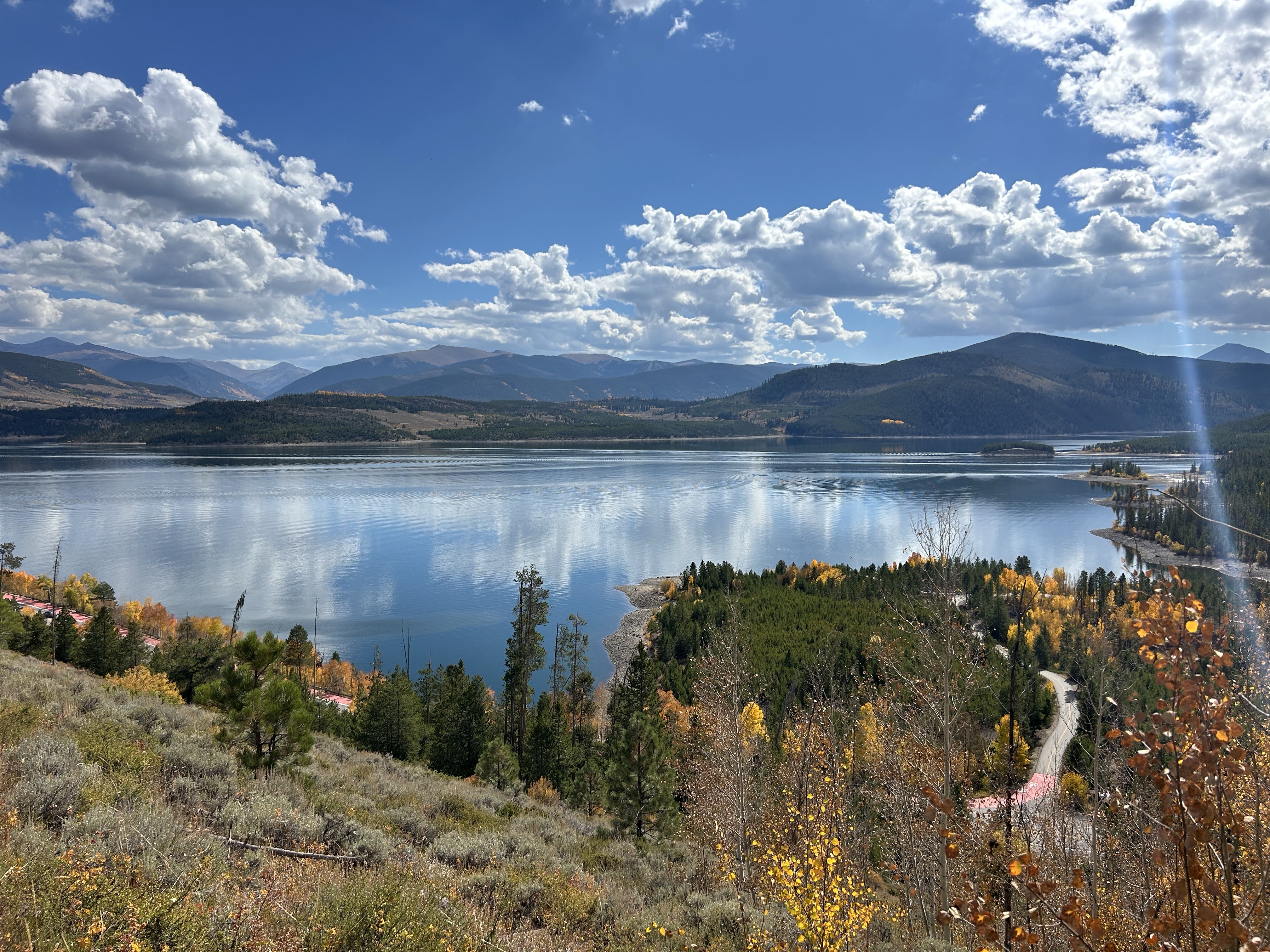
I write this from my happiest and most contented place on Earth, the Colorado Rockies. For five days I get to hike, read, write, and be. Having received so many messages of love and connection on my birthday, starting the moment I woke up, it was clear that the only way for me to move through this long weekend is in deep gratitude.

Framing everything this way makes my perceptions of and reactions to any and all life occurrences different and better–more tolerable and peaceful. On arrival, my greeting from family: “Hi. So you’ve gained a lot of weight recently, huh?” WTAF, really? –pause– Gratitude. Reframe: This encounter triggers me because it evokes my own inner fat-shame and body image issues. Long standing, multifactorial, and slowly improving, I am shown here that I have more inner work yet to do: self-compassion, self-acceptance, and self-discipline, among other things. Deep breath, forgiveness, thank you for this awareness; now I can let go and move on.

Gratitude makes me revel in my friendships–any and all opportunities to be present and attuned to the amazing humans I have the great, unearned fortune to know and love. In recent weeks I have had the opportunity to connect with my two friends above, and they humble me. Confronted with their own mortality in the prime of life, they exemplify grace. In our honest and loving conversations, they show me the absolute essence of vulnerability, courage, and perspective, and leave me in utter awe. We discuss frankly what it means and what it takes to get to peace with death. It reinforces my three take aways from Being Mortal by Atul Gawande: 1. We need to talk about death early and often, get comfortable with and accept it. 2. End of life decision making is about goals and trade-offs, and those of the dying take precedence. 3. The more peaceful the dying can feel at the end of life, the less suffering for those left behind. How lucky am I that my two friends lead by such wise and peaceful example?

We talk about grief, regrets, relationships, legacy, and meaning. We marvel together at the mind boggling advancement of cancer treatment in our lifetime, and the miracle that is the human body. We laugh, cry, and connect. I am shown starkly and in no uncertain terms that the most important thing in life is relationship, full stop.

One day, one moment, one breath at a time, my friends.

May we be present to all of it, as much as possible, in love and mindfulness, in mutual respect and humble communion. I’m sad, yes. And it’s okay. I revel in every day, every moment, every breath that my friends yet live. My highest goal and wish for them is to know how much they are loved and embraced, how they will never be forgotten, how all of us who know and love them will hold their spirits with us until we die ourselves. And that’s assuming something doesn’t take my own life before theirs end.
Tomorrow is not promised for any of us.

So knowing this, how will we choose to really live? Clarity on this visits me much more often as I age, and once again I am profoundly grateful. I get to choose love, respect, meaning, courage, and connection over resentment, disdain, judgment, and separation.

I can choose peace.

There will be time later to mourn, to grieve. Now is the time to honor, uphold, revel, and live fully in one another’s love and light.