
I so admire this photograph.
Are there even words to do it and its subject justice?
Power
Respect
Life
Thank you for sharing yourself with us.

I so admire this photograph.
Are there even words to do it and its subject justice?
Power
Respect
Life
Thank you for sharing yourself with us.

“Oh that’s turning 50,” my wise friend said.
I had just told her how I feel more liberated lately to say what I think, freed to be totally honest, boobs out (figuratively), suddenly and significantly more than before.
It’s not that I don’t care what anybody thinks, or that I mean to offend people. I may care less now what everybody thinks; the value of your opinion to me correlates directly with my respect for and connection to you. I assume you deserve my general respect until you show me otherwise, though—my default is still positive.
Somehow now, holding back what I really think, sharing less than the whole of it, feels less and less—what—authentic? Honest? Connecting? Meaningful? Real?
What am I saying/telling more? Usually it’s observations and assessments, syntheses of conversations, how I know people, how I see them in their contexts, and of course my relationships with them. When I see (feel) power, love, vulnerability, strength, connection, growth, evolution, light—anything that grabs my attention and moves me—I name it. I don’t let it pass by without catching and holding it a while, showing it, shining it. Do you see how great you are? Do you feel your worth? Here, let me show you, help you stand in it, own it. I have done this for years with my close friends. Maybe I’m just more generous with it now?
Since the pandemic, my return to work from a personal leave, turning 49 (not yet 50), and Son leaving for college, all in succession, I stand more confidently in my abilities—all of them—perception, integration, articulation, communication, connection. I trust my intuition and judgment much more. I’m willing to take more risks in order to connect, to show that I see you, because that’s what I truly want to do—it nourishes us both. Where I’m unsure, I feel empowered to clarify. If I’m wrong, I can redirect, recalibrate, start over. As my confidence has grown, perhaps so has my humility… Funny, that.
When I’m asked to step outside a boundary, I decline firmly, tactfully, and with clear rationale. I push some boundaries, too… intentionally, thoughtfully, with awareness of potential impact and conseqeuences.
When someone violates a boundary, I address it quickly and decisively. Met with disrespect, I exit. Life is too short, and I have too much to do, to tolerate that.
Huh… Maybe this is the manifestation of some nascent, maturing life phase clarity? Much still feels nebulous, vague. Something is happening, though.
Life is getting bigger.
Can’t wait to see what’s around the corner. Bring it.
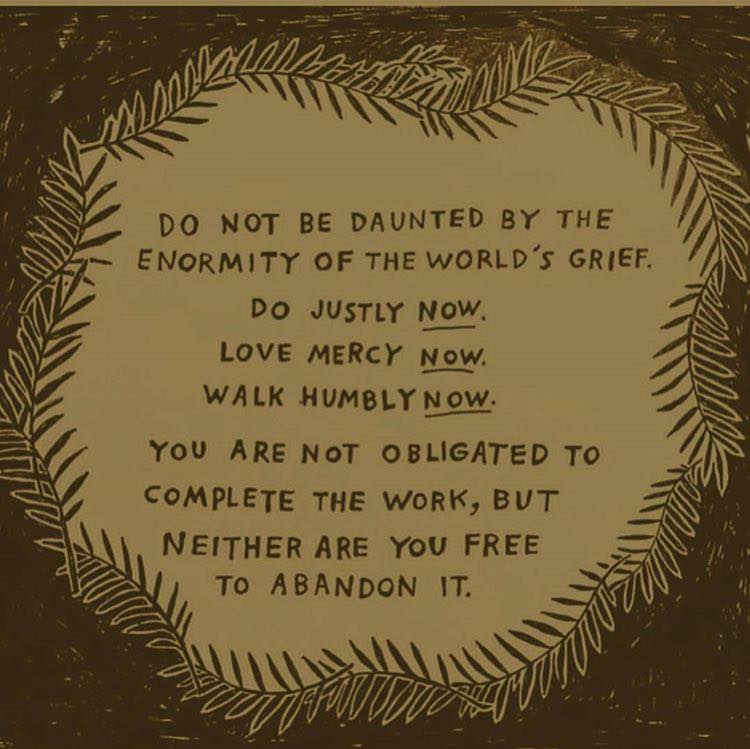
Friends, here is my latest confluence of ideas for making a more lovingly connected world, from three articles I have read this month:
Malice
Readers of this blog may know that I’m a big fan of David French. He writes columns for The Atlantic and The Dispatch, and serves the latter as senior editor. He is politically conservative and one of my intellectual role models. Last weekend he posted an article, “A Blow Against the Malice Theory of American Politics,” which I highly recommend. Some highlights:
“Negative polarization (or negative partisanship), as I’ve written many times, is the term for politics that is fundamentally motivated by animosity for the other side more than affection to your own party’s leaders or ideas.
“Under the malice theory, the key to electoral victory is unlocking that anger. That means highlighting everything wrong with your opponents. That means hyping their alleged mortal threat to the Republic. Because of pre-existing animosity, your message will fall on fertile soil.
“In this context, it’s easy to see how kindness and graciousness are seen as weakness, or at least as a lack of conviction.”
Basically, if we think of our political opponents as a ‘them’, an other, we make them an abstraction. If we paint them with broad brushes in various shades of ‘evil,’ then we make ourselves fundamentally susceptible to tyrants who manupilate that fear and hatred for their own purposes. We follow blindly out of emotional hijack, deluding ourselves that we are being totally rational. The ultimate tool of such tyrants is dehumanization, making ‘the other’ a thing rather than a person, something we could not possibly relate to or care for.
Validation
One potent antidote to dehumanization and malice politics is emotional validation. I found this article while writing Monday’s post on how to be less shitty to one another. If you read any of the essays from this post, read this one! More highlights:
“Emotional validation is the process of learning about, understanding, and expressing acceptance of another person’s emotional experience. Emotional validation is distinguished from emotional invalidation, when a person’s emotional experiences are rejected, ignored, or judged.
“Validating an emotion doesn’t mean that you agree with the other person or that you think their emotional response is warranted. Rather, you demonstrate that you understand what they are feeling without trying to talk them out of or shame them for it.”
When we talk about people on the ‘other’ side of politics from us, what do we say? Do we speak in generalizations? Do we assume nefarious motives, declaring that they are just bad people? Maybe we say we ‘can’t imagine,’ ‘don’t understand’ how anyone would vote the way they do? What assumptions do we make about how they live their lives and how it must be completely different from us? Validation requires us to put down these generalizations and see each other as individuals, humans, people with whom we are in relationship (and we are all in relationship)–to move in closer, as Brene Brown asks us to do. It’s a practice in empathy and ultimately, a neutralizer of negative partisanship.
Why should we validate one another’s emotions? Because it helps us connect, especially across difference. When we feel validated, we let our guard down. When we feel seen, we de-escalate. Then we are more likely and able to engage in discussions, even disagreements, with more openness and curiosity, respect and collaboration. But someone has to take the first step on the path to de-escalation, to lead by example and invitation.
The Butterfly Effect
In my Quirky Nerd post, I mentioned this idea at the end, in passing. I like to include links to interesting ideas, and found the essay on Farnam Street by Shane Parrish and/or his team. Parrish hosts The Knowledge Project, one of my favorite podcasts. Ever since learning about the self-organizing nature of culture, I have felt validated (ha!) and increasingly confident to point out how the impact of any given node in any system both impacts and is impacted by that system–because everything is connected! I define myself as a node, and I am a member of multiple systems at once (we all are). Some systems are nested (family, neighborhood, city, state, nation); some overlap (Chinese-Americans, physicians, working moms). Looking from the most complex and simultaneous perspective, we can then see how the state or movement of any one node may have direct and indirect ripple effects that propagate and eventuate in dramatic multi-systemic change.
Or, it may not. It’s a paradox–anything you and I do can have transformative effects or no effect at all. I wrote about this as the Optimistic Nihilist. From Farnam Street: ” John Gribbin writes in his cult-classic work Deep Simplicity, ‘some systems … are very sensitive to their starting conditions, so that a tiny difference in the initial ‘push’ you give them causes a big difference in where they end up, and there is feedback, so that what a system does affects its own behavior.’
“We like to think we can predict the future and exercise a degree of control over powerful systems such as the weather and the economy. Yet the butterfly effect shows that we cannot. The systems around us are chaotic and entropic, prone to sudden change. For some kinds of systems, we can try to create favorable starting conditions and be mindful of the kinds of catalysts that might act on those conditions – but that’s as far as our power extends. If we think that we can identify every catalyst and control or predict outcomes, we are only setting ourselves up for a fall.”
My point here is that when I start to feel too small to make a difference, I just remember my role as node. I may not see the waves that my attitude, words, actions and relationships create in the world. But I believe wholeheartedly that I can and do make a difference–a big one, potentially. I just don’t know exactly which day, which conversation, which post, which relationship will incite the shifts I agitate to make–toward mutual understanding, accpetance, cooperation, and connection. Thus, anything and everything I do matters, so I keep it up. I commit to playing the infinite game of human connection, and my just cause is to de-escalate, defuse, and disarm us, in service of interpersonal peace. But anything I do could not matter at all, so I don’t have to burden myself with perfection and exhaustive hamster wheeling.
It’s a perfectly joyous paradox.
Thanks for reading to the end of this long one, folks. Past the halfway mark of 30 days, woohoooooo! I’m still having a lot of fun, hope you are, too!
Peace out, my peeps—ODOMOBaaT.


