On Personal Activism

Strong back, soft front.
Am I doing enough?
Am I enough?

Once again I find myself alarmed and agitated, wondering how we got here. One week in and it feels exponentially worse than last time. Some would argue that all politicians are equally nefarious and selfish, equally devoid of character. I suppose that is possible, but I just don’t think so. Jimmy Carter, George HW Bush, and Barack Obama stand out to me as role models, men of character and integrity. Not so the person in office now.

Executive acts this past week have served what I believe to be their intended purpose, stoking unrest and outrage, churning anxiety, division, alienation, and escalating susceptibility to fear and rage-based behavior, inclulding violence. I believe some of the most sweeping acts will be successfully challenged and modified, if not stalled, but at what cost to the system? What of the workers who suddenly lost their jobs? What of the scientific and medical researchers whose funding may not exist anymore, and the patients whose very survival or mortality may hang on that funding? And all while real and present problems loom at impasse after impasse because our elected officials refuse to negotiate like mature, reasonable adults? How did we get here? How did we choose these people to ‘lead’ us? End rant.

How will our daily lives feel the impact of this administration? I wonder how racism, misogyny, and dehumanization will cascade again en masse from the precedents that this POTUS sets? He validates, encourages, and exemplifies the most derisive of human behavior and relationship.
How did we get here?

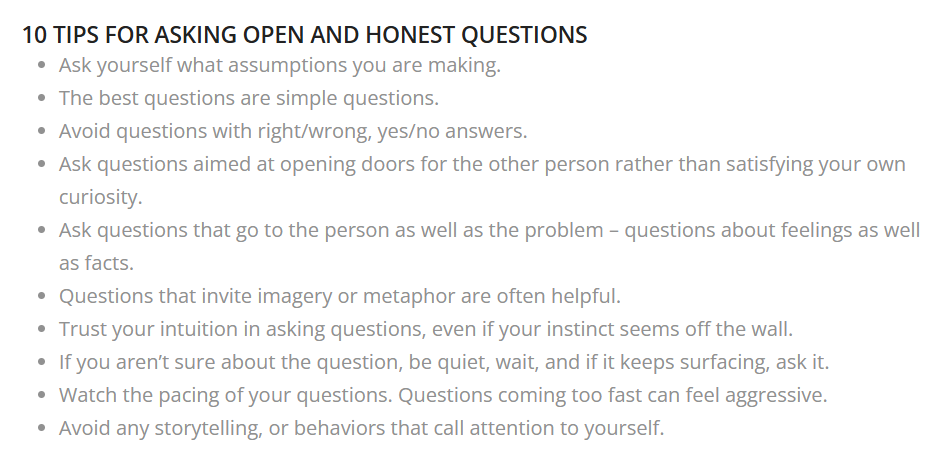
Once again I find myself asking, “What can I do, I’m just one person?” Somehow this week, treating people all along the political spectrum with respect, asking open and honest questions, holding the benefit of the doubt, resisting outrage in favor of calm and curious exploration of diverse perspectives, and withholding judgment just don’t feel like enough. And yet there is so much to advocate for, so much to resist, so much happening every day, it’s overwhelming. Where would I even start? And I think that’s the point, right? Submission by way of learned helplessness.

I had the good fortune of two incredibly insightful and enlightening conversations this weekend. I was invited to articulate my Why, my purpose, and explore my Whats. I talk to people. I write. My favorite and most effective forum is one on one, and I also do well speaking to large, live, interactive audiences. I am an integrator of ideas, an innate mediator, a ‘boundary spanner.’ Normally that feels exceptional and more than enough, I realize as I write this. But today it feels small, inconsequential, puny.
But maybe that is not the sensation to heed.

Connection across difference is exactly what we need right now, all of us, elected leaders and all. We have lost this capacity and skill at a collective level, it seems. So if I can retain it, then it’s actually a big deal. If I can exemplify and amplify it, be the connection and do it every chance I get (which is any given human encounter), then I am making a difference. Me, one of seven billion.

What if I could modify, even a little, the mindset and behavior of just two people in their encounters with people who disagree? And each of them two more? What if each of my Braver Angels friends could do the same? What if even a fraction of Mónica Guzmán‘s readers also had this impact? That’s exponential growth–a movement–of connection across difference.

Ok I feel better now. DIY pep talk via blogging! I can keep doing what I’m doing. Talking, writing, Healing Through Connection is my domain, literally and figuratively. Abortion, equity work, gender policy, healthcare, and intellectual freedom are all issues I care deeply about. I can find ways to support initiatives and leaders in those spaces ad hoc. But my own work, my personal activism, lies principally in person to person relationship, which applies in all other domains more than most people realize. I can raise that awareness and help folks acquire and hone those intra- and interpersonal skills that may, one day, steer us toward electing legislators who also practice successfully. Meanwhile, we could heal friendships and family ties wounded by political divergence. How hopeful.

So, dear reader, what is your brand of personal activism?

Holding Polarity

To long time readers of this blog: First, THANK YOU!

Second, what themes here stand out to you over time? Because they recur so often, they resonate, or for other reasons? When I search for ‘polarity’, 20 posts come up since 2020. I only learned about the concept of polarity management in 2019 and have since integrated it in my approach to challenges in almost every life domain.

Almost exactly a year ago I wrote about it in one of the best posts of the month, in my opinion. I identified Polarity Partnerships and Braver Angels as two organizations that do polarity management well (Partnerships was founded by Barry Johnson, author of the seminal book Polarity Management). This means that rather than pitting apparently opposed or antagonistic ideas and positions against each other in a zero sum, we seek to identify and maximize the advantages of both perspectives for optimal integration and function.

It occurs to me that we perceive the word ‘polarized’ with a negative connotation. It means people withdraw from one another, retreat to corners of comfort and concensus, avoiding engagement with those who think, feel, and believe differently on important topics. This negativity about polarization risks making us think negatively about polarity in general, which I Hold for Us to resist.

Polarities are good. Or at least they are not inherently bad. Actually describing them as good or bad is probably not helpful. Polarities are ubiquitous, a fact of nature and life, and holding them in curiosity, openness, and possibility, and without judgment or resistance (thus holding them mindfully) helps us see through and past conflict to creative (re)solutions.

Progressive/Conservative, Blue/Red, Left/Right–however we label our political poles, we each have to stop wishing for the ‘other side’ to back down or step aside. We need to let go the idea that we can convert anyone from their side to ours, to make them see and think the way we do. And we absolutely must stop demonizing one another, calling each other names and generalizing negativity on whole groups based on one attribute. The truth is we need tension and competition of ideology, the free and open debate of ideas and solutions to thrive as an engaged, innovative, and evolving society. We just need to handle the tension and debate much, much better.

We have descended too far into the depths of adversarial engagement. More than any political ideology or policy change, I see this as the greatest threat to our democracy–the fact that we citizens, the collective electorate across the country, cannot muster the ‘curiosity, compassion, and courage‘ to talk through our differences respectfully and constructively. This makes us extremely vulnerable to those who seek to inflame our respective greivances for their own benefit–those for whom a divided population helps them rise to and stay in self-serving power. ‘Divide and conquer.’

The good news is that the movement of polarity management–the resistance to toxic division–grows quickly now. Early adopters have found one another and partnered. They amplify one another’s messages on social media. Their reach expands by resonating with the deep need that so many feel to leave behind hostile rhetoric and ad hominem attacks, to come together and get sh*t done.

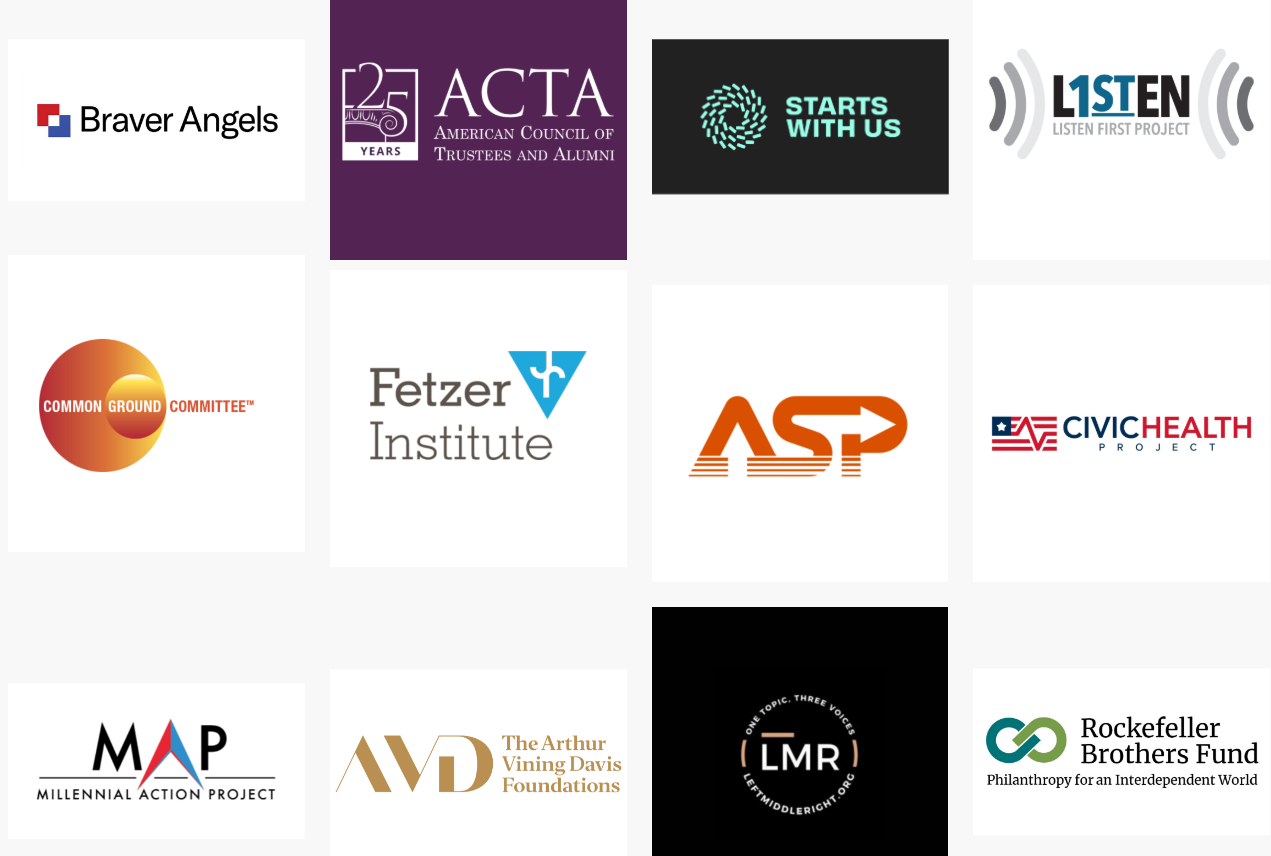
The featured image on this post shows twelve organizations that partner with BridgeUSA, “the youth movement for better politics.” From their About Us page:

BridgeUSA is a multi-partisan student movement that champions viewpoint diversity, responsible discourse, and a solution-oriented political culture. We are developing a generation of leaders that value empathy and constructive engagement because our generation will bear the cost of polarization and tribalism for years to come.

Starts With Us, another polarity navigating group, asks:

Are you one of the 87% of Americans from all walks of life who sees a world beyond “us vs. them?” Are you tired of polarizing politics and endless culture wars? The power to reclaim our culture Starts With Us.

Their Movement statement:

We can each work on the skills needed to overcome the forces that divide us — but where do we start? The 3Cs: [Curiosity, Compassion, and Courage]

We all have an innate capacity for curiosity, compassion, and courage. The Starts With Us community is committed to turning the 3Cs into personal daily habits [emphasis mine] that have tremendous personal benefits:

–Connect with and influence community
–Repair strained relationships
–See through fear-stoking media
–Strengthen communication and negotiation
–Sharpen critical thinking and problem solving
–Feel more agency, less anxiety

Progressive and Conservative ideologies are not inherently good or bad, or even necessarily opposed, and it’s counterproductive to hold them as such. Navigating this polarity with the 3C’s, from a mindset of mutual respect, integrative and complementary potential, and shared humanity opens the possibility of finding truly innovative solutions to the challenges of our increasingly complex world.

I Hold Polarity for Us because we are not enemies. We are all humans, here doing our best with what we have. Competing ideas and ideologies do not necessarily imply inevitable conflict or war, though humans too often escalate it that way. Holding Polarity with Curiosity, Compassion, and Courage, in the spirit of connection over division, will help keep us from destroying ourselves.

Holding the Work

I procrastinate writing this post. I worry how it will be received. I may anger some, offend others, and invite unpleasant backlash. But now that I write it out, as if I said it out loud, that fear abates. How fascinating–naming a fear helps dissipate it. That’s an important practice for the work we hold ahead.

“Question your own fears.” —Monica Guzman, Braver Angels, A Braver Way

Monica Guzman is my hero. Watch the video of her talking about how our fears of what’s in other people’s hearts harms and divides us. Listen and feel her passion, her struggle to stay compassionate to all people, and her distress at how people she cares for now suffer from Trump being elected. Listen to her courage in vulnerability, expressing hope that despite the deep divisions all around, we can still connect across our differences and not destroy ourselves. And know that she has a point of view–she takes a political side. She just doesn’t approach opponents as adversaries.

Monica inspires me to recommit to the work of bridging our political divides, real and perceived. I understand the election was only a few days ago and some people’s pain and distress are still raw. I know some don’t care or want to bridge anything, at least not right now. That’s okay; this post may not be for you. But I’m ready. I hear the call and I’m answering now.

From Instagram

I had a lovely conversation today with a man I’ve known for some years. Our relationship is fun, trusting, and honest. He asked me how I am with the election and I told him I’m very much not okay. He felt great about it. We each described why we feel our own ways, listening for each other’s personal experiences and impressions of the candidates, the parties, and the people around us. I live on the south side of Chicago; he in northwest Indiana. I’m in medicine; he’s in construction. I’m a 51 year-old East Asian woman; he’s a 67 year-old white man. Our life experiences and world views diverge widely. We also have no problems connecting as humans. We both lamented how so few people we know can conduct political discourse calmly and respectfully. We agreed on multiple social issues. Our conversation prompted me to seek data about maternal mortality since Roe v. Wade was overturned. I shared with him and we both learned. It was a meaningful and satisfying conversation, and we agreed to continue. I don’t intend or expect to change his political leanings. I want to understand him, and I want him to understand me. I want us to deepen our relationship, practice healthy political discourse, and bring what we gain from each other back to our own circles. This is how I will make a positive difference in our political culture and landscape.

All people who voted for the other candidate are not evil, or sheep, or whatever name we want to call them. I know how good it feels to say they are (see Brené Brown quote below), and it absolutely does not make anything better. We each get to choose how much contact we want with people who are different from us. Often they cannot be avoided, and then we still get to choose how we interact. We each have power to influence and impact any relationship we touch. Will we be connectors or dividers?

I observe that my fellow progressives are often the ones actively dividing. Cancel culture rages on the left, rife with judgment in minimal interaction, overgeneralization and oversimplification based on assumption and association. I see value in calling out overtly racist and misogynist attitudes and behavior, but public shaming does little to educate, enlighten, or alter anyone’s mind. It just drives their biases underground, only to resurface later. It alienates, inflames, and perpetuates conflict. Judging and throwing away a whole human being based on one fact about them, no matter what that fact is, feels antithetical to a progressive, inclusive ethos to me. And, it is a totally understandable human response to severe moral distress. For those of us committed to bridging, we must learn, practice, and train in self-awareness, self-regulation, and effective communication to mitigate that relationally counterproductive response. We must ground ourselves in openness, curiosity, humility, generosity, empathy, and kindness. These are not mutually exclusive to holding fast to our values, convictions, and causes.

I have many days yet this month to delve into particular skills. For now I can simply sit with a renewed commitment to non-adversarial change agency. This is the Work. I have learned in safe spaces, with people who will not throw me away or belittle me for my beliefs. It’s easy when it’s easy, and it’s how I show up when it’s hard that counts. But I can’t show up competent when it’s hard unless I have practiced–done the drills, entrained the muscle memory, prepared for the harder challenges. So I embrace the test of encounters during the next administration. This is what I have trained for. So I say bring it, I can do this relational stuff better and better, and I can lead by example like Monica Guzman. I still have a lot to learn, and as we say in medicine, see one, do one, teach one–and I’d add–repeat, ad infinitum.

If you’ve read this far and you’re neither offended nor ready, thank you for holding your own space. We can each/all only do what we can, when we can, and how we can.
I Hold the Work for Us to bridge our differences for all our benefit, whatever, whenever, and however we can each make our contribution.

There is hope.

From Facebook