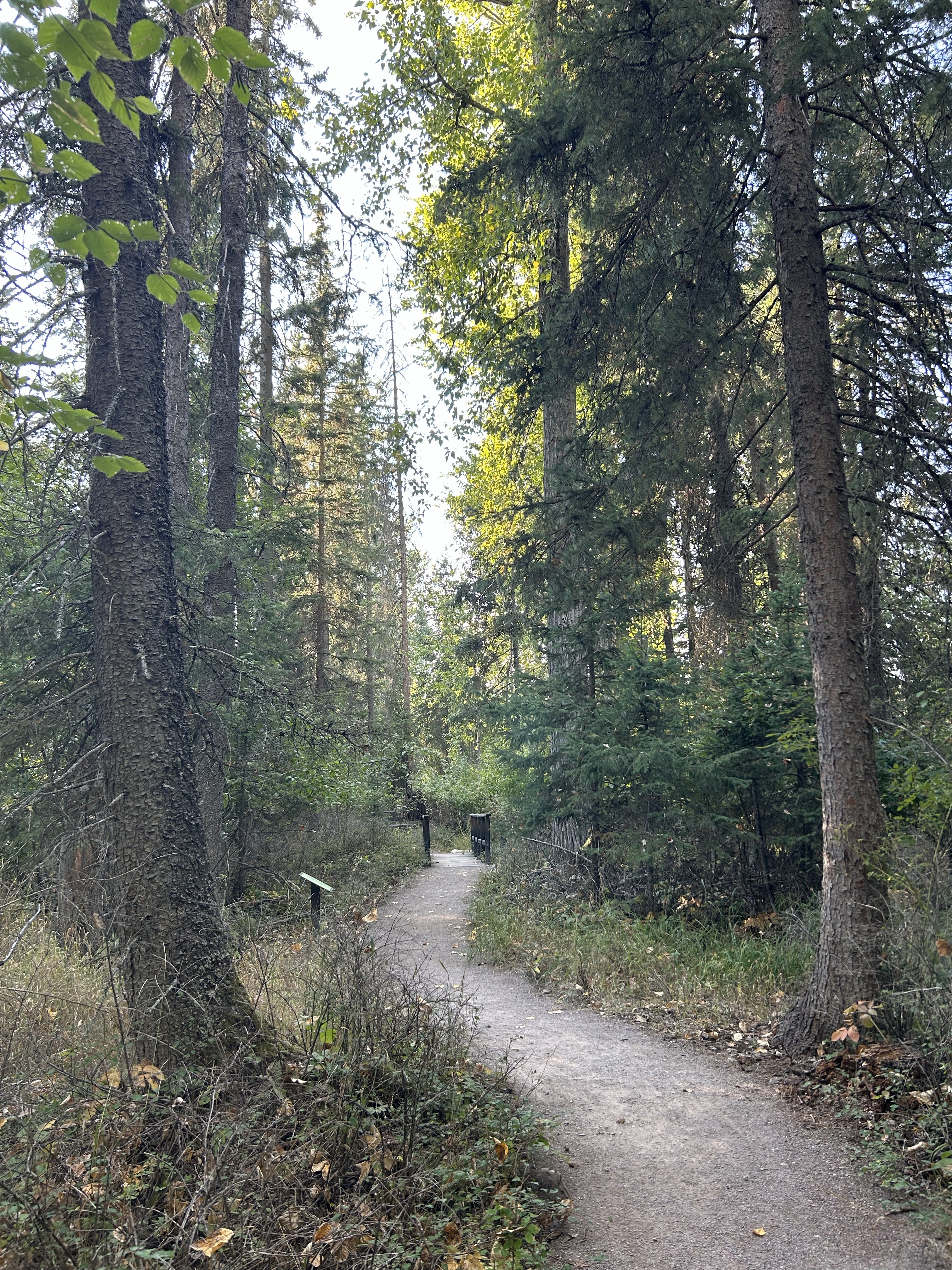
Trail near The Lodge at Whitefish Lake, Whitefish, Montana
Dear Readers, I wish you all the curious, thoughtful, open, and loving friends like I have! The same person I mentioned in “What Does Love Make Us?”, Sean, helped inspire this post tonight, coaxing insights to emerge just by being his curious, thoughtful, open, and loving self. Earlier I wrote a brief list of what I think love makes us: Vulnerable. Courageous. Powerful. Forgive. Willing. Selfless. Grow. Better.
So what does anger make us? A dichotomy emerged in conversation today:
Adversaries We see it everywhere: Rage poured forth, one person onto another, groups against each other. It’s us against them, no question, no nuance, no reflection, ‘no quarter.’ Yikes.
It’s understandable, of course, and sometimes even justified, this adversarial mindset and approach to the opposition, ‘the enemy’. Longstanding experiences of socially accepted marginalization, dismissal, and oppression fester and seethe, then spew forth like pus under pressure. As with any abscess, lancing that pent up wrath relieves pain, even as the initial incision stings momentarily.
Then we ‘go to war,’ as some might say. We ‘fight’. We take both an offensive and defensive stance, we weaponize our words, and we make all the worst assumptions of those we pre-judge as against us. We close our minds to alternative perspectives, plow forward with agendas that we believe can only be achieved by vanquishing all who resist. Even if our mindset is not this extreme, we risk sliding down that slippery slope. Abstraction and dehumanization of anyone ‘on the other side’ happens all too easily, my friends, and the louder the adversarial voices around us, the more pressure we feel to follow suit.
Where and what does this get us?
Looking back on my own life, on policy and human history, I can think of few tangible examples where the adversarial approach has benefited us, individuals and the collective alike, in the long run. And when it does, the costs are extraordinarily high, often borne by those with the least power or choice. Death, destruction, trauma, and lives irrevocably shattered–the adversarial route of anger scorches the earth.
Advocates I have a friend who exudes rage and has suffered relationship and reputation damage from it. It makes me cringe because I understand the origin of their anger as protectiveness, righteous outrage on behalf of others, and a belly full of fire to do good.
I have also witnessed them advocate for their causes with diplomatic, almost loving assertiveness toward total strangers. They are bold but respectful, strong and friendly, a force of nature, like a stiff wind that envelopes and nudges you firmly but not forcefully from behind, getting you to where you might have been going just a little faster and with more urgency. People receive their words and advocacy with openness, curiosity, and a willingness to consider action; how often do you see interactions like this?
In January I wrote “Tested and Called“, feeling angry and a little hopeless after Alex Pretti’s murder by border patrol agents. It was my first documented “DIY pep talk“, I see now. I wrote about anger and courage, ‘hope’s two daughters.’ I reminded myself that in the face of all that makes me angry, I can and must continue to show up and ‘fight’ for things and people I care about. Better writers than I have made the distinction between fighting for and fighting against. It’s a subtle attitude shift that matters.
Fighting against–being adversarial–too easily devolves into ad hominem and caustic division: name calling, shaming, othering, dismissing, dehumanizing, and even violence. The external focus and negative energy depletes us, and when we see little to no progress we burn out. Fighting for, or advocacy, on the other hand, carries a light from within, an intrinsic motivation of renewable energy, fostered and amplified when any progress is made. Advocacy attracts allies, grows a movement, and creates sustained and sustainable change agency.
The language of advocacy centers the cause, not the opposition. It informs, educates, inspires, and empowers. Advocacy demands accountability of the systems it seeks to change, as well as its own advocates themselves. The strongest and most effective advocates strive always to walk the talk.
I have written this blog for eleven years. Surely there are posts that I would not write, or write differently, today compared to when they were published. Information evolves, and I along with it. My attitudes and opinions change with age and experience. But I can stand with confidence by the intent of every post here as non-adversarial advocacy of some kind–even when the execution misses the mark. I look for others with a similar ethos, especially in medicine and science.
Whom do you admire for their non-adversarial advocacy? What good do you see them doing in the world? How can we amplify them?
Below are Instagram accounts that I follow for their strong advocacy in the face of threats to the integrity of our scientific and medical institutions. Some of their posts verge on adversarial, but for the most part I perceive an earnest, professional, and evidence-based mission to protect public safety. And of course I think of Braver Angels and Builders for their work to bridge division and move us away from adversarial political engagement.
Lastly, apologies for this second delayed post–life! Quality time with Son and Daughter, both home from college, took precedence over sitting at the laptop. Worth it! May we all have such meaningful and fulfilling choices to make!
Anybody else feeling deeply conflicted and fatigued right now?
It’s getting late and I still have to prepare for the workweek ahead. Lots of exciting movement and connection on the Book front, and so many ideas for future posts on the Crowns Trilogy (binged books two and three again last weekend) and Heart of Champions, a movie Son and I eagerly watched together that speaks to everything I espouse about teamwork. So much to dissect about humanity and leadership–which all applies to what’s going on in our country right now. Awesome–I will dig in soon! But for now I’m just tired and overwhelmed.
Please find below an update from last week’s post and a compilation of what agitates me and gives me hope (mostly the latter).
I will try to muster something more coherent and thoughtful next week, friends. ODOMOBaaT.
Friend J, my staunchly conservative high school classmate, and I spoke on the phone for 90 minutes on Tuesday. We agreed more than we disagreed, though our disagreements loom heavily on my consciousness. I always feel connected and reassured after my calls with Red voting friends. But disappointment and frustration inevitably set in later when I realize they seem wholly unmoved by my thoughtful, well-reasoned, and well-articulated arguments. HA! I suspect they may feel the same… or maybe they feel sorry for me, or dismiss my concerns as delusional and irrelevant. I wonder if they fear I do the same to them? Somehow I doubt it, though I know people on both sides who do this, which shoots us all in the collective civil discourse foot. I realize as I write this, how I truly may not understand and cannot relate to a conservative ethos. Or rather, I can understand it intellectually but cannot relate limbically, where it counts. Regardless, I’m grateful for my conservative friends who are still willing to connect. Three more actively reached out to me this week and I have two dates on the books this month, one that will involve cooking together, which I especially look forward to.
Thank you to all who provided feedback on last week’s post, including comments here, texts, emails, or replies on social media. I had not expected such an energetic response, and it means so much to me to receive such earnest engagement. I hope we may all continue the important, uncomfortable, and grappling conversations, in service of connection and de-escalation.
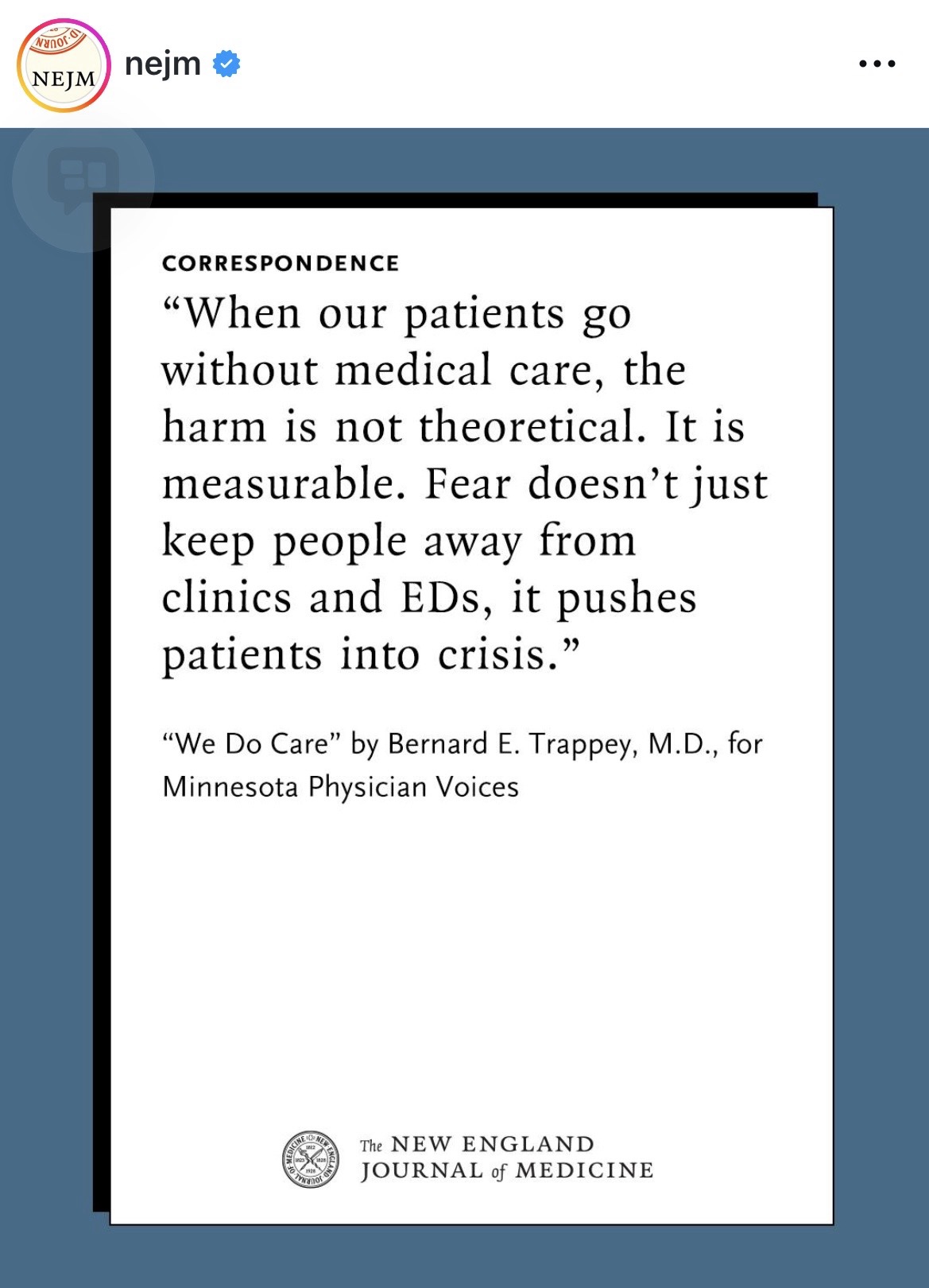
Federal immigration and border patrol abductions cause active, direct, and mortal harm to people. The lack of due process prevents any kind of record or recourse for their medical care, the morbidity and mortality of which boggles the mind. That our federal government is the original perpetrator of such traumatic pain and suffering to so many, regardless of immigration status, is beyond egregious. Racial profiling resulting in violently forceful detainment, separating parents from their terrified and then unattended children, rightly causes people of color (because this isn’t happening to white people), regardless of immigration or citizen status, to avoid leaving their homes, forgoing necessary medical care (eg labor and delivery, wound care, cancer care). It’s sickening and makes me rage. Hear from a veteran physician in Minnesota as she lists case after case:
It’s about our shared humanity, my friends. I wrote to my libertarian friend tonight, “The more I perceive this administration actively, directly, and mortally harming people with less and less accountability, the harder it is to accept anyone’s argument for having voted for it. The direct human costs (as I and so many perceive them) for whatever broader economic or ideological gains is just too high and unacceptable.” ICE and border patrol treat people ‘way worse than any other law enforcement agents; they follow no standards for respecting people’s rights, human or otherwise, and act with impunity and violence. The officers who shot Alex Pretti continued to work for days afterward, moved elsewhere ‘for their safety’–as if they were not a danger to anyone based on their shooting of an unarmed man. Even now it’s unclear what kind of investigation will take place, and whether it will be objective or trustworthy in any meaningful way. Does any legitimate law enforcement agency operate with this profound lack of oversight and accountability?
My heart rate, blood pressure and nausea rise even as I write this. ODOMOBaaT.
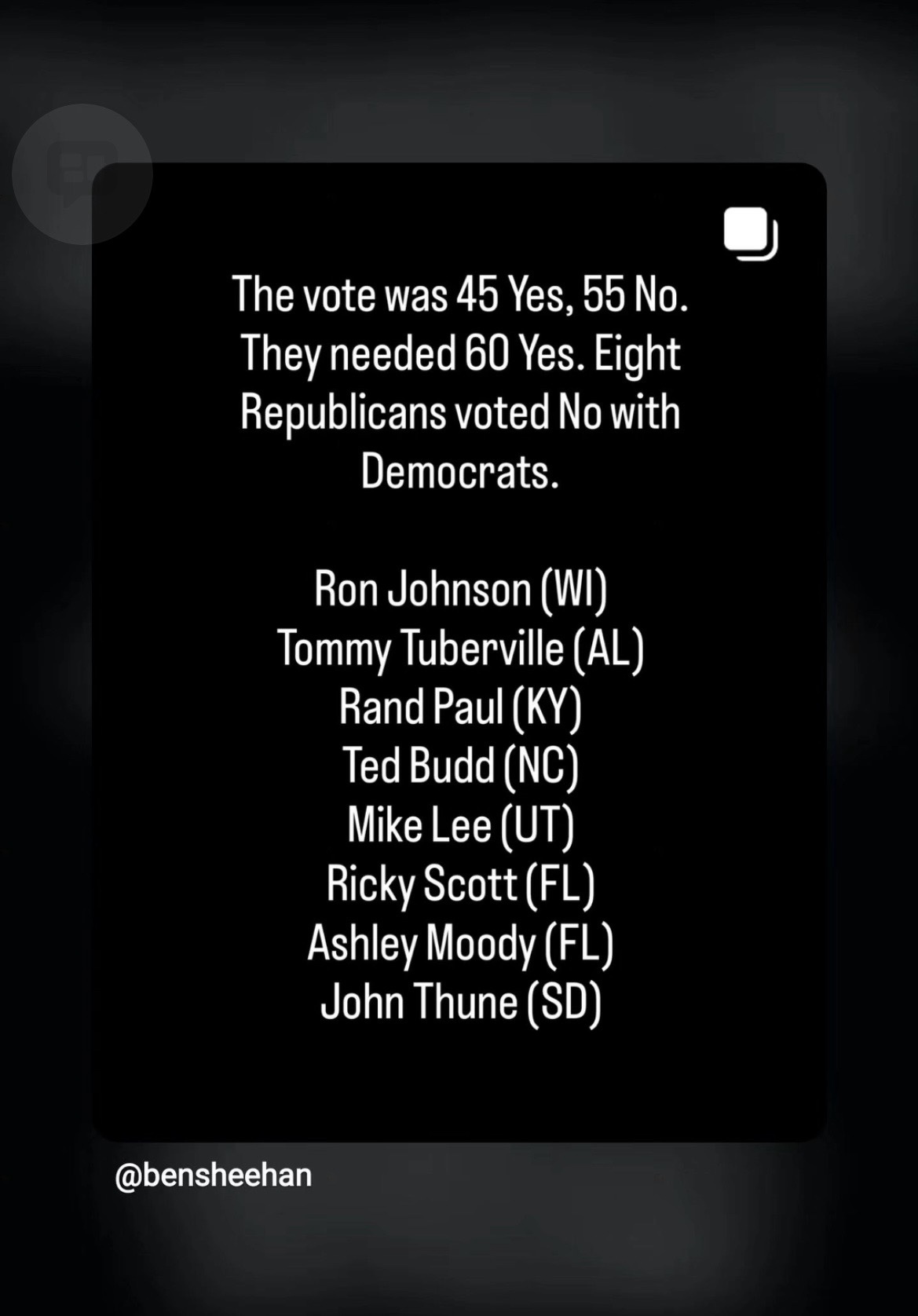
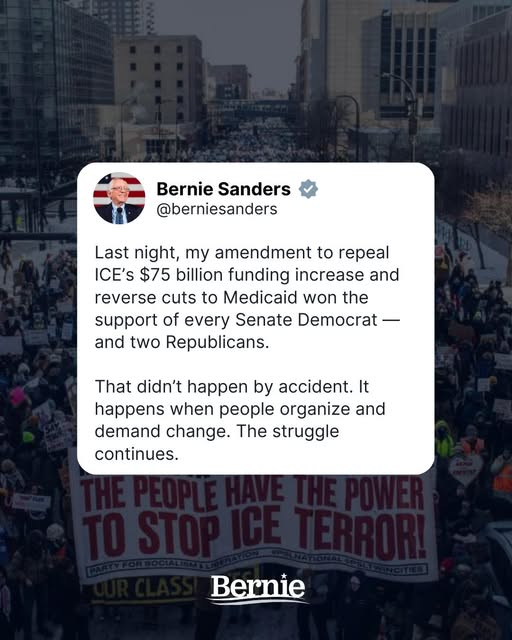
Senate vote on 6-bill package for government funding, 1-29-2026, from Instagram
What Gives Me Hope
From Politico, January 29, 2026: “Eight Republicans joined every Senate Democrat to block sweeping government funding legislation from advancing Thursday amid ongoing negotiations around a potential offramp to avert a lengthy shutdown of several agencies. The Senate voted 55-45 against moving forward with a six-bill package that would fund, among other things, the departments of Homeland Security, State and Health and Human Services, as well as the Pentagon.”
From Justice Patrick Schiltz, Chief Judge of the District Court of Minnesota, a Bush appointee and former clerk for the late Antonin Scalia, in an order filed January 28, 2026: “…That does not end the Court’s concerns, however. Attached to this order is an appendix that identifies 96 court orders that ICE has violated in 74 cases. The extent of ICE’s noncompliance is almost certainly substantially understated. This list is confined to orders issued since January 1, 2026, and the list was hurriedly compiled by extraordinarily busy judges. Undoubtedly, mistakes were made, and orders that should have appeared on this list were omitted. This list should give pause to anyone—no matter his or her political beliefs—who cares about the rule of law. ICE has likely violated more court orders in January 2026 than some federal agencies have violated in their entire existence. The Court warns ICE that future noncompliance with court orders may result in future show‐cause orders requiring the personal appearances of Lyons or other government officials. ICE is not a law unto itself. ICE has every right to challenge the orders of this Court, but, like any litigant, ICE must follow those orders unless and until they are overturned or vacated.” [boldface added by me–cc]
Braver Angels and the Builders Movement:
Braver Angels will host “a National Webinar on America’s Deportation Policythis Friday, February 6th, from 8:00 – 9:30 pm ET. We will both be panelists—along with Congressman Brian Fitzpatrick (R-PA), Congressman Tom Suozzi (D-NY), Gaby Pacheco, Peter Skerry, David Izquierdo, and Jorge Pineda. We will get into all the issues involved, and most importantly, we’ll explore how America climbs down from this scary confrontation and get to what we need as a nation: cooperation!” I am registered to attend. I hope to see some of you there.
Take the time to read and watch this collaborative Facebook post from Builders with Helene Biandudi Hofer, journalist and co-founder of The Good Conflict with journalist and author of High ConflictAmanda Ripley (I highly recommend this well-researched, well-written, and practical book): “Why Republicans backed a Democrat in this small town… In a town where red dominates and Democrats rarely run, respected Republicans supported a Democratic candidate. Leadership had stalled, decisions were made on autopilot, and the town seemed to be coasting instead of planning for the future. Joe Lamanna ran on showing up—joining boards, serving as chair, and engaging with neighbors. He focused on the work, the people, and the community, not the left-right divide. Some criticized him; others recognized his competence and dedication. He didn’t win, but the results were striking: nearly half the vote and far better performance than previous Democratic candidates. Beyond the numbers, the campaign sparked conversations and connections that had been dormant for years. Neighbors started talking, sharing ideas, and reconsidering assumptions. It’s a reminder that local politics doesn’t have to mirror national division. Change starts with participation—showing up, asking questions, and engaging with your community. Even small actions can shift the conversation and open space for progress.” Here is the Instagram link if you don’t use Facebook.
“A “recent CBS poll found 59% support deporting people who are in the U.S. illegally, but only 37% approve of how deportations are being handled.
That tells us something important: People want enforcement AND accountability. So here’s a question for you If enforcement is going to happen, should it follow the same basic rules we expect of any law enforcement agency? Here are some nonpartisan, practical reforms many Americans across parties are talking about. Do you agree or disagree?
1. No anonymous agents Require visible identification for ICE officers. No masks. No mystery. If someone has government authority, the public should know who they are.
2. Independent investigations after deaths or serious injuries Federal agencies shouldn’t investigate themselves. Independent oversight builds trust, especially after fatal encounters like the recent shooting in Minneapolis.
3. Clear limits on where enforcement can happen Prohibit enforcement actions at vulnerable places like hospitals, schools, and churches. Public safety shouldn’t mean people are afraid to seek medical care or send their kids to school.
4. Homes require a real warrant ICE should only enter homes with a judicial warrant signed by a judge—not administrative paperwork. That’s a basic Fourth Amendment principle, not a radical idea.
5. Body cameras for every enforcement action Mandate body cams across the board, just like many local police departments. Body cams protect civilians from abuse and officers from false claims. Accountability cuts both ways.
What would you add? What would you change?
Reply. Disagree. Improve it.” [boldface added by me–cc]
From The New York Times, today: “For one constituency, Mr. Pretti’s death did more than grant permission to criticize. It confirmed a long-held fear. For decades, the conservative case for the Second Amendment has rested largely on the premise that an armed citizenry is the last defense against government tyranny. N.R.A. fund-raising letters once warned of “jackbooted government thugs.” The language was apocalyptic, the scenario hypothetical. Minneapolis made it real. Masked federal agents killed a legal gun owner who had never drawn his weapon. Gun rights groups pushed back. Gun Owners of America posted on social media: “Peaceful protests while armed isn’t radical — it’s American. [The First and Second Amendments protect those rights, and they always have.] GOA will hold any administration accountable.” [bracketed text added from original post by me–cc]
To my Red voting friends: I don’t need you to relinquish your conservative ideals. We need both conservative and progressive perspectives intact and healthy for productive debate and earnest policy negotiation.
But we are well beyond the conservative vs progressive debate here.
This is about the government hunting and abusing people without any due process or accountability.
The only way this gets better is if we all call forth our shared humanity and rise together to stop it.
When and where is it safe for you to disagree strongly and still maintain healthy relationship?
My friend and I had a brief text exchange recently. Me: “…I wonder when they will start profiling East Asians on the street. My kids and I all live in target cities. It’s less and less safe to be non-white.” Friend: “You’re citizens; no need to worry.” Me: “Citizens have been picked up and detained already. Lots to worry about on many fronts. Please do not dismiss people’s concerns, even if you don’t share them. They are not all unfounded.”
Our friendship has developed over a couple of years, accelerating and deepening this year around and through mutually respectful and unreserved political discourse. This thread occurred spontaneously last week. I felt safe to express my fears as well as my reaction to his response. I know he did not mean to dismiss my feelings; he knew that my response was meant to uphold mutual accountability rather than incite shame. Our relationship is now strong and trusting enough for us to be bluntly, caringly honest. We caught up on the phone today and reaffirmed that respect and trust, that bond of platonic love that transends difference even as we embrace and grapple with it. I cannot wait to sit down over lunch and explore each other’s perspectives again soon.
This summer I gave a series of wellness presentations to a global professional firm. Over five Zoom sessions we explored self-awareness and -regulation, open and honest communication, generational differences, variables of diversity, psychological safety, authenticity, leadership, and culture. I did my best to leave an impression and aspiration of empathy, compassion, and accountability in action and relationship, to be cultivated intentionally, both individually and collectively, in the year to come. In all of my conversations with the series organizers before and since, we continue to seek the attitudes, postures, resources, and practices that help a workforce engage and contribute, dissent and challenge, all in the name of elevated collaboration and excellence.
This weekend I traveled to New York City (hence this delayed post) to meet Andy “AJ” Wilson-Taylor and my fellow fans. I only knew two other attendees walking in, and was welcomed and folded into a truly unique throng of uplift and bonding. This community, led by a loving, humble, curious, generous, and kind soul, reflects and amplifies those qualities and values in spades. The brightest love and joy radiated from every person gathered; oxytocin flowed and saturated my whole being. I wondered aloud to more than a few people about the possibilities of capturing the energy of that assembly–the joy, love, shared humanity and connection–concentrating and focusing it, then aiming it to heal the wounds of the world. Members of this group, led by AJ in his unassuming and self-effacing way, have already healed themselves and one another in presence, encouragement, and steadfast mutual support through darkness and disconnection back to light and flourishing kinship.
I pondered this weekend what political discourse would look and feel like in these groups–collegial coworkers practicing interpersonal effectiveness to leverage diversity and elevate creativity and innovation, and a gathering of women brought together by shared love and admiration of a man whose purpose in their space is to ally with and elevate their personal, sexual, and social well-being.
Then yesterday Braver Angels hosted an extemporaneous gathering of leaders from bridging organizations across the country: “Dignity Over Violence: A Unified Civic Response”. I hope to have a link to the recording to share here soon. Claim hope, my friends. This movement of intentional, resilient, and empowering connection across political polarization grows stronger and tighter every year. Love can still win. Over the two hour program, at least twelve leaders both acknowledged what is and pointed to what could be. They cited words and acts of people across the political spectrum, from every demographic, that defy the loudly skewed rhetoric of extremes. In this, yet another mission-driven gathering, I felt an unwavering commitment to mutual understanding and connection, to humility, curiosity, empathy, generosity, and accountability.
“When you hear something triggering, take a deep breath and ask a [good, open and honest] question. Try to understand why that person believes what they believe.” This is the first step to any exchange of true connection.
All systems of human relationship require us all to practice these skills. We cannot just rely on designated leaders to lead by example (especially since so few today do so). Each of us must take up the cause of connection and get to work; more urgently now than ever in my lifetime. But how daunting, to consider reaching across a great political chasm to connect with an adversary, real or perceived?
So after this weekend immersed in gatherings of hope and possibility, I remember that any skill must be developed and cultivated deliberately, consistently, and iteratively. As I prepared to leave the office at 8pm today, I debated briefly about doing my five minutes on the slackboard. Consistency. Commitment. Every session on the slackline, no matter how brief, is another chance to train my nervous system in sensory awareness, feedback integration, and dynamic balance. Over the course of 2.5 songs on my Spotify liked list, I had the best session to date. So too, political discource can be trained in the workplace, in a social gathering, in a family–anywhere and with anybody–by practicing humility, curiosity, empathy, generosity, kindness, and accountability in any relationship system around any topic. We all do it, but I bet we don’t think of it in these terms.
The slackboard, a Braver Angels Zoom call, an AJ’s Angels meet up, my wellness talks, and my conversations with Friend–these are all spaces where I feel safe to express my authentic self. I can challenge staid and conventional social norms, explore the possible. I practice and develop the skills that make me confident to engage in political discourse calmly and with equanimity. Come to think of it, patient encounters train me for this every day, too.
So I ask again: When and where is it safe for you to disagree strongly and still maintain healthy relationship?
Where do you already do this well? When you disagree without getting triggered, how do you show up and conduct yourself? How can you translate this mindset and behavior pattern to the more fraught and emotionally higher risk scenarios? What do you need to feel safe to try/train? Can you identify the ladder of escalating potential triggers to tackle, the way a skier progresses from green to blue to black diamond trails? Can you schedule practice sessions the way an athlete trains for a race, so you can hone the skills, see and feel yourself improving with each encounter?
How can we all make it safe for one another to practice? Like accountability partners at the gym, how can we hold each other up in this effort to save our democracy, to reconnect across polarization and mutual dehumanization, one conversation at a time?
Humility. Curiosity. Empathy. Generosity. Kindness. Accountability. Start where it’s safe and easy. Then look for the next challenge. We grow and strengthen through struggle. Environments and circumstances that feel threatening are not conducive to learning or progress. We can create and cultivate safety for effective disagreement for ourselves and one another. Take a deep breath and ask one good, open, honest question. Start there.



 If enforcement is

