
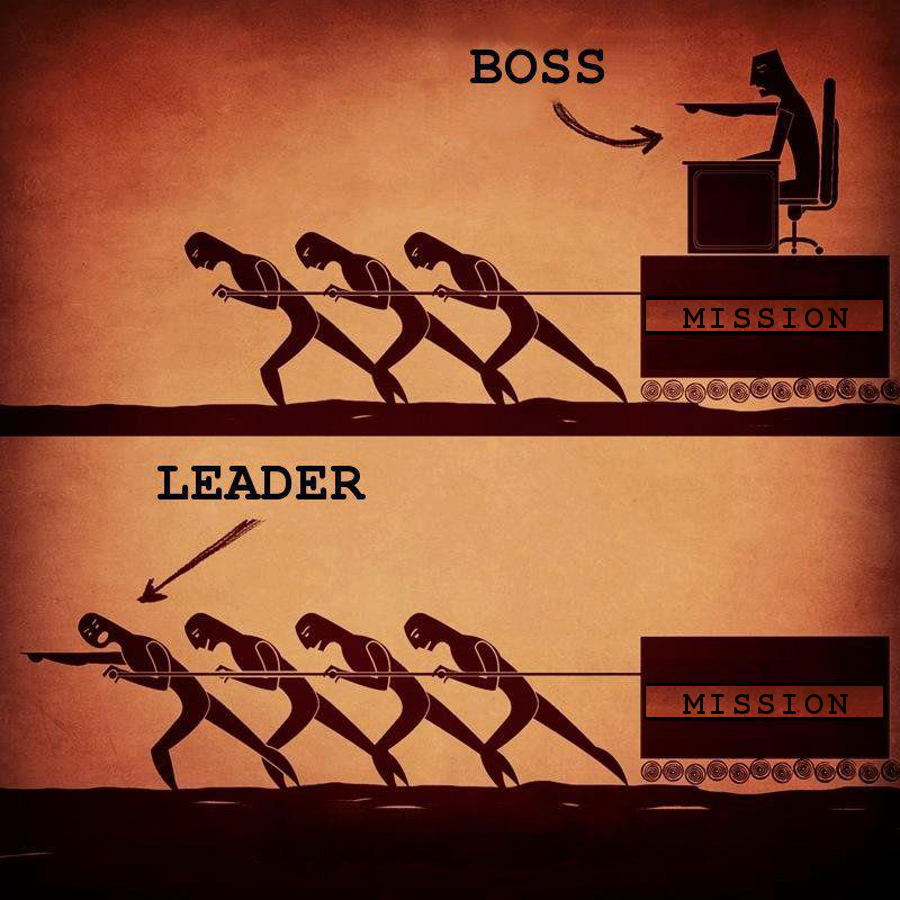
Lever Arms, Body Mass, Power, and Leadership

First seen on a social media post by Simon Sinek; please let me know whom to credit!

What makes you an asset to the team? How do you know? How does your leader know?
Does your leader know?

Friend Mark came with me to Ethos last weekend for the last conditioning workout of the block. We pulled the skiers and rowers side by side for 200-300m or 90 seconds, whichever came first, among other movements. No matter how fast I pulled, he still finished at least twenty to thirty seconds before me. Pushing the 215# sleds down and back on the turf, you’d think his weighed almost nothing the way he zipped along, compared to my Sisyphian effort. But I didn’t feel too bad about myself. I’m 5’2″ and 145#; he’s got at least a foot and 60# on me, I’m sure. I marveled briefly at our juxtaposition and just reveled in the fun of having my friend with me in one of my favorite places.

Today, back on the skier and rower, I thought again about our physical differential while pulling, varying my method between leading with legs, back, and arms. I wondered if I’d be an asset or a liability on a rowing team? Is it generally advantageous for rowers to be tall, so they get more distance per pull from their longer lever arms and leg extensions? Could I ever find a rowing method that could compensate for my much shorter limbs? Does my lower body mass give the team any advantage, and if so would it make up for the limb length deficit? How could I maximize my power to contribute? What are the ideal physics of a heterogeneous crew habitus? How could this team win consistently?

It all got me thinking about leadership, naturally.

How do we all contribute from our strengths? How do our leaders identify our strengths and amplify them, then place us in positions of complement and synergy for the good of all?

This requires more attention, thought, intent, creativity, and work than most leaders consider to be their jobs, no? It requires relationship. I must know you to find your true strengths; I must know the whole team to see how we all fit together, where we grind and where we glide. When I do this, you are much more likely to feel seen and valued. I can enlist each person to identify not just their own strengths but one another’s. Proactively synergizing our respective gifts can bond the team in mutual respect and collaboration. My effort, then, is worth the rewards in loyalty and willingness to sacrifice, because we all feel in it together.

Leaders who are willing to do this cultivate cohesive teams who can withstand adversity with confidence and grit. We can call on one another’s superpowers with humility and collegiality, knowing we shine brightest when we all shine together, rather than always trying to outshine one another.

Honesty and transparency stand out as core values here. If I really wanted to row and understood why that would not serve my team, if I were told kindly how I could contribute meaningfully in other ways that also align with my strengths, I’d be much more willing to pivot and still participate fully. That would require my team leader to take time and energy to communicate clearly and completely. I think this is not too much to ask. We should expect it, train it, and hold leaders accountable for it with specific, relevant, and regular feedback.

If the default assumption is that everyone has a worthwhile contribution to make regardless of limb length, body mass or other attribute, and leaders actively help team members identify and amplify their strengths, then that contribution will manifest from each and all of us fully and for the greatest good.
What a wonderful exercise on possibility, no?
No Longer Stupid, Not Yet Infirm: Make Every Pull Count

Reflections on turning 52, yay!

I’ gotta say, I kinda killed it at the gym yesterday. It’s because Jacob was coaching, and because it was the third week of the block and I had avoided death the prior two Saturdays–that does wonders for confidence! Band rotations, bike, rope waves (I hate ropes), butterfly sit ups, mountain climbers, rower and SkiErg–woohooooo!

Remember when I wrote about how much I love driving curvy roads in the mountains? It’s the challenge of hugging that perfect tangent, timing the brake and acceleration just right–such a thrill! I feel the same way about rowing and skiing at the gym. Every pull on the machine is a chance to train that movement just a little better. What proportion of rowing power comes from hip and knee extension versus lat pull? When during the stroke is best to extend the back, if at all? How much hinge and knee flexion is optimal on that ski? If I practice this well and I ever get on The Price Is Right, will I have an advantage spinning that big wheel? We train functional movements, after all!

It’s a practice in presence. When I focus on each pull of the rower or SkiErg, I’m almost one with the machine, flowing in real time, in fluid motion. It borders on meditative, honestly. Each pull, each session feels a little more fluid, a little more powerful, efficient, and rewarding. Where else can I apply this mindset? On the slackboard. For two months now I have set the goal of spending five minutes each work day balancing on a two inch wide nylon strap that spans the length of a skateboard-shaped wooden plank. I’m already good on both long and round boards and a Bosu, but this is a whole new challenge. The asymmetry between left and right, which I sense only somewhat doing single leg movements in the gym, amplifies exponentially on the slack line. But in fifteen minutes or less per week, in eight weeks, I have made noticeable improvements in both physical balance and mental focus.

What fantastic opportunities, these training modalities, to continue growing body, mind, and spirit at this age! My nest is about to empty. I have things yet to do and plenty of runway still to do them, if I attend to what matters:

5 Domains: Sleep, Exercise, Nutrition, Stress Management, and Relationships.
3 Fundamental Skills: Self-Awareness, Self-Regulation, and Effective Communication.
5 Attributes of physical, mental, emotional, and relational fitness: Stable, Strong, Flexible, Agile, and Resilient.

Life is crazy fun when we keep learning and growing, making new friends, finding love and connection around every corner.

Love multiplies when offered, received, reflected, and amplified. I experience it every day and never take it for granted. There are also areas where I could love better; every day is another chance to practice that, too.

Who knows how long we each have on this earth, really? Regardless, I still think of every life as having infinite possibilities–HA! I wrote that post on my birthday three years ago! We just never know what encounters will change our lives for the better, set us on a path of even deeper, brighter, tighter, and more inclusive love. Even through pain and struggle, there can always be light on the other side.

No longer stupid, yes… Maybe for a decade or so now?
Not yet infirm, RAH! Not for many more years, if I can help it!

Make every pull, every encounter, every relationship, every expression, every breath count, my friends!

Bring What Ya Got. Wow, I wrote that one over ten years ago. I got the advice in 1987, and it’s just as relevant for me at 52 as it was at 14, maybe even more so, as what I’ ‘got’ right now is definitely not what I had then! OH that makes me laugh in so many different ways, it’s just too good.

Daughter and I hit the road tomorrow, friends. I’ gotta pack! I have an idea what I may write here next week, and it could all change multiple times between now and then–life! Onward in love, light, peace, and snacks!

Owning Our Leadership: Ethos Self-Efficacy Session 2

How do you lead?

I like to ask a question at the start of a post because it feels like an invitation… Like I’m starting a conversation. Because the purpose of this blog is not just to express my own thoughts and ideas, but to connect with others who are willing and excited to engage with them and me. I just never know when, where or who the next great connection will be, and it’s one of the best uncertainties in life.

As I prepared for my second self-efficacy session at Ethos today, all I wanted to do was explore questions. I know my own approach to leadership, how I have evolved in my own practice of it, etc. And I am happy to ‘impart’ any of that to anyone who asks, but these self-efficacy sessions are meant to stimulate attendees’ own explorations and assessments. I am simply the facilitator. So I came with more queries than teachings. Looking back, I wish I had invited more questions as well. Learning for next time!

The group was small, five of us who know each other already, three who attended my first session in March. No dry erase writing this time, just slow, thoughtful reflection and sharing. I know now that regardless of audience size or composition, I can show up loving and present, and navigate any dynamic with a strong rudder of openness and connection. And I’m rewarded so generously every time.

Words that recurred today included energy, empathy, together, expectation, growth, awareness, humility, discomfort, vulnerability, and love, among others. I will continue to reflect on my friends’ insights and expressions, and learn from them. Please find below the questions I prepared, as well as a few that emerged in conversation. We did end up discussing most of them, without feeling rushed or forced. It all flowed in easy, loving exchange. We led ourselves and one another in exactly the way I had hoped we would, and I am nothing but grateful.

I hope you experience excellent leadership in your life, dear reader–both of you and by you. And if you are unclear or unsure how to lead well or better, may opportunities for clarity and confidence meet you soon on your journey.

Oh, and in case you have not already considered:
Assuming you are a leader in any given space, regardless of title or status, how does this affect/change how you show up, to yourself and to others?
If you knew you could lead from any chair in the orchestra of your family, your work organization, and humanity, how would you play?

————————————-

Ethos: Own Your Leadership
June 22, 2025

Curious – philosophical – concrete –> Apply

Why here today? Curious about…?
What is leadership?
How do we know we’re being led?
How do we know we’re leading?

What is your first act of leadership in memory (mine was in preschool)?
–What was the outcome/consequence?
–What did it teach you?

What is your leadership style and (how) does it change with context?
–How has it evolved over time (drift)?
–Any seminal experiences that shifted it?

How do we feel when led well?
How do you want those you lead to feel–about themselves, the work, and you?
–How does this inform how you show up?
–How do you think/assume/// they want to feel?

What feedback have you gotten about your leadership?
What feedback have you given about others’?
What are the compontents of effective feedback, both giving and receiving?