Here with the family on a speaking (Hubs) and school project (Daughter) vacation; could not be more grateful. That we can take this trip all together, I could hand off patient care for a week with complete confidence, and we can spend these days in one another’s company relaxed and connecting for the first time abroad in two years—wow, what a privilege and a joy.
We have reconnected in quality time with one another and also with old friends from the kids’ grade school years. That was so special.
Last month I referenced the four thousand weeks of the average human lifespan. It’s the equivalent of 100 pregnancies. I just realized why that reframe hits such a soft spot right now. Pregnancy feels like forever, then it’s all but forgotten in the maelstrom of newborn care and raising children to adulthood. There is some math about the percentage of kids’ time spent in the home of their family of origin and how the vast majority of it has passed by the time they leave for college. It’s a duh-HA kind of calculation, one that makes perfect sense cognitively and also doesn’t hit a parent until the kid/s is/are actually flown and we realize how seldom we will actually see them hereafter.
It’s a natural order of things. Children grow up and separate from parents. And of course they can always come home, anytime for any reason. I have stuff to do that has waited for this season, yet part of me feels guilty for looking so giddily forward to it. I suppose it may just be the nature of parenting, this self- versus other- first ambivalence? Regardless, the relationship is unique and mundane, ordinary and sacred. What a privilege and challenge, an incredible journey.
With our second and last college launch only a few months away, revelations and insights about family, parenting, and relationships in general hit heavy and strong. I find myself slowing down, allowing the feels with more reverence than last time. I will cross this bridge in no rush. I will savor it more this time, pay more thoughtful attention.
This family trip feels different and special. How lovely. Signing off now from ‘the future,’ as my Aussie friend calls it. Ha. That feels appropriate for this unintentional precipice post. 😊
I had such an endearing conversation with a friend this week. A new empty nester, he reflected on this new perspective. Having spent so much time and energy focused joyfully and lovingly on his children the last couple of decades, he now has some of that time and energy ‘back’, to do with what he chooses. And it seems he chooses in part to appreciate the awesomeness of his life a bit more. Fabulous marriage, meaningful and fulfilling careers for both him and his wife, a chance to make a positive difference in the world around him, and happy, healthy kids. Yay!
I absolutely love hearing people revel in awesomeness, don’t you? Is it not totally inspiring? When was the last time you looked around and truly appreciated the goodness all around you? It’s a vulnerable act, if we’re honest. Too often it feels like tempting fate, ‘jinxing it’, to call out all that is going so well, so right. So we keep joy at bay, we keep striving, always looking for how it could all be better. Huh.
What happens when we allow awesomeness to envelope us, penetrate us, move us?
I think the first thing we get is a deep sense of wonder. How could it be so good? How is it even possible? And it doesn’t even have to be anything big. I have a cold—fever, congestion, headache, fatigue, body aches, mental fog. And yet I can hydrate, medicate, and slow down, and still work (not in person!) and take care of the family. The parameters for normal operation in the human body are remarkably narrow. And yet multiple systems can be widely deranged, and we not only survive, we function at about 90% or better for the most part. What an amazingly evolved machine, with perfectly orchestrated and automatically, effortlessly effective redundancies! HOW AWESOME!?
For me, from wonder grows gratitude. Some people can’t actually tolerate a cold so well, but I can. Some people don’t have access to excellent healthcare, but I do. Some people don’t have the marriage, career, and kids that my friend and I have—but we do. And we are grateful. We don’t have to feel shame or guilt for having it ‘better’ than anyone else. Everybody has their challenges in life, us included. And still, counting our blessings is a great way to get perspective in any time, hard or easy.
Gratitude, then, is the fountain from which generosity springs. I wrote about this in 2015:
When I feel grateful, there is enough. I am enough. Even just saying the word, seeing it on the screen, brings me to a more peaceful state of mind and body. It brings to mind the people in my life—my parents, husband, children, friends, colleagues. I recall instances when someone went above and beyond to help me, or when they thought of me and took to the time to call or write. I feel humble. I feel connected. I want to share what I have with others.
When we truly revel in awesomeness, then allow wonder to infiltrate our psyche, then bask luxuriously in deep gratitude, how can we help but wish for everybody to have what we have, to feel what we feel? If I can have all this, when life is this abundant, how can I help but share?
Finally, I believe reveling in awesomeness is the seedbed for my activist heart. I have much and I strive to share freely. I wish for everybody with much to share with those who have much less. I wish for our culture and society to make it easier, through policy, for all to have more thanenough, for that to be the default. These days I have cynicism-optimism whiplash at ever higher speed and intensity. I see so much self-absorption, biting competition, and scarcity thinking. Sometimes I just want to shake people and yell, “Look UP! We have so much potential for good here, if we only choose to see it!” But I realize folks don’t always appreciate this approach. So for now I can simply revel out loud for myself, in all the awesomeness I experience every day. And like my friend did, I can share the light I see—emanate it—and I can keep making a difference starting from there.
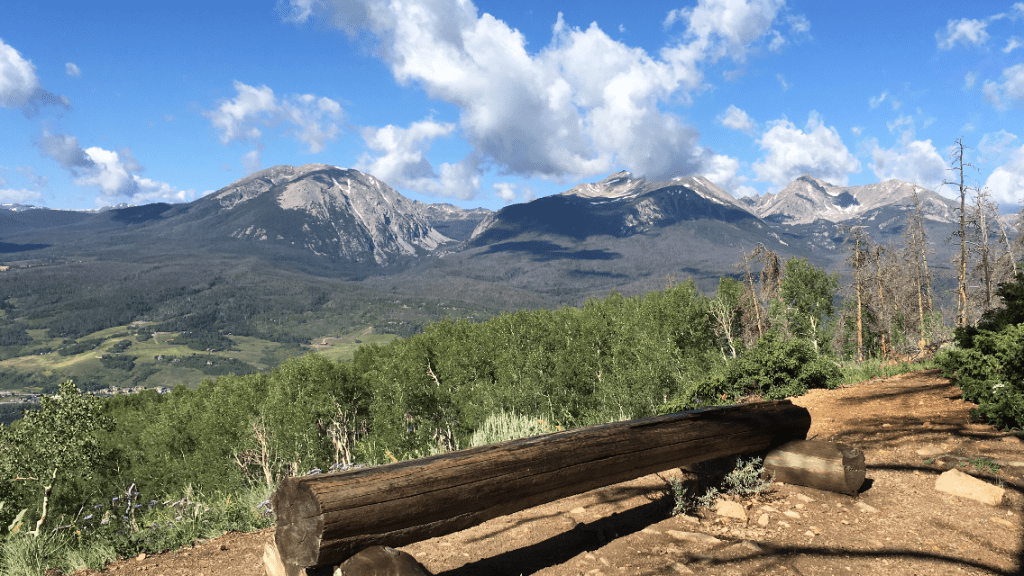
Friends, I’m sad. I will not go home to Colorado next month. The family went already last month; it was a glorious 15 hour road trip each way from Chicago, with 7 amazing days in the mountains, my favorite place on earth. Because we had planned to be abroad that week, back in January we made plane reservations for a five day trip to my home state in August. And now I will cancel.
Cancelling a trip home is a big deal for me. But I cannot ignore the glaring imbalance of risk and benefit here. It’s a personal, emotional decision, but not without reason.
Trust
First, I agree that flying during this pandemic can be safe. It depends critically on everybody doing their part, namely masking up and staying on the ground if we feel sick or have a recent known exposure. I do not trust everybody to do their part. I don’t know who will lie on a symptom checklist or suppress a fever with medication in order to fly while ill. I don’t know who will pull their mask off right next to me for the duration of the flight. Sure, the airline can ban them from flying after we land, but I still have to sit next to them for three hours, wondering about their infection status, fuming at their apparent disregard for my safety and that of everybody on the plane.
Shock and Awe
Second, I have never seen a disease like this. The spectrum of illness spans from totally asymptomatic to 100 days in hospital, intubated and proned, on ECMO (heart-lung bypass) and dialysis, limb(s) amputated, before finally dying. Every organ system can be affected, including the brain. COVID patients in the ICU require sedation and paralytics to control agitation, psychosis and flailing. Some suffer catastrophic strokes. Upon discharge, if they survive, months of rehab still don’t guarantee any return to normal. It’s been only six months since the disease emerged; we have no idea what long term consequences or complications lie down the road for these patients, no matter what their illness course.
Statistically, my family and I have a low risk for complications and death if we are infected. We are young and healthy. Populationally, the old and infirm have the highest mortality risk. This is also true for flu. And, healthy young people die every day from COVID, just like they do during flu season. And death is not the only horrible thing that happens to COVID patients. Symptoms can last weeks to months, including cough, shortness of breath, profound fatigue, diarrhea, and mental slowness. There is no way to predict 1) who will get infected or 2) what their disease course will be. It could be anything, and there is no good or reliable way to affect the outcome. You could be totally fine or suffer long and hard before dying. And the mental and emotional tolls of suffering in isolation, for the patient as well as their loved ones, are the ultimate insult added to injury.
I have profound respect for this virus and this disease.
Regret
Third, it’s a five day vacation. We were just there a month ago. This is not essential travel. My kids are my life. If one or, God forbid both, of them got sick, or if my husband and/or I got sick and died, or if I infected my patients—if anyone, family or not, ended up suffering because I decided to take this trip—my soul could never rest.
In the end one question always helps me: Of the worst case scenarios at the end of each path at this fork, which would I regret more? I will be sad to not go home this time, yes. But I don’t know how I could take the responsibility of getting someone infected because I wanted to take a five day vacation and made us all get on a plane in the middle of a wildly uncontrolled pandemic. There is no question here.
The sadness is real, though. And it’s not just about the trip. It’s about life turned upside down, everything we took for granted—our safety and security—threatened. It’s about the immense uncertainty, the suffering all around us, the lashing out and fighting from stress and tension, the chaos. How will we know what do to about school? When will life be the f*ck normal again?
Clarity
All of that said, there is still a very bright side.
This is temporary. Life will likely not ever go back to what it was, but it will feel normal again, someday. It will take some years, all things considered. In the meantime, we are fully in control of our mindset and response in this moment.
‘Mindfulness’ has become a trendy buzz word, almost cheapened such that I hate to even write or say it. But the evidence is all but irrefutable for its benefits, especially in times like these. The practice is essentially to be with what is, right now, including how you feel about it, with acceptance and nonjudgment. So much easier said than done! And yet, in truly mindful moments, peace and clarity ultimately descend (or transcend, I should say). To look around at the chaos and suffering, and accept it as just the way things are, is the first step to managing it all. Living fully in the present moment allows us to distinguish clearly what we can control from what we can’t. We can claim and exercise agency over the former, and let go the latter, thereby suffering less and maximizing energy and resources to effect positive change for ourselves and others.
To really free ourselves from the anxiety and uncertainty of the present moment, to know what to dotoday, while we attend to the now, we must paradoxically also cast ourselves into the future. We must take the long, infinite view. What really matters today? What from today will really matter next year, and in five, ten, or fifty years? Will the disruption of remote learning for my privileged kids this year really make a difference when they are my age? Likely not. Will missing essential nutrition and social contacts, and parents’ unemployment this year, for kids in marginalized communities, matter later? Absolutely. Many of us will be okay no matter what. Many more of us will not. The disparities we see today cast long shadows into the future, and we must attend to them in current policy and guideline decisions.
We are all in this together, and what we each do affects everybody. This fact is inescapable. There will be more suffering and death, no matter what we do. Somehow we each must make our own peace with the risks, find freedom and joy, and exercise empathy and social responsibility, in the face of it all.
In this crisis we are called to be our best selves for one another. That ultimately includes individual, short term sacrifices for the greater good. I can give up my little vacation to help keep everybody healthy. I wash my hands like I have OCD. I keep my distance around people I don’t live with. And I wear. my. mask. I protect you, you protect me. Let’s all do our part, shall we?



 Healing Through Connection