What Does Love Make Us?

https://www.nicolatyche.com/

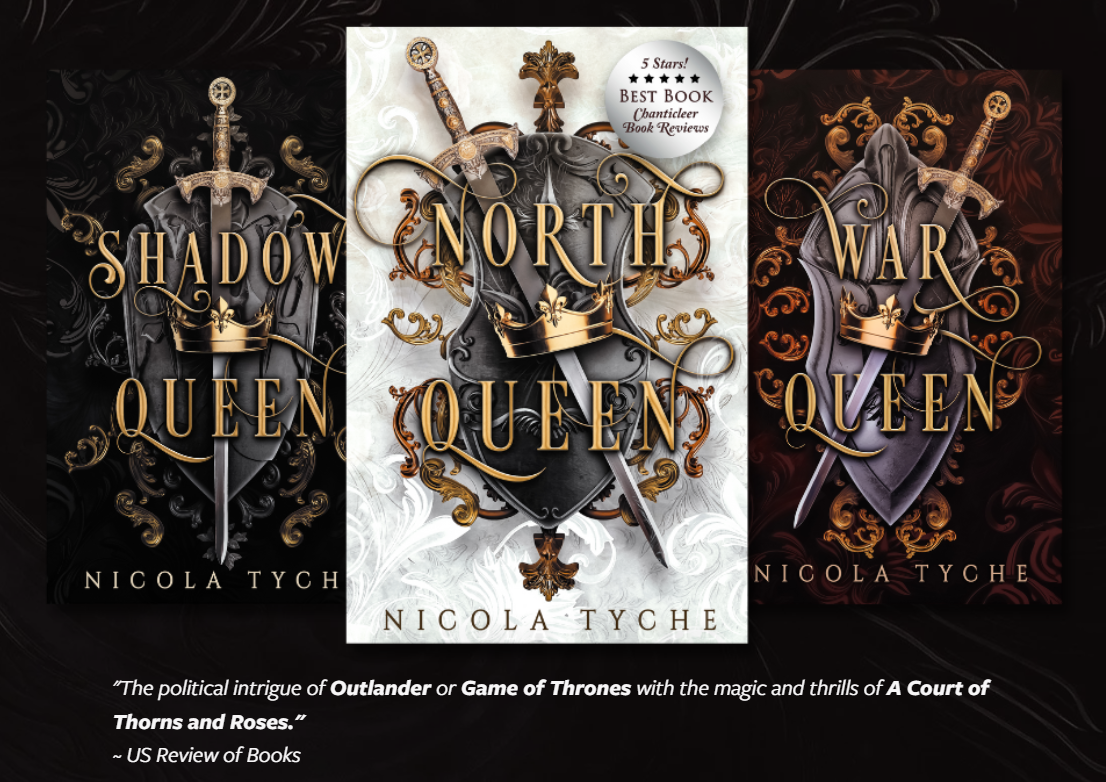
“Love makes one weak.” –Soren, War Queen, Nicola Tyche

What think you, friends? Do you agree?

I respectfully disagreed as soon as I heard it the first time (I binged the series twice in a row–looking forward to writing more about it here soon) and each time since (I listen to exerpts repeatedly when the mood strikes), the line prompts me to counter more excitedly. So here is my partial list of what love does make us. What would you add?

Vulnerable.
At risk of being hurt or harmed due to exposure or lack of armor. To many, this equates with weakness. But is it really the same? Love can make us feel endangered, undefended, unarmed, and open to risk of disappointment, pain, abandonment, etc. Vulnerability feels soft and susceptible. And yes, it can seem like weakness. But if we get still and feel into our love, is it weakness that we sense? What does vulnerability in love actually feel like in mind, body, and spirit? I submit that it is giddy, tense, anticipatory, and maybe anxious. It’s a high energy state with an outward facing posture, no? What if we reframed ‘weakness’ in this context as ‘hopeful vulnerability, open to the possibility of harm in service of the great potential for connection’? As Brené Brown writes and says often, vulnerability is the foundation of courage.

Courageous.
Just think of all the brave things love makes us do. We stand up for our loved ones against bullies. The most introverted among us profess our love out loud and in public. We advocate for our most meaningful and heartfelt causes with conviction when love drives. This foundation of courage fuels us from a deeper place, and it is self-sustaining. I think of parental love here more than anything–Lorenzo’s Oil and stay-at-the-intensive-care- bedside-holding-your-baby’s-foot-because-it’s-the-only-part-of-his-body-not-covered-with-lines-or-monitors kind of love. Love makes us strong.

Powerful.
The most memorable and important human movements I can think of are all founded in love. Martin Luther King’s civil rights leadership and LGBTQ advocacy come to mind first. Love is love. That anyone has to fight for the right to live in full expression of their love boggles me. Here we are at the end of 2025 and the fight persists, and I am heartened that the pro-love movement in all its forms continues to show up in strength and power. There may always be opposition, and I am confident that love will always raise us to the challenge to overcome it.

Forgive.
I think this is true. Some of us may be more forgiving by nature, or more so in certain situations. But wronged in the same way by different people, I’m much more willing to forgive if I love you. There is something about the loving relationship, something about preserving the connection, that makes me repair ruptures much more willingly.

Willing.
Come to think of it, I’m much more willing to do a lot of things because I love, aren’t you?

Selfless.
Love makes us put others before ourselves. Parental, romantic, fraternal, platonic, Agape alike–think of all your favorite examples of altruism and sacrifice. Do they not all arise from some form of love? Just think if this were not the case–if love didn’t exist or didn’t have this effect on us. We’d all live in a world of utterly selfish competition, default assholery in front. Yuck.

Grow.
Love makes us stick with things and people. We choose perseverance over escape, at least some of the time. So if we pay attention and work to overcome conflict, if we engage and learn our and others’ patterns, then we grow. We change and evolve, even as we settle more and more into our core selves. Root down and branch out. Awesome.

Better.
Is there anything that makes us better more than love? Empathy, compassion, kindness, generosity, curiosity, humaneness; education, achievement, connection, security–all of these are either grounded in love or secondary to love in importance for our betterment as individuals and society alike.

What if we expressed and acknowledged love more explicitly in more domains? It feels natural in families and among friends, of course. I also love my patients and my colleagues. I made a new friend last week, an executive coach, who expresses love for his clients–he serves as kind and loving truth teller for them, and to hear him describe himself this way just made my heart sing. It’s one thing to operate by default from a place of love, something too few of us do. It’s another level up to consciously own it, profess it, to lead and live all the way into it with intention and purpose.

Oh no, love does not make us weak, dear Soren. I love you and you are, arguably, the strongest character in the trilogy. Your love at all levels makes every other character respect, follow, and love you back with the ardent loyalty and conviction that saves you all.

Love makes us everything good that his human. May we embrace and exude it, my friends.

Lever Arms, Body Mass, Power, and Leadership

First seen on a social media post by Simon Sinek; please let me know whom to credit!

What makes you an asset to the team? How do you know? How does your leader know?
Does your leader know?

Friend Mark came with me to Ethos last weekend for the last conditioning workout of the block. We pulled the skiers and rowers side by side for 200-300m or 90 seconds, whichever came first, among other movements. No matter how fast I pulled, he still finished at least twenty to thirty seconds before me. Pushing the 215# sleds down and back on the turf, you’d think his weighed almost nothing the way he zipped along, compared to my Sisyphian effort. But I didn’t feel too bad about myself. I’m 5’2″ and 145#; he’s got at least a foot and 60# on me, I’m sure. I marveled briefly at our juxtaposition and just reveled in the fun of having my friend with me in one of my favorite places.

Today, back on the skier and rower, I thought again about our physical differential while pulling, varying my method between leading with legs, back, and arms. I wondered if I’d be an asset or a liability on a rowing team? Is it generally advantageous for rowers to be tall, so they get more distance per pull from their longer lever arms and leg extensions? Could I ever find a rowing method that could compensate for my much shorter limbs? Does my lower body mass give the team any advantage, and if so would it make up for the limb length deficit? How could I maximize my power to contribute? What are the ideal physics of a heterogeneous crew habitus? How could this team win consistently?

It all got me thinking about leadership, naturally.

How do we all contribute from our strengths? How do our leaders identify our strengths and amplify them, then place us in positions of complement and synergy for the good of all?

This requires more attention, thought, intent, creativity, and work than most leaders consider to be their jobs, no? It requires relationship. I must know you to find your true strengths; I must know the whole team to see how we all fit together, where we grind and where we glide. When I do this, you are much more likely to feel seen and valued. I can enlist each person to identify not just their own strengths but one another’s. Proactively synergizing our respective gifts can bond the team in mutual respect and collaboration. My effort, then, is worth the rewards in loyalty and willingness to sacrifice, because we all feel in it together.

Leaders who are willing to do this cultivate cohesive teams who can withstand adversity with confidence and grit. We can call on one another’s superpowers with humility and collegiality, knowing we shine brightest when we all shine together, rather than always trying to outshine one another.

Honesty and transparency stand out as core values here. If I really wanted to row and understood why that would not serve my team, if I were told kindly how I could contribute meaningfully in other ways that also align with my strengths, I’d be much more willing to pivot and still participate fully. That would require my team leader to take time and energy to communicate clearly and completely. I think this is not too much to ask. We should expect it, train it, and hold leaders accountable for it with specific, relevant, and regular feedback.

If the default assumption is that everyone has a worthwhile contribution to make regardless of limb length, body mass or other attribute, and leaders actively help team members identify and amplify their strengths, then that contribution will manifest from each and all of us fully and for the greatest good.
What a wonderful exercise on possibility, no?

Life, Death, and Life

“There is never enough time to be with the ones we love.” Relish every moment.

“‘Our world has been around longer than you can imagine. Your Ma lived in her time and you live in yours. You both lined up for a good nine years. What are the chances of that, in all of human time? Near impossible. Count yourself lucky.'”
–Roger Weathersby, Man of Science, The Resurrectionist of Caligo by Wendy Trimboli and Alicia Zaloga

We celebrated Mary’s life three weeks ago. Two days ago my friend’s 95 year-old father was transferred to the intensive care unit and needed medications to maintain blood pressure; I really worried he would die and my friend may not make it home in time to say goodbye. But he pulled through and my friend is with him now. Yesterday I had the privilege of participating in the life celebration of Hiroshi (Paul) Shimotake, father of my dear friend Tom. Tom, Janet, kids and extended family returned to Chicago for the memorial at the church where both Hiroshi and Hiroko and Tom and Janet were married. It was one of the loveliest tributes I have ever experienced, and I got unusually emotional.

I think it’s normal to take life for granted, at least a little. We make plans assuming we will still be alive and well tomorrow, next week, next year, several years from now–of course we do. Still, none of us knows how much longer any of us have in this lifetime. These recent remembrances bring to mind my own family’s future, as the kids’ independent lives begin in earnest and my parents’ approach their sunsets. What will stand out most when we recall our shared past? What insights will we only gain when our people have passed on? What will we wish we had said or done, cleared, resolved, or mended? As well as we know ourselves and might predict how the death of a loved one will affect us, I’m sure we cannot possibly know until it happens. So much (most? all?) of life is such, no? We can study all we want, and theoretical knowledge is still no match for first hand experience.

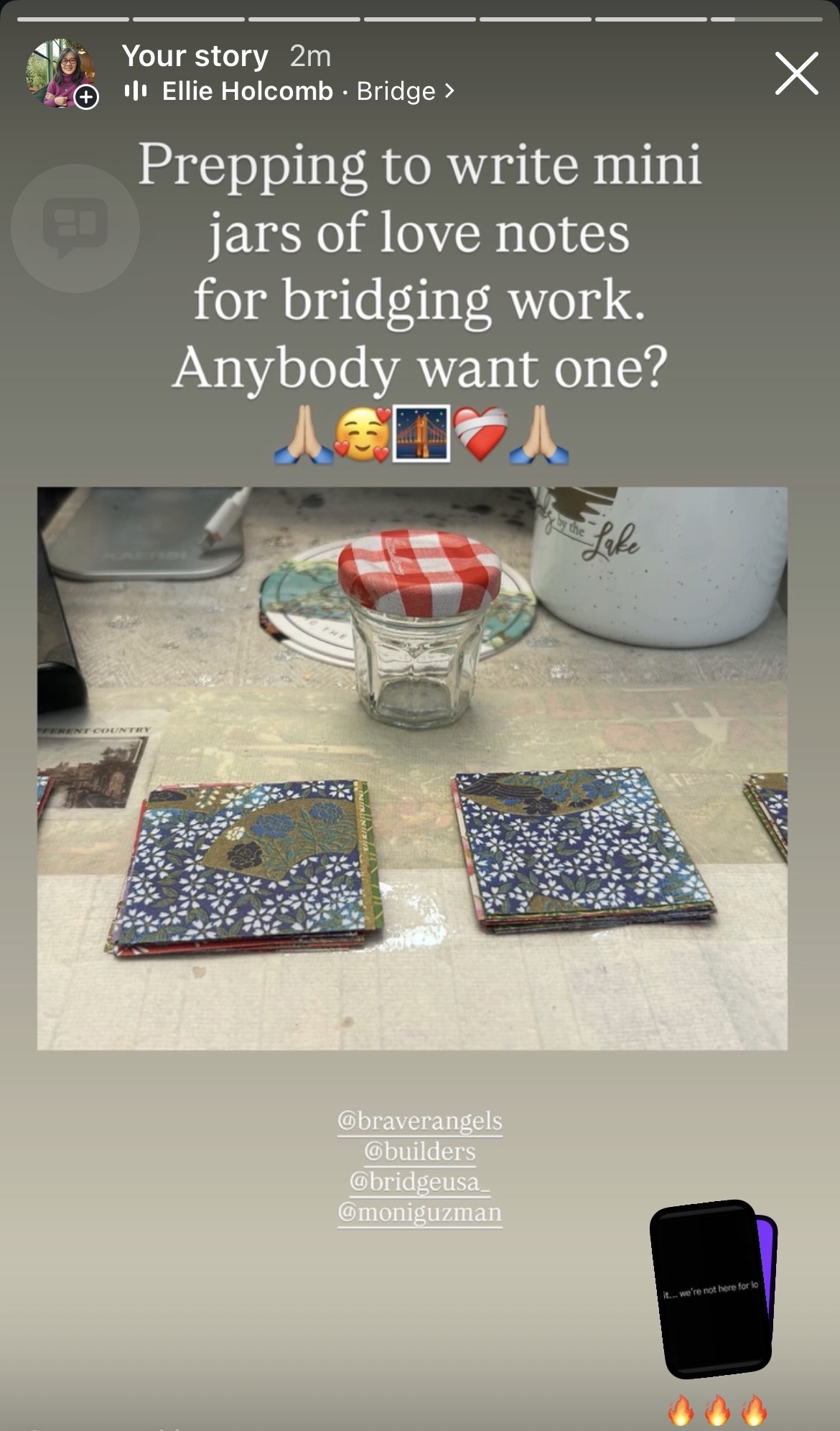
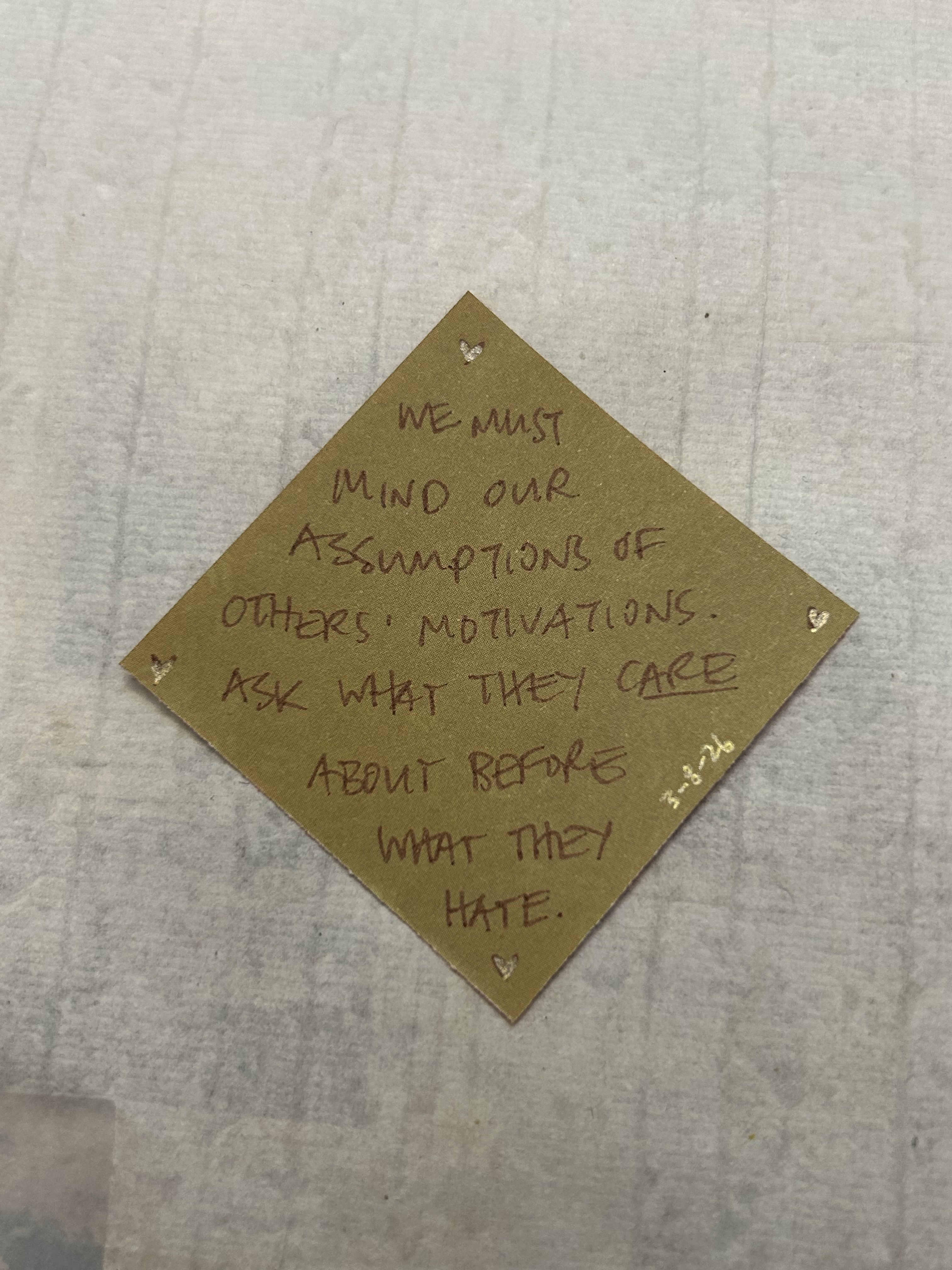
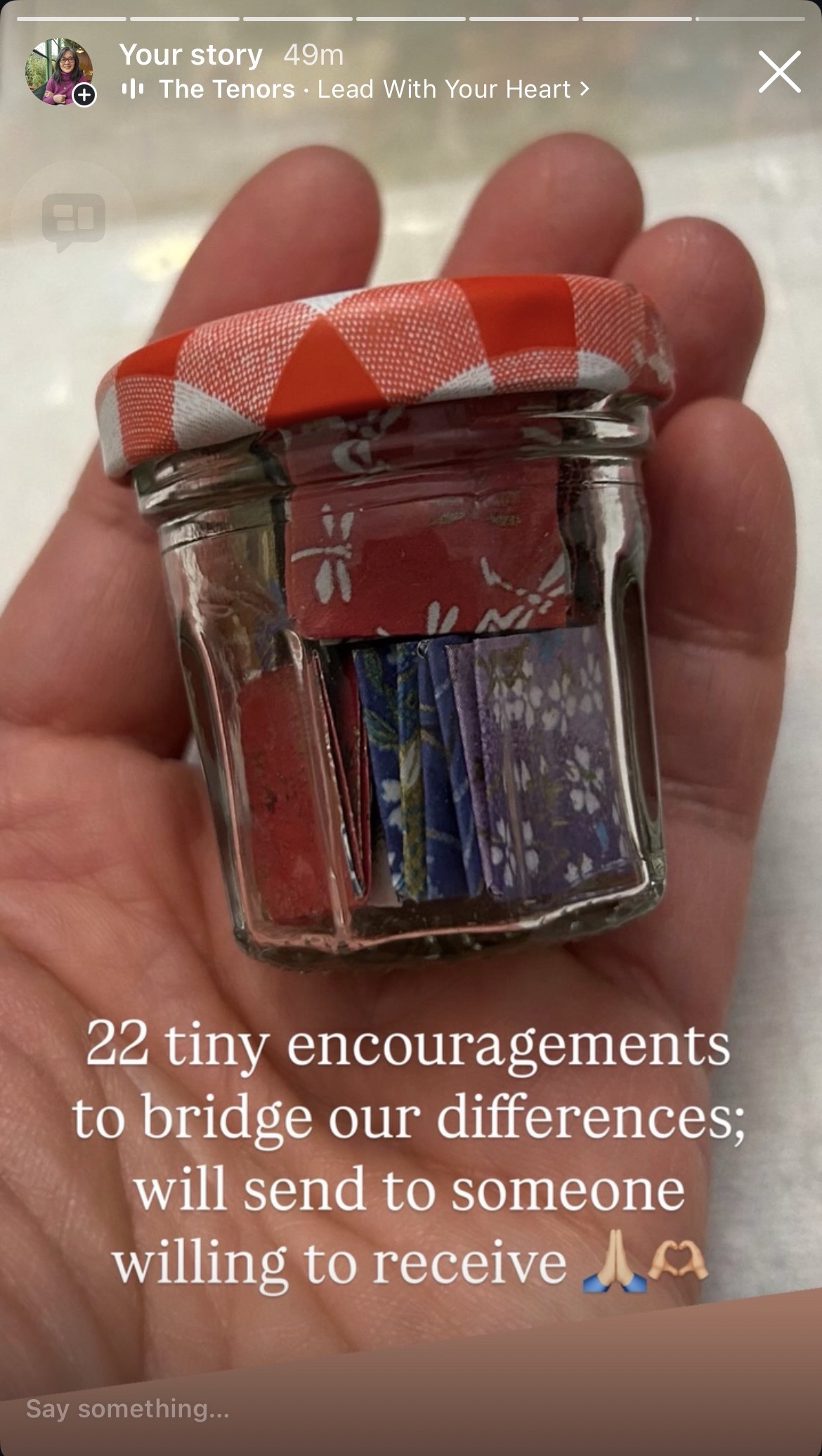
I recently gave Mary’s spouse the twelve Remembrance Love Notes. Yesterday I gave Tom and family Love, Homecoming, and Reunion. That felt right. I still find peace in the wish, “May their memory be a blessing,” as it acknowledges the passing as well as the legacy. I chose remembrance as the theme of my post after ‘grief’ and ‘loss’ both felt incomplete. I know we must journey through all of the feelings, memories, and processing, recurrently and often in convoluted fashion, over time. That’s just how it is. And of course, it’s just so much easier to do it together. I think the meaning we make this way is deeper, more connecting, and more healing.

“Mortality has no domain over love,” I wrote in my card to the family yesterday. I meant ‘no dominion,’ but I think they will still catch my meaning.

What a reassuring way to think of death, no? It hurts for those left behind, but if there was/is love, then the pain can be borne, especially if we share it. And isn’t that the case with most (any?) pain? I say often that pain is inevitable and suffering can be a choice. We mitigate our suffering by sharing our pain, no? I’m generally not a fan of formal or rigid rituals, but I appreciate better their comfort and importance for connection as I age.

How wonderful to be able to hold my friends’ loss, grief, and remembrances with them. I had not anticipated some of my own visceral, emotional, or cognitive responses. But I am not at all surprised, and infinitely grateful, for the glowing fullness I feel in my heart from tightening meaningful connections, even in these sad circumstances.

Death comes for us all eventually. What will help us be at peace at our end? What will we regret? How can we live today to make the balance of both be what we want? What can we do now to help our loved ones make it for themselves? Every life and death is experienced individually, even when we come together to share them. What helps us hold the space for ourselves and one another? I think the best we can do is simply to live intentionally and according to our highest values, and to maintain our connections to the people and causes that matter most. Relationships and meaning. Simple and complex, both.

In my middle age I see life as both long and short. It makes me smile. I’ve had such good fortune, done so much, come through my challenges relatively unscathed. And there is still so much to look forward to, so much more to experience and learn. So bring it! I can take good care of myself and those around me so we may all have the best chance at maximally enjoying one another and whatever time we have left together. And when any of us passes, my greatest wish is that we nurture the hurt with all the love, and not fear the pain. That deep, strong, soul-saving love, cultivated now and sustained later, is worth the pain of grief, I say today. But when death claims someone I love, will I wish I loved them less, so I could hurt less? I can imagine that thought crossing my mind. I hope if it does, that I will allow it, investigate it, and nurture it as well, and nurture myself and others in patience and compassion.

So let us all live fully, my friends, and remember our loved ones in word, action, and relationship. That is the best way I can think of to honor us all.