
Comfort Food

img_5475.jpg

NaBloPoMo 2017: Field Notes from a Life in Medicine

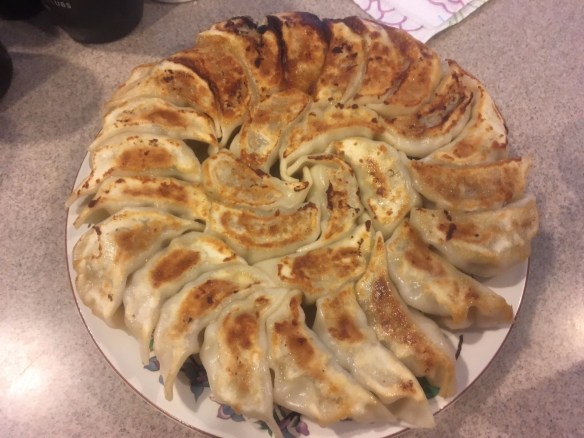
There is just something about rice that comforts us Asians.  This morning I got up early and spent all morning with my hosts in the Department of Surgery.  My presentation went well, as did a leadership and communication session I helped lead with the department chair.  But I only snacked on trail mix, and by the time I met my friend for sushi in the afternoon, I was starving.  The tuna, salmon, and yellowtail sashimi came with a nice, round bowl of rice, and I was in heaven.  The smooth, cool texture of the fish, the pungent bite of wasabi, and the dampening, flavor blending effect of soft white rice—every bite was a true pleasure.

Coming back from the west I connected in Denver, happily landing at Concourse C, where they have a bank of restaurants serving hot food.  I never do this, but tonight I made a beeline for Big Bowl.  No wraps, salads, snack boxes, or tabouleh this time.  I wanted rice and stir fry.  They served up one of those black takeout containers with the clear lids, filled with food, and I ate the whole damn thing.  It was just so satisfying, and so odd because Chinese food is usually the last thing I want when I eat out.

Maybe it’s because I’m overtired.  I traveled three times in three weeks in October, to Colorado, then San Francisco, then DC.  I connected with amazing people, old friends and new, and my brain was saturated with nature, love, and learning.  I also had multiple projects going on at home in that time.  This month I have stuck with my commitment to post here every day save one, keeping me up too late most nights.  I have presented to colleagues twice, traveling once to do it.  It’s been four weeks since I hurt my knee (complete ACL tear, now confirmed, with minor meniscal tears associated), I’m still limping, and my left quad is visibly–stunningly–atrophied.  All in all, it’s been a physically, mentally, and emotionally grueling couple of months.  I don’t regret most of it, except maybe going to volleyball that night when I probably should have gone to bed.  Grrr.

So it makes sense tonight that I’m attracted to ramen with a poached egg, chicken and vegetable soup, rice, stir fry, and oily fish.  They are warm, substantive, and satisfying, without feeling heavy or gluttonous.  I don’t feel guilty after eating them—these are my true comfort foods.

Thankfully, I have no more travel until Christmas and no presentations for two months.  One more NaBloPoMo post tomorrow and 2017 is in the books.  I’ve accomplished a lot, and definitely enough, this fall.  I can get off this treadmill in another day or so, and start the knee rehab in earnest—a whole new and fascinating experience!  Patience will be the challenge, perseverance the goal, and mindfulness the primary coping tool.  Now I just need to get home and get some sleep.

Tribal Pride and Tribalism

DSC_0347

NaBloPoMo 2017: Field Notes from a Life in Medicine

What tribes do you belong to?  How do they serve you, and you them?  How not?

I think of this today as I have traveled out of state to speak to a Department of Surgery on physician well-being.  I wonder how often they have internists present at their Grand Rounds?  What a tremendous honor, I’m so excited to be here!  I hope my talk will be useful and memorable, as I represent my field and my institution, in addition to myself.  In the talk I describe the central tenets of Tribal Leadership and culture, and how to elevate ours in medicine.

So I’m thinking tonight about tribal pride and tribalism—the benefits and risks of belonging.

We all need our tribes.  Belonging is an essential human need. To fit in, feel understood and accepted, secure—these are necessary for whole person health.  And when our tribes have purpose beyond survival, provide meaning greater than simple self-preservation, our membership feels that much more valuable to us.  But what happens when tribes pit themselves against one another?  How are we all harmed when we veer from “We’re great!” toward “They suck”?

Of course I’m thinking now of intra-professional tribalism:  Surgery vs. Medicine vs. Anesthesia vs. OB/gyne vs. Psychiatry.  Each specialty has its culture and priorities, strengths and focus.  Ask any of us in public and we will extol each other’s virtues and profess how we are all needed and equally valuable.  Behind closed doors, though, internists will call orthopods dumb carpenters; surgeons describe internists’ stethoscopes as flea collars, and the list of pejoratives goes on.  Maybe I’m too cynical?  My interactions with colleagues in other fields are usually very professional and friendly—until they are not.  I have experienced condescension and outright hostility before.  But can I attribute it to tribalism—that general, abstracted “I’m better than you because of what I do” attitude—or to individual assholery?  Or maybe those docs are just burned out?  As with most things, it’s probably a combination.  Based on what my medical students tell me, negative energy between specialties definitely thrives in some corners of our profession.  Third year medical students are like foster children rotating between dysfunctional homes of the same extended family—hearing from each why all the others suck.

So what can we do about this?  Should we actively police people’s thoughts and words in their private moments?  I mean part of feeling “We’re Great!” kind of involves comparing ourselves with others and feeling better than, right?  Isn’t some level of competition good for driving innovation and excellence?  Should we even embrace this aspect of tribal pride?  It certainly does not appear to be diminishing, and I have a feeling it’s just human nature, so probably futile to fight it.

I wonder why we have this need to feel better than.  Is it fear?  A sense of scarcity?  As if there is not enough recognition to go around?  Like the pie of appreciation is finite, and if you get more I necessarily get less?  Intellectually we recognize that we are all needed, we all contribute.  But emotionally somehow we still feel this need to put down, have power over, stand in front.  And it’s not just in medicine.  I see it in men vs. women, doctors vs. nurses, liberals vs. conservatives, and between racial and ethnic groups.  It makes me tired.

But maybe we can manage it better.  Maybe we can be more open and honest about our tribal tensions, bring them into the light.  Yes, I think surgeons can be arrogant.  And that’s okay to a certain extent—it takes a certain level of egotism to cut into people, and when things start going wrong in the OR, I think that trait can help make surgeons decisive and appropriately commanding when necessary.  I imagine surgeons get impatient with all the talking we internists engage in.  So many words, so little action, they might think.  And yet they understand that words are how we communicate with patients, how we foster understanding and trust.  Maybe we can all do a better job of acknowledging one another’s strengths and contributions out loud and in front of our peers (and learners).  The more we say and hear such things, the more we internalize the ideals.

Tomorrow I get to spend a morning with surgical attendings and residents.  I hope to contribute to their learning during my hour long presentation, but I really look forward to my own learning, to expanding my understanding and exposure to parts of my profession that I don’t normally see.  I’m humbled at the opportunity, and I will look for more chances to bring together colleagues from divergent fields.  If we commit, we can connect our tribes and form a more cohesive profession.  That is my dream for future generations of doctors—to be freed from infighting and empowered to collaborate at the highest levels, for the benefit of us all.


Mom Love

DSC_0419

Somehow tonight I got to thinking about all my patients who are moms.  I am filled with love and admiration, and compassion for all of them.  Maybe it was because today that is what I did most—momming.  Chauffer, meal planner, shopper, meal preparer, science project thingy seeker, organizer of the week to come (meal planner, babysitter/transport arranger, meal planner, shopping planner, piano lesson re-scheduler)…

I feel so grateful that I can work part-time.  I accomplish most of these life tasks on days when I’m ‘not working,’ as I used to say.  Now I call them days on which I ‘don’t see patients.’  All moms work; it’s a full time job with intangible and transcendent benefits, as well as hellish hours, often disproportionately low appreciation, and obviously no financial compensation.  Some of you may have seen a popular article this year on the mental workload of moms.  I highly recommend the short read.  Here’s a slightly older article that also includes references to research on the ‘work-home gender gap.’  And I absolutely love this eloquent, hilarious, and heartfelt to tribute to moms from last year, which is basically encapsulated in the first sentence: “I am the person who notices we are running out of toilet paper, and I rock…”

What tugs at my heart the most sometimes are the moms who have chosen to stay at home, giving up, at least temporarily, a fulfilling and meaningful professional career.  So many of them feel conflicted over making this choice, and then shame over feeling conflicted.  Countless times I have heard some version of, “Please don’t think I don’t love my kids, because I LOVE my kids!  …But (sheepishly) being with them 24/7 is so tiring, and I really miss using those other parts of my brain, having conversations with adults, and solving problems that employ my education and training.  But I love my kids, really I do, and I love being with them and I chose this and I know I should feel so grateful that we can afford for me to stay home, I just feel so guilty for ever wanting to be away from them, what good mom wants that??  But I’m so tired, and sometimes (pause) I wonder if I should have kept my job, worked it out somehow?  I never thought I would feel so torn.”  In these encounters I do my best to validate my patients’ choices, to reassure them that in no way do I question their love for their children just because they long for the company of peers and colleagues, and to address the consequences of their inner conflicts on their health and relationships—with self and with others.  I feel sad and angry that anyone would shame a mom for wanting to have a meaningful life outside of momming.

There’s the guilt of the working mom, also—which springs from the same pathological thinking that no good mom would want to be away from her kids.  But somehow these women seem easier to console, in my experience.  They often derive significant meaning from their work, and even if that is not the case, they take pride in providing for their families.  They also often report seeing themselves as role models for their daughters.  Regardless, I hate that these women have to deal with the same social gremlins as their stay-at-home counterparts—that somehow being a mom and having a career are necessarily divergent ideals.  This is an example of a false dichotomy that serves no useful purpose, and causes many of us to suffer unnecessarily.  Thankfully, others have written extensively on solutions; I really like this article on 8 ways to overcome mom guilt, regardless of your W2 status.

In looking up the articles for this post, I also came across this one, addressing the invisible mental workload of men.  I’m so glad I read it, because it reminds me of another fallaciously dichotomous rabbit hole: when we start exploring and addressing women’s challenges, the discussion too easily devolves into man-hating.  I claim my own susceptibility to this mindset, and thankfully this article helps me rein it in.  The same antiquated social pressures that tell women they ‘should’ always want to stay at home also tell men that they ‘should’ always want to be at work, and GAAAGH, it just kills all of our souls, a little at a time.  The author, Josh Levs, writes:

“All women who notice and keep track of their families’ many needs deserve big props and respect for it. So do the men who do this work. It’s crucial, detail-oriented, and never-ending. It makes a home a home.

“For 2017, let’s resolve to put aside misguided gender assumptions and work together to achieve a better balance and healthy work-life integration—for the sake of women and men.”

I wholeheartedly agree.  Let us stop with the guilt trips and shaming, and give all moms, and dads too, all our love for the ‘momming’ we all do!