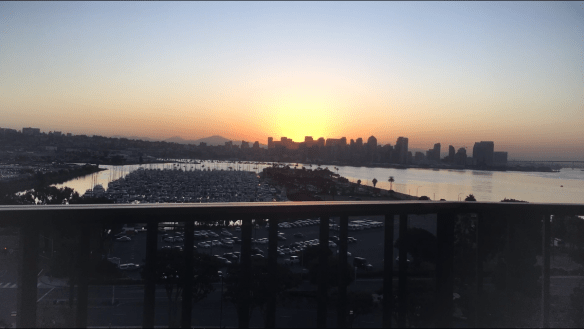
November 3:  (Sun)light Makes Me Better

IMG_2975

NaBloPoMo 2019

Happy Standard Time Change, friends!

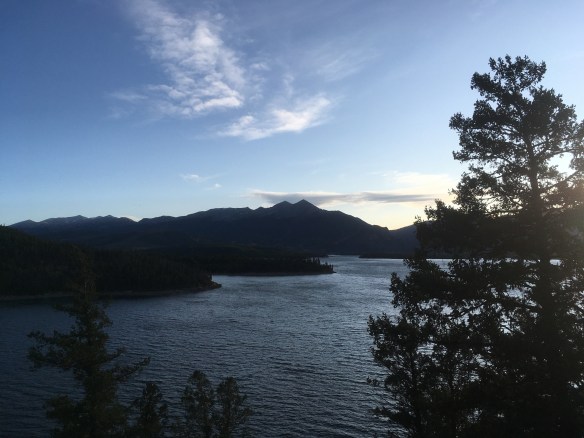
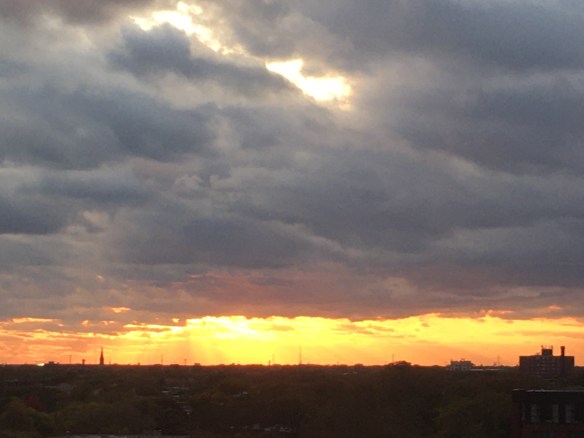
How do time changes affect you?  What about the shorter days here in the higher northern latitudes this half of the year?  I don’t have seasonal affective disorder, but no question, the absence of light affects me.

I grew up in Colorado (really, I know you could not possibly know by reading this blog), taking the sun for granted the whole time.  Blogging makes me read more, which makes me more honest.  I’ve been bragging to my friends lifelong about 320 days of sunshine per year in Colorado; turns out it’s more like 245.  But it’s still more than the US average of 205.  (Arizona has 299; Chicago has 189.)

IMG_2976

Utterly anomalous, then, that I decided to go to Northwestern for college.  I already wrote this summer about my campus visit—rain, rain, and more rain.  I never saw the sun that whole weekend.  But maybe it was the lake, viewed from the student center, that called me—that vast blue expanse, a smooth surface concealing untold life and tumult beneath.  There was no other school for me; I was meant to be there, sun or no sun.

Fall quarter freshman year, recalled now by a typically skewed mid-life memory, was a BLAST.  Independence, new friends, beautiful campus (deciduous trees with fall colors other than yellow, YAY!), being a small intellectual fish in a much bigger, much more diverse and interesting pond—I was in heaven.  Going home for Christmas, once I overcame the stark reality that life had clearly continued without me (what?), was also joyous. I caught up with old (HA! ‘old’ at age 18) friends and curated more items to bring back to school.  Life was sweet!
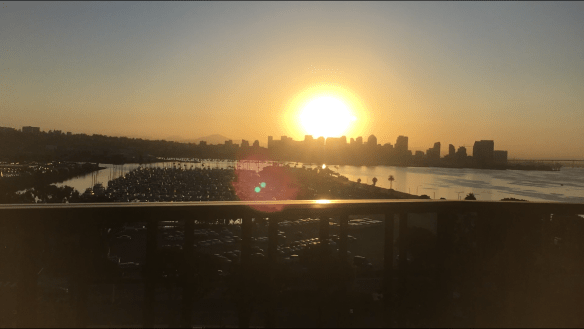
IMG_2977

So two weeks into winter quarter, I really had to wonder why I felt so down.  Mopey.  Low energy.  Sad.  Not severely, but noticeably.  I remember the moment, walking south on Sheridan Road in front of Tech, the giant engineering building (third largest building under five stories after the Pentagon and the Kremlin, they told us on the campus tour—found no reading tonight to verify this).  I looked up at thick gray-white clouds blanketing the sky.  I saw everywhere bare branches, orange and maroon leaves long gone, and only dirty snow, ice, concrete sidewalks and holey asphalt on the ground.  I had not seen the sun since returning to school, and I realize now as I write, there was simply no color anywhere outside, other than the bright neon Columbia jackets my friends and I wore in those days.  So of course I felt sad!  I think that was the day I started hating the climate here.  After that I never worried about my mood in the winter, grumpy as it was.

Fast forward about 17 years:  Winters were taking their toll: waking to blackness every morning, getting two little kids ready and out the door by myself, working indoors in a windowless office, and coming home again in the dark to the same little kids, hubs, and chores.  Maybe I was getting more cranky than I realized (she says innocently)?

My infinitely patient and loving husband was, finally, completely and justifiably fed up.  For Christmas, perhaps out of desperation, he bought me a dawn simulator, which may have saved our marriage.  It’s basically an alarm clock dimmer, which you can set to gradually turn on a bedside light to simulate the rising sun.  For the past decade or so, pitch black mornings outside have given way to a soft, emerging glow of light in my bedroom sanctuary.  By the time the audible alarm sounds, my surroundings are already warmly lit by the full spectrum bulb that came with the device—it really is kind of like dawn.  And I kid you not when I say that I am a much happier person all day—all year—for it.

IMG_2973

Since this realization, I make sure to get by a window every day in the winter, even on cloudy days.  Any light is better than none, and it makes a huge difference for me and everyone who comes in contact with me.  With age I have also gotten better at noticing how my environment affects me.  It’s a slow and continuous awareness.

The sun always shows itself eventually, my friends.  Maybe you’re like me and a dawn simulator or light box could improve your life.  It makes me think, though—meanwhile, how can we all be a little light for one another?

IMG_2978


Medicine:  Science + Humanity = Professional Pride

IMG_2525

Lots of learning this month, friends.  I’m overwhelmed and overjoyed, and proud of my profession.

It’s too much to write about in one post, but I will try all the same, in order of occurrence.

18 October 2019

Once again I had the privilege of meeting with medical students, this time to discuss their experience of leadership in medicine.  As is my new custom, I started with an appreciative inquiry exercise: What is the best thing about medicine, WHY do you do this?  One of their responses:

“The medical encounter is a unique combination of compassion and intellect—the conversation is my favorite thing, and that I also get to help.”

19 October 2019

Looking through the basement bookshelf, I came across my medical school application from 1994.  The general application included a one page personal statement, in which I wrote:

“Science, and the human body in particular, have always fascinated me… In practice, while I pursue the challenge of each new patient’s illness, I want to share with them my enthusiasm for the science of medicine…  But being a doctor involves more than curing people’s illnesses…  It is the job of the physician to reassure and comfort the patient…  In my practice I will…do my best to communicate with (patients) in terms they will accept.  The best way to comfort people is to relate to them.  I believe this skill will make me understand not only patients’ medical needs, but their emotional and psychological needs as well…  I hope to keep learning from my patients in the future.”

Turns out I’ve been both a science nerd, and also thinking and writing about relationships and connection for a while now, go figure.

IMG_2397

25-26 October 2019

This year’s ACP Illinois Chapter Meeting was the best one in recent years, in my humble opinion.  I’m so proud that under the leadership of our Northern Region Governer, Dr. Suja Mathew, we were able to present a robust clinical education conference, as is the ACP tradition.  Along with sessions on diabetes, heart failure, office orthopaedics, and cancer survivorship, however, we also included sessions on critical social and public health issues, such as diversity/inclusion, the impact of social media, firearm injury and death, medical marijuana, trauma-informed care, and sexual harassment in the workplace.  Esteemed colleagues from across the country came to share their expertise.  Here are just a few examples of Science + Humanity, in action every day in our work:

Diabetes

Science:  We now understand that it’s the wide swings in blood sugar, and especially very low sugar, that lead to end organ damage.  We have new classes of drugs with novel mechanisms of action.  They decrease the burden of glucose control on pancreas cells, and also seem to prevent heart failure in some patients.  Humanity:  All diabetic patients need education—face to face time with a trained professional who can teach them about the disease and how to manage it. Even the most highly educated and most well-informed person cannot automatically know how to be a diabetes patient without the help of these medical team members.  More and more, diabetes care in particular is a team sport, and our collective skills get better every year.

Cancer

Science: We are curing cancer.  There are more survivors now than ever before, thanks to targeted genetic and immunotherapy and minimally invasive surgery, among other treatments.  Humanity:  Survivorship starts at the time of diagnosis, and cancer patients have both unique and diverse needs and concerns.  Complications from treatment such as neuropathy and heart failure can occur years out from treatment, and the psychosocial consequences for patients and their families can be lasting and transformative.  The better we understand this as their care teams, the healthier and happier our patients will be.

Childhood Trauma

Science: Since the 1970s, cumulative evidence shows that Adverse Childhood Experiences and trauma correlate with an increased risk of negative health behaviors, mental illness, chronic diseases such as diabetes and heart disease, decreased academic performance, limited professional productivity, and early death.  And they appear to affect each of these outcomes independently.  In the Tree of ACEs, branches and leaves represent the interpersonal experiences.  We are only starting to understand the roles played by Adverse Collective Historical Events (slavery, genocide, mass incarceration, forced displacements)—the soil, and Adverse Community Environments (poverty, violence)—the roots.  HumanityThe key factor that correlates with escape from the early mortality path from ACEs is a stable and nurturing relationship with an adult caregiver.  As healthcare providers, we have a unique and important part to play in the healing of all ACEs—our patients’ and our own—and all evidence points to the quality of our patient-provider relationships as foundation—no surprise.

Gun Violence

Science: In 2012 33,000 people died from firearm injuries (it was up to 40,000 in 2018); 62% of these deaths were suicides.  That same year there were 62,000 nonfatal firearm injuries, 72% of which were assault, 5% self-inflicted, and 17% unintentional.  Higher rates of gun ownership correlate with higher rates of death from firearm injuries.  States with both background checks and waiting periods have lower rates of suicide by firearm compared to those with background checks only.  It is still unclear whether states with more lax concealed carry laws have different rates of firearm related deaths compared to stricter states.  Humanity: Though mass shootings dominate the media, the majority of deaths from firearms are self-inflicted.  The acute impulsivity of mental illness, combined with an accessible, loaded firearm, destroys lives—whole families and communities at a time.  Our job as physician advocates is to not alienate gun owners, and rather enroll and recruit their help to address the factors that take our friends and loved ones from us.  It’s not an Us vs. Them fight over rights.  It’s a shared challenge to create policy that honors our unique national history and culture, and also effectively addresses our public health crises.  Here is where our highest notions of collaboration, respect, and shared purpose must be exercised.

10-22-19-3

27-30 October 2019

Today I arrived in San Diego for the International Conference on Communication in Healthcare, my first time at this meeting.  Many of the sessions will present research on effective ways to teach communication skills to trainees, factors that impact health literacy, and methods for measuring effective communication.  This conference is all about the science of communication in healthcare.  And it’s also about the humanity.  The first plenary speaker was Dr. Lisa Fitzpatrick, who interviews people on the streets of DC in her series, “Dr. Lisa on the Street.”  The videos show over an over how people feel ignored and dismissed by our healthcare system, and how unsafe it is for them to admit what they don’t know or ask questions.  This is one of the only meetings I have attended at which patients are invited to present and voice their perspective.  At the end of this session one patient attendee stood up and spoke words that will guide me throughout this week and my career:  “Doctors may have all the education in the world, and if you cannot talk to your patients in a way that makes them trust you, it really doesn’t matter.”

Sessions I plan to attend:

Moving Health Care from a Team of Experts to an Expert Team

How to Become an Effective Advocate for Humanism in Your Healthcare Organization

Collaboration and Communication Across Multidisciplinary Healthcare Teams

Civility Ninjas:  A Field Guide to Improving Colleague-Colleague Interactions

Understanding and Addressing Mistrust

Shared Decision-Making as Ethical Practice

Thanks for reading to the end, friends.  I know it was a lot.  As I age I learn to hold patience as well as eagerness, absorbing the input as well as creating my own, integrated outputs for good.  How lucky I am to have so many amazing people to keep me company on the journey!

Four days to NaBloPoMo, my fifth attempt, HOLY COW!  Better get to bed…

We Are Really Bad At This

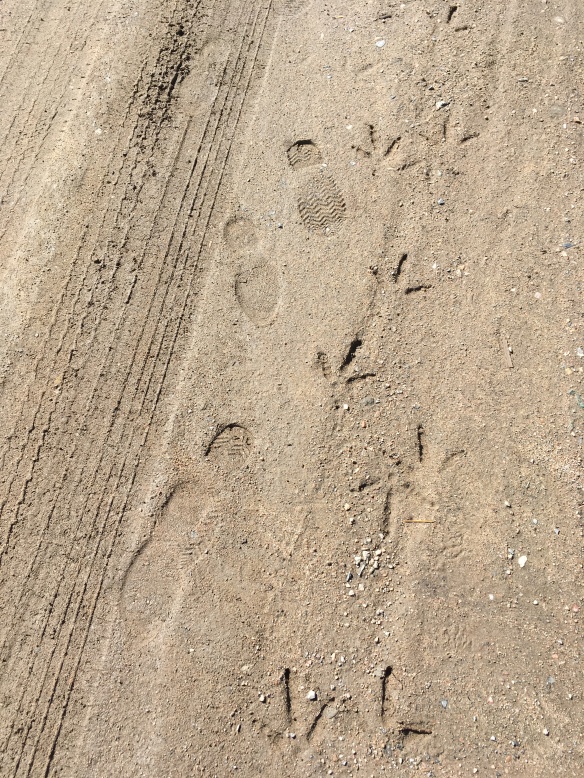
turkey human car tracks

Sylvan Dale Guest Ranch, Loveland, Colorado, March 2019

How many truly meaningful and fulfilling conversations do you have in a day?

How many such relationships do you have?

Though I wrote my Pit Crew post almost a year ago, its ideas recur regularly.  I have linked to it on multiple subsequent posts.  I share it with patients and reference it in conversations often.  My patients are leaders of large corporations and organizations.  My colleagues and I lead teams in the hospital, the medical group, and the medical school.  My friends lead their families and communities.  When I think about our health and its consequences, it’s about taking care of those for whom we are responsible, ourselves included.

Are you generally the one who always takes care of others?  How does this affect your style and effectiveness as a leader?

Who Takes Care of You?

I estimate that about 20% of the time when I ask this question, my patients say that nobody takes care of them; they do it themselves.  They don’t mean that nobody cares about them.  It’s that they don’t really depend on anyone for counsel and/or support.  They hold everything together themselves.  I always have mixed feelings when the conversation takes this turn.  On one hand I feel admiration and respect, especially when they seem generally healthy—apparently unaffected by physical, mental, and emotional dysfunction.  On the other, I get curious.  How do they sustain this Lone Ranger method?  And what does it cost them?  I believe we all need tight, vulnerable, and safe connections through which we can get raw and real, and work through life’s ultimately messy sh*t.  We need others, even if it’s only one or two, to help us truly hold it all together.  My default assumption is that if we don’t have such connections, we are not living into our full potential.

And today I feel cynical.  I think we are getting really, really bad at taking care of each other.

Driving to work this week I wondered to myself, why do we feel the dearth of mental health services so acutely these days?  Is it that more of us are living on the psychological razor’s edge of mental health and illness?  Are we not diagnosably mentally ill but simply, profoundly, stressed to our limits of sanity and function?  Is that why none of my patients can get in to see a psychiatrist or therapist for weeks to months?  Is that why physicians are increasingly leaving the profession and killing ourselves?  Why do we feel so hopeless?

It’s easy to blame social media.  And I do, partially.  The cruelest irony lives here.  My non-evidence based impression is that cyberbullying bears equally life-threatening consequences as face to face bullying.  If you know of evidence to support or refute this premise, please share.  Negative interactions on social media, which rage so easily like wildfires, are now understood to contribute significantly to the rise in loneliness across the country.  Worse, cultivating truly positive relationships via social media is much harder and more complex, even deceptive.   So on balance the risks and harms of social media may far outweigh the benefits.  There simply is no substitute for personal, physical contact, for sharing the same space, breathing the same air, experiencing another’s full presence.

Worse yet, too often we can’t even get that right!  Ozan Varol wrote about this in his last post, “3 Ways to Be Insufferable In Coversation.”  They are:  1. Always turn the conversation back to yourself; 2. Pretend to listen; and 3. Ask no questions.  How many people have you already met today who do this on the regular?  If you’re honest, how many times today have you committed these relational sins?  It’s okay, we all do it sometimes.  As GI Joe says, knowing is half the battle.  The other half is doing something about it!

IMG_1547

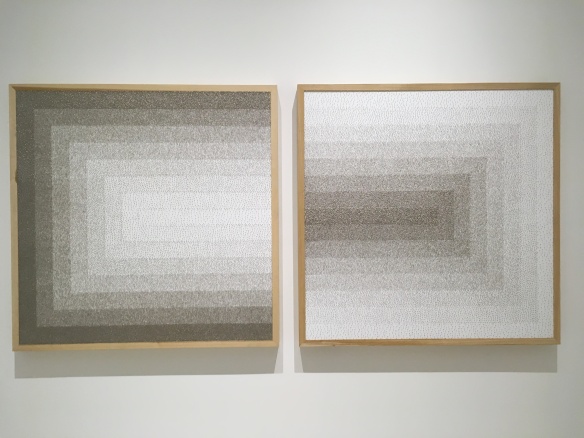
Smart Museum of Art, Chicago, July 2019

So what do we do?

First, Attend.  Pay attention.  How much time do I spend on social media?  What do I get out of it?  When does Fear Of Missing Out (FOMO) drive my scrolling?  Am I really connecting?  Or am I stalking, comparing, judging, flaming, agitating the echo chamber, and otherwise wasting time and energy?  How can I set alerts and redirect my routine?

Second, Intend.  What is the best use of my time?  If I want to see how my friends are doing, rather than check my Facebook feed, why not call them up?  Send a text, photo, or—gasp—a handwritten note just to say hi, I’m thinking of you?  It may cost you time, energy, and $0.55 in postage.  But aren’t your real friends worth the investment?  You can do it on social media too—if you slow down and think about it first.  Consider the return—brightening someone’s day, feeling that personal connection.  Dopamine drives FOMO, and is also associated with addictive behaviors.  Bonding behaviors elevate oxytocin, the hormone that mediates empathy, safety, and connection.  There is even evidence that higher levels of oxytocin correlate with increased longevity of romantic relationships, or even a person’s own life span (could not find a reliable, peer-reviewed source for this claim—I just believe it intuitively).

Third, Get Curious.  This was the first skill I (re)learned in life coaching, ‘way back in 2005, and it serves me well every single day.  If we let go of the competitive, scarcity-based thinking that surrounds us, what more could we learn?  What novel and inspiring stories could we hear from anyone we meet, or even our closest friends?  If we listen to understand rather than to reload and refute or one-up, what vexing problems could we solve, together?  Just wondering about it makes me feel lighter and more optimistic, what about you?

Subscribe to Ozan’s newsletter, the Weekly Contrarian, to get his list of solutions to conversation insufferability this Thursday, 9am Central Time (I have no financial interests in Ozan’s site; I just really admire his work and the community of critical thinkers he has convened).  And today, I challenge us all:  Monitor our attitudes and facial expressions.  Manage our self-absorption for a few minutes at a time.  Look strangers in the eye and smile as if they’re already our friends.  Ask a Facebook friend what they did this weekend that really made them feel alive and well.  Let’s all get our caring on, shall we?