NaBloPoMo 2019:  What Makes Me Better

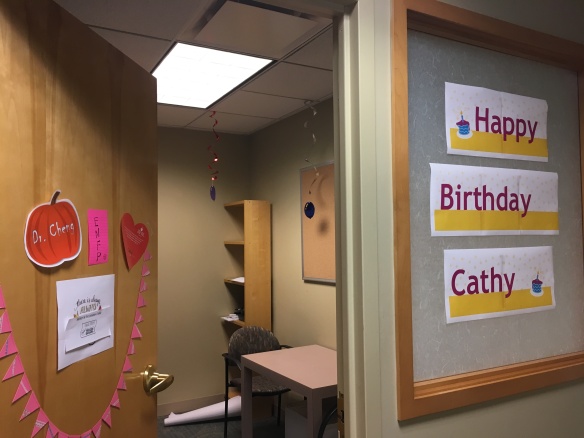
IMG_2639

My friends, it starts again woohoooooo!

National Blog Posting Month occurs every November, a 30 day daily blogging challenge apparently founded in 2006, inspired by National Novel Writing Month, or NaNoWriMo.  I think this will be my fourth attempt, and it gets easier and more fun every year!

This year’s theme originates from a sense of both gratitude and anticipation.  Increasingly I feel compelled to do more, contribute more, help more.  When I look around I am consistently humbled by those who go before me, on whose broad and strong shoulders I stand.  So I dedicate this month to all of you.
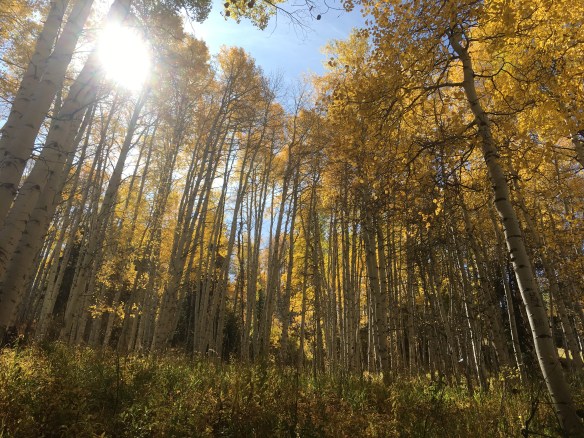
IMG_2646

November 1:  Role Play Makes Me Better.

I was converted to the Church of the Necessity of Role Play in 2003.  I had previously belonged to Tribe of Full-Socket Eye Roll at Role Play.  That year I had the privilege of attending a Stanford Faculty Development Program series.  It was a 7 week clinical teaching program for physicians.  Every week we practiced a specific teaching skill, on camera, then had to watch ourselves and critique our own and one another’s performance.  Even though each ‘encounter’ was only a few minutes, and we were all pretending, it felt real enough to translate into concrete behavior changes in real life—for all of us.

Since then I have always employed role play when teaching motivational interviewing (MI) to medical students.  At first I played the noncompliant or resistant patient, and had students take turns trying MI skils on me.  When I noticed myself feeling defensive and belittled in that role, I realized what the students were missing, and how it could enhance their empathy.  So I started having them take turns playing both patient and physician.  That was an epiphany for us all.  When I attended the Harvard Lifestyle Medicine Conference MI session in 2015, I experienced yet another layer of important experiential learning.  In dyads, we not only took turns playing patient and physician, but we practiced both directive and MI styles of counseling.  The contrast on both sides of each of those interactions solidified in both my cognitive and limbic brains why MI is a superior counseling method for behavior change.

This week at ICCH I innocently volunteered to play the physician in yet another role play.  Little did I know what I was in for.  I should have seen it coming, as the workshop title was “Teaching Medical Students How to Deal with Challenging Patient-Physician Encounters.”  I, unknowingly, stepped into a scenario of recurrent asthma exacerbation brought on by stress, due to domestic violence.  I felt anxious with a circle of international colleagues watching, and also confident that I could enter the play encounter the same as I aspire to enter a real one—present, open, grounded, kind, loving, and smart.  The physician teacher who played my patient stayed solidly in character and immediately drew me in with her slumped posture, dejected facial expression, and barely perceptible voice.  And she, like so many victims of violence, was not giving it up easily.

I had to conduct a medical interview as well as a psychological one, at times alternating between them.  I wanted to get at what I suspected (first generalized stress, and then clearly violence at home), but we had just met, and she really wanted to get out of the hospital.  Her fear was obvious; but she held its cause close to her chest, like the rest of her, until she could trust me.  I approached with general words at first, “Anything else going on lately?”  I kept my questioning as open ended as possible, and tried to leave space for her to answer.  Nothing.  Then I confessed my own inner dissonance:  “I feel like there’s something else…”  When that didn’t work, I continued with the general history.  No other chronic medical problems, no surgeries; allergies that can trigger her asthma, but no recent exposures.  You have 4 young kids, a full time job, a house to take care of.  Are you partnered?  Yes, married, to Bob.  Pause; a breath.  Then, “How does Bob treat you?”  Pause.  Why do you ask me that?  “I’m asking about abuse.”  And then it opened.  How did you know?  “I’ve been doing this a long time…  And someone close to me was abused.”  Do I look like her?  “You remind me of her.”

She was mortified that I would tell anyone.  How could I possibly help, then?  There were longer silences as I, frantic on the inside and slow breathing on the outside, racked my brain for solutions.  The harsh reality eventually settled on us both:  Neither of us could do much about her situation in that moment, her asthma attack was resolved, and the longer I kept her away from her family the worse I might make everything for her in the near term.  We agreed that I would look for ‘stress management’ resources, and I would give her my phone number.  And I would discharge her later that day, back to her violent husband, who had promised he would never hit her again.

It was so real.  I was almost able to forget about the audience.  I was personally invested in the health and well-being of this one person in front of me.  I imagined if she were a real patient.  Would I actually give her my phone number in this moment?  Absolutely I would.  We had to start somewhere, and I was the only person who knew, who could connect her to resources for help.

After it ended, I felt pretty drained.  We had both been tearful at times.  I also felt proud to have gotten through—both the exercise and to my patient.  I connected.  And even though I had no immediate solutions, I had established a relationship that had hope for helping a person who really needed it.

I have not encountered this scenario in real life in a while—that I know of.

I hope I’m not missing something, somewhere, for somebody who needs me.  Yikes.

Role play makes me better.  It reminds me to always beware my blind spots, to keep practicing, and to remember the deep humanity of every person I meet.
Birthday Sock and Washi Love


IMG_0486

What’s the best birthday gift for you?  How do you feel when you get it?

I turned 46 last week; I am now officially in my late 40s, YAY!  It feels pretty awesome—what a great age!  I am a seasoned clinician, at a point in my career where I have earned some respect and status, and still have plenty yet to accomplish.  My kids are maturing, getting wise; we have fun and deep conversations.  I am, finally, understanding how to do this complex thing called marriage.  I know what I will tolerate from others and what I will not, and I stand up for myself better than ever.  I know who I am.

Apparently others know, too, and they showed me this week in the most loving celebrations.

img_2199.jpg

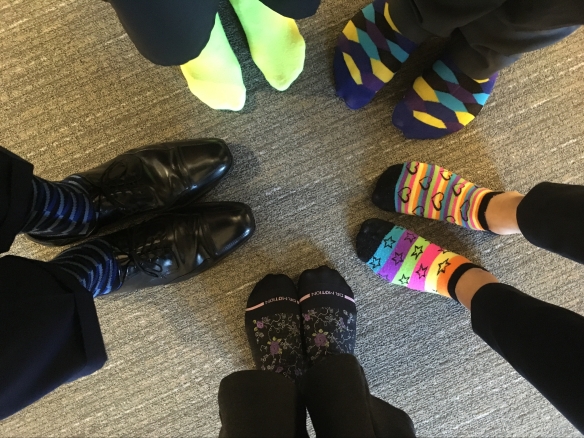
I used to wear the most boring socks.  I worried whether they matched my outfit or my shoes.  Then one day my manager gleefully wore the loudest, brightest striped socks to work.  Suddenly hosiery became the easiest mode of self-expression that I could exercise daily, with abandon!  Soon I discovered mismatched sock trios, launching my sock loving life to the next level.  Thereafter my socks did not match; they coordinated (but I did it less expensively by just mixing regular pairs).  These days I wear compression socks, but even they come in fun styles (I have no financial interests in any of the businesses linked here)!  It just brings me that little bit of joy each morning pulling them on, and then seeing them all day—a splash of color, a flourish of design.  On Thursday, in honor of my birthday, colleagues came to work sporting fun socks of their own.  We gathered briefly and bonded with exuberance, took a picture, hugged, and went, a little more joyfully, back to work.

IMG_2202

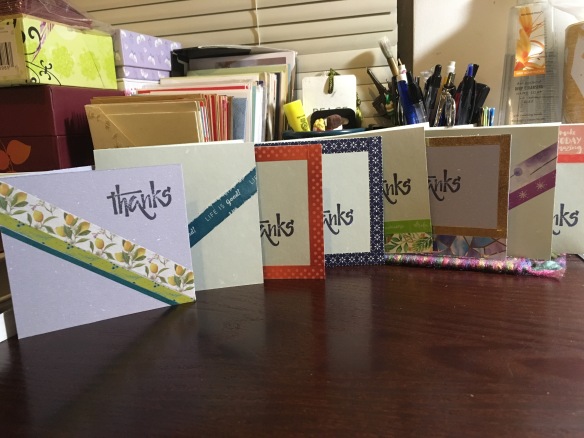
The next day, at the other office, I was greeted with a big printed sign, shiny streamers, and a delicate, hand-decorated, washi tape banner.  My newest colleague brought a huge box of assorted donuts.  Hugs abounded from all over.  And one friend wrote me a lovely birthday note—on one of a stack of washi tape cards I had made and left in the office for folks to use on each other.

I have a friend who always feeds me when I go to her house—whatever she has around, often that she has made—and she always has something awesome…  It’s usually sweet.  This day she went to special trouble to make a perfect dessert, which we enjoyed with coconut green tea while catching up on work, relationships, life.  We sat in her beautiful front room, afternoon sun streaming in, surrounded by books, leather, and special papers—all of my favorite things.


It was the best birthday yet, I must say.

*****

I wrote recently that we have 5 fundamental needs:  To feel seen, heard, understood, accepted, and loved.  Over these two days and in the past week, so many people in my life have not only met these needs for me, but fulfilled them in the deepest, most touching and poignant ways.  Simple gestures.  Heartfelt words.  Slow, quality time.  They may seem small.  But make no mistake, their impact and resonance cannot be adequately measured.  I felt absolutely lifted, and my heart was—is still—warmed, through and through.  “Gratitude”, even rendered by the eloquent and wise David Whyte,  just doesn’t quite capture the whole experience.

Gifts like these—conceived from an intimate knowing, presented joyfully, and shared in generosity and love—make birthdays, both mine and my friends’, some of my favorite days of the year.

Out and Back: Coming Home

IMG_1944

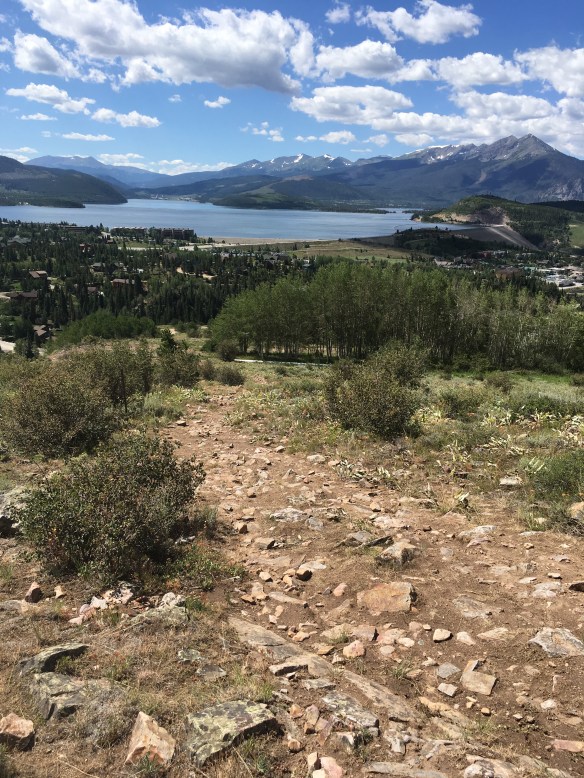
Meadow Creek Trail, Lily Pad Lake toward Frisco, Colorado

When you hike, do you like loop trails or out-and-back trails better?

What metaphors for life can you make from hiking?

IMG_1863

Ptarmigan Trail, outbound, Silverthorne, Colorado

Out and Back

I used to think out and back trails would be boring.  What’s so great about getting to the end of a path and then going back the way you came?  Wouldn’t it be tedious and redundant?

But the more hikes I take, the more I realize how valuable it is to retrace my steps, especially on the trails with big elevation gain and diverse landscape.  The same path, going uphill and then downhill, heading north at daybreak then south at mid-day, is a vastly divergent experience.  It is a concrete, tangible exercise in perspective, if ever there were one.

IMG_1862

Ptarmigan Trail, looking toward trailhead from same point as above

Looping

On a loop trail, you get to decide at the outset the way you will go.  If you choose clockwise, you miss out on the counterclockwise experience—until next time, perhaps, when you get to choose it.  Or maybe you always go the same way?  That feels safe—you know what’s coming, perhaps?  But on any trail, especially in the high country, you just never know what you’ll encounter.  Time of day, time of year, recent events (wildfire, thunderstorm) all alter the path—you could actually never walk the same trail twice—whether it’s out and back (hereafter abbreviated “OAB”) or a loop.

IMG_1931

Meadow Creek Trail again

In life, do/can we ever really go back?  I’m reminded of the quote attributed to Heraclitus:

“No man ever steps in the same river twice, for it’s not the same river and he’s not the same man.”

Whether you choose OAB or a loop, when you arrive at the trailhead again, is it the same as when you started?  Are you?  And regardless, why hike in the first place?  What does it do for you, what do you gain?  Why step out from where you live every day, all the time?

Here’s what insightful writers I’m reading lately have to say about it:

John Gardner, in Self-Renewal:  “As the years go by we view our familiar surroundings with less and less freshness of perception.  We no longer look with a wakeful, perceiving eye at the face of people we see every day, nor at any other features of our everyday world…  That is why travel is a vivid experience for most of us.  At home we have lost the capacity to see what is before us.  Travel shakes us out of our apathy, and we regain an attentiveness that heightens every experience.”

John O’Donohue, in Anam Cara:  “Hegel said, ‘Das Bekannte überhaupt ist darum, weil es bekannt ist, nicht erkannt’–that is, ‘Generally, the familiar, precisely because it is familiar, is not known.’ This is a powerful sentence. Behind the facade of the familiar, strange things await us. This is true of our homes, the place where we live, and, indeed, of those with whom we live. Friendships and relationships suffer immense numbing through the mechanism of familiarization. We reduce the wildness and mystery of person and landscape to the external, familiar image. Yet the familiar is merely a facade. Familiarity enables us to tame, control, and ultimately forget the mystery. We make our peace with the surface as image and we stay away from the Otherness and fecund turbulence of the unknown that it masks. Familiarity is one of the most subtle and pervasive forms of human alienation.”

IMG_1998

West Overlook, Ridge Trail, Dillon, Colorado

When patients see me for their annual exams, I imagine it can feel tedious and redundant.  But it’s always fresh and interesting for me, because I haven’t seen or heard from them in a year.  And I’m continuously learning, so I often have new questions and queries to apply.  They may not think much of the past year, it goes by so fast; I get to be their fresh eyes, and lend them new lenses.  What’s the most interesting thing that happened to you since we last met?  What do you want to focus on this day we are together?  When you look back at your life a year from now, what do you want to see and say about it?  I feel like a ranger at the common trailhead of inifinite paths, checking in with my hikers as they loop and retrace their ways back to me, stopping to debrief before getting back on the road of living and growth, of evolution and development.

Mei lakeside July

Chicago, IL

Homecoming

I was born in Evanston, Illinois, when my dad was doing his PhD at Northwestern University.  We moved to Colorado when I was six, and for as long as I can remember, I have considered that state to be my true home.  I go back every chance I get; I savor it, relish it, drink it in with fervor.  When I return to Chicago, where I have lived for all but those 12 formative years before I came (back) to NU for college, it’s always with a gnawing reluctance, even a little resentment.  I never call it ‘coming home.’  Last night when I arrived at my house after a week in the Colorado Rockies, I did feel myself relax, ready to settle into life as usual.  But I still longed to be home for good—back in Colorado—my only real home.

That perspective changed today.

These last days I have thought deeply about my life path.  I’ve really only lived in these two places, these vastly different places.  Until this morning I thought of my OAB trailhead unequivocally as Littleton, Colorado, where I grew up.  My plan is still to go back for good someday.  But this morning on the way to church, as I crossed the intersection onto the NU campus, I felt at home.  We left our house late and drove through a thunderstorm to get there, and like a flash of lightning, I recalled when I came for my campus visit in the fall of my senior year of high school.  It had also rained cats and dogs that whole weekend.  But I’m pretty sure I wrote to friends at the time that it felt like coming home.  I was born here after all.  It is my dad’s and my alma mater.  I met my husband here during New Student Week my freshman year.  I’ve brought my kids here since they were born.  Our church here is my spiritual home, no question.

We were late today, arriving toward the end of the homily, in the chapel across the street, as ours is being renovated.  From the back, I first saw the silhouette.  Then I heard the voice.  Then I listened to the words—always words of connection, truth, service, and love.  I was overcome with emotion when I realized: It was Father Ken, director of our church from my sophomore year until I first became a mom.  He led my RCIA class for confirmation.  He nurtured my early adult development as only a pastor could, and has known me through inspiration as well as struggle.  I have only seen him rarely since he left, and missed his calming, comforting presence. Seeing him and hearing his homily today made it suddenly crystal clear to me: This, Chicago and my life here, are also my home, wholly and without question.

I can claim and love both—the places, the people, the cultures, the memories.  The mountains and also the lake; where my parents made their life and also where my kids are growing up.  Colorado is not the same now as when I left in 1991.  Chicago is not the same today as it will be when I finally return to Colorado.  Which is the Out and which is the Back?  Doesn’t matter.  Finally, after all this time feeling conflicted and divided, I really am home.

IMG_1959

Dillon Reservoir, Dillon, Colorado