New Body Signs of Stress

How does stress manifest physically for you? 

I’ve asked patients for years now.  Some people know exactly what I’m talking about and answer without hesitation—“Oh, migraines—MONSTER migraines.  As soon as I feel one coming on I know I’ gotta unplug and go for a run!”  Some need a little prompting—I give them other examples like chest tightness, loss of appetite, or insomnia.  For others, it helps to ask what their significant others or children tell them.  “What would your wife say if I asked her,” usually gets a pretty immediate and animated reply.  Very occasionally, even after all of that, some still don’t really understand the question, or deflect, and we move on.

I noticed neck pain as my stress signal sometime in my 20s.  I suspect my body learned this nerve pattern during residency, when my heavily laden white coat pockets dragged my posture toward the floor for well over 80 hours a week.  I remember taking the coat off (aaaaahh, relieeeeef), then picking it back up later to put it on (aaaaaarrgh).  I’d say it probably weighed a good 5 to 7 pounds.  If you’ve never experienced this, and you’re also looking for a great laugh, check out this video of the Try Guys wearing boob weights for a day. You’re welcome!

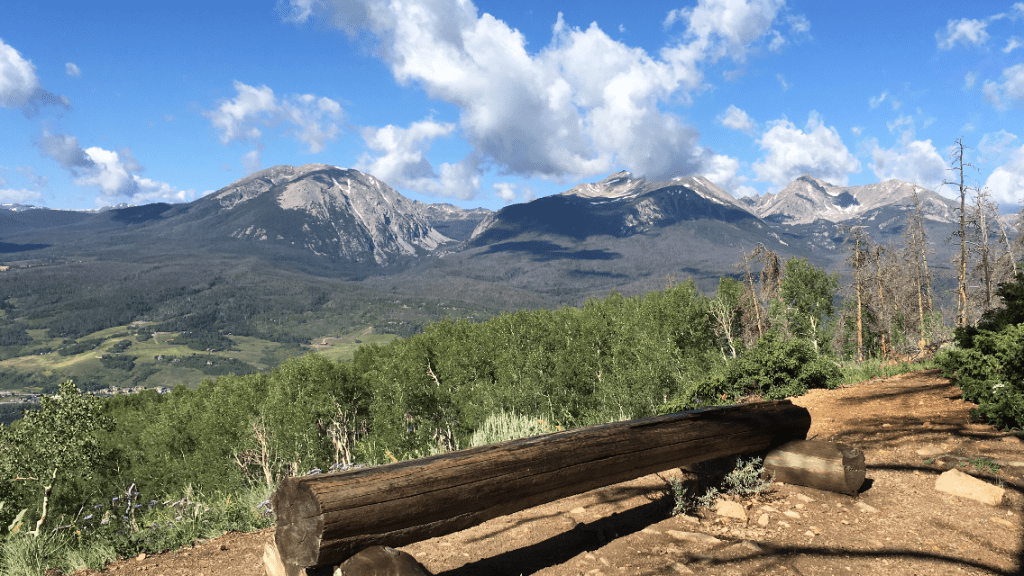
For years a simple backrub or even just a good night of sleep would take care of it.  But in spring of 2010 I started having a hard time sitting still at work.  Increasingly I was distracted by tightness, and eventually searing pain, all around my neck and shoulders.  It was diffuse and constant, and I could never find a comfortable position, day or night.  Ibuprofen would not help, and hour long massages only very briefly.  It had been six months since starting a new position, and I was ‘way more stressed than I realized.  The day before vacation I thought, I bet this goes away in Colorado.  And voila, by the time we landed in Denver I was already feeling like myself.  After a week in my happy place, I returned to work expecting the neck pain to recur.  Happily, it didn’t!  Hooray, all fixed!

Not so fast.

A month later I developed astonishing pain and sensitivity in my right forearm—cubital tunnel syndrome—to the point where I had to roll up my sleeve because I could not stand the touch of the fabric.  I barely got through CPR training one morning; I told my mind-body physician friend, thinking he’d recommend a supplement or something.  He listened compassionately and reflected how often he’d heard the same story from patients.  “Sometimes the body just puts it in another place,” he said simply. 

Thankfully at the end of that week, I went away to my first ever mindfulness retreat with other medical educators.  I could not remember the last time I had so much quiet time to myself, not having to rush somewhere, make a decision, or take care of someone.  After dinner we had free time and I climbed into a bay window and started writing.  On a random legal pad I dumped everything that had swirled in my mind for however long—deep, complex thoughts that poured forth from the pen in a torrent, pages and pages full.  By that night going to bed, my forearm felt normal, and that pain has not come back.  I’ve been journaling regularly ever since.

Over the years, the neck pain has come and gone, and improved significantly since I left that job.  But even in the last two years as I have taken on more at work, and in the past six months of utter chaos, it has only recurred mildly. 

***

Out of nowhere last week, I developed a sore throat.  Strange.  It came on and worsened suddenly over a few hours, then abated after an hour Zoom call with my Braver Angels pals and a big mug of honey tea.  I had no other symptoms—no fever, body aches, fatigue, nasal congestion, or headache—just a really irritated throat, and only on the right side.  On further reflection, I had also been doom scrolling, eating, and online shopping more. Huh. 

This is exactly what happened back in March, when I wrote four blog posts in eleven days about the pandemic.  Looking back, I see the same pattern of behavior—staying up late, reading voraciously, ruminating, anticipating, problem solving, and looking for things to do to help.  For days in a row I had mild, barely perceptible throat irritation and nothing else.  It came and went, without discernable patterns or correlations. 

New body sign!  How fascinating.

This time I had to call in sick to work.  The team sprang into action and rearranged schedules.  My patients all agreed to speak by phone; my colleagues did their physical exams in my stead.  Everybody was so understanding and gracious, their day turned upside down, all because I had a sore throat for a few hours. 

Rightly so.  What if it were an infection?  What if the person I was with 5 days earlier, who was now home sick, had COVID (they didn’t, and we were both masked and distanced, together for only 15 minutes)?  What if I ignored the sign of potential infection and came to work, and then transmitted to the team and my patients?  Yes, it was a huge hassle for everybody to make last minute workflow changes.  But that was nothing compared to the potential, exponentially larger hassles of a whole workforce having to stay home sick, all because of me.

Right now we should take no chances.  Now more than ever we must build, sustain, and advocate for work systems that support the health and well-being of the workforce.  We need to make it safe—and expected—for employees to take care of themselves, thereby caring for coworkers and clients.  Short term inconvenience is the investment for the returns of long term loyalty, cohesion, and success.

If we slow down and pitch in—if we all take care of each other on the team—maybe we will have the mental and temporal space to notice new patterns.  Not just new personal body signs of stress, but new community signs of need, new collective signs of connection, and new team signs of creativity, innovation, and core values expression.  Wow, wouldn’t that be something?

Why I’m Not Going Home

Friends, I’m sad.  I will not go home to Colorado next month.  The family went already last month; it was a glorious 15 hour road trip each way from Chicago, with 7 amazing days in the mountains, my favorite place on earth.  Because we had planned to be abroad that week, back in January we made plane reservations for a five day trip to my home state in August.  And now I will cancel.

Cancelling a trip home is a big deal for me.  But I cannot ignore the glaring imbalance of risk and benefit here.  It’s a personal, emotional decision, but not without reason. 

Trust

First, I agree that flying during this pandemic can be safe. It depends critically on everybody doing their part, namely masking up and staying on the ground if we feel sick or have a recent known exposure. I do not trust everybody to do their part. I don’t know who will lie on a symptom checklist or suppress a fever with medication in order to fly while ill. I don’t know who will pull their mask off right next to me for the duration of the flight. Sure, the airline can ban them from flying after we land, but I still have to sit next to them for three hours, wondering about their infection status, fuming at their apparent disregard for my safety and that of everybody on the plane.

Shock and Awe

Second, I have never seen a disease like this. The spectrum of illness spans from totally asymptomatic to 100 days in hospital, intubated and proned, on ECMO (heart-lung bypass) and dialysis, limb(s) amputated, before finally dying. Every organ system can be affected, including the brain. COVID patients in the ICU require sedation and paralytics to control agitation, psychosis and flailing. Some suffer catastrophic strokes. Upon discharge, if they survive, months of rehab still don’t guarantee any return to normal. It’s been only six months since the disease emerged; we have no idea what long term consequences or complications lie down the road for these patients, no matter what their illness course.

Statistically, my family and I have a low risk for complications and death if we are infected.  We are young and healthy.  Populationally, the old and infirm have the highest mortality risk.  This is also true for flu.  And, healthy young people die every day from COVID, just like they do during flu season.  And death is not the only horrible thing that happens to COVID patients.  Symptoms can last weeks to months, including cough, shortness of breath, profound fatigue, diarrhea, and mental slowness.  There is no way to predict 1) who will get infected or 2) what their disease course will be.  It could be anything, and there is no good or reliable way to affect the outcome.  You could be totally fine or suffer long and hard before dying.  And the mental and emotional tolls of suffering in isolation, for the patient as well as their loved ones, are the ultimate insult added to injury.

I have profound respect for this virus and this disease.

Regret

Third, it’s a five day vacation.  We were just there a month ago.  This is not essential travel.  My kids are my life.  If one or, God forbid both, of them got sick, or if my husband and/or I got sick and died, or if I infected my patients—if anyone, family or not, ended up suffering because I decided to take this trip—my soul could never rest.

In the end one question always helps me:  Of the worst case scenarios at the end of each path at this fork, which would I regret more?  I will be sad to not go home this time, yes.  But I don’t know how I could take the responsibility of getting someone infected because I wanted to take a five day vacation and made us all get on a plane in the middle of a wildly uncontrolled pandemic.  There is no question here.

The sadness is real, though.  And it’s not just about the trip. It’s about life turned upside down, everything we took for granted—our safety and security—threatened.  It’s about the immense uncertainty, the suffering all around us, the lashing out and fighting from stress and tension, the chaos.  How will we know what do to about school?  When will life be the f*ck normal again?

Clarity

All of that said, there is still a very bright side.

This is temporary.  Life will likely not ever go back to what it was, but it will feel normal again, someday.  It will take some years, all things considered.  In the meantime, we are fully in control of our mindset and response in this moment.

Mindfulness’ has become a trendy buzz word, almost cheapened such that I hate to even write or say it.  But the evidence is all but irrefutable for its benefits, especially in times like these.  The practice is essentially to be with what is, right now, including how you feel about it, with acceptance and nonjudgment.  So much easier said than done!  And yet, in truly mindful moments, peace and clarity ultimately descend (or transcend, I should say).  To look around at the chaos and suffering, and accept it as just the way things are, is the first step to managing it all.  Living fully in the present moment allows us to distinguish clearly what we can control from what we can’t.  We can claim and exercise agency over the former, and let go the latter, thereby suffering less and maximizing energy and resources to effect positive change for ourselves and others. 

To really free ourselves from the anxiety and uncertainty of the present moment, to know what to do today, while we attend to the now, we must paradoxically also cast ourselves into the future.  We must take the long, infinite view.  What really matters today?  What from today will really matter next year, and in five, ten, or fifty years?  Will the disruption of remote learning for my privileged kids this year really make a difference when they are my age?  Likely not.  Will missing essential nutrition and social contacts, and parents’ unemployment this year, for kids in marginalized communities, matter later?  Absolutely.  Many of us will be okay no matter what.  Many more of us will not.  The disparities we see today cast long shadows into the future, and we must attend to them in current policy and guideline decisions. 

We are all in this together, and what we each do affects everybody. This fact is inescapable. There will be more suffering and death, no matter what we do. Somehow we each must make our own peace with the risks, find freedom and joy, and exercise empathy and social responsibility, in the face of it all.

In this crisis we are called to be our best selves for one another.  That ultimately includes individual, short term sacrifices for the greater good.  I can give up my little vacation to help keep everybody healthy.  I wash my hands like I have OCD.  I keep my distance around people I don’t live with.  And I wear. my. mask.  I protect you, you protect me.  Let’s all do our part, shall we? 

Please Stop With the Fighting

IMG_1596

What a difference a week makes.  How are you feeling?  I can only describe my own experience as ‘off.’  Things feel heavy, fraught, tense, uncertain, and anxious.  All the talking and writing I do about tolerating uncertainty and holding space for tension feels almost comically hypocritical right now, as I grapple with my own practices.  But more than that, I feel accelerated degradation of relationships all around me.  Armed men march and yell at the Michigan capitol building (where a woman governor serves).  More armed men gather in front of state public health director Dr. Amy Acton’s house in Ohio (not the capitol, where a man governor serves), saying there will be no violence, “for now.”

People on the ‘side’ of public health deride decisions to reopen state economies as willfully ignorant, even malicious.  People on the ‘side’ of reopening economies derail stay at home orders as fascist.  Perhaps these are the minority voices of each ‘side’, but they are loud, and they dominate public discourse and social media (I know, I know, moderate my intake, yada yada).  Yet another false dichotomy escalates with increasing vehemence on both sides.  I have mulled it for weeks and not found a good way to write about it.

Late yesterday, I found two pieces that help, written by conservatives I respect.

In the first, “What Republicans’ Kool Aid Moment Means for the Rest of Us”, Chris Ladd outlines our fatal flaw as humans, and then asks some profoundly important questions about how to resist the ultimate pitfalls of that flaw:

“Confronted with displays of cult loyalty we commonly resort to some mistaken conclusions, dismissing these people as crazy or stupid. These assumptions are born of the same logic that leads people to blame the sick for their illness, a desire to manufacture some difference between them and us, something that would leave us immune to their condition. We want to believe that there’s something uniquely broken, inferior, or even subhuman about the people in those pathetically sad images of self-destruction. Those dismissive characterizations of cultists aren’t just false, they are dangerous.

“We are not inherently rational creatures. By nature, our model of reality is not a product of careful individual inquiry, formed through a critical review of all available data, but a social construct heavily influenced by our preferences, hopes, and the collective will of our tribe. Human beings are capable of independent, rational thought premised on a body of constantly moving data, just like we are capable of juggling or riding a bike. Absent special training, critical, data-centered reasoning is so effortful, difficult and unnatural that any political order premised on the rationality of the average man will be consistently unstable.

“Even with careful training over years, a life of critical thought remains a challenging endeavor, costly to maintain and not suited to every circumstance. Riding a bike sounds easy once you’ve learned to do it but try dialing your phone or eating a sandwich while peddling and you’ll see the challenge. Careful, critical reasoning is resource-expensive. None of us engage in it as much as we think we do.

* * * * *

In the second essay, “What If We Loved Them Both?”  David French invites us to exercise that resource-expensive skill of critical, rational, nuanced and complex analysis:

“Once again, our nation is faced with the painful process of sorting through grave sexual assault allegations against a powerful man. Once again, the public assessment of the veracity of those claims is lining up all-too-neatly with the partisan needs of the moment. Those who object to the rush to judgment against the accused will often ask if how we’d respond if, say, Joe Biden or Brett Kavanaugh was someone you loved. What if he was your father or grandfather. Would you feel like they’d been treated fairly?

“The counter is quick. What if Tara Reade or Christine Blasey Ford was someone you loved? Can you imagine how you’d feel as they mustered up the courage to tell a dreadful story and then you watched them endure the inevitable slings and arrows of scorn, hatred, and mockery?

“But there’s a different, better construct. What would the world look like if an imperfect population that possessed imperfect knowledge loved them both?  

“Due process is just, and it’s indispensable to the pursuit of justice. It is the answer to the question at the start of this newsletter—in the most fraught of claims and the most vicious of crimes—What if we loved them both? What if both accused and accuser were of equal worth? When we consider the right to bring a claim, the requirements of evidence, and even the time limits imposed on cases (given the difficulty of both defending against and proving very old allegations), we not only humbly acknowledge our inability to peer into a person’s soul to discern truth, we also acknowledge that even the mightiest man can and should be brought low when the evidence dictates. 

“But protecting due process (like protecting free speech) is hard. Just as permitting bad speech is a necessity for maintaining the larger, just legal structure of free speech—individual injustices can also protect the larger, necessary structure of due process.

“Each person involved in the controversy is of equal worth, a human being created in God’s image. That means the accusers have a right to bring their claim and be heard, respectfully and fully. That means the accused have their own rights to defend themselves, and a presumption of innocence is wise. Our own extreme fallibility and inability to peer into a human soul means that we should diligently seek external evidence that corroborates or rebuts any allegation or defense. 

“It is true that our culture has frequently failed women. It has failed in the obligation to treat them with respect or to fully hear or fairly consider their claims of terrible crimes. It is also true that our culture has also failed men, especially black men. There are simply too many terribly tragic tales of men dying at the hands of a mob in the face of an unsubstantiated claim of sexual misconduct. Even today, there are echoes of that awful injustice in the way in which black men are treated in campus courts. 

“But the answer to historical injustice isn’t another, equal and opposite injustice. That’s the score-settling that leads to endless ideological and partisan conflict. Instead, the answer is to discern the correct standard, and hew to it as closely as we can. Conservatives should not seek ‘revenge’ for Brett Kavanaugh. Progressives should not give in to the temptation of believing a Democrat through highly-subjective judgments of ‘demeanor’ or ‘temperament.’ That’s the God’s-eye view. And human beings are terrible at playing God.” 

* * * * *

The essays above, while encouraging, also ring abstract and esoteric.  How do we take these lofty ideals and apply them today, in our daily lives, so as not to feel so disconnected, so disparate?  Because what good are ideals if we cannot live them out?  We really are all in this together.  What’s helping you remember that, really feel it, right now?

In our lifetime, there may be no more important moment than right now to recognize and truly honor, in our minds, hearts, and bodies, our shared humanity.  I took a stab at an action plan with the list below.  What would you add?

  1. Stop thinking ‘we’ are better than ‘them’; really try hard to see everybody as equally worthy to engage.
  2. Marshal our best skills at patience and generosity when ‘they’ say they’re better than ‘us.’
  3. Focus on shared goals and humanity— how are we all ‘us’?
  4. Lead by example resisting the urge to oversimplify and over generalize; look for and point out complexity and nuance.  See this as a strength rather than a weakness.
  5. Do not fall for baiting and inciting statements meant to trigger defensiveness.
  6. Acknowledge and concede the flaws and faults of ‘our side’; encourage others to do the same.
  7. Disengage, for the moment, when ‘opponents’ as well as ‘allies’ show themselves, or we find ourselves, to be uninterested in following or unable to follow these rules of engagement. Even when our intentions are earnest, this stuff is hard. And it takes grit and perseverance to train. And almost all of us are total novices at it. So we have a LONG way to go. Try again later. And again, and again, and again.