Greetings from Ireland, friends! Delayed post due to travel!
Daughter is here for a five week archaeology/osteology course, on a dig in an old castle–how amazing is that? I took it as an excuse to ‘drop her off’ and spend a few days by myself, walking around looking for bookstores and coffee shops in Dublin. It is positively glorious.
In the past week I have finished about four audiobooks and started a new book in print. After walking over 12K steps the last two days, I think tomorrow I may feel okay about planting myself in the shops I found to just read and write the hours away. Afternoon tea and a hotel gym workout are my only plans. More gloriousness!
Since I have loved so many books this year already, I decided to post a mid-year list, so I can write a little something about some of my favorite ones, if they don’t already have a dedicated post. I feel my book consumption pattern changing a little again, leaning toward more complex stories in fiction/romance, and returning to my psychology interests again in non-fiction. AJ, Donna, and I will discuss The Deal by Elle Kennedy, then Being Mortal by Atul Gawande, and then Outlander by Diana Gabaldon in our next few gatherings.
The first 16 books on this year’s list are left over from prior years. It took me two years to finish listening to 1.The Fourth Turning, and I still want to read it, as the density made it hard to absorb everything audibly. But what a fascinating and prescient concept: the intersections of the four cyclic turnings of Western history (crisis, high, awakening, unraveling) and the four phases of a human lifespan (childhood, early adulthood, middle age, elderhood), how they influence our leadership and culture, and perpetuate the cycles!
I finally abandoned 2. Outlive after three years; got about 70% through, listening at 2x speed, before stopping. I found 71. Spring Chicken because I like Jeremy Arthur’s voice and narration style and I recommend both it and 36. The Cure for Everything! (also read by Arthur) before Outlive. Chicken was published in 2015, maybe at the beginning of our current obsession with longevity (subtitle “Stay Young Forever (Or Die Trying)”, and cites many of the same studies as Outlive, though much more concisely and with better storytelling. Cure was initially published in 2011, with updates in 2020 and 2023. Outlive came out in 2023. All three books essentially address the same question: What can we do to stay healthy for life? Timothy Caulfield, an academic and the author of Cure, queried his fellow academics in fitness, nutrition, genetics, and medicine, then followed and wrote about the effects of their evidence-based advice for healthy habits. Bill Gifford, writer and author of Chicken, likewise interviewed researchers in aging and medicine, and also applied credible recemmendations to his own life. In the end both authors conclude that living well and long is not rocket science: Don’t eat too much. Move a lot most days and lift heavy things often. Stay connected to people you care about and who care about you. Enjoy your life. Supplements, complex diagnostic tests, and the latest trends in biometric tracking move the needle very little if you’re already following these basic principles.
My two top priority non-fiction listens this summer are The Way of Excellence by Brad Stulberg (I still recommend Master of Change to patients every week) and Inside the Box by David Epstein (I also still recommend Range reguarly). What I love about these authors is their thoughtfulness, humility, and how they advocate for a mindset rather than a method. And all they’re selling is books, not overpriced products or exclusive, overindulgent services.
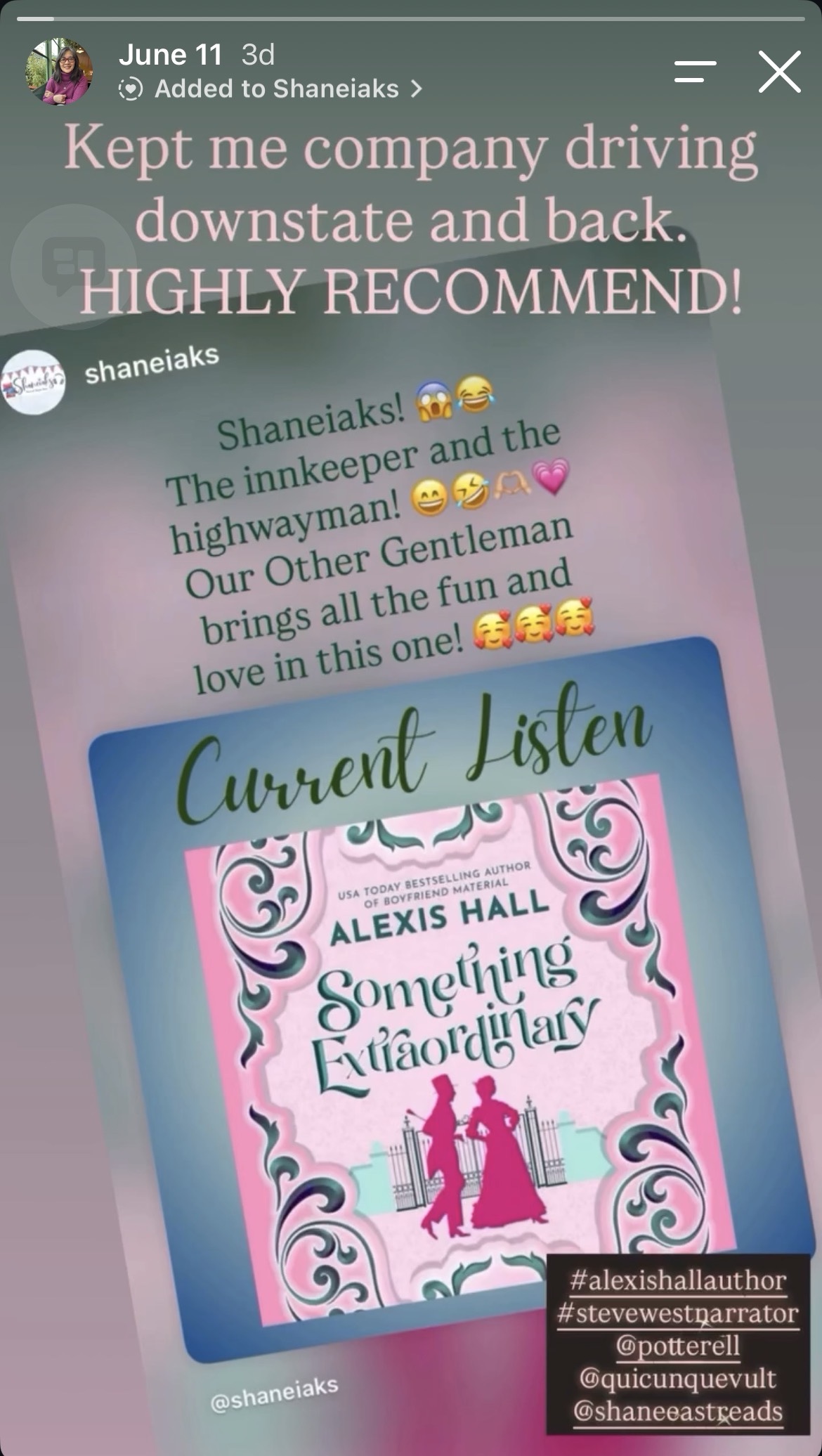
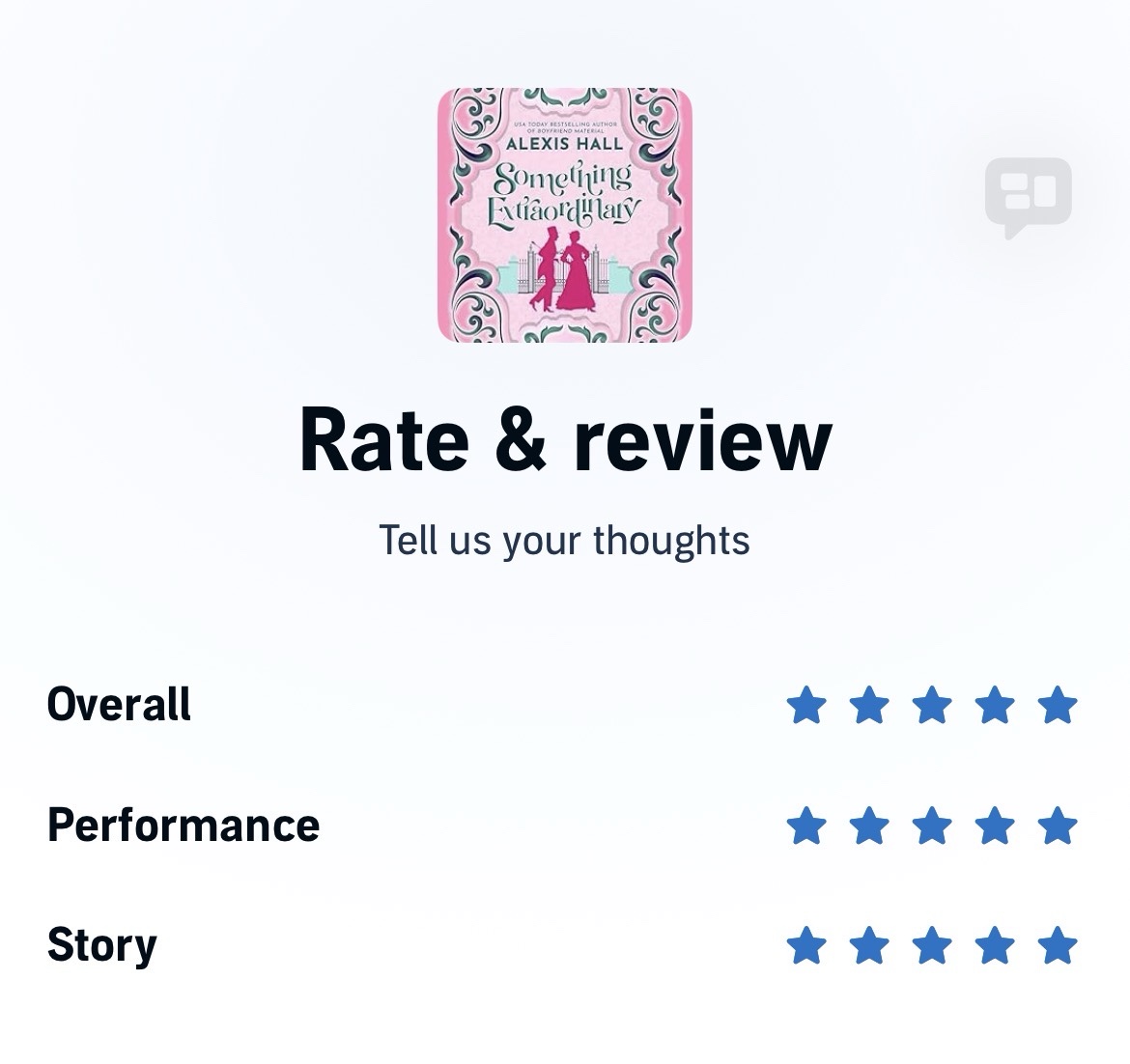
On the fiction side, I have already written about my very favorite novels of the year to date: The Crowns Trilogy by Nicola Tyche (29. North Queen, 26. Shadow Queen, and 27. War Queen–the last of which is essentially my comfort audio anymore) here, here, and here. I eagerly await the next two books in this saga, Blood King Parts I and II, which Zach Lazar Hoffman is currently recording. He reads live on TikTok sometimes; how fun to watch my favorite voice actors work! This series continues to make me both feel and think, every time I listen. Like 60. Never After and 74. Something Extraordinary by Alexis Hall, which I have also reviewed here this year, these stories remind me to always put our shared humanity in front when faced with disagreement or conflict. We are all here doing our best trying to get our most fundamental needs met, some more effectively than others. 30. Love Your Enemies by Arthur Brooks also centers on this point–another book I share often and posted about here.
Here at the end of Pride Month, I highly recommend 75. Daughter of Tides by Kit Rocha. Another MMF romantasy I found through Shane East, the premise makes me think and imagine: How would Love incarnate manifest? Shane plays Aleksi, god of Love in human form, who falls in love himself with the sea god and water nymph he intends to matchmake, all while they three defend against unknown assassins in a world of post-war intrigue.
Theo of Golden by Allen Levi, narrated by the great David Morse, started out slow but interesting enough to keep me listening the whole thirteen hours. The premise of sitting down with strangers to get to know them, as the main character does with a widely disperate set of folks in a small Georgia town, intrigued and hooked me. The intertwined relationships and transformations that ensue, and the plot twist at the end, made the long, languid listen well worth the time spent, and I imagine this story will occur to and influence me often hereafter.
Finally, I hope to write here soon about Tea & Alchemy by Sharon Lynn Fisher. Another Shane East performance with Marisa Calin (they also narrate Kerri Maniscalco’s Prince of Sin series–“Think Bridgerton in Hell”–also among my favorites, see 31. Throne of Nighmares), this slow burn, low spice, heartwarming love story between a reclusive, benevolent ‘alchemist’ and a budding tea leaf reader points to all the ways we humans reject and harm one another by default, and how we can choose openness, generosity, kindness, and compassion to overcome those destructive tendencies and make a better world. I have connected with Sharon Lynn Fisher herself, and hope to interview her about the story’s inception and evolution, and what she wishes for the characters and us readers from it.
I don’t formally review all the books I love, much less all that I consume, but I’m happy to discuss any of them with anyone. Which titles interest you from the list below? Which have you read/listened to and what was their impact on you?
Oh, and I definitely recommend the movie Heart of Champions, starring Michael Shannon and Charles Melton. Son and I found it while scrolling our streaming platform and we both immediately jumped at it. Teamwork, leadership, integrity, and resilience: it’s all here, the models and the foils. Tragically evocative, thought provoking, and an excellent conversation starter.
What books and media have got your attention lately? What do you recommend?
Happy reading and listening, my friends.
Key:
Bold = favorite
[Open bracket = stopped but not yet abandoned
[Closed bracket = abandoned]
–Hypenated = repeat listen; plus –times repeated
ALC = Advance Listener Copy
Books & Media of 2026
- The Fourth Turning, William Strauss/Neil Howe
- [Outlive, Peter Attia]
- [The Art of Quiet Influence, Jocelyn Davis
- [Born Liars, Ian Leslie
- [Connie: A Memoir, Connie Chung
- [Want: Sexual Fantasies by Anonymous, Gillian Anderson
- [Possible, William Ury]
- [Lust for Life, Irving Stone]
- [The Biology of Desire, Marc Lewis
- [True Love, Robert Fulghum
- [Moral Ambition, Rutger Bregman]
- [The Well at the World’s End, AJ Mackinnon]
- [Existential Kink, Carolyn Elliott, PhD
- Romancing the Shadow, Dr. Connie Zweig & Dr. Steve Wolf
- Careless People, Sarah Wynn-Williams
- [Letters to a Young Poet, Rainer Maria Rilke, translation by MD Herter Norton
- Hathor and the Prince, JJ McAvoy
- The Daughter of Sherlock Holmes, Leonard Goldberg
- Between the Cracks, Helena Hunting
- Unwanted Love, L. Steele
- The Virgin’s Fake Fiancé, Kim Loraine
- A Study in Treason: A Daughter of Sherlock Holmes Mystery, Leonard Goldberg
- Better Than a Box of Chocolates, Emily March
- The Keeper’s Legacy, Meg Anne
- The Disappearance of Alistair Ainsworth: A Daughter of S Holmes Mystery, L Goldberg
- –Shadow Queen, Nicola Tyche-4
- –War Queen, Nicola Tyche-6
- The Order of Time, Carlo Rovelli
- –North Queen, Nicola Tyche-2
- Love Your Enemies, Arthur C Brooks
- Throne of Nightmares, Kerri Maniscalco
- Viciously Yours, Jamie Applegate Hunter
- Watch Me: Private Listing, CS Berry
- –Priest, Sierra Simone
- –Midnight With the Devil, Emma Castle
- The Cure for Everything!, Timothy Caulfield
- Duke of Eccess, Mariah Stone
- Tea & Alchemy, Sharon Lynn Fisher
- Crescent Kingdom, Tessa Hale
- Mountain Fire, Donna Grant
- Hidden Potential, Adam Grant
- [What the F, Benjamin K Bergen
- [The Meaning of Your Life, Arthur Brooks
- –Never the Roses, Jennifer K Lambert
- American Queen, Sierra Simone
- –Sinner and Saint, Sierra Simone—exerpts only
- The Coffee Shop, Rosaline Jay
- Of Prophecies and Pomegranates, TC Kraven
- Of Death and Desires, TC Kraven
- –Two Pretty Lies, Kelleigh Claire–1
- Cross Me, Geneva Lee
- Prince of Seduction, Donna Grant
- Holy Hearts, Amanda Richardson
- Hollen the Soulless, Sven the Collector, Denali Day
- Erik the Tempered, Denali Day
- Ivan the Bold, Denali Day
- Seaside Serenade, Melissa Foster
- –Sanguine, Sierra Simone-4
- –The Lady’s Command, Stephanie Laurens
- Never After, Alexis Hall-2
- The Unwilling Love, L Steele
- The Correspondent, Virgina Evans
- One Summer Day in Rome, Mark Lamprell
- [West of Wicked, Nikky St. Crowe
- The Marriage Proposal, Kim Loraine
- –Big Deck Energy, Kim Loraine
- The Baby Proposition, Kim Loraine
- The Sideways Life of Denny Voss, Holly Kennedy
- Embracing Hope, Viktor Frankl
- [Handmade, Gary Rogowski
- Spring Chicken, Bill Gifford
- [The Boys in the Boat…, Daniel James Brown
- What If I Say Yes?, Harlow Scott, alpha reader copy
- Theo of Golden, Allen Levi
- Something Extraordinary, Alexis Hall
- Daughter of Tides, Kit Rocha
- The Good Witch’s Guide to Bad Choices, Sarah Piper, ALC
- One Hot Favor, Anna Durand
- [Hidden Treasures, Michelle Adams
- Messages From the Mafia Boss, Evie Rose
- The Skull and The Nightengale, Michael Irwin
Movies
Heart of Champions, 2021