Collegial Love And Then Some

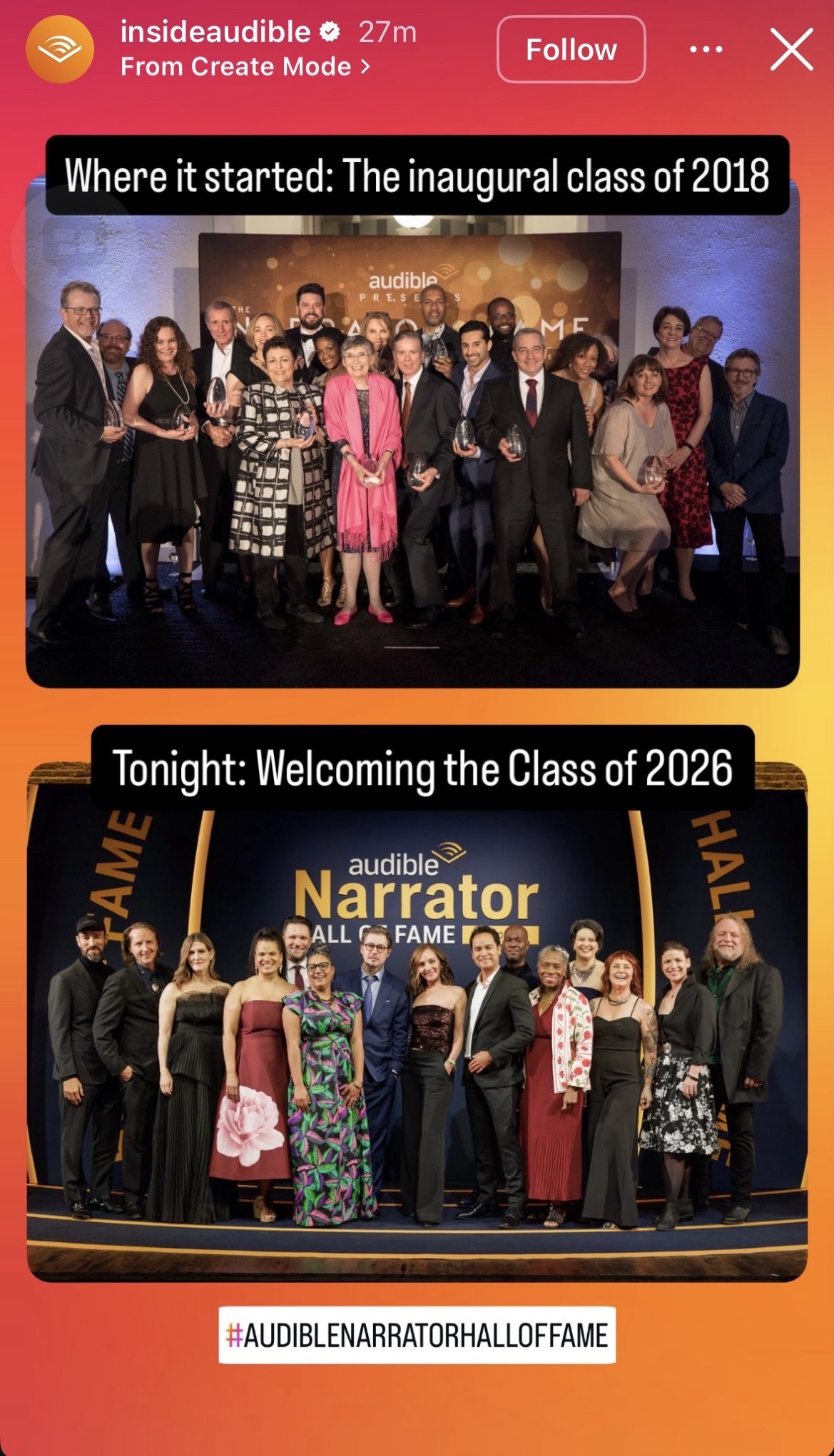
Audible Narrator Hall of Fame Class of 2018 and 2026 Inductees

Who are your colleagues?
What connects you?
What do you share with these people that others do not and cannot understand or relate to?

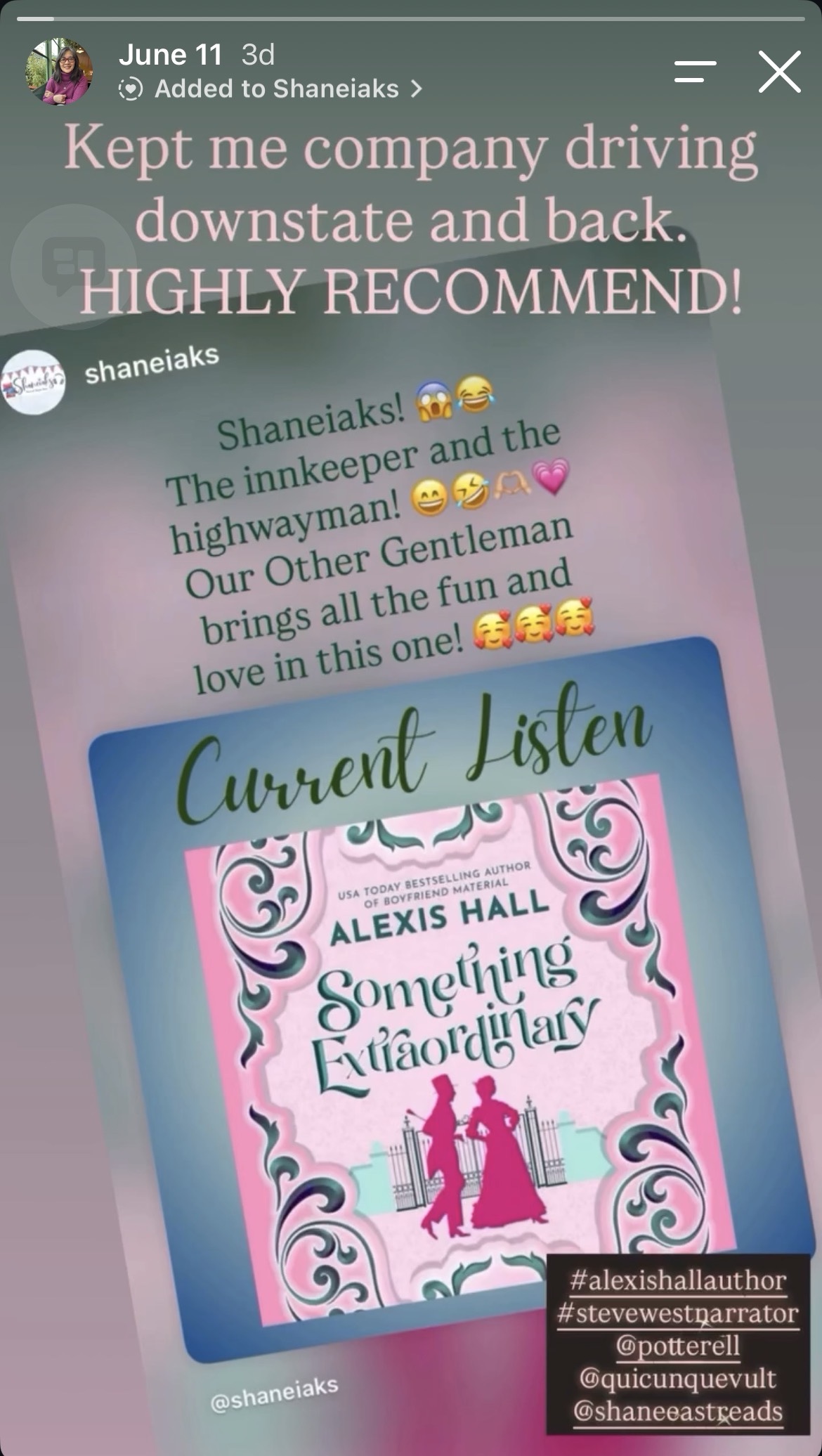
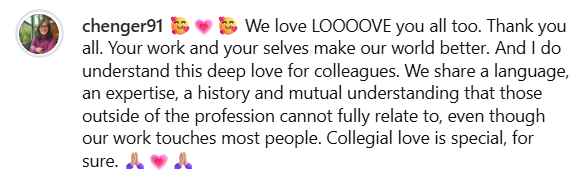
Last week Audible celebrated their second cohort of Hall of Fame narrators, including a couple of my favorites, Andrew Eiden/Teddy Hamilton, and Steve West/Shane East. Andi Arndt, Hall of Fame Class of 2018, gushed about her colleagues on Instagram the night before, reminding me of that deep collegial love that I feel every day in medicine. My impromptu comment on her post stuck with me all week.

The photos of celebration and connection, the joy and energy of the Audible event moved me, too. I haven’t been to an American College of Physicians national meeting since 2019 (it was next weekend in San Francisco, but I came to Portland, Oregon instead, to visit with friends–hence this delayed post), and I miss seeing my colleagues from all over the country, going to sessions and learning together, having coffee, sharing stories, catching up.
Voice acting can be very solitary work, so I imagine these artists relish opportunities to gather and commune, especially when it centers around celebrating their shared love of the work.

I wrote to a VA acquaintance once, “I hope (imagine) that you get enough positive feedback, validation, and reinforcement for your work! 😀 I also hope you get enough contact and connection with your colleagues. I can always walk down the hall and consult mine on challenging cases or difficult encounters. We are friends. My professional support network is at my elbow and fingertips; I hope yours is too!”

I spent time this weekend with Christine, my life coach and friend of 20+ years. She described her experience of ‘supervision,’ wherein she was required to debrief with elder colleagues during a segment of her training, exploring potential personal pitfalls and blind spots that client work may uncover, and how to beware of and manage it all. As coach and physician, our conversations weave in and out of mutual support and informal ‘supervision’ in organic and collegial ways. Our work overlaps with that of therapists, nurses, and probably any other helping profession. Walking along the Willamette River with Grant today, we reflected on how easily we can apply our professional training and skills in any domain where humans interact.

Back in 2017, the night before presenting at general surgery grand rounds (unusual for an internist), I wrote about tribal pride and tribalism:
“We all need our tribes. Belonging is an essential human need. To fit in, feel understood and accepted, secure—these are necessary for whole person health. And when our tribes have purpose beyond survival, provide meaning greater than simple self-preservation, our membership feels that much more valuable to us. But what happens when tribes pit themselves against one another? How are we all harmed when we veer from ‘We’re great!’ toward ‘They suck’?”

Nine years on, how do we assess the relationship between tribal pride and tribalism in any given domain on the current geopolitical landscape? Surgery vs. medicine, staff vs. leadership, conservatives vs. progressives, advocates for vs. against AI… How can we maintain our human connections above all, no matter what our divergence? I have often thought of myself as a ‘lumper’ as opposed to a ‘splitter’–always looking for connection, commonality, and relationship everywhere, among all people. In the same message to my VA acquaintance:

“Acting and medicine: What do you imagine are the overlapping aspects of our respective work?  I see it mostly in story—empathy for and holistic understanding of the full human experience, from the euphoric highs to the most sorrowful lows.  For both of us, to be truly excellent at our work, we must call forth real and sincere empathy from our own depths, which is vulnerable and courageous in a lot of ways, don’t you think?  For you, the stories are complete, and you get to interpret and bring them to life, to present them for our benefit.  I get to elicit the stories, coax them to emerge in real time, and interpret them along with my patients.  What stories do people tell about their health, their lives, their agency to influence it, and the outcomes they can/not achieve?  We get to dissect and discuss and then act on our shared interpretation.  We edit and revise together over time.”

So this weekend I communed with two of my coaching friends. I spent quality time with Phara who has a degree in psychology, and Heather, a fellow writer. We bonded over parenting–the unique mental load of moms, especially working moms. This theme has emerged powerfully in my medical practice, no matter the moms’ day jobs and no matter our kids’ ages.

Colleagues share language, training, experience, and perspective. We compare notes, tell stories, and connect. But we do this not just in professional circles. Our tribal memberships intersect and overlap, often in ways we could not predict or design. So really, we can find love in commonality anywhere, with anyone, if we just open up and ask, no?

What a fun exercise to come across an idea on social media, feel it in my heart, react in real time, then process it for days and see what arises in stream-of-consciousness blogging while stuck at the airport! Tomorrow I get to co-present on health and wellness to the Illinois Judiciary–another esteemed tribe of helpers, as I see them. What a privilege.

My tank is so full from a long weekend of deep and thick connection with my amazing friends here in the Pacific Northwest. I will miss this year’s chance to commune with my fellow internists nationally, but I’ll get back to the office this week and soak it all up locally. How lucky I am, truly. I hope whatever your profession, whomever you call colleagues and friends, that you get to enjoy this deep, collegial love born of shared humanity. And if you can recognize and strengthen it across domains, even better. That’s what will save us all, I am convinced.

Bit Post: Hooray for Our Inner Cheerleaders

Seoul, South Korea

Hey, hey, it’s okay,

We all fuck up anyway!

Hey, ho, let’s go now,

We learn and move on anyhow

Hey now, let’s take heart,

Each of us can do our part

To give each other a new start

Ok so, here we go,

On this journey, ebb and flow

Boo, hiss, our Critic yells, 

Anxiety and blame it sells

Hello no, Cheerleader beams,

We’ got strengths galore in reams

Integration’d be ideal, it seems?

Both perspectives offer truth

Bitter swill and sweet vermouth 

But Critic’s voice too often wins

Harshly calling out our sins 

So let’s give joyful Cheers the mic

To let our spirits get a hike

And give self-efficacy a spike

Humility and confidence 

Both are virtues, both make sense

Our critical and cheerful sides

We need them both to ride the tides

To stay aware and make our strides

In our chaos world of me before all

Critics and Cheers both heed the call

To live our values and when we fall

Stand up again with integrity tall

So no need to silence the Critic, friends 

It plays a role in our best ends

Just make sure to bring Cheers along

Like a playful partner in attitude ping pong

To keep perspective clear and strong

Inspired by Manifesting Success by Elisha Ainsley, narrated by Steve West

Meditation on the Sleepiest app

Illuminator Aspirations

Well this feels cosmic.

After posting “Questions for Connection” last Sunday, I started listening to David Brooks’s How to Know a Person: The Art of Seeing Others Deeply and Being Deeply Seen on Tuesday–cramming for book club on Thursday, of course, having added it to our list months ago. Perfect timing! The whole book, as you may imagine, discusses the what, how, and why of human connection, and it speaks to my soul, omg! From developmental psychology to conflict resolution, education to culture, and told through his and others’ personal stories, Brooks distills decades and generations of objective and intuitive knowledge and wisdom into a fast, easy read/listen that points us all toward both the doing and being of presence and attunement to one another. There is an entire chapter on asking good questions, which I obviously appreciated.

Illumination was a novel idea to me, however, and I look forward to reading and marking up this chapter in the hardcover. Brooks describes illuminators as people whose presence–their posture, mannerisms, words, and ability to listen, absorb, reflect, and connect–lights others up. They are the ones who make us feel safe, who open us up and thicken our social ties. I have thought and written for years about the importance and impact of feeling seen, heard, understood, accepted, and loved; illuminators do this for and with us. This is how I wish to show up to everyone in my life–patients, family, friends, colleagues, online acquaintances, and strangers alike. The book provides skills and practices to do just this, and though I estimate my proficiency to be reasonably high already, Brooks presents pearls that inspire me to do better yet.

He also discusses Accompaniment, the attitude of escorting, even stewarding, one another on our respective life journeys. The concept evokes a sense of deep empathy, kindness, and reverence for our shared humanity that feels so lacking these days. Subsequent chapters discuss suffering, despair, empathy, hard conversations, and personality traits that affect our relationships to self, others, and society at large. “We are all walking each other home,” Ram Dass says. Hallelujah.

I finished HTKAP in plenty of time for book club, excited to explore and discuss with my friends. Our conversation was warm and connecting, and Mary shared yet another deck of questions meant to bring people (teens, in this case) closer. Sue even stayed the whole time, which was a big deal, and I think speaks to the successful intended effect of the book. How wonderful.

Screenshot

After that deep dive into human connection, I wanted something more lighthearted. I always enjoy a solo Shane East/Steve West narration, and The Natural: How to Effortlessly Attract the Women You Want by Richard La Ruina called to me this week–so intriguing! 24 hours after finishing, I can honestly say I am glad I listened to this book.

Published in 2014, eight years after founding his seduction and dating coaching business PUA (pick up artist) Training, some of the book has perhaps not aged well (eg the parts about touching, and use of the word ‘control’). The direct and sometimes blunt descriptions of ‘types’ of women and scenarios, and the granular scripts he presents as highly successful interactions made me cringe sometimes, as I imagined being the woman in the situation. But I found myself nodding as often as I squirmed. I make no judgments about pick up artists, their goals, and their methods, as long as everything that happens between them and the women they engage with is fully consensual, lucid, and mutually fulfilling.

Two things stand out to me about The Natural, especially in comparison and contrast to How to Know a Person.

First, La Ruina is remarkably open about his personal experiences throughout this book, similar to how Brooks is in his. He chronicles his journey “From Geek to Natural” in the first chapter. Son of a single mom in a rough neighborhood of London, bullied in school and having no strong male role models, he took the initiative to turn his nonexistent romantic life around and learn how to be more interpersonally effective with women. He devoured books on psychology and communication, and sought teachers. He practiced regularly, diligently leaving his comfot zone, trying different techniques, recording and analyzing successes and failures. He created an organized and consistent, though flexible and customizable method for approaching, engaging, and yes, seducing women, which he shares openly and transparently in detail in the book; we readers and listeners get to witness his transformative journey.

Throughout the book La Ruina’s honesty strikes me. I hear him (through Steve’s voice) as humbly confident, offering his personal perspective, learnings, and earned expertise to benefit others: men who feel like he used to feel around women–awkward and intimidated.
He makes appropriate asides to point out that women are not simply marks for conquest; that seduction is, in fact, a process of connecting with another person on a human level–albeit with a specific and often carnal objective. He admonishes readers/listeners to be respectful and honest, to attune to women’s nonverbal cues, to practice excellent self-awareness and self-regulation. He addresses consent, sexually transmitted infections, and expectation setting. He distinguishes between same night sex and a one night stand: sex on the first meeting does not necessarily have to be the only time, and seduction can lead to anything from casual sex to casual dating, to long term relationship. I find myself mildly disconcerted and oddly appreciative at the same time.

Second, when I get still and consider these two books, written by men from different generations and with apparently divergent goals, I can see them both as treatises on relationship and communication. Both enumerate a set of skills and practices for connecting with other humans through face to face interactions. These skills involve presence, active listening, real time energy attunement, and caring for our counterparts. Brooks discusses more esoteric and philosophical topics, as his goal is to get us to think both more deeply and globally about humanity’s current state of collective disconnection and how to remedy it. La Ruina simply wants to help men get laid, but in a way that makes them better versions of themselves in the process.

Both of these books remind me of Presence by Amy Cuddy, another book that I love. You may have seen her TED talk, “Your body language may shape who you are”, on how posture influences self-confidence, self-efficacy, and others’ perceptions of us. Ten years ago I started “power posing” before presentations–standing tall with feet wider than shoulder width, arms extended, palms open, chest out, calling forth my credentials and expertise to show up all me, all in, to my audience.

The skills, techniques, and practices for listening, asking questions, and attuning to others in both Brooks’s and La Ruina’s books parallel Cuddy’s suggestions for attending to posture and body language. At the end of her TED talk she says, “fake it ’til you become it”: In effect, act like you’re calm and confident. Imitate it, do it with your body until you can really feel it–wholly embody it–in your mind and spirit also. In all of these books, I hear the authors showing us how and what to do, on our way to being the person who does these things naturally–attuning to others, empathizing, understanding, attending to their needs, and connecting, which also feeds ourselves in turn.

Whether our goal is to inspire an audience, support our friend through their struggles, or take a woman (or man–it occurred to me multiple times that the techniques La Ruina recommends for seducing women could easily apply to men–because it’s all about making the other person feel seen and appreciated) willingly and happily to bed, both the being and the doing matter. Our expressions and actions reflect our attitudes and intentions. When all of these are aligned, we are authentic. We can sense when this is not the case, but we don’t necessarily require 100% alignment to engage willingly with someone–we often give one another the benefit of the doubt and leave room for improvement, as long as we feel safe enough.

Illuminators may vary in mission and goals, apparently. If our job in this lifetime is to walk with one another and make our respective journeys a little less painful, a little more joyful, and more lovingly meaningful in connection, then How to Know a Person, The Natural, and many other resources can help us. I never thought I would listen to, much less admire, a pick up artist’s practice manual, and here I am. There is learning to be had everywhere and anywhere, my friends! I’m excited to see where I find it next.