We Are Really Bad At This

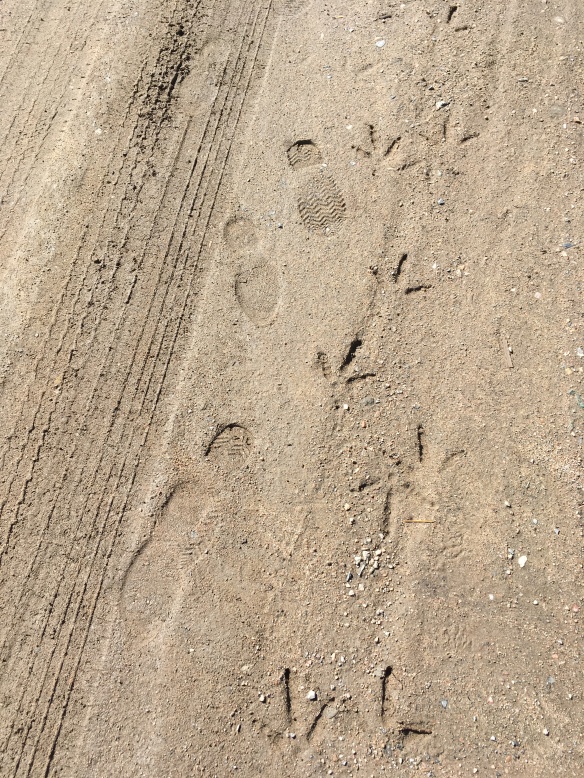
turkey human car tracks

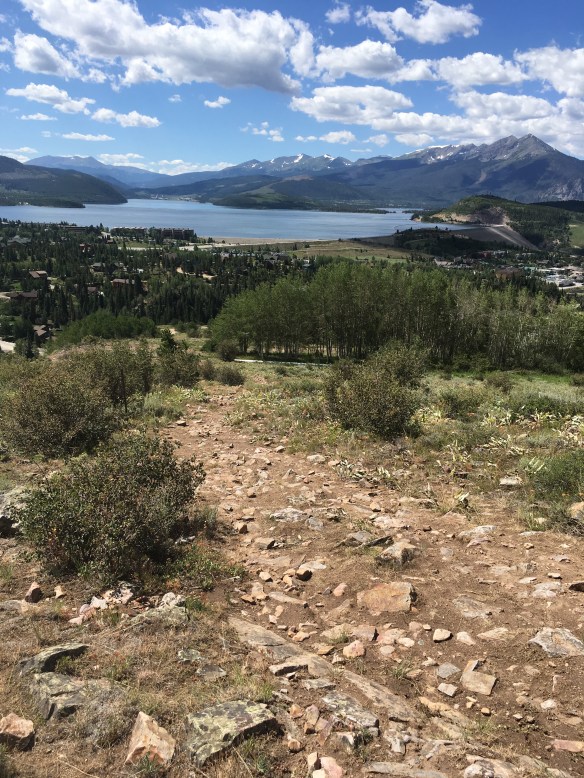
Sylvan Dale Guest Ranch, Loveland, Colorado, March 2019

How many truly meaningful and fulfilling conversations do you have in a day?

How many such relationships do you have?

Though I wrote my Pit Crew post almost a year ago, its ideas recur regularly.  I have linked to it on multiple subsequent posts.  I share it with patients and reference it in conversations often.  My patients are leaders of large corporations and organizations.  My colleagues and I lead teams in the hospital, the medical group, and the medical school.  My friends lead their families and communities.  When I think about our health and its consequences, it’s about taking care of those for whom we are responsible, ourselves included.

Are you generally the one who always takes care of others?  How does this affect your style and effectiveness as a leader?

Who Takes Care of You?

I estimate that about 20% of the time when I ask this question, my patients say that nobody takes care of them; they do it themselves.  They don’t mean that nobody cares about them.  It’s that they don’t really depend on anyone for counsel and/or support.  They hold everything together themselves.  I always have mixed feelings when the conversation takes this turn.  On one hand I feel admiration and respect, especially when they seem generally healthy—apparently unaffected by physical, mental, and emotional dysfunction.  On the other, I get curious.  How do they sustain this Lone Ranger method?  And what does it cost them?  I believe we all need tight, vulnerable, and safe connections through which we can get raw and real, and work through life’s ultimately messy sh*t.  We need others, even if it’s only one or two, to help us truly hold it all together.  My default assumption is that if we don’t have such connections, we are not living into our full potential.

And today I feel cynical.  I think we are getting really, really bad at taking care of each other.

Driving to work this week I wondered to myself, why do we feel the dearth of mental health services so acutely these days?  Is it that more of us are living on the psychological razor’s edge of mental health and illness?  Are we not diagnosably mentally ill but simply, profoundly, stressed to our limits of sanity and function?  Is that why none of my patients can get in to see a psychiatrist or therapist for weeks to months?  Is that why physicians are increasingly leaving the profession and killing ourselves?  Why do we feel so hopeless?

It’s easy to blame social media.  And I do, partially.  The cruelest irony lives here.  My non-evidence based impression is that cyberbullying bears equally life-threatening consequences as face to face bullying.  If you know of evidence to support or refute this premise, please share.  Negative interactions on social media, which rage so easily like wildfires, are now understood to contribute significantly to the rise in loneliness across the country.  Worse, cultivating truly positive relationships via social media is much harder and more complex, even deceptive.   So on balance the risks and harms of social media may far outweigh the benefits.  There simply is no substitute for personal, physical contact, for sharing the same space, breathing the same air, experiencing another’s full presence.

Worse yet, too often we can’t even get that right!  Ozan Varol wrote about this in his last post, “3 Ways to Be Insufferable In Coversation.”  They are:  1. Always turn the conversation back to yourself; 2. Pretend to listen; and 3. Ask no questions.  How many people have you already met today who do this on the regular?  If you’re honest, how many times today have you committed these relational sins?  It’s okay, we all do it sometimes.  As GI Joe says, knowing is half the battle.  The other half is doing something about it!
IMG_1547

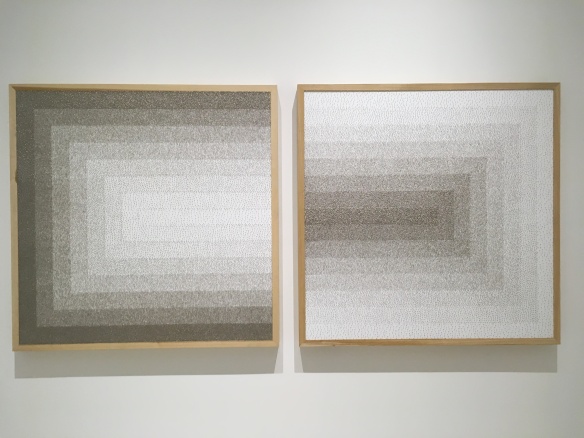
Smart Museum of Art, Chicago, July 2019

So what do we do?

First, Attend.  Pay attention.  How much time do I spend on social media?  What do I get out of it?  When does Fear Of Missing Out (FOMO) drive my scrolling?  Am I really connecting?  Or am I stalking, comparing, judging, flaming, agitating the echo chamber, and otherwise wasting time and energy?  How can I set alerts and redirect my routine?

Second, Intend.  What is the best use of my time?  If I want to see how my friends are doing, rather than check my Facebook feed, why not call them up?  Send a text, photo, or—gasp—a handwritten note just to say hi, I’m thinking of you?  It may cost you time, energy, and $0.55 in postage.  But aren’t your real friends worth the investment?  You can do it on social media too—if you slow down and think about it first.  Consider the return—brightening someone’s day, feeling that personal connection.  Dopamine drives FOMO, and is also associated with addictive behaviors.  Bonding behaviors elevate oxytocin, the hormone that mediates empathy, safety, and connection.  There is even evidence that higher levels of oxytocin correlate with increased longevity of romantic relationships, or even a person’s own life span (could not find a reliable, peer-reviewed source for this claim—I just believe it intuitively).

Third, Get Curious.  This was the first skill I (re)learned in life coaching, ‘way back in 2005, and it serves me well every single day.  If we let go of the competitive, scarcity-based thinking that surrounds us, what more could we learn?  What novel and inspiring stories could we hear from anyone we meet, or even our closest friends?  If we listen to understand rather than to reload and refute or one-up, what vexing problems could we solve, together?  Just wondering about it makes me feel lighter and more optimistic, what about you?

Subscribe to Ozan’s newsletter, the Weekly Contrarian, to get his list of solutions to conversation insufferability this Thursday, 9am Central Time (I have no financial interests in Ozan’s site; I just really admire his work and the community of critical thinkers he has convened).  And today, I challenge us all:  Monitor our attitudes and facial expressions.  Manage our self-absorption for a few minutes at a time.  Look strangers in the eye and smile as if they’re already our friends.  Ask a Facebook friend what they did this weekend that really made them feel alive and well.  Let’s all get our caring on, shall we?
 

On Labor Day

IMG_1530

For a New Position

May your new work excite your heart,

Kindle in your mind a creativity

To journey beyond the old limits

Of all that has become wearisome.


May this work challenge you toward

New frontiers that will emerge

As you begin to approach them,

Calling forth from you the full force

And depth of your undiscovered gifts.


May the work fit the rhythms of your soul,

Enabling you to draw from the invisible

New ideas and a vision that will inspire.


Remember to be kind

To those who work for you,

Endeavor to remain aware

Of the quiet world

That lives behind each face.


Be fair in your expectations,

Compassionate in your criticism.

May you have the grace of encouragement

To awaken the gift in the other’s heart,

Building in them the confidence

To follow the call of the gift.


May you come to know that work

Which emerges from the mind of love

Will have beauty and form.


May this new work be worthy

Of the energy of your heart

And the light of your thought.


May your work assume

A proper space in your life;

Instead of owning or using you,

May it challenge and refine you,

Bringing you every day further

Into the wonder of your heart.


–John O’Donohue, from To Bless the Space Between Us


I know Labor Day is not about doctors, but I’m thinking about all workers and how we each relate to our work.  I discovered the poem above earlier this summer and loved it.  Rereading it this weekend, it resonated even more deeply and I shared it with some friends.  Since taking on a new leadership role about 20 months ago, it feels like I have really lived into these aspirations, as if the cosmos has held this blessing for me a while already.  I was primed for the call; I summoned every skill and insight I already possessed; still the learning curve has proven steep.   And no success is achieved alone!  The steady, honest, and loving support I enjoy from so many humbles me beyond expression.

Our practice recently welcomed new physicians and staff, and I will soon share this piece with the whole team.  Even for us veterans, it never hurts to look at our everyday work with new eyes, as if approaching it for the first time.

I hope O’Donohue’s words above speak to you in your chosen vocation, even if your occupation does not fulfill all of these lofty ideals (it’s kind of a lot of pressure to put on a job).  I wish you work that is much more meaningful than stressful.  If that’s not the case, I hope for you an effective and peace-giving way to reconcile this and find great meaning elsewhere in life.

And I thank you for the work you do, whatever it is.


Out and Back: Coming Home

IMG_1944

Meadow Creek Trail, Lily Pad Lake toward Frisco, Colorado

When you hike, do you like loop trails or out-and-back trails better?

What metaphors for life can you make from hiking?

IMG_1863

Ptarmigan Trail, outbound, Silverthorne, Colorado

Out and Back

I used to think out and back trails would be boring.  What’s so great about getting to the end of a path and then going back the way you came?  Wouldn’t it be tedious and redundant?

But the more hikes I take, the more I realize how valuable it is to retrace my steps, especially on the trails with big elevation gain and diverse landscape.  The same path, going uphill and then downhill, heading north at daybreak then south at mid-day, is a vastly divergent experience.  It is a concrete, tangible exercise in perspective, if ever there were one.

IMG_1862

Ptarmigan Trail, looking toward trailhead from same point as above

Looping

On a loop trail, you get to decide at the outset the way you will go.  If you choose clockwise, you miss out on the counterclockwise experience—until next time, perhaps, when you get to choose it.  Or maybe you always go the same way?  That feels safe—you know what’s coming, perhaps?  But on any trail, especially in the high country, you just never know what you’ll encounter.  Time of day, time of year, recent events (wildfire, thunderstorm) all alter the path—you could actually never walk the same trail twice—whether it’s out and back (hereafter abbreviated “OAB”) or a loop.

IMG_1931

Meadow Creek Trail again

In life, do/can we ever really go back?  I’m reminded of the quote attributed to Heraclitus:

“No man ever steps in the same river twice, for it’s not the same river and he’s not the same man.”

Whether you choose OAB or a loop, when you arrive at the trailhead again, is it the same as when you started?  Are you?  And regardless, why hike in the first place?  What does it do for you, what do you gain?  Why step out from where you live every day, all the time?

Here’s what insightful writers I’m reading lately have to say about it:

John Gardner, in Self-Renewal:  “As the years go by we view our familiar surroundings with less and less freshness of perception.  We no longer look with a wakeful, perceiving eye at the face of people we see every day, nor at any other features of our everyday world…  That is why travel is a vivid experience for most of us.  At home we have lost the capacity to see what is before us.  Travel shakes us out of our apathy, and we regain an attentiveness that heightens every experience.”

John O’Donohue, in Anam Cara:  “Hegel said, ‘Das Bekannte überhaupt ist darum, weil es bekannt ist, nicht erkannt’–that is, ‘Generally, the familiar, precisely because it is familiar, is not known.’ This is a powerful sentence. Behind the facade of the familiar, strange things await us. This is true of our homes, the place where we live, and, indeed, of those with whom we live. Friendships and relationships suffer immense numbing through the mechanism of familiarization. We reduce the wildness and mystery of person and landscape to the external, familiar image. Yet the familiar is merely a facade. Familiarity enables us to tame, control, and ultimately forget the mystery. We make our peace with the surface as image and we stay away from the Otherness and fecund turbulence of the unknown that it masks. Familiarity is one of the most subtle and pervasive forms of human alienation.”

IMG_1998

West Overlook, Ridge Trail, Dillon, Colorado

When patients see me for their annual exams, I imagine it can feel tedious and redundant.  But it’s always fresh and interesting for me, because I haven’t seen or heard from them in a year.  And I’m continuously learning, so I often have new questions and queries to apply.  They may not think much of the past year, it goes by so fast; I get to be their fresh eyes, and lend them new lenses.  What’s the most interesting thing that happened to you since we last met?  What do you want to focus on this day we are together?  When you look back at your life a year from now, what do you want to see and say about it?  I feel like a ranger at the common trailhead of inifinite paths, checking in with my hikers as they loop and retrace their ways back to me, stopping to debrief before getting back on the road of living and growth, of evolution and development.

Mei lakeside July

Chicago, IL

Homecoming

I was born in Evanston, Illinois, when my dad was doing his PhD at Northwestern University.  We moved to Colorado when I was six, and for as long as I can remember, I have considered that state to be my true home.  I go back every chance I get; I savor it, relish it, drink it in with fervor.  When I return to Chicago, where I have lived for all but those 12 formative years before I came (back) to NU for college, it’s always with a gnawing reluctance, even a little resentment.  I never call it ‘coming home.’  Last night when I arrived at my house after a week in the Colorado Rockies, I did feel myself relax, ready to settle into life as usual.  But I still longed to be home for good—back in Colorado—my only real home.

That perspective changed today.

These last days I have thought deeply about my life path.  I’ve really only lived in these two places, these vastly different places.  Until this morning I thought of my OAB trailhead unequivocally as Littleton, Colorado, where I grew up.  My plan is still to go back for good someday.  But this morning on the way to church, as I crossed the intersection onto the NU campus, I felt at home.  We left our house late and drove through a thunderstorm to get there, and like a flash of lightning, I recalled when I came for my campus visit in the fall of my senior year of high school.  It had also rained cats and dogs that whole weekend.  But I’m pretty sure I wrote to friends at the time that it felt like coming home.  I was born here after all.  It is my dad’s and my alma mater.  I met my husband here during New Student Week my freshman year.  I’ve brought my kids here since they were born.  Our church here is my spiritual home, no question.

We were late today, arriving toward the end of the homily, in the chapel across the street, as ours is being renovated.  From the back, I first saw the silhouette.  Then I heard the voice.  Then I listened to the words—always words of connection, truth, service, and love.  I was overcome with emotion when I realized: It was Father Ken, director of our church from my sophomore year until I first became a mom.  He led my RCIA class for confirmation.  He nurtured my early adult development as only a pastor could, and has known me through inspiration as well as struggle.  I have only seen him rarely since he left, and missed his calming, comforting presence. Seeing him and hearing his homily today made it suddenly crystal clear to me: This, Chicago and my life here, are also my home, wholly and without question.

I can claim and love both—the places, the people, the cultures, the memories.  The mountains and also the lake; where my parents made their life and also where my kids are growing up.  Colorado is not the same now as when I left in 1991.  Chicago is not the same today as it will be when I finally return to Colorado.  Which is the Out and which is the Back?  Doesn’t matter.  Finally, after all this time feeling conflicted and divided, I really am home.

IMG_1959

Dillon Reservoir, Dillon, Colorado