
Friction, Traction, and Drag

On our way to any destination, what helps and hinders our progress?

I am currently halfway through reading The Human Element: Overcoming the Resistance That Awaits New Ideas by Loran Nordgren and David Schonthal, which I recommend. It describes “the four Frictions” that keep us from adopting new ideas or behaviors: Inertia, Effort, Emotion, and Reactance. How fascinating and helpful! It makes sense to think of friction as something that hinders motion and progress, something to be overcome. We consider kinetic energy wasted when friction converts it to heat, and experience real consequences of equipment failure, injury, and stagnation from the burn of chafing contact in motion.

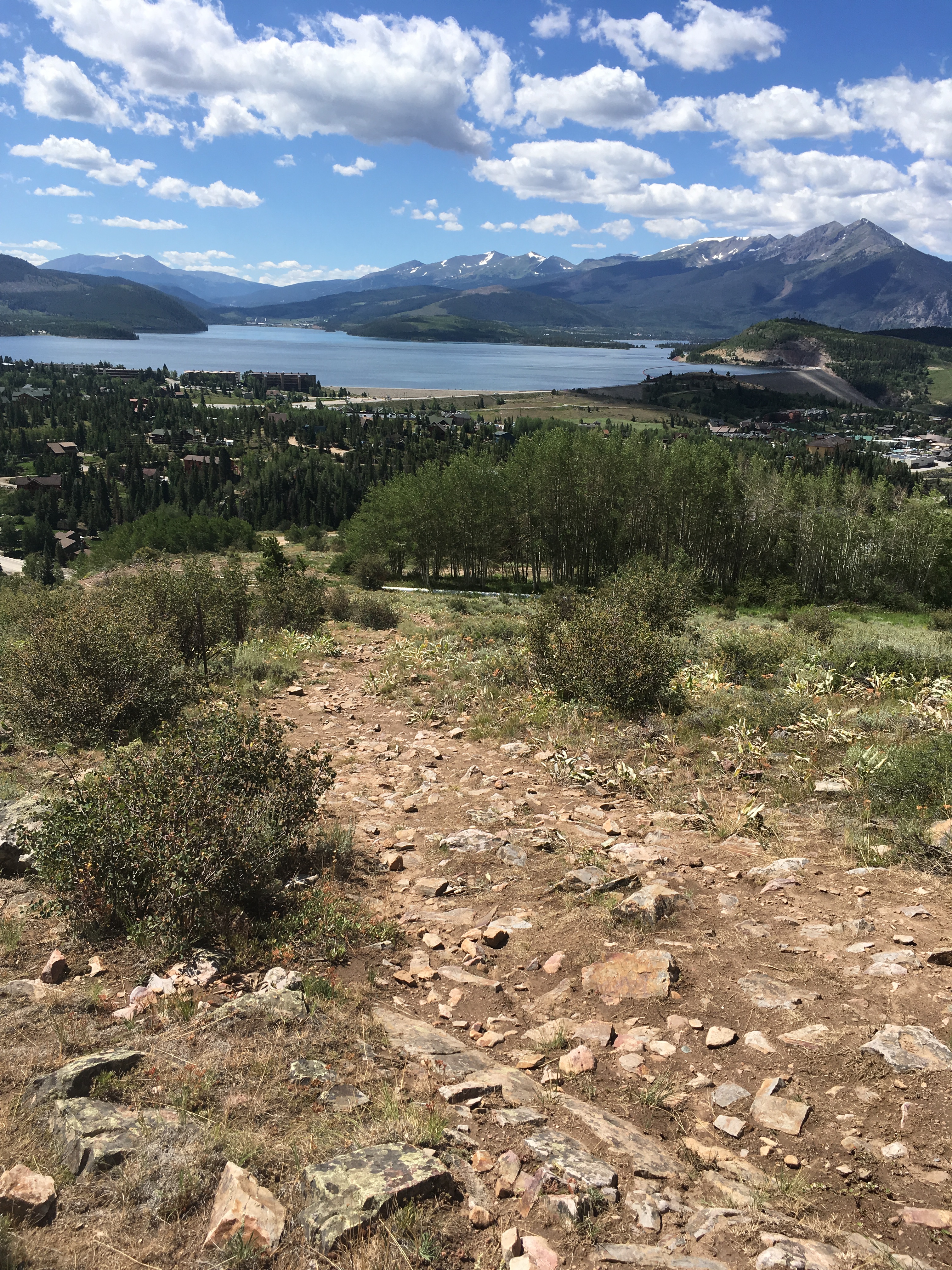
Then again, when is friction desirable? Imagine hiking, mountain climbing, or attempting to traverse any path with the surface covered in a sheet of smooth ice or a thick oil slick. Either we get nowhere, or somewhere we don’t want ‘way too fast. Even for Olympic speed skaters, blade contact with the most pristine ice track still requires some friction–an ideal amount–to gain enough purchase to push against and maintain control.

I submit that in movement of any kind–physical, political, behavioral, emotional, etc–we need optimal friction. Stability requires friction; we depend on it for orientation, to know where we start. Optimal friction coefficient over an ideal surface area provides traction–enough resistance to push against, the stability to launch forward with power. Tire treads, soccer cleats, chalk on a pool cue–we know how to modify objects for maximal traction and performance.

How can we modify our mindsets similarly? What does it cost us to make everything too easy, to remove all friction on the path to achievement? For three years I have exercised in my basement, doing things I know, challenging myself minimally. I have gained strength and maintained confidence in my movements, and also stagnated in my fitness. Joining a fitness community pushes me; I get to reassess my assumptions of capacity and limits. It introduces healthy friction. The tribe here gives me something to test against, strengthening through challenge, elevating my achievement. Additionally, I feel positive peer pressure to eat healthier, a perennial stuggle for me. Communing with folks who care for their bodies with whole foods increases the psychological discomfort (friction?) I feel from eating junk–even when I’m not with them–and voila, my nutrition patterns are changing for the better.

What is the relationship between friction, traction, and drag?

Friction can help or hinder. Traction requries an optimal quantity and distribution of friction for both stability and mobility–I think of it as a kind of potential energy. We understand the concept of traction easily from common vernacular, but what about ‘drag’, other than as late 20th Century social slang? I love the internet, where you can Google, “What is drag in physics” and get it directly from NASA:

“Drag is a mechanical force. It is generated by the interaction and contact of a solid body with a fluid (liquid or gas). It is not generated by a force field, in the sense of a gravitational field or an electromagnetic field, where one object can affect another object without being in physical contact. For drag to be generated, the solid body must be in contact with the fluid. If there is no fluid, there is no drag. Drag is generated by the difference in velocity between the solid object and the fluid. There must be motion between the object and the fluid. If there is no motion, there is no drag. It makes no difference whether the object moves through a static fluid or whether the fluid moves past a static solid object.”

So drag is the resistance of the milieu to movement of an object. It is the cultural current against which innovation swims upstream, a result of the inherent viscosity of any given system. I think of it as another form of friction, but one that only hinders.

If I’m trying to change, to move something, what are the sources of negative friction, positive traction, and drag? Of these, which are modifiable and not? Where and how can I gain a foothold or grip, to push or pull myself onward? Where do I need to apply some lubricant and relieve or release a counterproductive grind? How does the environment need to change, or how can I change my orientation within it, so I may glide more easily toward my goal?

“Drag is generated by the difference in velocity between the solid object and the fluid.” Hmmm. So if I claim my role as change agent, then I must decide how much drag I’m willing and able to tolerate, how much I can afford in cost of fuel for thrust, and what velocity of change will satisfy me. I have to think that my vector matters, also. Head on opposition to a strong and established current, versus a hard left diversion, versus introducing a small fork or bumper in the terrain… I can consider all of these and more, depending on my goals and the ambient conditions.

OH this is such a fun thought experiment! Framing my goals, plans, and actions in terms of friction, traction, and drag allows me to step back from my own tunnel vision, to see a complex adaptive system perhaps more concretely and objectively, even dispassionately. Whether it’s my own personal health habits or the professional culture of medicine, this analogy feels helpful. I wonder how it will continue to manifest hereafter?
Keep Going


Something is definitely better than nothing.
Keep with your healthy habits, even if sporadically and at low intensity.
Back at Ethos one month now
Very sore after the first week
Old occult injury aggravated
So accommodations made without judgment
Now fifth week completed
Took it easy these eight sessions
Afraid to get hurt and sidelined
Encouraged by coaches to challenge without overexerting.
Supervised, corrected. Cared for.
Increased load as tolerated within each session, along with confidence
Exponentially
Progress made in one month
Greater in some ways than the past three years total, in the basement at home
So keep doing your best.
Just keep going, however slow.
You will know when it’s time to kick it up.
Trust yourself.
Recruit your Tribe.
Onward in solidarity.

Thank you, Sisters Jennifer and Marian, and Brother Kinnier, for keeping me company on my slow persistence.

Thank you, Melissa, for pouring such a strong foundation with me 9 years ago.

What Does It Cost?

What does your work cost you, in terms of your health?  In your relationships?

There is always a cost for the money we make.” says Simon Sinek.  There is always a cost (for the reward) of any choice we make, no?

Friend and I recently bonded over the challenge of disconnecting from work when we go on vacation.  It took going overseas for me to finally feel mostly (not totally) guilt-free deferring all urgent patient care, temporarily, to a colleague.  Friend also went abroad for spring break, yet he still logged onto work email for 30 minutes every day (was it really only 30 minutes, I wonder?).  As a high-level organizational leader, and thus a gatekeeping decision maker, “things stop for a week if I go away, and I hate that idea, that I’m the [rate limiting step of the org’s operations].” 

I get that. Maybe it’s different from medicine. It’s more work to cover another doc, no question. We answer calls from patients we don’t know, often prompted to sift through a tangled morass of electronic medical records that now often includes documents from multiple facilities across the country. We don’t readily know the patient’s current health status, communication preferences, or personality quirks. But in the end, we can all take care of the patient. And in a week or two, we hand them back off to their primary care doc, hopefully with questions answered and problems resolved (‘tucked in’), or at least an appropriate care plan well underway. Because of this, many of us ‘cover ourselves’ when we go away, especially if it’s a short time, like a holiday weekend. So over a year, my patients maybe have to live without my immediate, personal assistance a total of three or four weeks. We docs trade off, and it feels fair and manageable. I asked my friend if no one could cover him similarly, be available in a pinch so he can relax with his family? Yes, he answered without hesitation, it’d be easy. What would it cost him and the workplace, I asked. “Nothing.” And yet he has never done it; not really even considered it, maybe? We were walking, and I stopped suddenly, stymied in surprise and empathy.

How fascinating. 

In our thinking brains we know what to do and how to do it—to make it safe and seamless to get away. Logical calculations tell us that disconnecting from work for a little while is low risk for organizational operations. Our colleagues are more than capable of handling things in our absence; the place and its people will not actually grind to a screeching halt. And yet the social pressure of staying connected, of never putting down the yoke of work, even for a little while, looms heavy and thick. “The graveyards are full of indispensable men,” Charles de Gaulle said. And it’s not that we think ourselves truly indispensable—it’s not arrogance. It feels, at least in part, more like a fear of being seen as a slacker, a freeloader, not pulling our weight. Most concretely, it can cost precious time, attention, and connection with our loved ones. And it’s not just on vacation. Our 24/7 work lives invade our homes, stealing us from our children so insidiously that we don’t even notice. But because home is where we feel safe and un(less)conditionally loved, it’s much easier to withdraw from that account to pay work.

Beyond that, what are the myriad costs to those we lead, and thus to our organizations, and our society as a whole?  When my direct reports see me sending emails at midnight on Saturday, what example and expectations do I set?  Even if I write explicitly that I do not expect a response outside of business hours, the implicit message is the opposite.  I lead by example, like it or not.  “Do what I say, not what I do,” fails just as surely at work as it does at home.  This is how the status quo of burnout and disengagement, even (especially?) among the most passionate and well-intentioned workers, perpetuates.  What a vicious cycle, I say, all of us trying so hard to prove our worth every day, not trusting that our value is seen and appreciated just by virtue of our contributions and relationships. 

And whose job is it to break the cycle, to reshape this flawed culture of relentless, imbalanced, and unhealthy self-sacrifice? I think it’s the leaders’, first and foremost. It’s so much easier said than done, and it cannot depend solely on one person in any given place. Culture is self-organizing and perpetuated through the mundane, momentary, miliary interactions between all of its members. So we all matter—we contribute—in the big picture. But I am convinced that no significant change occurs without direct influence from those at the hierarchical apex. Thus, I commit to doing my best to support, encourage, and advocate to leaders themselves and on their behalf, one person, one vacay, one interaction at a time. We will all be better for it, co-creating a world where we can all rest sometimes, taking turns pulling the cart. The immediate social costs of bucking the system can be borne more easily the more of us support one another in the effort. The current status quo already costs us productivity, morale, and lives, literally.

At the ends of our lives, will our work rewards have been worth all that we paid?