What Do You Mean By That?

http://www.cherrypointmarket.net/lavender-labyrinth.html

“When we go to a foreign country, we know acutely when we don’t share a common language.  Not so in US political discussions.”

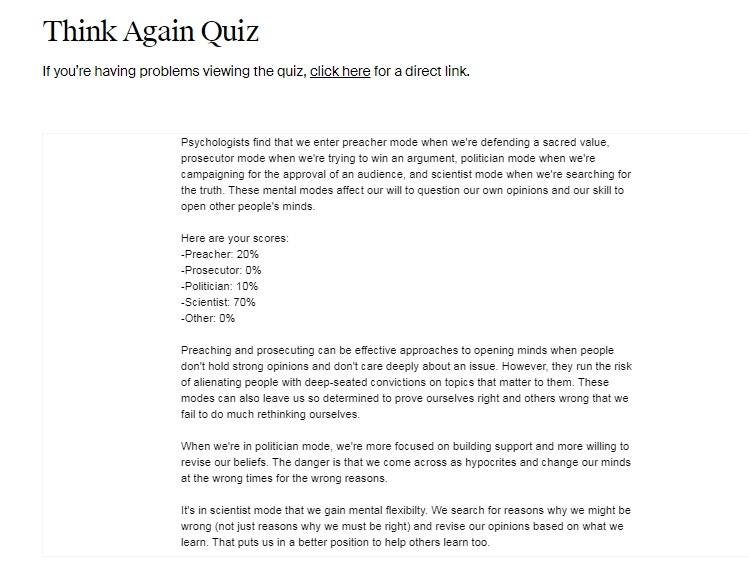
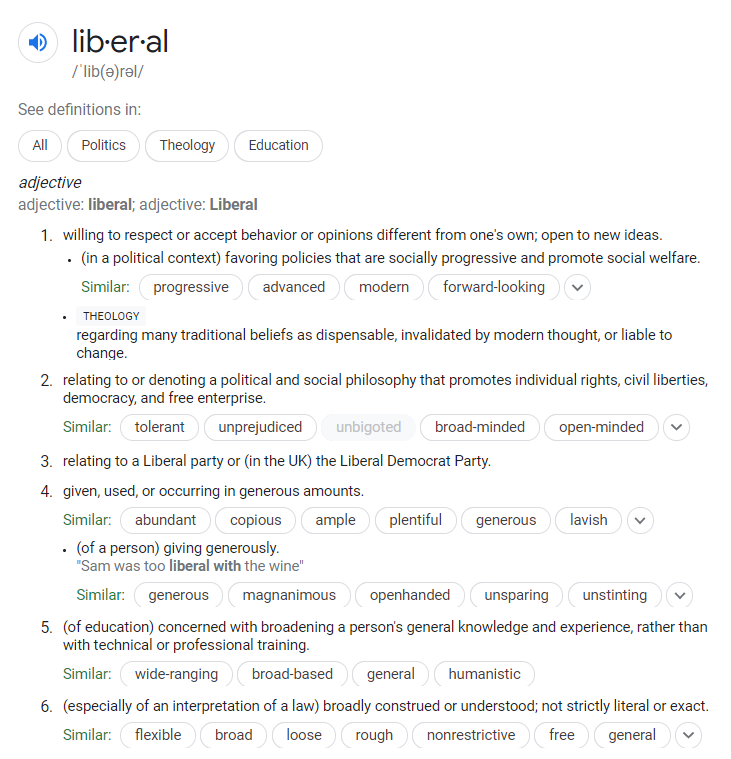
I paraphrase Sharon, my Braver Angels pal.  I had just described what I mean when I say “liberal,” and why I prefer to identify myself as “progressive.”  And though we both consider ourselves to be “Blue,” it turns out that our definitions of these words diverge widely.  I think neither of us uses the words interchangeably (do you?), and I wonder if it has ever caused us to misunderstand each other.  What comes to mind and body for you when you hear these labels?  What about “conservative,” “right wing,” or “Red?”

When I read/hear “liberal,” I cringe a little and feel defensive.  Maybe that’s because it’s used so often as a pejorative term anymore by “the right,” like when they jeer people of my ilk (which is what, exactly, though?) as “libtards,” (a dual pejorative against both “liberals” and people with developmental disabilities).  I resist labels, especially when people apply them to me without knowing anything about me.  I suspect we all dislike this, no?  To me, “liberal” means loose, without boundaries or limits, mindless, uncontrolled—as in suntan oil—“apply liberally.”  Maybe I have internalized the contempt of the other side?

Google search

I prefer to identify as progressive because it feels more intentional.  When we progress, it is toward something.  We have a goal.  We serve a purpose, and we walk with conviction to values.  Those values, for me, include equity, compassion, integrity, fairness, and the infinite, dynamic balance between what serves the individual and what serves the collective.  And I absolutely value meeting my political opposition on common ground, looking for shared values and goals to manifest in collaboration, rather than in competition.  This is the opposite of the prevailing idea of the word, I think?

Google search

I think Sharon’s definitions of the two words are more commonly shared.  She sees “liberal” as the general term that defines those who identify as “Blue,” who share and advocate for values attributed to “the left,” such as environmental protection, climate change action, antiracism, social justice, financial regulation, social safety nets, public healthcare, gun control, police reform, etc.  In her mind, “progressive” defines folks on “far left” of the spectrum, whose rhetoric and tactics are more aggressive, and who express much less willingness to negotiate or compromise on their goals and policies.

Tonight I invite you to participate in an experiment.

Sit down, relax; take some deep breaths.  Free your mind and unwind your body.  Feel safe to be totally honest and vulnerable with yourself.  Choose a few words from the list below and free associate for a minute or two.  Notice the images, words, emotions, and physical sensations that emerge when you read, say, and hear each word.  Don’t judge your reactions; they are neither right nor wrong, good nor bad.  They are simply your personal associations.  Write down what emerges for each word.  Take your time.

When you come across an opportunity (or seek it next—or maybe it will find you), invite someone you trust to do the same for the words you chose.   Assure them that you will not judge or criticize their associations (and then don’t).  Maybe offer them to choose some words for you both to associate.

Then compare notes—share.  Consider setting some ground rules, such as mutual non-judgment and respect, before starting.

What does the idea of this personal exercise and exchange bring up for you, in mind, body, and spirit?  What do you make of your reaction?  How might this exercise help you in political conversations, perhaps the way a translator might help you in a foreign country?  How might it also help you in other relationships and domains of life? 

Please feel free to share your associations and exchanges in the comments.

Onward in curiosity, humility, generosity, and connection, my friends.

Word list:

Right

Left

Conservative

Liberal

Progressive

Democrat

Republican

Red

Blue

Democracy

Democratic

Republic

Right wing

Left wing

Negotiate

Compromise

Regulation

Pro-Life

Pro-Choice

Climate Change

Pandemic

Public Health

Healthcare

Social Justice

Racism

Antiracism

Police reform

Gun control

Immigrant

Dreamer

Elite

Conspiracy

Insurrection

Coup

Riot

Patriot

Loyalty

Hypocrisy

Integrity

Bias

Prejudice

Discrimination

Tribe

Party

What else?

What We Would Give

“I would eat less myself so that you may be full.” 

It’s much more poetic and beautiful spoken in Chinese.  My mom said these words to me as she pretreated a pile of clothes, ‘Asian squatting’ on the floor in front of the washer.  I was in middle school, perhaps.  We were talking casually about parents and children.  She always had, and continues to have, the most efficiently poignant ways to express how infinitely parents love their children—how much they are willing to sacrifice in service of their kids’ health, well-being, and success—all without any residue of shame, guilt, or obligation.  As a parent myself, I totally get it now.

“What I would(n’t) give for…”

When have you thought or uttered these words?  What was it for, a hot dog?  A drink of water?  Your loved one not to have cancer?  Reconciliation with and estranged friend?  An end to systemic racism?

What are we willing to give for what we really care about?  Where is the evidence in action for the values we profess? 

I’m listening to Barack Obama’s memoir, savoring it now in the last few hours.  What I really appreciate is the inside look at the rationale, the complexity, and the reality of policy making.  He explains why he chose to push certain policies through legislation rather than executive order, knowing it was the harder and politically higher risk path.  He describes the personal, relational, legal, and procedural struggles that made legislative losses so frustrating and wins so satisfying.  This was an easy ‘read’ because he is my hero.  I relate to his motivations and understand his rationale easily—I know him as a fellow tribe member.  Next I will attempt Mitch McConnell’s The Long Game, in an honest effort to see the other side’s perspective.  I will buckle down and grit my teeth, and try my best to listen with presence and openness… and also critical, respectful skepticism.

I want tell the story about our elected officials that they entered public life in pursuit of ideals greater than themselves, what Simon Sinek names ‘a just cause’.  According to Sinek a truly just cause is 1) for something—protagonistic and visionary; 2) inclusive—anybody can join; 3) service oriented—benefits others; 4) resilient—endures in the face of change; and 5) idealistic—impossible to actually achieve, but inspires us to pursue anyway.  I see pursuit of just causes so clearly in President Obama’s words and actions.  I have trouble with some others’.   I know many have the opposite experience—how fascinating!

I also want to tell the story that our politicians are people of integrity, who negotiate and compromise with both short term outcomes and long term strategy in mind, all in service of their just cause.  But even knowing that we citizens never see the whole picture, even giving them the benefit of the doubt, it’s a hard story to believe much of the time.  …So if it’s not a true story, what are we citizens willing to give to make it so?

When does compromise constitute hypocrisy?  When does calling out hypocrisy amount just to whining?  When is it better to let this one go and wait for next time, or to go for broke now, lest we miss our only opportunity?  How much are we willing to spend/invest/lose/fail/sacrifice, in order to achieve our ultimate goals?

What are we each really willing to give?  What does this tell us about our values?

And in the end, how will we be at peace with the consequences of our in/actions?

Do Not Throw Away Your Friends

*deep breath*

Let’s all slow down and sink into this moment, shall we?  I mean really get settled. Be here only, right now.   *deep*   *breath*

How are you feeling, physically, emotionally, mentally, spiritually, and relationally?  I think I will live more peacefully if I ask myself this more often, and take the time to answer and reflect, before I speak or act.

I had finally walked out of some heavy darkness after a truly regenerative vacation.  I started two and finished three books after Christmas.  I wrote all of our family New Year greetings in one sitting, got a better handle on stress eating, and made inroads on social media moderation.  I even worked out four days in a row—2021 was off to an awesome start!

And then this week happened.  I followed peripherally through the workday as our Capitol was besieged by rioters seeking to overthrow the government, then proceeded to doom scroll and [out]rage post into the wee hours of night.  I felt agitated, like most, and also weirdly vindicated.  Thinking back to the dread and despair I experienced this time four years ago, and my conservative friends telling me I was overreacting, I thought, “See?  I was right to worry.” 

“I was right.”  Such a delicious and potentially toxic sentiment.  How does it make anything better?

I saw so many people on January 6th telling their Facebook friends to unfriend if they still support 45.  Another classmate, a Trump supporter, announced she was deactivating her account due to the hostility and blanket dismissals of her as a person.  “You’re dead to me,” my liberal friends announced.  How is a person supposed to respond to that in any kind of productive way?  The title of this post came to me that evening, as I left the office.

In 2016 I friended a high school classmate for the express purpose of conducting civil political discourse on social media.  At that time I did not quite understand what an exercise in futility this can be (mostly is).  I’m proud to say that our exchanges have always, indeed, exemplified civility.  Over the years we also bonded over hiking, shared nerdhood, and not much else.  He asked me occasionally for general medical information and challenged me with math problems he presented to his high school students (I solved them with authority).  But the political interactions became tiresome as the current administration continued.  Last year I requested to cease our political conversations; he graciously agreed.  It was just too unsatisfying, and I felt relieved to just be friendly.  I look forward to when we can meet in person to engage, because I’m so much better at that now.

In face to face political conversations, I have learned to define and hew to clear and simple objectives in any interaction, and it’s almost never to persuade anyone of my rightness.  Most of the time it can only be to understand the other person’s perspective; I’m almost always the one asking more questions and listening more.  I’ve had to accept that and practice patience.  I’ve also had to muzzle my inner rage monster whenever I hear sweeping, oversimplified generalizations like “Democrats’ policies will make everything worse for America,” or “Democrats have no soul.”  I’m not a Democrat, but right now that is the party that more often advances causes and policies that I support.  Conservative and progressive ideals are never all good or all bad.  Rather, they are complex and intricate polarities to be managed in the infinite game of democracy.  Adherents to each side are not mutually demonic and subhuman, monolithic enemies to be vanquished.  They are our neighbors, colleagues, family, and friends.  Nothing will get better if we go around cutting ties left and right (hey! Pun!), especially not in the heat of a moment when the country most needs our collective composure, despite our most agitated emotions.  This is why we must breathe deeply and settle in to our best selves, before we open our mouths or type another word online.

My friend has renounced Trump, saying it took a fair amount of rationalization to vote for him this time, which he regrets.  Welcome to humanity, sir, where we all rationalize most of our decisions, more than we know and much more than we’d like to admit.  He has also declared steadfast commitment to his conservative principles, which I wholeheartedly support.  I’m so hopeful that we may continue to practice our discourse skills on and with each other.  I still may not engage on Facebook, and he has yet to accept a Zoom invitation, but I feel progress coming on (as Progressives often do).