Dance for Your Health!

IMG_0665

My friend posted an article with this title: “Neuroscientists Finally Revealed the Number One Exercise for Slowing Down the Aging Process.”  Well who wouldn’t click on that?  I admit, I did not think long enough to guess the exercise, but I somehow knew it would not be running or weight lifting.  Turns out, according to the article and the study it cites, it’s dancing.

“Of course it’s dancing!” I said to myself and commented on my friend’s page.  That makes so much sense.  It’s fast (or at least it can be), so you get your cardio.  It requires flexibility, erect posture, and excellent core stability and strength—all physical attributes of healthy aging.  Dance steps, taken in temporal and spatial order, require visual, auditory, and motor coordination, connecting all different parts of the brain at once, in concert and synchronization.  Moreover, I’m convinced that the simple rhythm of music resonates with something deeper in us, something transcendent, which must have anti-aging neuro-hormonal benefits!

In addition, dancing is usually done with others.  This social aspect of the activity cannot be underestimated, especially as we age.  I am convinced and have said many times on this blog and in life, it’s our relationships that kill us or save us.  And when we’re having fun dancing to songs and rhythms that move collective body and soul all at once, that has to be a good thing.

So basically, dancing activates key areas of the brain and body in an orchestrated fashion, igniting motion, joy, connection, exhilaration, sensory integration, creativity, passion, cardiovascular elasticity, and fun.  How could this not make us all younger?

The article, however, describes changes in the brain that occurred in 2 groups of elderly study participants, one randomized to dance classes with varying choreography, the other to training for strength, endurance, and flexibility. The primary measure of ‘anti-aging’ was measurement of the hippocampus area of the brain and its sub-regions.  Both groups had increases in volume in this area, but the dance group had increases in more sub-regions than the exercise group.  This is a far less exciting interpretation of ‘slowing down the aging process’ than my own instant and intuitive “a-HA” conclusions above.

It’s okay though, because I can choose to follow my own understanding while the scientists continue their quest for the neuroanatomic proof of what we all know through living.  Mine is the deduction that will resonate with people and help get my kids, friends, family, and patients moving (dancing!) toward more optimal and youthful health.

I learned from my trainer about the five factors that keep kids in sports; we agree they are the same five factors that keep adults in any exercise routine:

  1. It’s FUN. Who wants to do something three to five times a week that’s a total slog?  So we gotta find something we enjoy, that we look forward to doing.  Just this brings the exercise threshold to a low enough activation energy that anyone can do it.
  2. Our friends are doing it. I have not studied the social aspects of exercise and motivation, but I know this is a common experience.  We have more fun and work out harder, and time goes by faster when we’re with our friends.  Not to mention, the exercise becomes a bonding activity.  Here is one of many summaries of the benefits of workout buddies.
  3. We feel like we fit in. I used to think this was the same as #2.  But this is more about self-consciousness.  It’s distracting and kills motivation.  Maybe all you need is to buy the cute yoga clothes and hang out at the back of the class to feel like you fit in enough, while you fake it ‘til you make it.  Or maybe you need to go with your friend who’s been a hundred times, who can introduce you to her buddies, who will welcome you, and you will immediately feel like one of the tribe.  That acceptance fosters relaxation that allows you to engage with your full presence and then some.
  4. We feel competent. This one is key, I think.  If we walk into the gym with no idea how to use the equipment, or walk on the court feeling embarrassment about our poor skills, we are far less likely to return than if we can say to ourselves (quietly), “I’ got this, bring it.”  Competence prevents injury and breeds confidence, which fuels motivation, and then–
  5. We feel we can improve. We relish the challenge.  One more push up, pull up, half mile, weight bar; better form, faster pace, farther distance—when we feel inspired to reach, stretch, and expand our limits, we cannot wait to get back at it.  Can you not hear Gloria Estefan singing in your head right this moment??

So get your groove on, my friends.  Even if it doesn’t make you younger, it’ll make whatever time you have in this life a lot more fun and memorable!


Because This Is Who We Are

DSC_0508

Followers of this blog may know of my interest in and passion for physician health and well-being.  I was immersed in this world the last couple of months, with two amazing conferences and multiple conversations with fellow physicians at work.  As often happens, I was moved to articulate a vision/mission statement of sorts, mostly to solidify my own intentions and also to share with like-minded colleagues.

I love that I enter this arena from the world of executive health.  Corporate leaders, physician leaders, and physicians on the ground share so many attributes that everything I learn from patients translates seamlessly to my own professional development.  This is exactly the right space for me to inhabit today, and I am forever grateful for the integrative experience.  Physicians are care team leaders by default, and we miss opportunities to improve all of medicine when we forget or ignore this fact.  I’m interested to know your response to the words below—the more visceral the better (but please, if possible, refrain from spitting, vomiting, or defecating your own words here):

Why do we advocate for physician health and well-being? 

Because we believe we can only lead well when we are well ourselves.

Because leading can be lonely and leaders need support.

Because leaders need metrics of our own performance, both related to and independent of the performance of those whom we lead.

Because health and leadership intersect inevitably and who we are is how we lead; the more awareness and active, intentional self-management we practice, the more effective leaders we will be.

Because people follow our example, like it or not, so we owe it to ourselves and those we lead to model Whole Physician Health.

What Is Whole Physician Health?

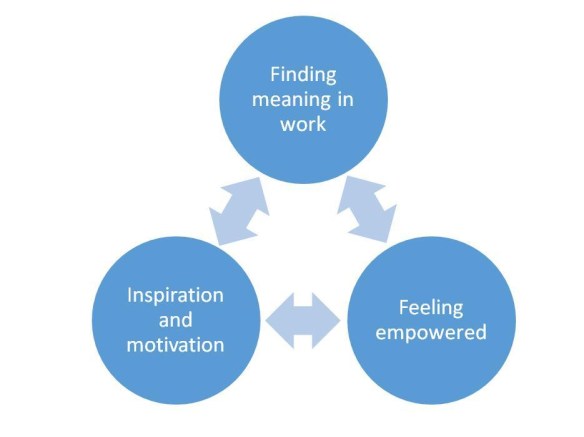
Whole Physician Health is an approach to health and well-being which defines physician as both clinician and leader, both healer and vulnerable.  This approach focuses on the 5 Realms of Health: Nutrition, Exercise, Sleep, Stress, and Relationships.  We explore how these realms intersect and overlap, affecting the individual physician, those whom the physician cares for and leads, and the entire medical profession.  We apply principles from health and sports psychology, communication, leadership, mind-body medicine, and myriad other disciplines.  We value openness, curiosity, critical analysis, and collaboration.  Our mission is to create a resilient medical culture in which all members—physicians, patients, all caregivers and support personnel—thrive and flourish.

DSC_0555

The Whole Physician Health Advocate:

*Values self-awareness and self-exploration.

*Understands and accepts his/her position as role model and culture setter for the team.

*Wishes to broaden the skillset in cultivating positive relationships

  • With self
  • Between self and immediate colleagues
  • Between colleagues themselves
  • Between physicians and staff
  • Between teachers and learners
  • With extended family of colleagues and institutional entities
  • Between institution and the patients it serves

*Sees the physician health and well-being movement as an opportunity to learn, see from a different point of view, connect to fellow physicians, and form new tribal bonds that will hold us all up.

*Wants to contribute to the creation of a global professional vision and mission of the 4 WINS:

WIN 1–You

WIN 2–Those you lead

WIN 3–Your whole organization

WIN 4–All those whom your organization touches

Of note, one need not be a physician to advocate for Whole Physician Health.

Stability is Strength

DSC_0486

The holidays are coming.  People will be bustling up and down Michigan Avenue with large shopping bags and puffy coats, fuzzy hats and determined gait.  If someone knocked into you on the sidewalk, would you be stable enough to hold your space and not get pushed over?

I asked this to a friend today, a woman about my height and twenty pounds lighter, ‘bird-boned’ by her own description.  I swear, she looks like a feather to me.  We were talking about our habits, what seems to be changing as we approach menopause, and how we envision our best selves in old age.  I thought about the elder women in my family, who are all healthy in general, but not necessarily fit.  What if someone knocked into them this holiday season, would I be dealing with a hip fracture over Christmas?  The mortality rate for people over 65 in the year after a hip fracture is somewhere on the order of 25%.  My friend and I definitely do not envision this for ourselves.

So what needs to happen in order for me to stand my ground in the face of some external force?  I need a stable foundation, my feet in firm contact with the ground.  I need a low, massive center of gravity.  I need fast reflexes to contract and relax opposing muscles groups to bear the sudden and unexpected load.  I cannot be rigid and brittle; rather I must exert flexibility, to absorb enough force to move with it and away from it on my own terms.  I need to stand tall and face the force head on, with openness and grace, firmness and self-assurance, ready to assess instantly whether it was inadvertent or intentional, benign or malicious.  And then I need clear-minded judgment to determine how to respond to either condition.

This may come naturally and easily in our 20s.  Today, bum knee notwithstanding, I feel confident that I could meet such a force with appropriate strength and stability.  My friend and I agreed today on a shared vision: STRONG OLD LADIES.  We understand that this will not just happen because we will it; we need to fuel and train, rest and recover, and cultivate our mind-body connections, as well as our connections with others.  Small habits, sustained over time, positive or negative, will yield predictable results.  So the time is now to pay attention and establish some excellent patterns.

It occurs to me that this idea of stability and strength relates our physical to our mental and emotional well-being.  While Amy Cuddy’s research has recently been called into question, I still adhere to the idea that power posing and physical posture can enhance or diminish confidence and self-efficacy. Wide stance, low center of gravity, elongated spine, and open arms:  Stand strong, feel strong, think strong, speak and act strong.  I have practiced power posing before presentations since 2015 and I believe I am better for it.  And if it’s a placebo, I’ll take it—the benefits so far have outweighed the risks and costs.

Lastly, I think we can also apply this stability and strength awareness to our inner lives.  Here I refer to our integrity.  Our world changes ever faster, technology offering capabilities we had not dreamed even a decade ago.  It seems every interaction these days is shorter, more ‘efficient,’ less personal.  That is the default goal—low cost, high speed above all else.  Change is often good.  But we must also exercise judgment, and practice taking the long view, casting light from our core values onto a cautiously optimistic future, attending to and addressing the shadows.  We should gut-check, with ourselves and one another.  What are we really getting here?  How will we use it mindfully? How can it serve us, rather than us serving it?  When we are stable and strong in our shared humanity and collective goodwill, we arrive at the best answers to these questions.  Then we can all be stable and flexible, and stronger as we age together.