
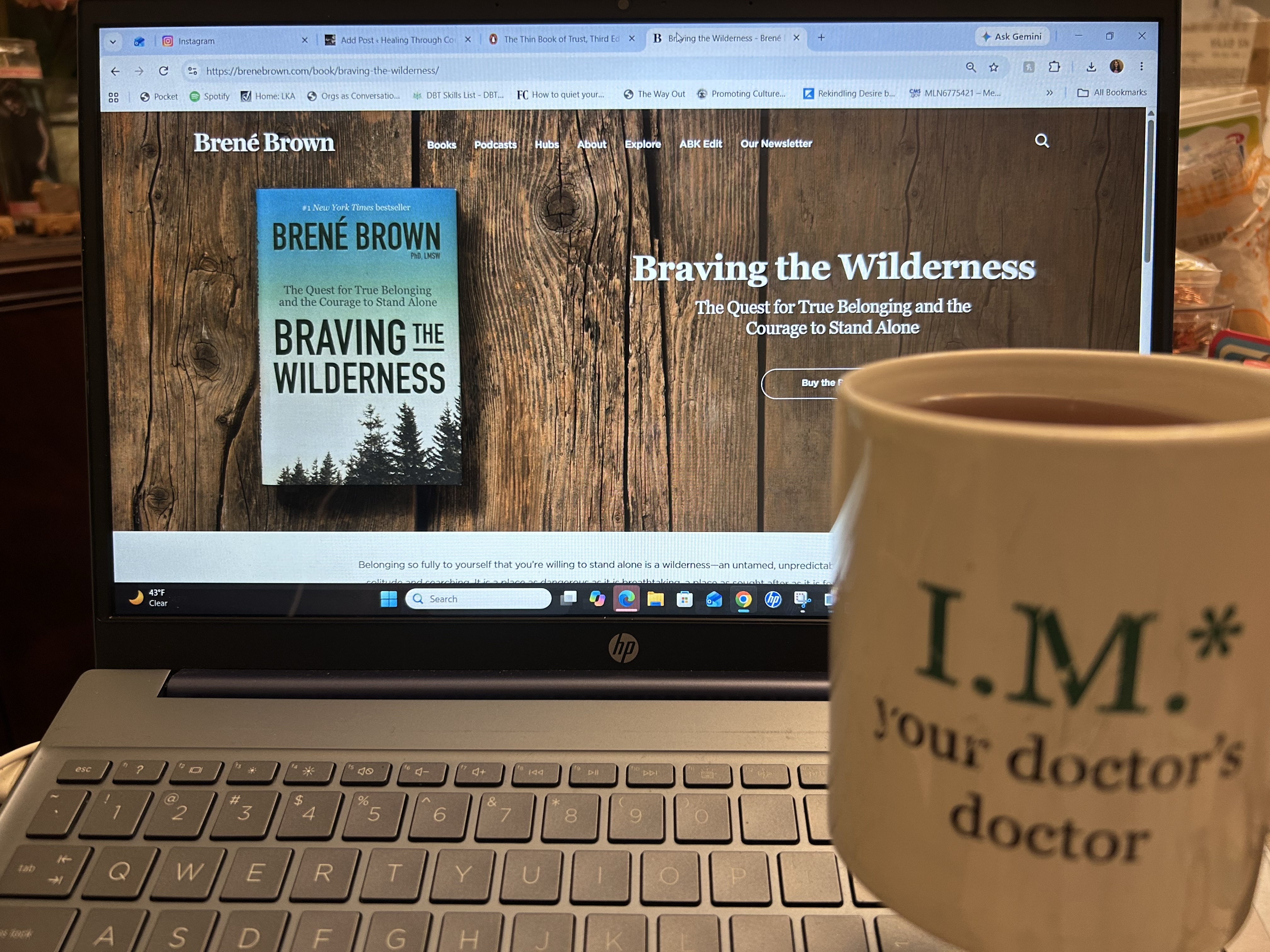
What makes you think you can trust me, your doctor?
What do we need to trust our politicians and elected officials?
Friend Anna and I spent three hours together in the pottery studio today talking about this and other things. Walk the talk, of course, we agreed. And when you fuck up, because we all do, own it. Admit ya’ done wrong. There may be a fine line between making excuses and giving ourselves grace for the circumstances that brought about our transgression, but regardless, accountability, simple and difficult, is key for earning and maintaining trust.
What else do we need to trust you?
What do our leaders need to trust us, their supporters (or opponents)?
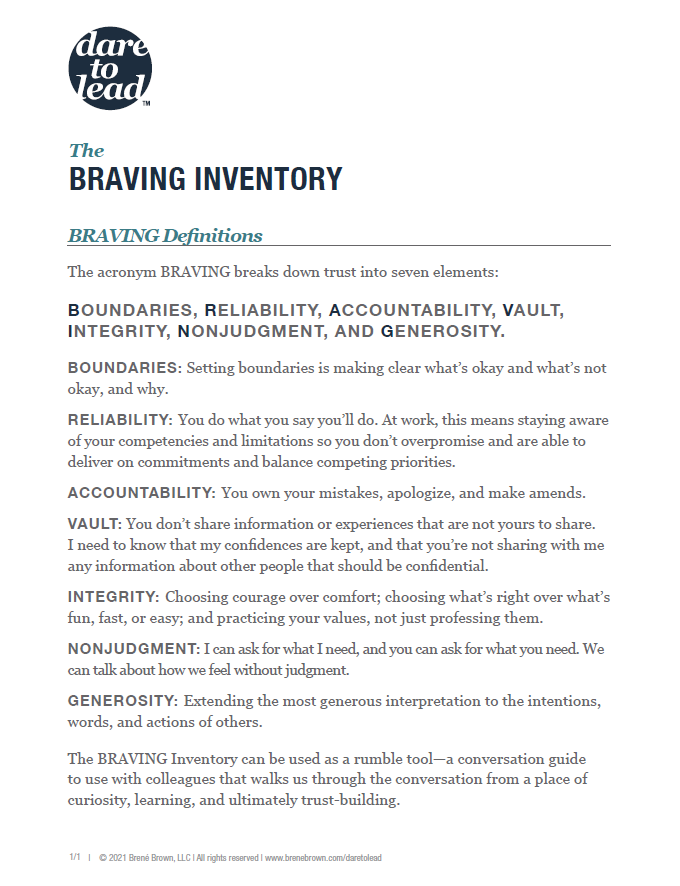
I have been a fan and follower of Brené Brown for years, and I like to think I have integrated many of her central tenets and practices in my life, professionally and personally. She introduced her BRAVING framework, the so-called anatomy of trust, in Rising Strong, and further developed it in subsequent books Braving the Wilderness and Dare to Lead.
Take a look at the seven elements of trust: Boundaries, Reliability, Accountability, Vault (confidentiality), Integrity, Nonjudgment, and Generosity. What think you?
How many and which ones could be absent and you would still trust someone?
With whom and about what do you think, speak, and act with all seven?
Brown also references and incorporates tenets from Charles Feltman’s The Thin Book of Trust, in which he (per Google AI overview) “defines trust not as an abstract feeling, but as something built on four distinct assessments. In his framework, trust is the assessment that what is important to you is safe with another person’s actions, while distrust is the assessment that it is not.
“The four distinctions of trust are:
“Care: The assessment that you have the other person’s best interests at heart and will not act solely out of self-interest. It means looking out for the well-being of others and protecting what matters to them.
“Sincerity: The assessment that you are honest, say what you mean, mean what you say, and express your opinions and feelings genuinely. It is the alignment between your internal thoughts and external actions.
“Reliability: The assessment that you keep your promises and fulfill your commitments. It means your actions match your words over time, making your behavior predictable and dependable.
“Competence: The assessment that you have the specific ability, skills, knowledge, and resources to do what you say you will do or what is expected of you. Competence is situational and domain-specific.”
It is a actually very thin book, and worth reading.
On walking the talk: I have recommended Barack Obama and Ben Sasse’s memoirs this week. I think it’s important to hear and read our leaders’ own words, spoken and written out of the spotlight and in their most thoughtful and nonperformative states. But even then, it’s just talk. So I look for town hall meeting footage, images of candid moments, and assessments made by others who know them, and whom I trust. My cynical brain whispers that it could all be staged, that we never see these people’s real selves. I don’t believe that. We just have to look, listen, and think harder at them as whole people and make our assessments as honestly as possible.
Funny how honesty itself is not listed in either framework of trust, right? Maybe that’s because honesty is too hard to assess?. How does honesty manifest–how do we feel it? It’s sincerity and reliability, repeatedly.
Trust takes time and multiple instances of interaction and observation to establish and deepen. Just like high blood pressure, one measurement does not the diagnosis make. Context matters. Lifestyle matters. Measurement devices matter. We can withhold judgment about a person/leader’s character and trustworthiness until we’ve witnessed multiple real instances of expression, and not jump to conclusions after just seeing the viral click-bait instigations. Trust is also partly intuitive, and heavily influenced by our default biases. So we must also be self-aware about our default mistrusts.
I often think of trust as a great oak tree: Stable, and strong, reverent and admirable. But when branches are broken, they do not grow back and the tree remains forever altered. So while fully grown and deeply rooted trust can withstand myriad challenging forces, it must also be tended and protected to flourish long term. That’s relationship and communication.
Of the seven BRAVING elements, accountability and integrity come up most frequently in my assessments and conversations. What about you?


