
Unknown's avatar

About Catherine Cheng, MD

I am a general internist in Chicago, Illinois, mother of two, almost native Coloradan, and Northwestern alum. I want to leave the world better for my having lived, by cultivating the best possible relationships between all who know me, and all whom I influence. Join me on this crazy, idealistic, fascinating journey! Look for new posts on the 10th, 20th, and 30th of each month. Opinions posted here are entirely my own, and in no way reflect the opinions or policies of my employer.

Friction, Traction, and Drag

On our way to any destination, what helps and hinders our progress?

I am currently halfway through reading The Human Element: Overcoming the Resistance That Awaits New Ideas by Loran Nordgren and David Schonthal, which I recommend. It describes “the four Frictions” that keep us from adopting new ideas or behaviors: Inertia, Effort, Emotion, and Reactance. How fascinating and helpful! It makes sense to think of friction as something that hinders motion and progress, something to be overcome. We consider kinetic energy wasted when friction converts it to heat, and experience real consequences of equipment failure, injury, and stagnation from the burn of chafing contact in motion.

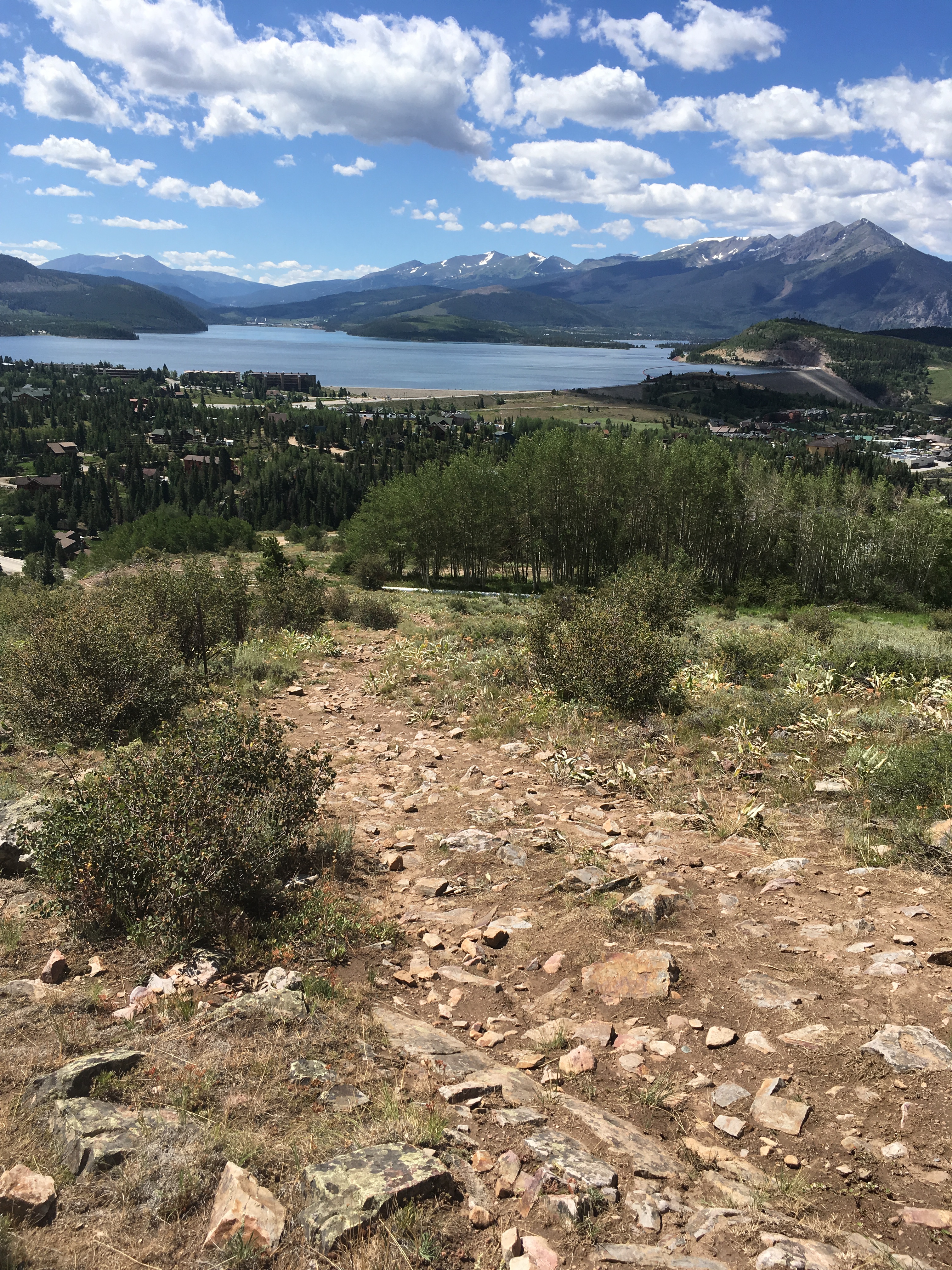
Then again, when is friction desirable? Imagine hiking, mountain climbing, or attempting to traverse any path with the surface covered in a sheet of smooth ice or a thick oil slick. Either we get nowhere, or somewhere we don’t want ‘way too fast. Even for Olympic speed skaters, blade contact with the most pristine ice track still requires some friction–an ideal amount–to gain enough purchase to push against and maintain control.

I submit that in movement of any kind–physical, political, behavioral, emotional, etc–we need optimal friction. Stability requires friction; we depend on it for orientation, to know where we start. Optimal friction coefficient over an ideal surface area provides traction–enough resistance to push against, the stability to launch forward with power. Tire treads, soccer cleats, chalk on a pool cue–we know how to modify objects for maximal traction and performance.

How can we modify our mindsets similarly? What does it cost us to make everything too easy, to remove all friction on the path to achievement? For three years I have exercised in my basement, doing things I know, challenging myself minimally. I have gained strength and maintained confidence in my movements, and also stagnated in my fitness. Joining a fitness community pushes me; I get to reassess my assumptions of capacity and limits. It introduces healthy friction. The tribe here gives me something to test against, strengthening through challenge, elevating my achievement. Additionally, I feel positive peer pressure to eat healthier, a perennial stuggle for me. Communing with folks who care for their bodies with whole foods increases the psychological discomfort (friction?) I feel from eating junk–even when I’m not with them–and voila, my nutrition patterns are changing for the better.

What is the relationship between friction, traction, and drag?

Friction can help or hinder. Traction requries an optimal quantity and distribution of friction for both stability and mobility–I think of it as a kind of potential energy. We understand the concept of traction easily from common vernacular, but what about ‘drag’, other than as late 20th Century social slang? I love the internet, where you can Google, “What is drag in physics” and get it directly from NASA:

“Drag is a mechanical force. It is generated by the interaction and contact of a solid body with a fluid (liquid or gas). It is not generated by a force field, in the sense of a gravitational field or an electromagnetic field, where one object can affect another object without being in physical contact. For drag to be generated, the solid body must be in contact with the fluid. If there is no fluid, there is no drag. Drag is generated by the difference in velocity between the solid object and the fluid. There must be motion between the object and the fluid. If there is no motion, there is no drag. It makes no difference whether the object moves through a static fluid or whether the fluid moves past a static solid object.”

So drag is the resistance of the milieu to movement of an object. It is the cultural current against which innovation swims upstream, a result of the inherent viscosity of any given system. I think of it as another form of friction, but one that only hinders.

If I’m trying to change, to move something, what are the sources of negative friction, positive traction, and drag? Of these, which are modifiable and not? Where and how can I gain a foothold or grip, to push or pull myself onward? Where do I need to apply some lubricant and relieve or release a counterproductive grind? How does the environment need to change, or how can I change my orientation within it, so I may glide more easily toward my goal?

“Drag is generated by the difference in velocity between the solid object and the fluid.” Hmmm. So if I claim my role as change agent, then I must decide how much drag I’m willing and able to tolerate, how much I can afford in cost of fuel for thrust, and what velocity of change will satisfy me. I have to think that my vector matters, also. Head on opposition to a strong and established current, versus a hard left diversion, versus introducing a small fork or bumper in the terrain… I can consider all of these and more, depending on my goals and the ambient conditions.

OH this is such a fun thought experiment! Framing my goals, plans, and actions in terms of friction, traction, and drag allows me to step back from my own tunnel vision, to see a complex adaptive system perhaps more concretely and objectively, even dispassionately. Whether it’s my own personal health habits or the professional culture of medicine, this analogy feels helpful. I wonder how it will continue to manifest hereafter?
Keep Going


Something is definitely better than nothing.
Keep with your healthy habits, even if sporadically and at low intensity.
Back at Ethos one month now
Very sore after the first week
Old occult injury aggravated
So accommodations made without judgment
Now fifth week completed
Took it easy these eight sessions
Afraid to get hurt and sidelined
Encouraged by coaches to challenge without overexerting.
Supervised, corrected. Cared for.
Increased load as tolerated within each session, along with confidence
Exponentially
Progress made in one month
Greater in some ways than the past three years total, in the basement at home
So keep doing your best.
Just keep going, however slow.
You will know when it’s time to kick it up.
Trust yourself.
Recruit your Tribe.
Onward in solidarity.

Thank you, Sisters Jennifer and Marian, and Brother Kinnier, for keeping me company on my slow persistence.

Thank you, Melissa, for pouring such a strong foundation with me 9 years ago.

It’s a Lovefest, OMG

“My gift from the universe is all the amazing people I meet.  My way of paying forward is to connect you all to one another.” –text from me to Tim Cohen

How does one person get so lucky?  For years now I am convinced, knowing this many smart, creative, loving, generous, and committed people cannot be for no reason. I am a magnet for my tribe from all over: readers, learners, helpers, leaders. Why would this be, if not for them all to know one another through me? What a win-win!

I met Tim at Ethos Training Systems before the pandemic. ‘Ethos’ is the perfect name for the business, and I felt immediately connected–we share a holistic approach to whole person health. Tim knows his clients as whole people, not just members of his gym. He studies how sleep, nutrition, and stress impact exercise performance, and takes an integrative approach to helping people–I consider that he and his team conduct a practice more than a business. I took a class in January 2020, led by Coach Ryan, and loved it. I was surrounded by people more fit and versed in the movements than I, and yet I felt welcomed and included. COVID shut down operations not long thereafter, and Tim invited me to an Instagram Live session to help clients understand, anticipate, and prepare for what was coming. I kept in touch and helped them prepare for reopening safely, and the place and its people have thrived since. Tim and I recently reconnected, and he invited me back to classes. Ryan still coaches, and this time I also met Coach Jacob. What sets this team apart is, indeed, their ethos (and it’s one of my favorite words). Everybody I have met exemplifies a growth mindset, always seeking new knowledge, integrating new learnings with existing expertise–faster, higher, stronger! They read widely and deeply, sharing enthusiastically with one another and me. Their collective vibe is palpable–we all matter, our potential is boundless, and we are all here to help one another. They attend to class participants with full engagement, watching for subtle breaks in position and stability. They approach with humility and caring, correcting while explaining the rationale and application in functional movement. I have only experienced such a holistic and loving training encounter with one other person.

I started training with Melissa Orth-Fray in January 2014, at age 40. In August of 2015, I wrote this homage (I’m so glad I have documented this journey!), concluding thusly:

“Melissa helps me stay on course in training with knowledge, application, openness and compassion. I can do the same for my patients and their health. When I withhold judgment about patients’ physical and motivational limitations, I make it safe for them to bring their fears and aspirations to every visit. I can meet them where they are each time, and hold space for the inevitable roadblocks: medication side effects, obstacles to behavior change, complications of treatment. We can then find a way through together, because we both know we’re in it for the long haul. Physicians and trainers may have more in common than we think.”

Melissa’s expertise has broadened, deepened, and integrated remarkably in the last few years. I don’t understand most of what she does (neuromuscular and reflex integration; somatic education-??). I just know it helps people and her work needs to be amplified and accessible to more people, no question. She has relocated to California, and developed a practice that works over video, as evidenced by multiple patients whom I have referred and who benefit from her help. When she told me she was coming back to town this month, I scheduled a session right away and invited the Ethos team to come and observe. We are all fluent in the mind-body, it’s-all-connected language; Melissa and I knew the ‘boys’ would appreciate the introduction. During our hours together, we invited their questions and feedback. I described my experience in words as they witnessed first hand the changes in my movements, my body and energy responses to treatment.

The whole time, all I felt was love and connection. I was under the care of my friend and trainer again. I was sharing her and all of her expertise with my new friends, whom I have adopted as brothers in the helping professions. What I most wanted to demonstrate, I only realized later, was the profound depth of relationship and trust between Melissa and me, and how foundational that is to the success of any therapeutic encounter. I think we all felt it; I left with a deep sense of mutual reverence and respect.

I have lived long enough to know that relationship and connection cannot be forced. I expressed to all parties in advance that nobody should feel obligation, pressure, or expectation for friendship and collaboration. Such bonding occurs organically, and often only over time. I simply wanted to facilitate the initial proximity, in service of possibility and potential. Now we go home, stay open, and allow complex adaptive emergence to occur as it will. SO exciting, and I hold it loosely.

My friends, this is what I wish for you: That you may find connection and mutual uplift from anyone you might meet, and that these connections help us all live more meaningful, loving, and fulfilling lives.

Ryan, Cathy, Melissa, Tim, Jacob