Holding Belonging

Everybody wants to both belong and stand out. The skillset for success here is attuning and differentiating at the same time.

In elections, and in 2024 especially, I perceive voting by many as rejection of the party that rejects us–that makes us feel like we don’t belong. Let us take a moment to let that idea sink in. At first it may seem irrelevant or even childish–and if we recognize it in ourselves, maybe we cannot imagine how ‘the other side’ could possibly feel the same, since they are the ones rejecting? But let’s get still and try to imagine how that could be? Within and among our layers of relationship–personal, professional, cultural–that feeling of rejection and being left out/behind is visceral and profoundly threatening, even when abstract. People feel it on both sides of this election, no question, and that feeling is also profoundly human. It’s vulnerable, raw, existential, and feels for many to be quite literally, not figuratively, life-threatening. If we can bridge even a little understanding around this fundamental and paradoxically shared experience, then we may actually get traction on healing our divides.

This idea of belonging as it relates to politics occurred to me early this month and faded; something calls me to post it tonight. Looking back, I actually already wrote a version, “Attune and Differentiate,” back in February 2020:

“…I listened again to Brené Brown’s Braving the Wilderness.  I highly recommend this book to help us all, conservatives and progressives alike, to engage (not avoid) one another this election year with a lot more compassion, civility, and mutual respect.  Throughout the book Sister Brené shares personal stories as well as evidence from her research that define true belonging, which I think of as another expression for self-actualization and self-transcendence.  In her words:

True belonging requires us to believe in and belong to ourselves so fully that we can find sacredness in both being a part of something, and standing alone when necessary. But in a culture that’s rife with perfectionism and pleasing, and with the erosion of civility, it’s easy to stay quiet, hide in our ideological bunkers, or fit in rather than show up as our true selves and brave the wilderness of uncertainty and criticism.

“Attune and differentiate:  these two practices are not only not mutually exclusive, they are essential and integral for whole person and societal health and well-being.  Read the book to adopt her four practices to advance true belonging, for yourself and for all of us:

  1. People Are Hard to Hate Close Up. Move In.
  2. Speak Truth to Bullshit. Be Civil.
  3. Hold Hands. With Strangers.
  4. Strong Back. Soft Front.  Wild Heart.”

What makes us exclude others?

Once again I’m convinced it’s fear–likely many fears at the same time, all threatening our sense of safety and security. It relates to identity and values, which inform ideology, which manifests in tribes.

I wrote in November 2017:

“…I’m thinking tonight about tribal pride and tribalism—the benefits and risks of belonging.

“We all need our tribes.  Belonging is an essential human need. To fit in, feel understood and accepted, secure—these are necessary for whole person health.  And when our tribes have purpose beyond survival, provide meaning greater than simple self-preservation, our membership feels that much more valuable to us.  But what happens when tribes pit themselves against one another?  How are we all harmed when we veer from ‘We’re great!’ toward ‘They suck’?”

Clearly, many of us have spoken and written about this for years now. And though the movement to bridge divisions grows, we also quite clearly have not kept up. *sigh*
And it’s okay. Human relationships, tribal and otherwise, are an infinite game of fluid context, evolving technology and interaction, and chronic recurrent conflict. I have no illusions of ‘world peace’ in any abstract sense. I think all we can realistically work for now is a return to civility–but not the kind that ignores or erases difference and disagreement. Rather, I want a more thougthful, intentional, and respectfully engaging civility, one that emanates from mutual recognition of our shared core humanity–every. single. one of us.

We all belong to one another, like it, want it, know it or not.

In the first post of this month, Holding Wholeness, I wrote, “…any leader–man, woman, or otherwise–must own all parts of themselves to lead to their full potential. The strong and the soft, the masculine and the feminine, the committed and the flexible, the differentiated and the attuned–these polar and balancing aspects of our nature make us whole humans. People who live in their wholeness lead by example, by inspiration, by resonance with the wholeness of those they lead. They are leaders because we are moved to follow them; we feel their integrity and want it, aspire to it for ourselves.”

I had not planned to reference attunement and differentiation as bookends to this month of reflective posts–each day’s topic emerged in real time. And of course the same ideas recur, right? The ethos of this blog is consistent, if nothing else.

If we want to heal our divisions, I submit that we start with healing ourselves. We all/each have our own inner work to get to true wholeness, true and deep belonging to ourselves first, as Brené Brown writes. There is no interconnection without intraconnection standing right alongside, if not walking ahead. This requires humility, curiosity, and psychological safety, which fosters courage. I feel so impatient, so I can practice self-regulation. We all have our work.

I Hold Belonging for Us tonight. Whether or not we recognize, accept, or embrace it, we all share this need. How fascinating the metamorphosis of its expression and manifestation at the personal and local versus the government and policy levels, no? OH there is so much more to explore here. For now, though, I just Hold it. Belonging. What if we each take a few minutes, a few times, in the next several weeks and months, just contemplating the idea, encouraging ourselves to include as many people in our intersecting tribes as possible? It reminds me of loving kindness meditation–emanating belonging from our inner circles out to all of humanity. It costs energy and risks ego. The rewards of understanding and connection, in my strident opinion, far outweigh the costs and risks.

Holding Strengths

What’s already good? How can we protect and strengthen that?
What could be better? How will we make it so?

I centered NaBloPoMo 2023 on these questions and set all 30 prompts/topics in advance. The idea was to take an Appreciative Inquiry approach to habit change at both the personal and collective levels. I wanted to shift focus from threats, failures, deficiencies, and shadow to people, places, and practices that thrive, uplift, and inspire. How could this mindset help us all in our current state?

From the Center for Appreciative Inquiry:

WHAT IS APPRECIATIVE INQUIRY?
Appreciative Inquiry (AI) is an energizing and inclusive process that fosters creativity through the art of positive inquiry. It builds new skills in individuals and groups, develops new leaders, encourages a culture of inquiry, and helps create shared vision and purpose by building on an organization’s core values and strengths. Perhaps, most importantly, are the outcomes that emerge during the process which provoke action, inspire commitment, and lead to results.

WHY APPRECIATIVE INQUIRY WORKS
Building upon the framework of positive psychology and human sciences, Appreciative Inquiry builds self-awareness and emotional intelligence to shift our focus, attention, and energy into exploration into opportunities and possibilities. AI does not focus on changing people, rather it invites individuals to engage in building a future they want to live in.

Appreciative Inquiry’s assumption is simple: Every human system has something that works right–things that give it life when it is vital, effective, and successful.

What I like about this approach to problem solving is the concreteness. Asking what already works, what’s not wrong or broken, requires practical, operational answers. It forces us to think and talk objectively about what is, rather than cogitate, theorize, and catastrophize about what could be. It starts from a place of strength and looks to build; it’s about what we’re for more than and before what we are against, so we can dream and design what could be instead.

At first I imagine applying this method to policy and systems collaboration. That would be great, but I don’t see it happening; people are still too negative, polarized, and adversarial for that, at least on large scales. I bet there are small organizations and groups where this strengths based approach to change actually already happens. I’d love to see more of them highlighted in the media.

For now, I think some of us may be ready and willing to apply appreciative inquiry to our existing relationships. I imagine a Blue friend and a Red friend, both wishing to connect across their differences and get closer. Both harbor curiosity about the other, even if it’s repressed. Each senses an intuitive possibility for deeper connection, and also feels stymied at how to achieve it. What if they started by considering the strengths of their relationship? Maybe those include honesty, non-judgment, good humor, and shared experiences. What if they imagined and envisioned together what an even stronger friendship would look, sound, and feel like? I get goosebumps envisioning those conversations.

What other domains of relationship would benefit from this approach to disagreement, challenge, conflict, and growth? I can think of at least a few in my life–she writes sheepishly–hello, walk the talk much? How fascinating! And here I thought this post would be boring and bland–HA!

I Hold Strengths for Us tonight, my friends: Strengths in relationship, in connection, in bond and union. Our relationships save us. I am convicted to this assertion, and I firmly believe it’s our strong relationships, especially across difference and disagreement, that will save our republic.

Holding Courage

“There is no courage without vulnerability. Vulnerability is not weakness. It’s the ability to show up and be seen. It’s the ability to be brave when you cannot control the outcome.”
–Brené Brown

What was the last thing you did that really required courage? What was at stake? What risk were you taking? What was the outcome? Would you do it again? What would you do differently, if anything? What did you learn?

How does that experience inform your future?

At this moment in history, it is up to us citizens to model courage in connection for our elected leaders. Are we up to the task?

Maybe we don’t see it as courageous to engage with people who voted the other way. Maybe we see it as futile, a waste of time, even beneath us.

I submit that we are afraid. We are afraid to be wrong, even a little. And now I’m thinking about more than just election debate. I think about any cause I champion that provokes resistance or opposition. What if that opposition is valid, even a little? What if my ardent zealousness masks a flaw in my reasoning, a potential unintended consequence of harm in my focused crusade for an intended benefit? When fear blinds us to the nuances of a problem, when we deny the inherent and inevitable complexities of modern human systems, we get rigid. We oversimplify and dig in, and our thinking narrows. Openness, curiosity, and creativity evaporate; flexibility and collaboration soon follow. Overcoming this fear takes courage.

It takes courage to recognize that we may not have the whole story, that we may not see or understand all relevant perspectives of an issue. The fear of being wrong, the shame of it keeps our minds closed. Then when all we do is yell at and dehumanize one another in ad hominem soundbites, we reciprocally destroy any incentive for anyone to admit they have anything to gain or learn from us–we burn bridges from both ends.

“Everybody’s right, and only partially.” What if we hold this mantra at least sometimes? When I remember it, my shoulders relax. I loosen my grip on ideological swords; I lift the visor on my suit of armor and look around, my view extending from the tip of my nose as far as the horizon. Acknowledging the partial validity of an opposing position does not negate mine, though it may feel that way. That expanse of unknown perspective threatens my certainty. What if my position does not actually uphold my values? What if I learn something ugly about myself? What will I do then?

If there is no courage without vulnerability, then how can we foster vulnerability?
Defined by Oxford Languages, vulnerability means “the quality or state of being exposed to the possibility of being attacked or harmed, either physically or emotionally.” Intentionally seeking opposing views, opening our own views to challenge and criticism, is vulnerable. It feels deeply uncomfortable and goes against all our natural instincts of survival in the face of threat. But when else do we choose this state freely and willingly? When do we put ourselves out in the world without hesitation?

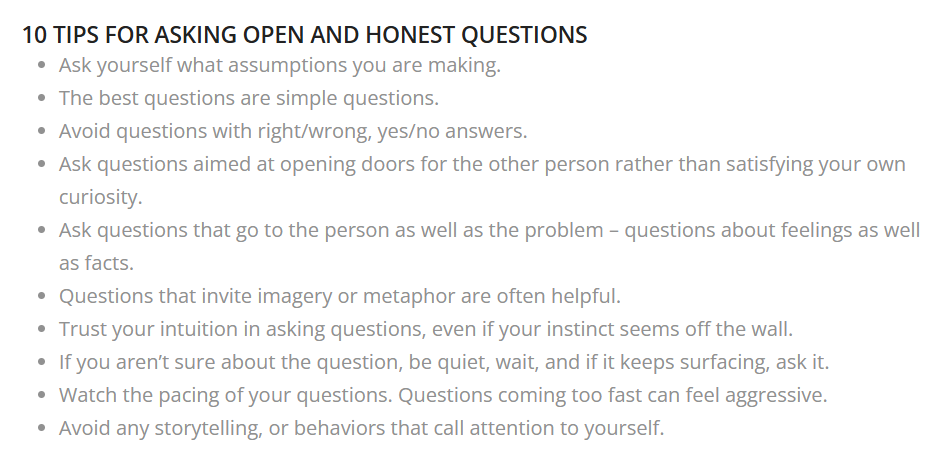
We do it when it’s safe. Or, safe enough. It’s that simple. We need to make our interactions safe for us all to put down the weapons, take off the armor, and see one another’s soft parts. Simple does not mean easy–not by a long shot. And it can be done. We can question and challenge our least generous assumptions, then modify them. We can look for shared values and goals and start our conversations there. We can ask open and honest questions at least three to five times more than we make statements.

Presence, openness, curiosity, humility, kindness, non-judgment, generosity–showing up with these qualities in front makes us vulnerable to attack. Ironically, when we come ‘armed’ like this, we make it safe for others to be vulnerable with us. This is when true healing connection occurs; this is how we heal our world.

Who will go first?
Who do you see doing this already?
They are the leaders we need to follow.

I Hold Courage for Us, my friends. We all have it within us–in spades. Let us all uncover and bring it out in one another, shall we?