Life Is Not a Randomized Controlled Trial

It’s more like that movie Everything Everywhere All At Once.

When I review biometric and lab results with patients at the end of a Day of Care (our practice’s name for the full day executive physical), results often correlate with what people tell me about their habits and circumstances in the past year, or even the past several days. Sometimes, though, one or more results do not align, and we have to stop and consider why. Occasionally this leads to additional testing and we actually find something that needs to be treated. But most of the time it’s not clinically significant and it’s okay to monitor for relevant signs and symptoms and repeat the test annually as per routine. It’s life.

But we humans fixate. Whether it’s weight, glucose, cholesterol, or some metric on a wearable device, it’s easy to get caught up in ‘the data’ and seek the one central variable (or latest technological solution) that we can address solely and thus yield the result we want. Expert scientists devise studies that control for all variables but one, intervene, collect the data, and make correlations into conclusions. There is definitive value in these experiments, and we should absolutely continue rigorous, evidence-based study and practice of medicine and public health.

And, we healthcare professionals must also step back often and look at whole systems–individual humans (body, mind, and spirit), humans in family and community, and local and global economies–not just snapshot data in vacuums. Weight, glucose, cholesterol, body fat, and cognitive function, among other things, often move in tandem. The good news is that the lifestyle advice we give to optimize all of these is all the same. The general principles are definitely not rocket science, and I think we can safely stop spending time, energy, and precious resources proving ad infinitum that good sleep, physical activity, whole foods, and healthy mindset and relationships are good for us.

That said, if it’s that simple, why are we not all already doing it? Because simple in theory too often becomes complex in practice, and we tolerate complexity less and less in our modern, instant gratification-seeking world. I borrowed a sign from a colleague early in my career: “Move more. Eat less.” Simple–deceptively and delusionally so. Now I see these words and want to reply with a scoff and an expletive–as if it’s just that easy. And yet we get so many messages that everything should be easy; that if it’s not easy then we’re doing it wrong. This supplement, that diet, this other meditation app, and any number of new cutting edge products–online, shipped to your door tomorrow!

If our goal is to elevate health and wellness and prevent disease, it’s not only our individual actions that matter. How do our behaviors intersect with, and how are they driven by, in entropic and synergistic combination with our environment and things we cannot control? In integrative medicine when inflammation is assessed to be high, a trial of elimination is often recommended. My colleagues point first to caffeine, alcohol, added sugar, dairy, and gluten: Eliminate them all for a month or so, and see how you feel. Many people report feeling significantly more energy, relief from digestive symptoms, clearer cognition, and myriad other benefits. One might interpret this as the result of removing ‘toxic’ substances from the body, which may be at least partially true. But I posit that it’s likely also due to elevated attention, intention, and mindfulness around eating, which likely cascades to subtle alterations in other health domains such as sleep and exercise. Nothing in a system happens in a vacuum–everything affects everything, directly or indirectly.

Look no further than COVID lockdown in 2020. The vast majority of corporate executive patients in my practice experienced marked improvements in almost all health metrics by the end of that year. They had eliminated work travel, business dinners, long commutes, and at least some office politics. Earnings projections and all manner of professional expectations were scaled back and down. For this privileged population, life acquired a drastically new balance of better sleep, more consistent movement, more quality time with loved ones, and net fewer calories consumed per week. After an elimination diet, patients are instructed to reintroduce foods one at a time in small quantities, to determine reactions and and thresholds. This makes sense, and can also be misleading because whatever makes us feel badly is often not just one thing. Corporations have varied in their reintroduction of prepandemic practices essentially reverting to prepandemic state. Many of my patients’ 2020 health gains have regressed commensurately.

So in practice, what can any given individual tweak in their daily routine or immediate environment to make healthier behaviors easier and more consistent? How can we change the default systems settings so we don’t have to exert such heroic intentional energy fighting our status quo habitat to be well? I still think we need to take a harder and more honest look at our global institutions, traditons, and default practices, especially those driving corporate culture. This is exceedingly difficult and complex, ‘way beyond the scope of an internal medicine doc’s weekly blog.

But I have a plan starting this week: Look for the bright spots. This idea comes from Chip and Dan Heath’s 2010 book Switch: How to Change Things When Change Is Hard. In this post-COVID era of deep psychological and social ambivalence, who’s doing well? Which organizations or teams have figured out an apparently optimal dynamic balance of in person and remote work, productivity and accountability metrics, morale, cost management, and overall integrated systems coordination? Who’s doing allostasis–maintaining stability through change–well? It’s almost never just one thing–it’s everything everywhere all at once but likely in small, cumulative, integrated ways, sometimes at the periphery and sometimes central.

Looking at whole systems can feel so daunting, especially when we get really humble and honest and see just how intricately webbed everything is–how even a small change in one domain can domino and propagate across a whole network. It can freeze us in incertainty and fear. Or it can free us to experiment–in an ‘uncontrolled’ rather than ‘controlled’ way–because too often we have no control and must act anyway. We can experiment mindfully, transparently, humbly, accountably, and flexibly. Small tweaks can establish new standards, which lead organically to subsequent adjustments downstream. A realiable cycle of assessment, action, learning, and application can help prevent getting stuck in rigidity and attachment to status quo well beyond its functional efficacy.

Life is change, an uncontrolled trial of human nature in variable and dynamic context. Everything Everywhere All at Once, all the time. We can breathe through the overwhelm, and look from both ground level and ten thousand feet. Any one thing matters both a lot and not very much in any system of systems–one of my favorite paradoxes!

So let’s get out there and BE and DO what we can! Take responsibility and own our attitudes and actions, respect others, and live in alignment with our values and integrity. What else can we ask of ourselves than that?

A Joyous and Synergistic Convergence

Screenshot

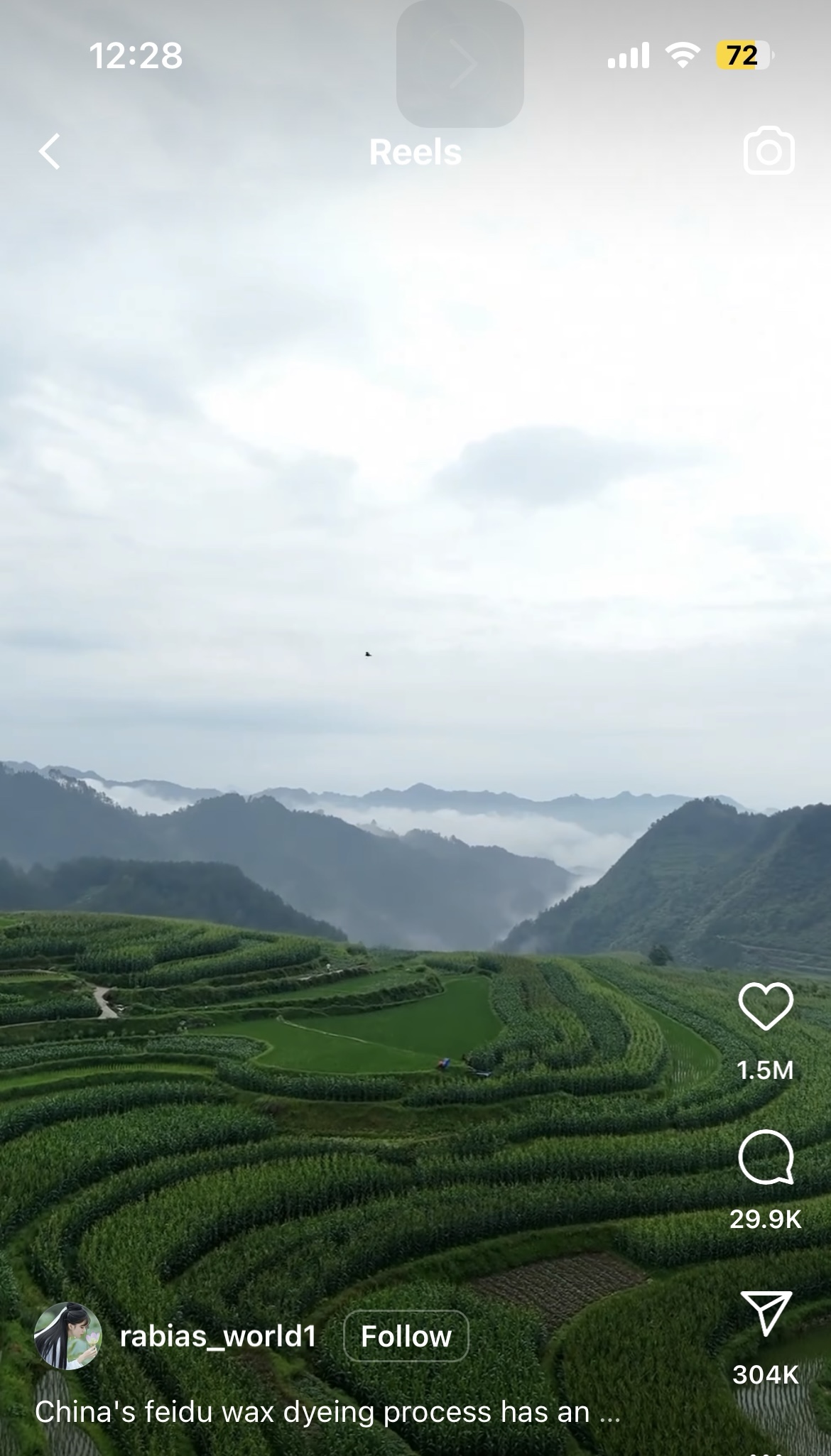
Sometimes I come across something that simply overtakes my senses, moving me to giddy stillness and awe. Today it was this video on Instagram, showing a lone woman demonstrating a traditional wax resist dyeing technique. It was unusually long for an Insta video, and mesmerized me for the entirety. I sent it to multiple people with the message, “Friends–the art, and the FITNESS!”

With a serene and joyful expression throughout, the woman squats to harvest two large baskets of leaves from the ground. She hoists the baskets connected with a bamboo pole onto her shoulder and transports them on foot. After transferring them to large vats to soak, she dead lifts large rocks to weigh them down in the water to make fabric dye. I realize this may not be how it’s really done–a single person doing all of this work. Still, the functional movements here strike me. Modern urban life has relegated us to sit for hours at desks deep indoors, and the most we may ever do is walk a few feet at a time, unless we formally train or travel. Putting my carry-on in the overhead bin approximates a dead lift, lat pull, and shoulder press in series, and that is nothing compared to what these artisans do in their daily lives.

We know how physical activity benefits the body–thickening brain networks required for neuromuscular coordination, sustaining clear cognition with age, and maintaining cardiovascular, muscular, and bone strength and resilience. And to do it outside–with this view every day–imagine how this feels, body, mind, and soul! Watch the whole video–can you not sense the energy of it move something deep within you? What does it inspire?

Screenshot
Screenshot
Screenshot

Imagine the patience it takes to be a maker like this–any artists reading this must be rolling their eyes, duh. While the dye ferments, she draws the entire phoenix pattern and applies wax by hand with fine implements. It reminds me of the parable of two cathedral bricklayers, one who resents the back breaking work because he focuses on what is, and the other who relishes it by imagining what could and will be. Once again I marvel at the dedication, perseverance, and commitment shown in this woman’s painstaking work.

Screenshot
Screenshot
Screensho
Screenshot

How motivating, when you start to see your creation emerge in its intended form? These days we are spoiled by instant gratification of digital photos on our phones, carried in our pockets and available in seconds. Remember film cameras? To take 24 photos, retract the entire roll, submit it for development, and not know for weeks whether any turned out the way we wanted, with no chance to repeat the shots… that wires our brains differently. How can we train for this kind of delayed and enhanced gratification in modern life? We appreciate and value of things more the harder we work to acquire or acheive them; we take less for granted. And that makes us humble, generous, and slower to dismiss. We live deeper lives, I think, and this video reminds me.

Screenshot
Screenshot

Consider how far most of our daily lives occur from nature. Imagine if your work required you to step into white waters, hang onto your creation lest the river sweep it away, and work in collaboration with the earth to bring forth your art for the world? When our creations depend on the natural environment, it broadens our perspective, teaches us how little we control. How humbling and also inspiring, to participate with nature in making something new?

Screenshot
Screenshot

This video ignites something strong for me–at once cognitive, limbic, and visceral. Epic vistas, resonant music, and a lone human both lifting heavy loads and creating grand art all conspire to incite a deep sense of awe and appreciation for all that we are capable of–Earth and humans alike. It feels like a simultaneous dopamine and serotonin hit, moving me to share immediately with friends, thus also giving me that surge of oxytocin I so live for.

Screenshot

The woman in the video does everything apparently alone. But we know this production required a team in community, from the planters of the field to pavers of the path, to makers of tools and appliances, to filmmakers. Let us all remember that as much as we may think and feel we operate independently from others, this is rarely the case. Nature always interacts, always intersects, overlaps, merges, and moves in both confluence and opposition. Life is a dance of it all. How literally and figuratively moving!

As we enter autumn, the season of exhalation and shedding of layers, preparing for contraction and rest, let us draw near to that which nourishes us, body, mind, and spirit. This includes art, fitness, and connection in all forms.

Wishing all in the US a happy long holiday weekend! Thank you, friends, for continuing on this journey of discovery and reflection with me all this time.

Screenshot

Many thanks and much love to friend Kasey McKenney for helping me think through the turning of seasons from a Traditional Chinese Medicine perspective.

Uninhibited

I effuse.

Anyone who knows me will tell you so. They will describe my facial expressions, gesticulations, profanity, and hyperbole. I feel strongly and express accordingly. I posted yesterday about how it’s all elevated and amplified (though still regulated) recently: I hug stronger and longer. I praise freely. I call people ‘love’ with accelerating frequency. And I talk about love, sex, and relationships a lot more. I attribute much of this to my now two year-old romance audio immersion.

American culture is such a paradox. At the same time that we hypersexualize both men’s and women’s bodies from a young age, we also harbor a collective and insidious Puritanical streak that shames sexuality in general, and for women in particular. I thought I had overcome the latter years ago. But these two years of spicy romance consumption have shown me my blind spots, for which I am eternally grateful.

Early in my career I met a woman patient who was very open about her sex practices. She had both male and female partners, sometimes multiple at a time. I can’t remember whether her practices were protected or not, but she had no active sexually transmitted infections while I knew her. Looking back, I’m sure my words centered around health risks and relationship safety. But if I’m honest, I judged her. I was young in career and life and could not relate to her behaviors and practices. I am sure she felt my negative moral vibrations, and I regret that to this day. Somewhere along the way I let go that judgment and have since made intentional efforts to make it safe for patients to tell me anything. As long as it’s consensual, lucid, and mutually satisfying, I want you to do whatever you want and enjoy your sex life as fully as possible! There is no standard, and my wish is for all partners to feel maximally fulfilled.

Romance novels have opened my eyes to diverse practices and experiences that I did not know to consider before: polyamorous, dominant-submissive, and asexual, among others, and all of the social, emotional, and relational implications thereof. I have shared my transformations of awareness and openness with patients and friends, and the response has been overwhelmingly positive. Both men and women get curious and then share their own experiences–desires, inhibitions, disconnects, accommodations, sacrificies, epiphanies/discoveries, etc. These days I talk even more openly than before and with anybody about libido, erectile (dys)function, emotional and carnal connection and their intersection, menopause, penile implants, and anything else that matters to someone’s sexual health. I thought I was uninhibited before and Whoa Nelly, watch me now. Based on conversations with fellow spicy romance enthusiasts, my experience is anything but unique.

Romance narrator Victoria Connolly addresses American purity culture, growing up in and now healing from it. She has invited listeners to share their stories; the voluminous response reveals the prevelance of experience and the value of acknowledging and naming it. See her Instagram post and comments c. August 12, 2024: “‘It wasn’t until I started reading primarily spicy romance that I finally got fed up/brave enough to ask him if it’d be okay if I touched myself or used a vibrator during sex because I’d like to come too.’ | If your story sounds like this, you’re in the right place. | Just share the book in the comments that rewired you forever. The one that made you believe you deserved pleasure.”

I mentioned the Quinn app in my recent Women Elevating Women post. Quinn describes itself as “a mobile app and website where you can listen to audio erotica… spicy audio stories, guided masturbation, dirty talk, and more. The audios on Quinn are designed to help you get there, but they also involve fun and interesting plots.” The New York Times reports, “Apps like Dipsea and Quinn have become popular destinations, particularly for some women who find them safe spaces to explore their sexuality.” Hallelujah!
Readers of this blog know my deep admiration for romance narrator Shane East and his strong allyship of women. His second ever Quinn audio dropped two days ago and has already been played more than 3500 times. Asked, “What inspired the move to create on Quinn?” he answered, “[Quinn] came to me after hearing my work. After discussing things with them and checking things out on the site, seeing what I would like to put out there and gathering a script and audio crew to help me do that, I decided to go for it. I’m all for anything that enables women to own their sexuality without the judgment or shame that can be handed out by others. I’m here of course for everyone being free to own their sexuality and desires in a judgment free, safe and accepting way; however and with whomever they like. Speaking of women specifically though, historically they have been repressed by societal restraints and patriarchal ideology for so long that I think it’s wonderful to be part of something — be that romance books or something like Quinn— that utterly goes against that and gives women (in particular) ownership of what they want. I think it’s fantastic to have the[m] out there.”

*sigh*

This is all such a good thing, all of us embracing our whole, wonderful, beautiful, sexually awake and aware selves–every person of any gender, both individually and in community. Life is simply too short to repress such important and fundamental aspects of identity and connection. Fiction in general and romance in particular help us receive perspectives (as opposed to taking them, as David Brooks writes) other than and different from our own, and empathize with the full scope of human emotional and relational experience.

Inhibitions are not empirically harmful. Restraints can serve us sometimes. And when they outlive their usefulness, shedding them elevates us, frees our spirit, and allows our whole selves to emerge in full glory and actualization. I hope this evolution of collective openness continues. The more we can eliminate shame and empower everyone to own their sexuality, foster deep and meaningful connections fully in mind, body, and spirit, and simply embrace all that makes us our whole human selves, the better all of our lives will be.