Listening to the end of Coming Up Short, Robert Reich’s memoir. Daughter and I saved it to listen on the road trip to college at the end of August. We finished all but the last two hours, which I could not bring myself to continue alone until now, nine weeks later. Highly recommend! His stories are rich and heartfelt, and I respect his principles and values. He is forthright and honest in his unflinching conviction and passion for lifting the middle/working class and making government work for all, not just the rich, an ideal to which he has dedicated his professional life. Reich describes his emotions at retirement, including gratitude and ambivalence. I wonder how I will feel when I stop seeing patients for a living, though I imagine I will always think of myself as a doctor.
So I hope I can come up with twelve excellent love notes for work!
Two days into thirty, I notice how redundant these love notes feel to write and reread all at once. As readers can you see these post titles as a list? Does it occur to you to read the first couple each day this month and save the rest for later? Would it work to dip in and out of this blog throughout this month and beyond, depending on what love note you need/want on a given day? Would you come here to pluck a love note for a friend or loved one? At the same time it feels a little awkward to write them this way, I wonder if these thirty days could be a closer approximation of my love notes pocketbook than I initially imagined? Hmmm, we shall see! 😀
Let us continue:
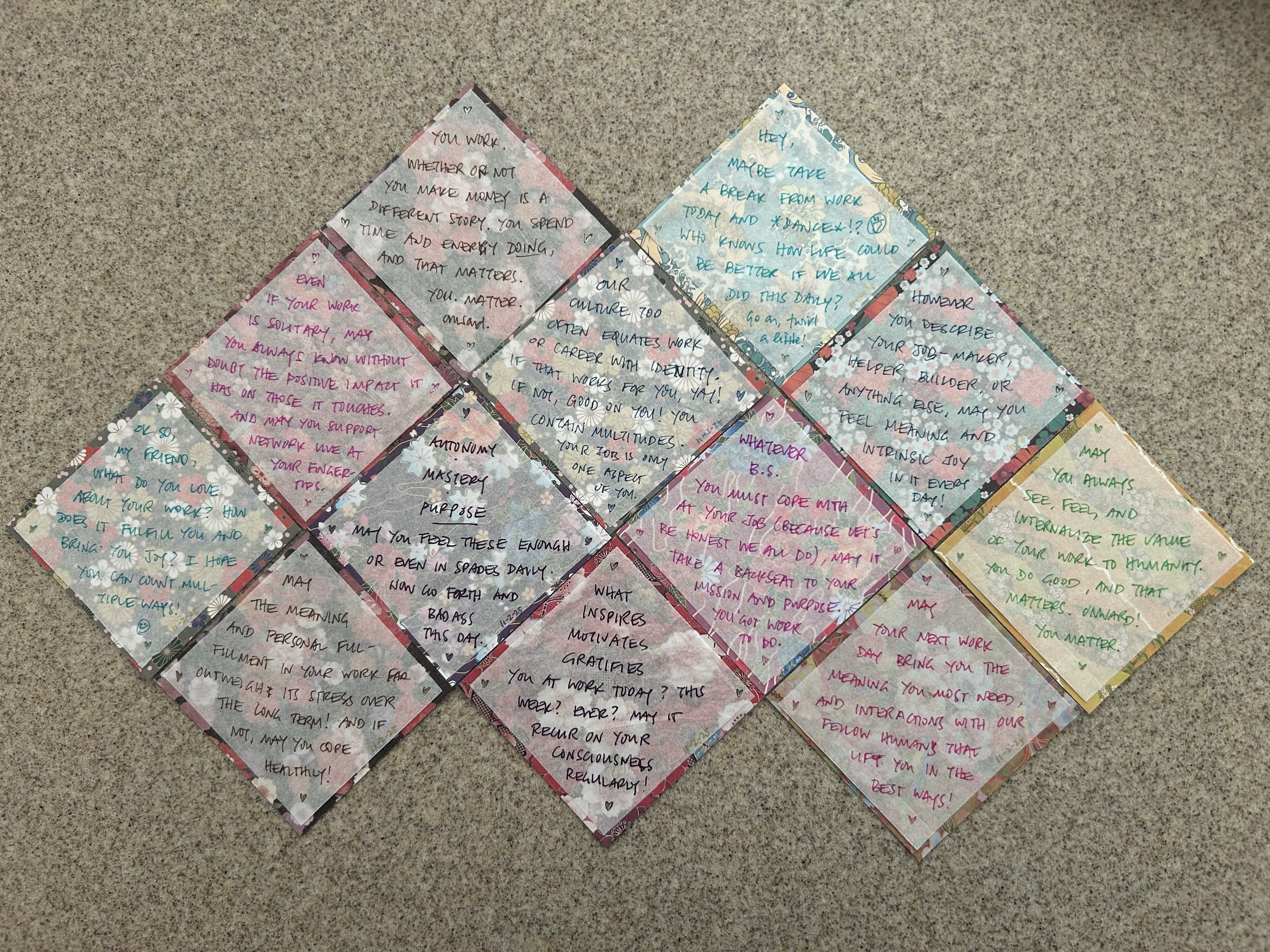
OK so, my friend, what do you love about your work? How does it fulfill youo and bring you joy? I hope you can count multiple ways!
2. Autonomy. Mastery. Purpose. May you feel these enough or even in spades daily. Now go forth and badass this day.
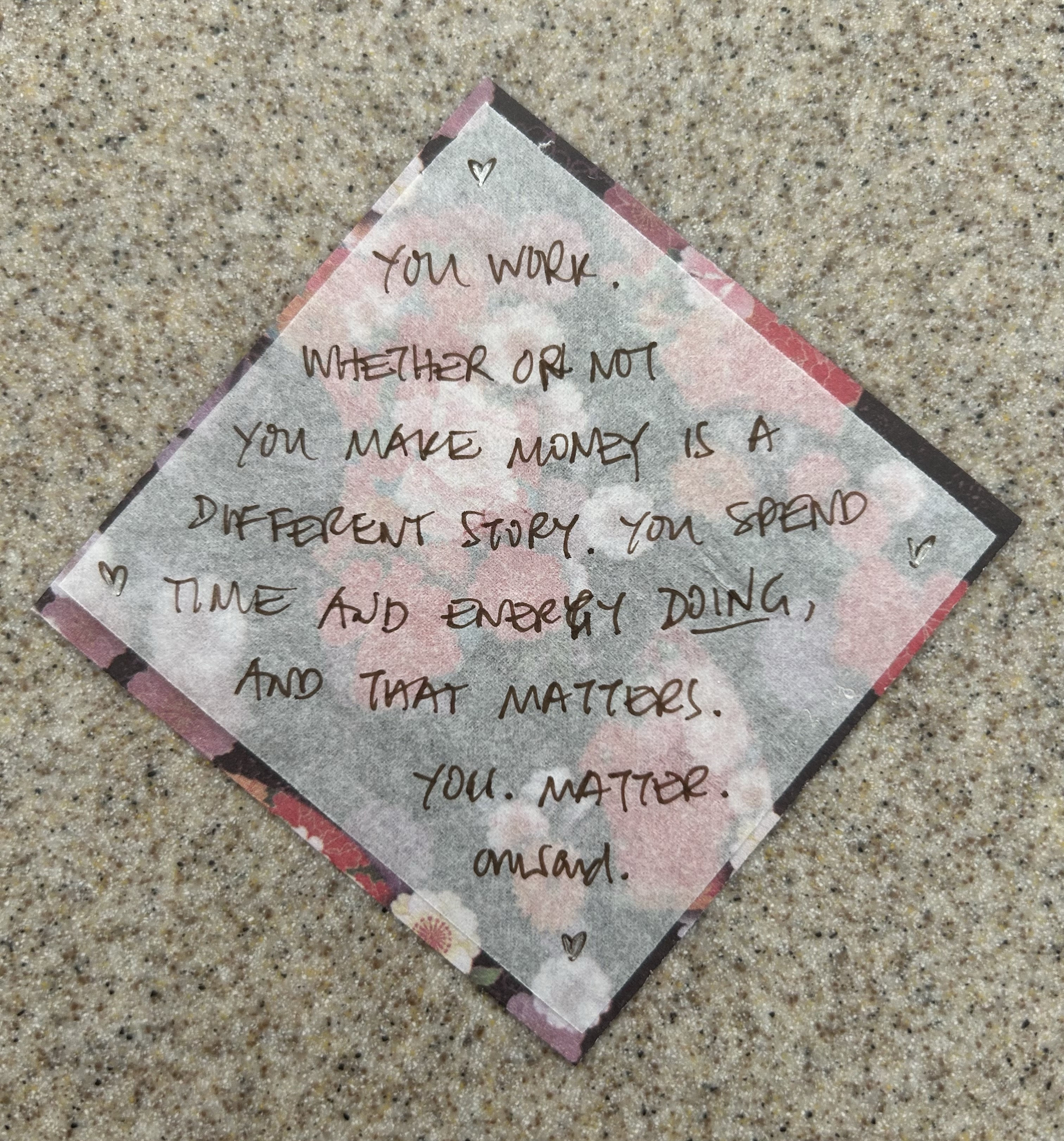
3. You work. Whether or not you make money is a different story. You spend time and energy doing, and that matters. You. Matter. onward.
4. May the meaning and personal fulfillment in your work far outweigh its stress over the long term! And if not, may you cope healthily.
5. Even if your work is solitary, may you always know without a doubt the positive impact it has on those it touches. And may you(r) support network live at your fingertips.
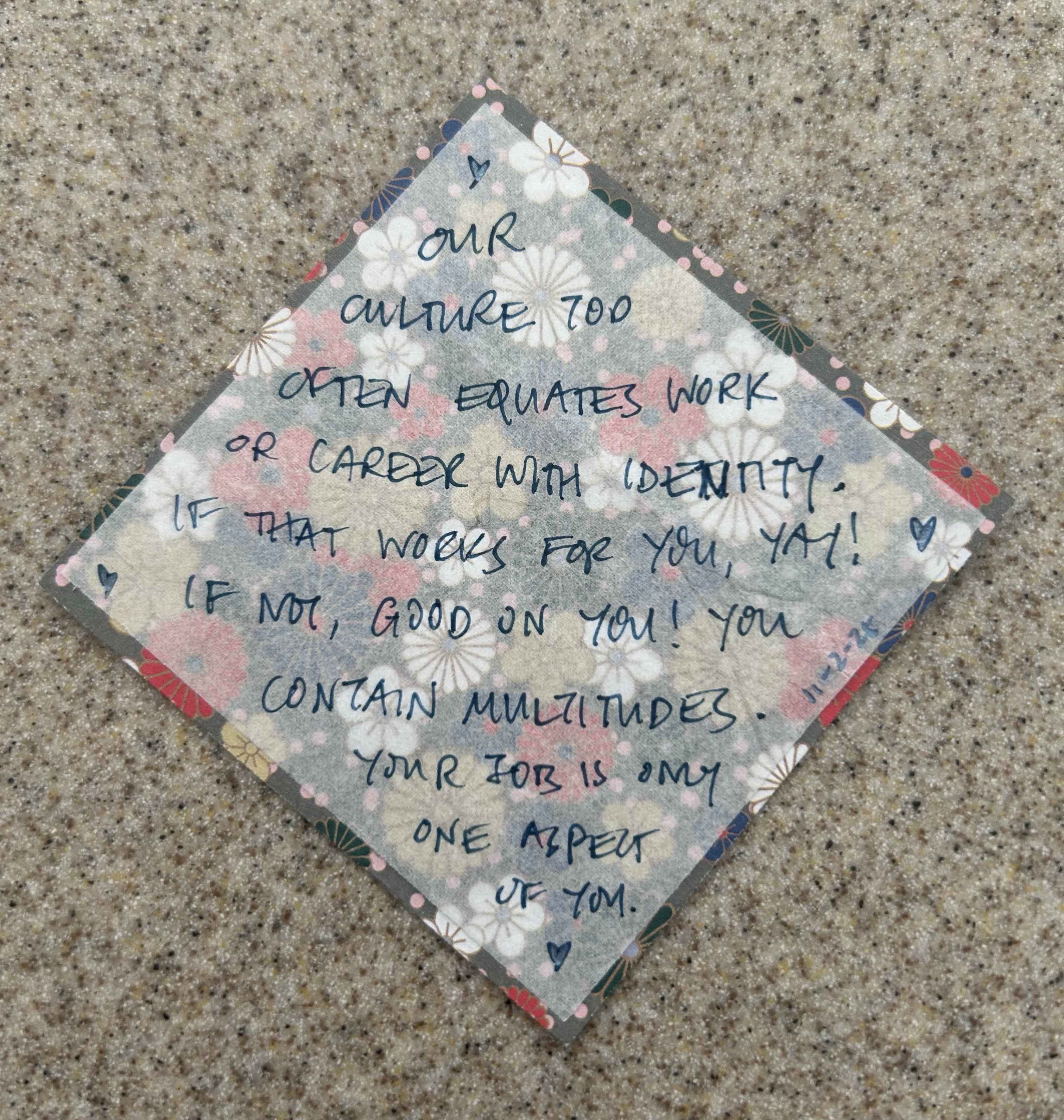
6. Our culture too often equates work or career with identity. If that works for you, yay! If not, good on you! You contain multitudes. Your job is only one aspect of you.
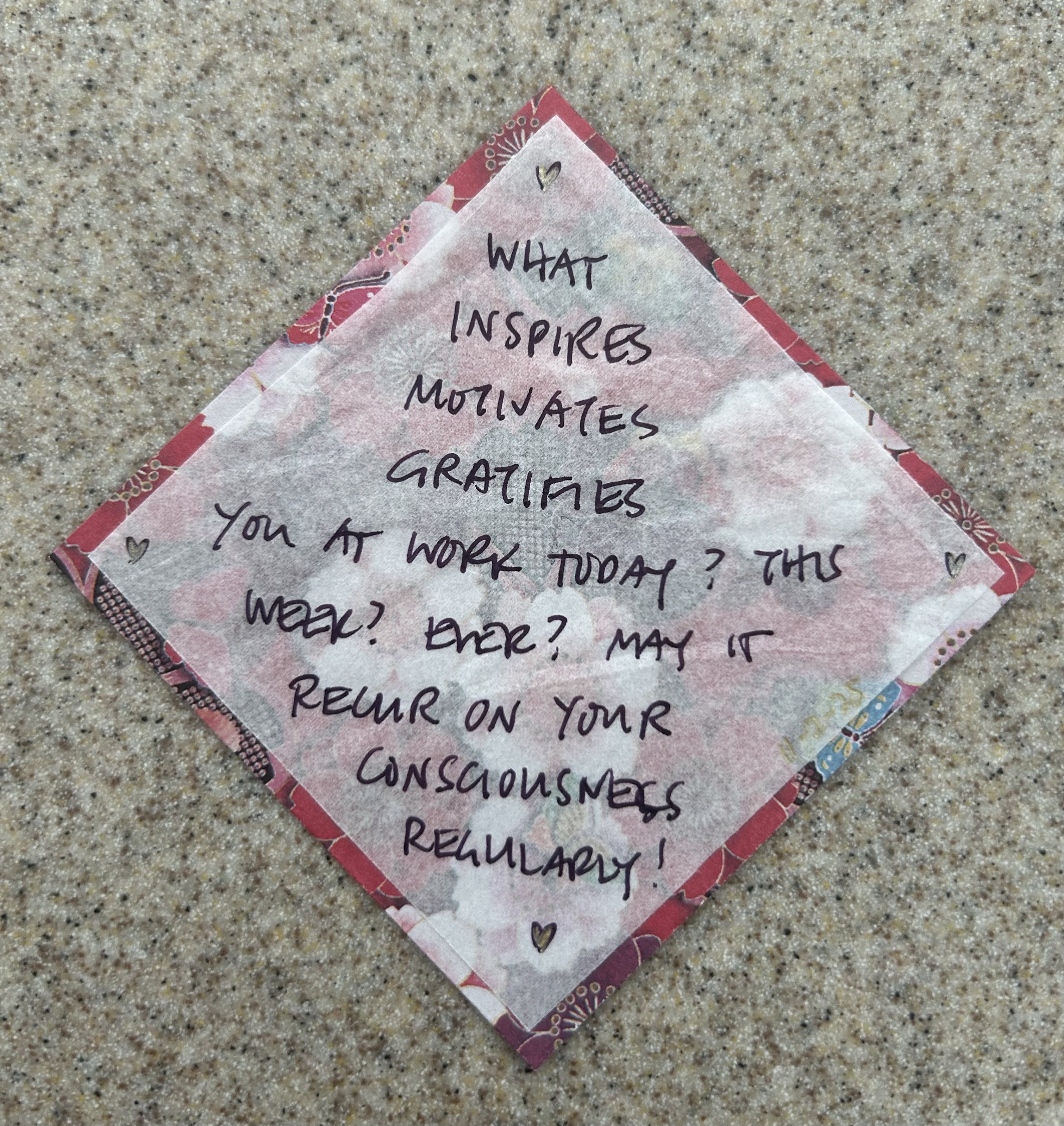
7. What inspires motivates gratifies you at work today? This week? Ever? May it recur on your consciousness regularly!
8. Whatever B.S. you must cope with at your job (because let’s be honest we all do), may it take a backseat to your mission and purpose. You’ got work to do.
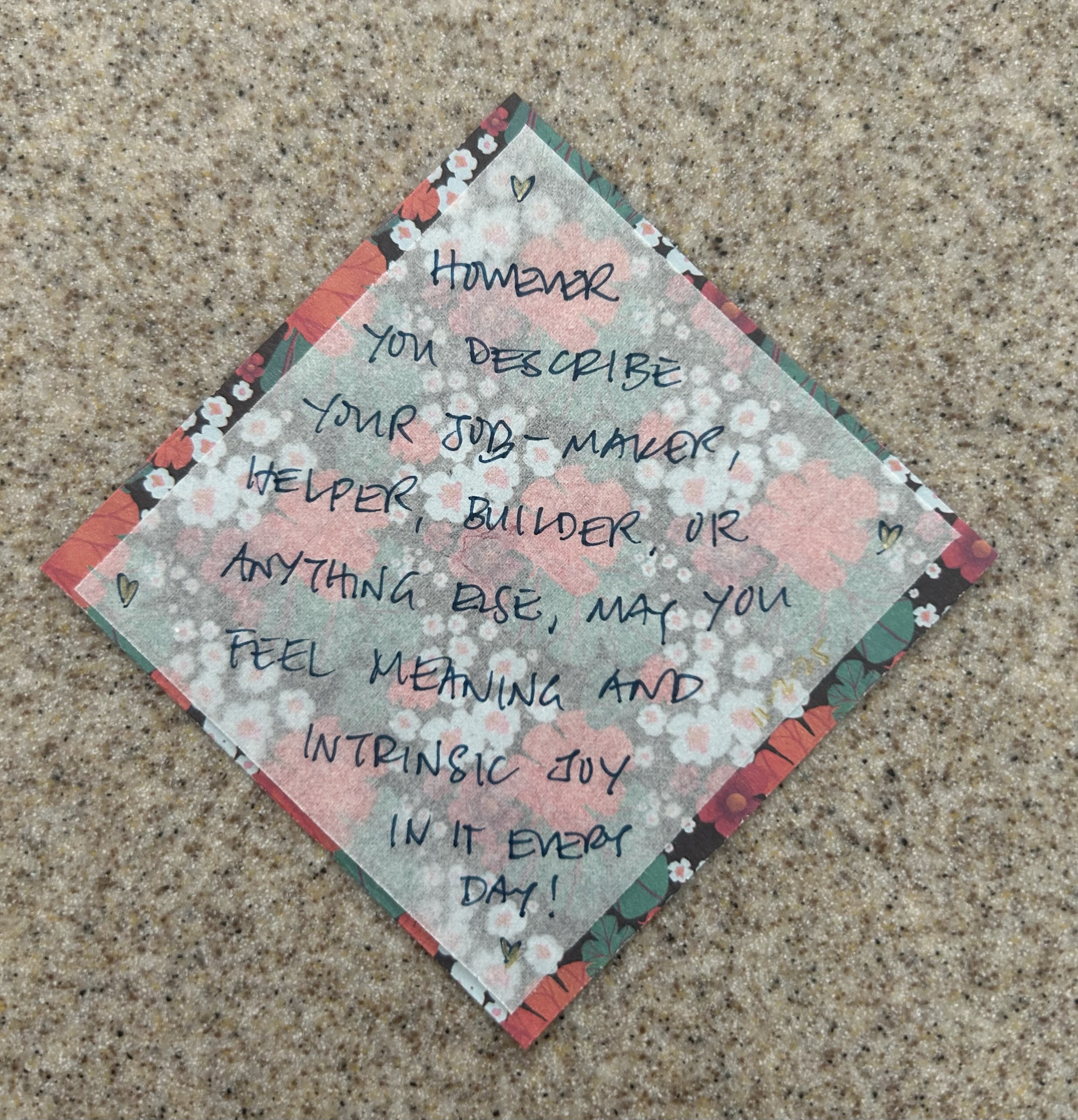
9. However you describe your job — maker, helper, builder or anything else, may you feel meaning and intrinsic joy in it every day!
10. Hey, maybe take a break from work today and *dance*!? 😀 Who knows how life could be better if we all did this daily? Go on, twirl a little.
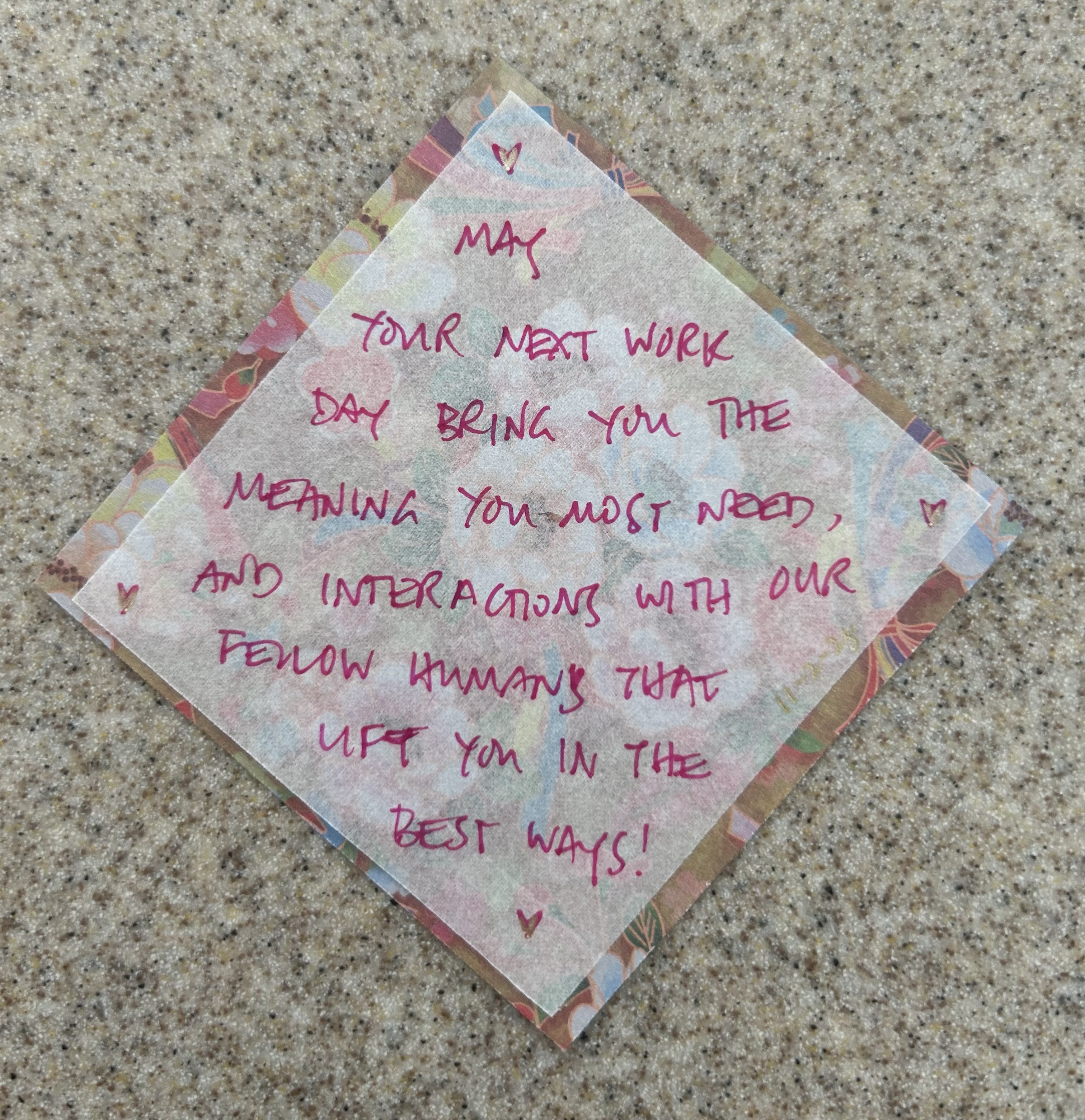
11. May your next work day bring you the meaning you most need, and interactions with our fellow humans that lift you in the best ways!
12. May you always see, feel, and internalize the value of your work to humanity. You do good, and that matters. Onward! You matter.
Thanks for coming with me on this love note trip with me! Please tell me how it’s going? 🙂
No obligations this weekend! I didn’t die from the conditioning workout at Ethos this morning, and even let Mason push me harder at the end of the rope waves round than I would have ever pushed myself. Feelin’ it all in the right bicep, my friends. Getting stronger all the time, woohoooooo!
And now if I want to stay in my house, see and speak to no one, I can! No calls, no errands, no children to ferry, not even Hubs to attend to–he’s on a work trip.
*sigh*
Here are my wishes for rest, friends. May we all get what we need.
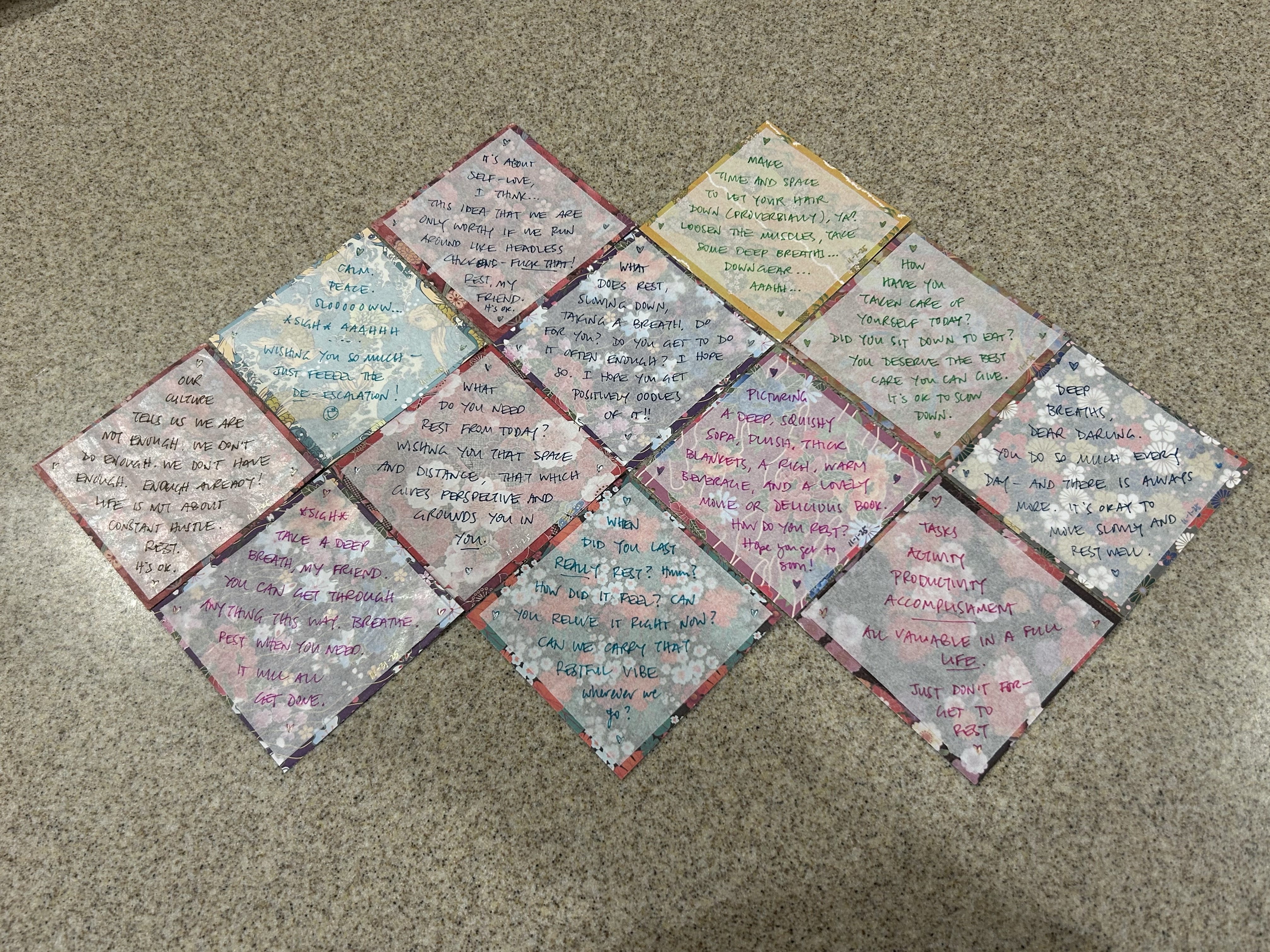
Make time and space to let your hair down (proverbially), ya? Loosen the muscles, take some deep breaths… Downgear… Aaaahh.
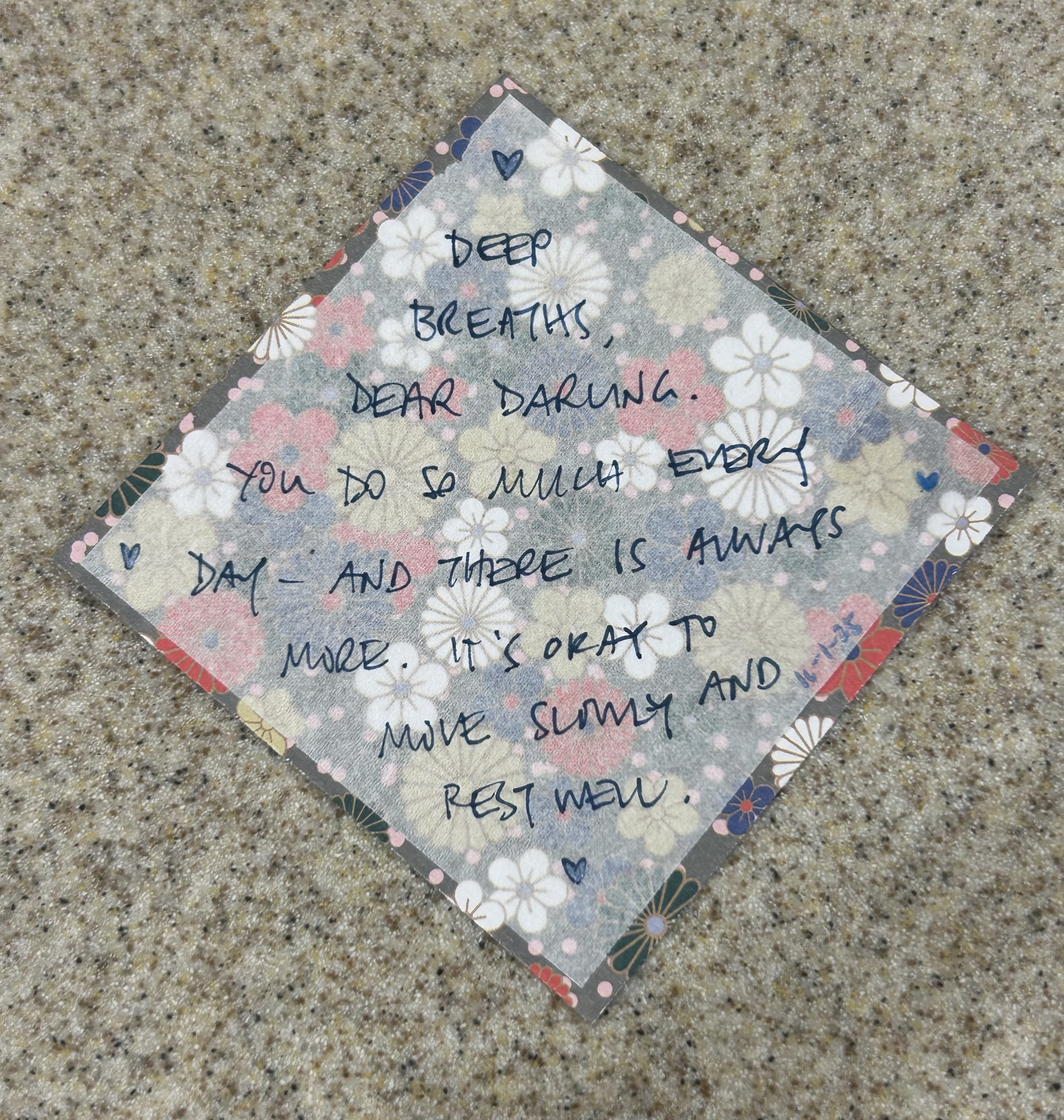
2. Deep breaths, dear darling. You do so much every day — and there is always more. It’s okay to move slowly and rest well.
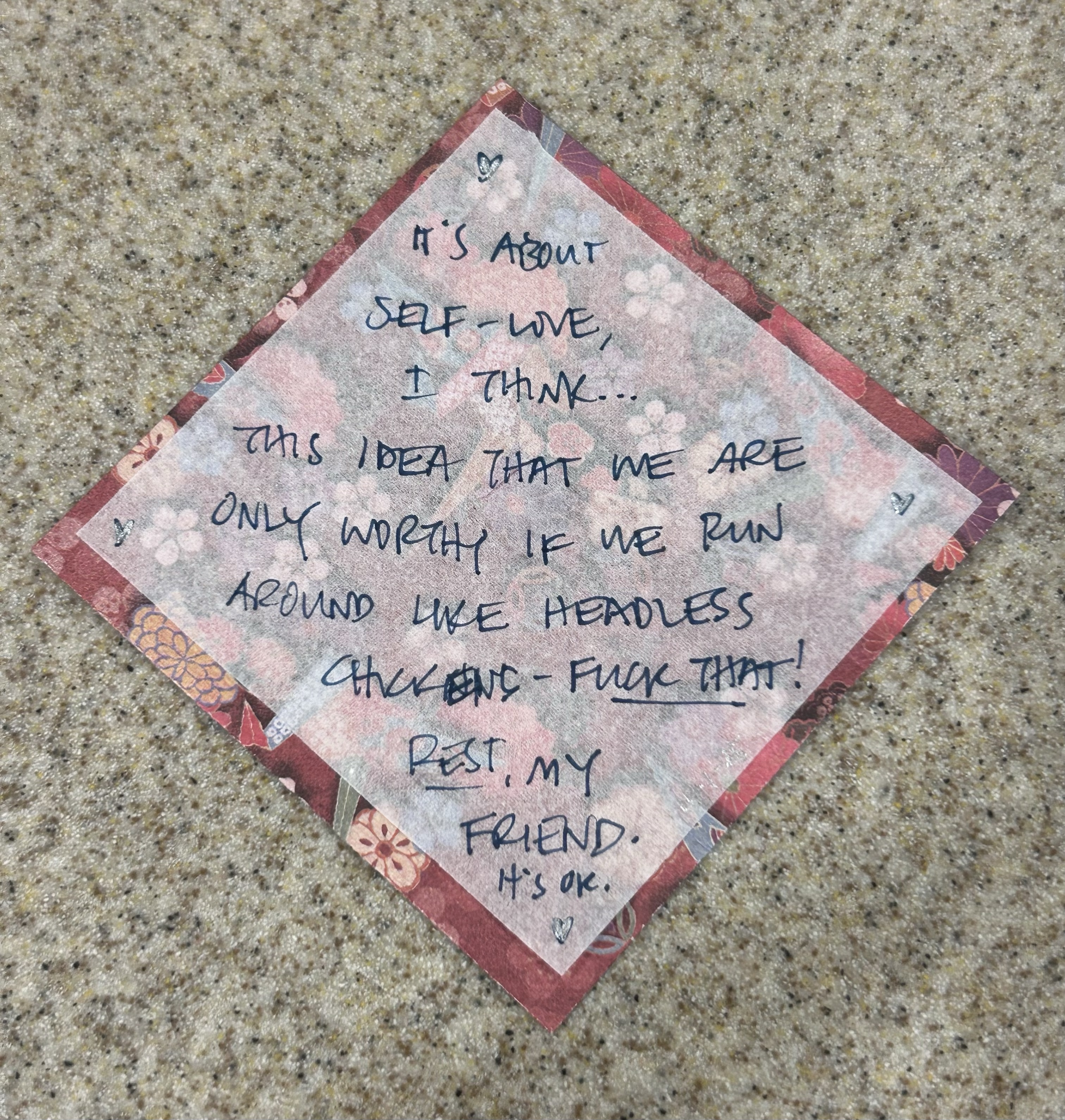
3. It’s about self-love, I think… This idea that we are only worthy if we run around like headless chickens–FUCK THAT! Rest, my friend. It’s OK.
4. How have you taken care of yourself today? Did you sit down to eat? You deserve the best care you can give. It’s okay to slow down.
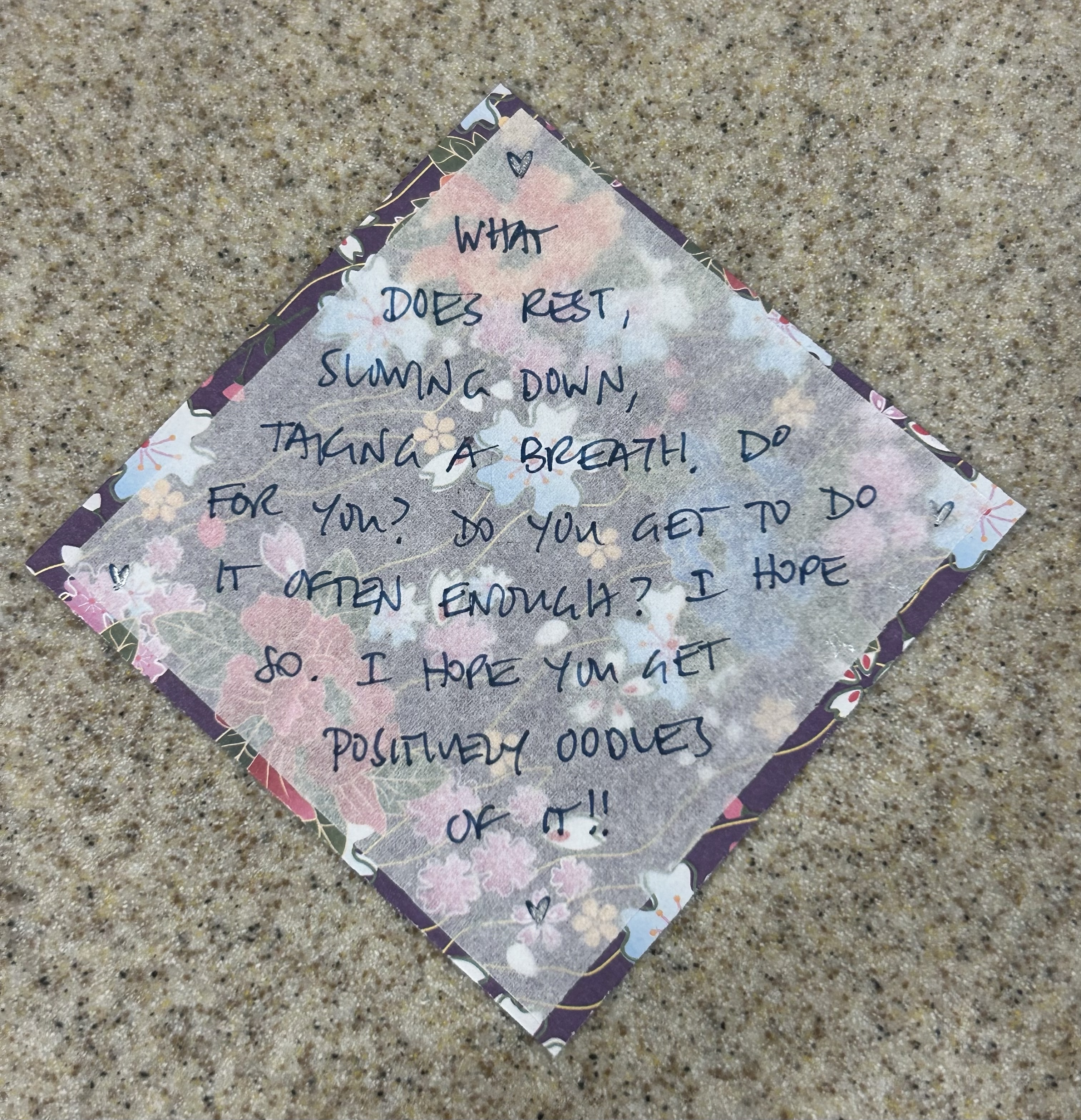
5. What does rest, slowing down, taking a breath, do for you? Do you get to do it often enough? I hope so. I hope you get positively oodles of it!!
6. Calm. Peace. Sloooooww… *sigh* Aaahhh — Wishing you so much– just feeeel the de-escalation!
7. Our culture tells us we are not enough. We don’t do enough. We don’t have enough. ENOUGH ALREADY! Life is not about constant hustle. Rest. It’s OK.
8. Picturing a deep, squishy sofa, plush, thick blankets, a rich, warm beverage, and a lovely movie or delicious book. How do you rest? Hope you get to soon!
9. What do you need to rest from today? Wishing you that space and distance, that which gives perspective and grounds you in you.
10. When did you last really rest? Hmm? How did it feel? Can you relive it right now? Can we carry that restful vibe wherever we go?
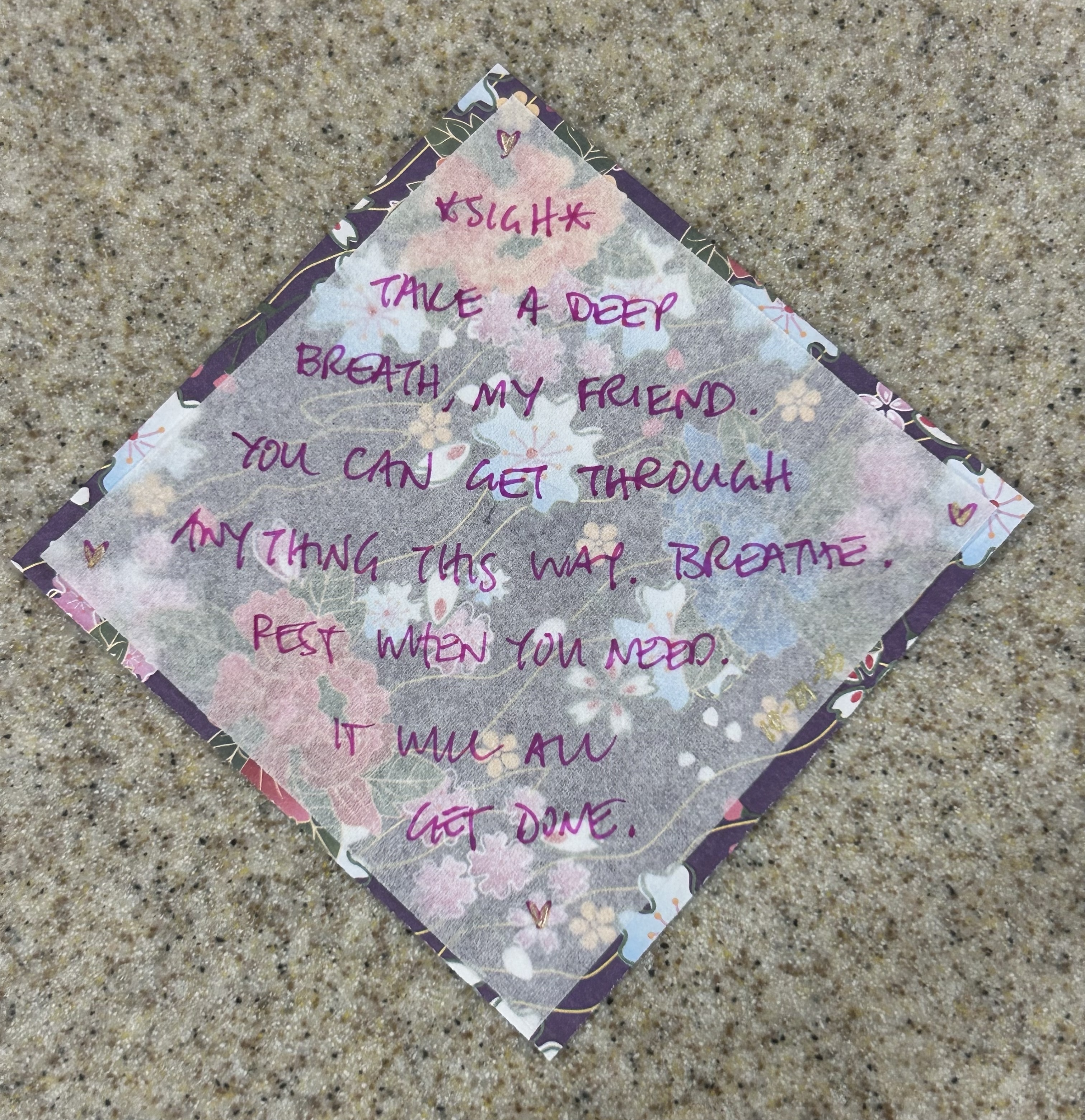
11. *sigh* Take a deep breath, my friend. You can get through anything this way. Breathe. Rest when you need. It will all get done.
12. Tasks Activity Productivity Accomplishment — All valuable in a full life. Just don’t forget to rest.
Huh. I see a recurring theme here. That says something, no?
What energy do you get from togetherness? I get positively giddy, among other things. This past week I have peopled ‘to the max’ and I feel euphoric. “Connection” recurs in my mind more than any other word, but what does that actually mean? How does connection feel? Let’s see if I can describe it, shall we? Tell me how this lands:
Solidarity Our office moved last week. The team continues to amaze me year after year. Every day is a little different, with up to twelve full day patients each with intricately pre-arranged agendas coordinated with multiple other departments throughout the medical campus. SNAFUs occur regularly and the schedulers, medical assistants, dieticians, exercise physiologists all respond with flexibility, agility, and collaboration better than any other work team I have ever encountered. They executed Friday as usual, then pulled together and packed up the whole place with alacrity and aplomb. Movers came for the big stuff, and we all pitched in, some coming in over the weekend. Everybody showed up Monday morning in the new space ready to go. We hit the ground running with a full slate of patients, prepared for snags and speed bumps. All week we co-created scut lists of errors and fixes, crossing off items one by one, unpacking, organizing, learning the new layout, establishing nascent routines.
Not once did I hear anyone snapping, grumbling, or otherwise pulling anyone down. I witnessed the epitome of teamwork last week and I could not be more proud. Yes, we are here to serve and care for our patients. We understand that to do that well, we must care for ourselves and one another first, each and every one of us, no matter where we sit on the org chart or hierarchy.
This solidarity energy lives in my upper chest and neck. It makes me look up walking the new long hallways, making eye contact and smiling at how we’ve made the new space ours, welcoming patients brightly and joyfully, as if we’ve lived here months already. The swell of pride fills my lungs like a hot air balloon, elevates my mood, and convinces me that this team can handle anything thrown our way. We prove every day how a cohesive and collaborative ethos shines and gets sh*t done.
Mission and Purpose Last Thursday I attended the Digs With Dignity Welcome Home Gala. My good friend and Ethos coach Kim Hannay co-founded Digs six years ago, and this year they celebrated 250 homes furnished for families emerging from homelessness. Dear friend Donna came as my date, we met other Ethos friends there, and heard all about how Digs fills that liminal space at the intersection of humanitarian uplift and environmental sustainability (upcycling and expertly refurbishing about 1,100 pounds of furniture, art, and homegoods per home, keeping it all out of landfills). Follow Digs on Instagram and see every Friday how they transform housing units into places where families can truly feel they come home.
The energy of togetherness at the gala positively buzzed. Kim leads her team and all of us supporters with crystal clarity and conviction, and strong, strategic vision. Growth progresses steadily and years later, the families they serve still thrive, breaking the cycle of homelessness in the most joyful and fulfilling way. I could not be more proud to call myself a friend of Digs, among so many others who showed up to celebrate and contribute.
I feel this mission and purpose-driven energy like the stretch of my glutes, thighs, and hamstrings, in position to explode forward in a race or up in a deadlift. This is our center of gravity, where our strongest, most powerful movements originate. It’s my favorite body part to train, and where I make the fastest and most satisfying gains. If my parents fall, I know I can lift them without hurting myself. When we pull together in deeply meaningful, shared mission and purpose, we can lift our fellow humans sustainably, and even uplift our systems to new levels of function and service for all.
Visibility, Understanding, Non-judgment, Acceptance, Safety, Security, and Love The Mate Games, my friends. Enter the universe. Join the community. You can thank me later. Yesterday in St. Charles, Missouri, about 150 people from across the country and across the pond gathered to celebrate this immense and intense literary universe of paranormal and fantasty romance, and the amazing humans who create and bring it to life. Authors Kim Loraine and Meg Anne, voice actors Aaron Shedlock, JF Harding, and Lauren Landa, Tyler and Ashlee from Plunk Productions, and artist Alyssa Dennis gathered with us readers and listeners, organized by Catherine Heffernan and Megan Munoz and their fearless staff, for a day of communion and fun. Voice actors Samantha Brentmoor, Teddy Hamilton, and Christian Fox even participated live via Zoom for a table read of a scene Kim and Meg wrote specifically for the event.
Those familiar with the paranormal and fantasy romance world know and embrace the depth of intentional inclusivity and the absolute commitment to freedom of expression and wholeness of self. When this ethos underlies a gathering of admiration and gratitude, the energy that exudes is pure love and connection. The creators’ answers to audience questions always circled back to authenticity, meaning, mutual support, and showing up for the people you care about–whether as characters or in real life. Panelists teared up multiple times, moved by this world of fantasy fiction that resonates so deeply with real people, in our real, complex lives and relationships. I’m only now about to finish listening to the first of the twenty books, but as soon as I knew about this convention last year, I registered without hesitation because I knew these are my people. Proceeds from the event will support three charities: Save Puffins, TWLOHA, and The Trevor Project.
Once again, like at AJ’s meet and greet, I feel the power of possibility from these gatherings. When we convene in love and the ideals of authenticity, mutual uplift, honest and full expression of our whole selves, and we take that energy home and turn it outward, what amazing good could we accomplish in our respective communities? When we stay connected after the ‘cons’ (short for conventions, I have learned), when we continuously fan that flame of solidarity, shared mission, and commitment to wholeness, how could we transform our world?
This energy feels high to mid-abdominal to me, somewhere between ribs and navel, like a thick, resilient cord, umbilical or otherwise, that threads the common consciousness of humanity. In the end, our needs are all simple and shared–to feel seen, accepted, cared for, and that we belong. What can we do in our daily lives to promote this connection for ourselves and one another?
Connection, Creativity, Synergy, and Rocket Fueled Possibility I drove home from St. Charles today just in time to host Brian and Krista, my elders in residency training, for a chat and snacks. They are here from Iowa to attend the memorial service for our beloved program director, Holly Humphrey, who died earlier this year of cancer. Tomorrow I will meet Jim before work, as he has also flown in from North Carolina to pay his respects. Looking around at my colleagues in the UChicago Internal Medicine Residency diaspora, another energy of pride wells in me, similar to when I consider my med school classmates. We are all out in the world doing our respective awesome things, helping people. Solidarity, shared mission, shared history, and mutual uplift–it’s all there, like a deep and protected flame of conviction and purpose, when I maintain my connections with beloved colleagues and friends.
So many contexts, so many gatherings, so many tribes, cohorts, and communities where humans show up, connect and do good.
It’s the heart, my friends. The center of all these energies of togetherness lives right there, center mass, where it all comes together, a warm and rhythmic metronome of love. If we’re honest, our hearts beat for one another as much as for ourselves. When we gather in that energy, that shared need to connect in meaning and belonging, we sustain one another through whatever life may bring. Whether we care for patients, upcycle furniture and create homes for families, write fantasy fiction, perform it, process the audio, create the art, read and listen to it, or do anything else that involves or touches other humans, we each and all have the power to make people’s lives better.
In the days to come, notice how you do this yourself. It may be more often and meaningful than you realize. Own it. Amplify it. Live it fully and watch the love you output zoom around like a circuit of lightening, energizing those around you and coming back to recharge you.
There is so much to be hopeful and optimistic about, my friends. We all have it in us to make a difference. Now go shine your light. I bet I see it from here.














 Healing Through Connection