Thanks, Ba

SS back nine 8-31-14

Today I sat stewing a long while over what to write.  Too many ideas, all intertwined, tangled, and amorphous.  It’s been an intense week of learning and introspection, and I’m happy to have some quiet down time.  Hubs and son went to Colorado for a quick weekend getaway, and I got to FaceTime with them briefly while they drove with my dad to the mall before heading to the airport for the flight back.  These, the three most important men in my life, all in one place—suddenly I felt moved to say thanks to the dads—Happy Father’s Day, of course!

When we think of dads and their special place in our lives, can we not help but realize the gravity of their job?  Let’s not kid ourselves, no dad is perfect.  But if we assume each does the best he can, we should really start to appreciate how they shape our lives.  At their best, they protect us, model our core values and how to be in the world, and prepare us to launch successfully into that world with conviction.  They seem also to possess inherent knowledge on how cars, garage doors, and water heaters work—what is up with that?

Much is written on why boys need strong male role models.  But we girls need them, too—dads are key to all kids’ success.  My dad immigrated to the US as an engineering graduate student in 1970.  He taught me how to be assertive, honest, direct, articulate, and confident–all the things he had to be.  Because of him I can stand tall (all 5’2” of me) in a room full of men and know without question that I can hold my own.  I can meet my senior corporate executive male patients not just with my MD and expertise, but with the self-assurance that a lifetime of verbal sparring with a powerful mental coach has provided.  Because of Ba I am precise, intentional, and sure with my words.  [I got my diplomacy from my mom, but that’s another post.]  I would not be the person I am today without my dad.  It’s not at all that Hallmark commercial mush and goo (we are Chinese, are you kidding?), and we have certainly had our differences.  But I do not question his absolute, unconditional, and infinite love, and I know he felt it from my grandfather before him.  Hou-Ping Cheng of the Greatest Generation was, by the way, a Renaissance man.  He traveled to the United States as a young adult in the early 20th Century, learned English, returned only to flee communist China after World War II, then rose to teach at university and lead infrastructure projects in my parents’ hometown in Taiwan.  I think his father was a surgeon (will have to check with Ba on that one).  I come from a long line of strong male role models, so voilà, how could I not be a successful, 21st Century, Chinese-American mama doc?

Healthy relationships evolve and mature with time, and parent-child relationships are no exception.  Kids appreciate when parents can admit their flaws and own their mistakes.  Parents appreciate when kids acknowledge that we really are here doing our best.  Apologies and forgiveness heal wounds great and small.  I don’t do everything the way my parents did it, and I expect my kids will do things differently still.  But what I really hope never changes through the generations, is that every kid in our family, no matter how old, feels loved through and through.

Ba, you have succeeded.  Congratulations and thank you!


How Reunions Feed Us

IMG_1337.JPG

It was July 1997.

Maria C. and I had just started our third year of medical school, rotating on general surgery.  We stood on evening rounds–it was already dark outside on this balmy summer night.  The hospital hallway was quiet and half the lights were off.  We visited a little old lady who had had surgery in the prior days.  She looked frail, but also like she had been spry once.  Her lips protruded the way my grandmother’s did when she took her dentures out at night.  She wore a round fuchsia sleeping bonnet, a little askew atop her head.  She looked half asleep, barely aware of our presence, and had slid down in the bed such that the pillow and blankets had effectively swallowed her.

We were tired, Maria and I.  It was not a fun rotation for me.  I had witnessed our attending throw a bloody sponge across the OR that month.  He was not particularly interested in us, I don’t recall any direct teaching (but there could have been), and the sleep deprivation was killing me.  But I had Maria.  She always had a smile, always an encouraging word, and she loved surgery.  Her energy held me up.  We stood dutifully, trying our best to pay attention and learn something.

As we listened to the discussion of the nice lady’s plan of care, suddenly I heard a loud, resonant, and prolonged PPPPPPPTHTHTHTHAAAAAARRRRRRRRTTTT.   Our somnolent charge had just passed the longest breath of colon gas I had ever heard, before or since.  And it didn’t phase anybody.  The team continued to discuss her plan of care as if nothing had happened.  I don’t know, maybe they were encouraged, as flatulence is the first step to oral feeds and eventual discharge after abdominal surgery.  They forged on without acknowledgement.  I wondered if I had imagined it.  But when I caught Maria’s eye, within seconds we could both barely contain ourselves.  Maybe we were just slap happy from too little sleep, or we just needed something to break the tension.  But it was too much, we had to step out.  Back out in the dim hallway we laughed out loud as quietly as we could, to the point of gasping for breath, hanging onto the wall and each other to keep from falling down.  Even today, 22 years later, I cannot help but smile at that moment.  Either we went back inside after composing ourselves, or the team emerged eventually, I don’t remember.  Rounds continued and I tucked away this little memory as one of the best bonding experiences of all my years in training.

*****

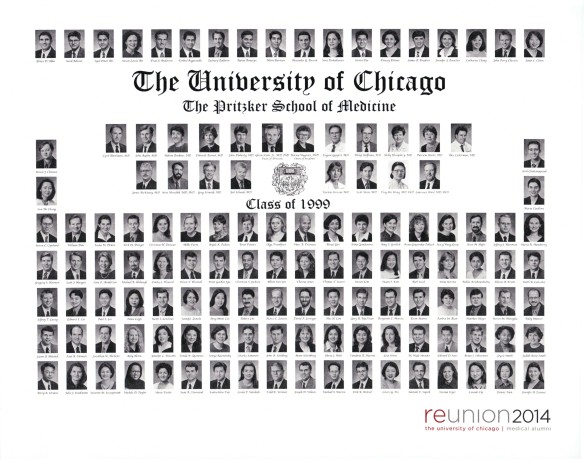
The Class of 1999 returned to The University of Chicago this past weekend to celebrate 20 years since graduation.  I had only signed up for a couple events, in my usual non-committal way.  I arrived at the breakfast venue, a building that did not exist when we were students.  I glanced over at the tables and saw only people much older than me, and my heart sank a little.  Where were my peeps?  Then at a back table an old friend stood up and waved, and my spirits lifted instantly.  We ate and laughed, and shared photos and anecdotes of surly teenagers at home.  As I had made no other plans that day, I met people again for lunch and we walked through campus, which I had not done in years.  The peonies in the quad burst with color and fullness, welcoming us all back.

I’m so proud of our class.  We are general internists and pediatricians, hospitalists, cardiologists, allergists, emergency medicine doctors, and orthopaedic surgeons.  We do neurologic interventional radiology, microvascular plastic surgery, and private equity.  We are medical directors, section chiefs, and NIH researchers; we teach medical students, residents, fellows and colleagues.  We advocate for immigrant health and lead international research teams to win the war on disease.  We are parents of toddlers and college students, single, married, and divorced.  But mostly we are just older versions of our younger selves, in love with the science of medicine and driven by something deeper within to care for our fellow humans, relieve suffering, and make the world better for our having lived.  This weekend gave us the opportunity to reconnect deeply on that level, to recall and relive those bonding memories tucked away all these years.  I had a chance to catch up with classmates whom I had always wanted to know better in school.  What a blessing.

Our specialties are widely diverse, as are our life experiences, before and since medical school.  But we also share so much in common.  Many of us have had painful experiences as patients or family of patients, and that has impacted our attitudes as physicians.  We collectively recall the stages and transitions of training as both trial and reward.  And everybody has something to say about the current, broken state of American healthcare.  But the overarching feeling of the weekend was camaraderie and love.  Emails poured in from classmates across the country and around the world who could not make it back; I count almost 60/100 of us included in our communications thus far.  We were just waiting for the chance to find one another again.

*****

In our current geopolitical climate of division, competition, and polarization, reunion is the antidote.  In this vital ritual of humanity, we reconnect with those who knew us in a more innocent phase of life, when we bonded through shared struggle, with whom our diversity and shared experience are paradoxically complementary in the best ways.  Our souls are fed by one another, in person, surrounded by food, back at our first professional home.  Relationships long dormant stand revived, and we are lifted.

It occurs to me, in this lovefest of reconnection:  How can we leverage this energy?  What if we could sustain these bonds, reforged and hot in this moment?  If we connected like this more often or regularly, across specialties, geography, and practice structure, how much better could we all be at what we do every day?  How much more empathy could we have for those who don’t do what we do, whom we see as competing for resources or otherwise trying to undermine us?  How would our patients feel in our presence?  Our support staff?  Our hospital leaders?  Gatherings like this prove that we have the capacity to just be together, appreciate one another, and support each other with generosity and grace.  So much potential for positive synergy among this group.

We have big plans for our 25th reunion, but I have a feeling our renewed relationships will find powerful expression long before then.  So stay tuned, my friends.  We are Pritzker Class of 1999, and we’ got work to do.

IMG_1339

A Community of Champions

IMG_1161

Spoiler Alert:  Big Bang Theory Series Finale!

* * * * *

When was the last time you felt totally safe, at work, to address the central relational challenges that hold you and your team back from your best performance?

How often at work can you really assess and evaluate your own interpersonal skills, their impact on those around you, and on the organization as a whole?

How much time and energy do your teams waste being stymied by relational issues, stuck in redundant, dysfunctional power struggles up and down the organizational hierarchy?

How do you feel in your body just reading these questions?  Perhaps tense and frustrated?

* * * * *

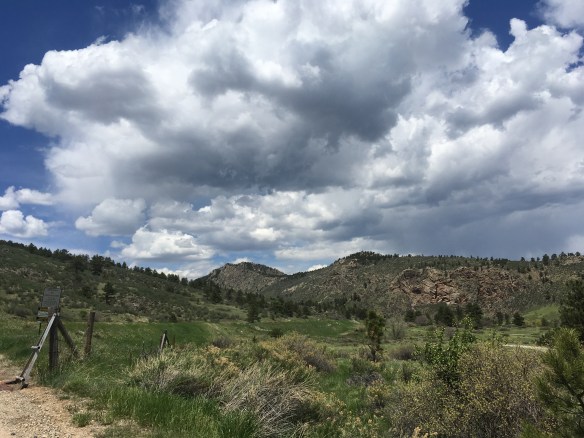
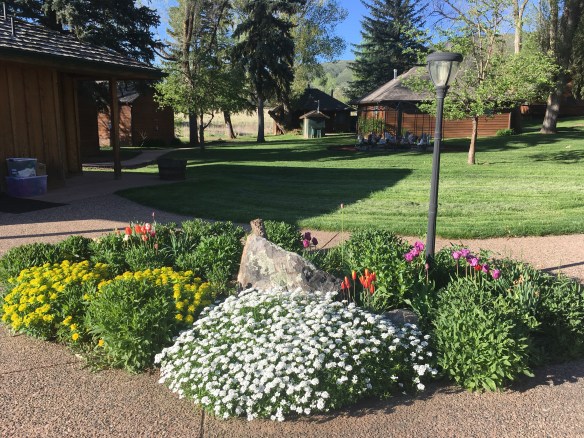
We, the eight participants and two faculty members of Leading Organizations to Health Cohort 11, reported palpable heaviness upon convening for our second training retreat last Tuesday.  Despite the Colorado spring bursting with blooms, wildlife, and vast clear blue skies, dark clouds hung over our collective consciousness, each for our own reasons.  Throughout the week we shared stories of successes, challenges, conflicts, power and powerlessness.  We practiced appreciative inquiry and relational coordination, and explored the insidious impact of unearned privilege.  We spent three days in intense skills training, supporting one another through viscerally gnarly role plays and open, honest feedback about how we impact the group.

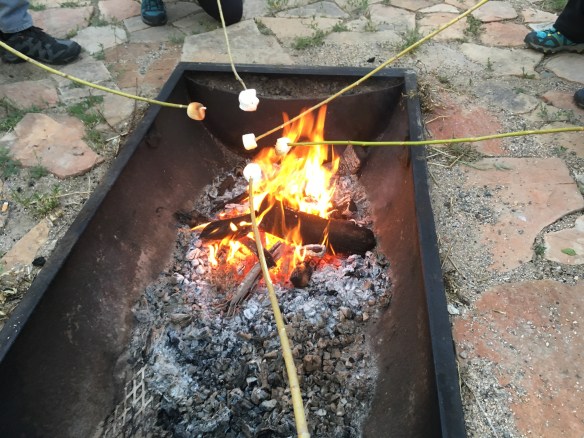
In the midst of all this deep work, we also shared meals, walks, a horseback ride, and life stories around a fire pit and drippy s’mores.  As we debriefed around the circle on the last day, something had shifted:  overall we now felt refueled and energized.  The air buzzed with the anticipation of learners on the verge of integrating our emerging skills, excited to bring it all home to practice.  The clouds had parted.  We will keep in touch through peer coaching groups—our newly established, intense-support network.  In my heart, I feel we are really becoming a family.


IMG_1176

I headed to the mountains straight from the session, for 24 hours of processing and decompression (and more washi tape card-making).  More and more I marveled at what a rare opportunity I have in LOH, to be led and learn to lead in this relationship-centered way.  For these ten months I am immersed in a professional learning lab, experimenting with different ways of speaking, acting, and being, safe among fellow professionals also grappling with this skill set.  It just does not get any better than this!

IMG_1110

On my way down from the mountains, I listened to an interview with Bonnie St. John on Ozan Varol’s podcast, Famous Failures.  She is the first African-American to win medals in Winter Paralympic competition as a ski racer; she is a lower extremity amputee.  She is also an author, an entrepreneur, and a former member of the Clinton administration.  Her story is inspiring, please take a listen!  At the end of the interview she describes asking a former coach about how he built champions.  He said he never built individual champions; rather, he built communities of champions.  You can only push one person so far, he said; but an allied group of people will hold one another up, push each other harder, make each other better, take one another farther.

That is exactly how I experience LOH—my best self is challenged and called forth in the most loving and professional way.  We hold space for all our struggles, allowing the learnings (epiphanies, in my experience!) to emerge.  It is deeply and literally inspiring.  Though I already do so much of this inner work on my own, there is a profound and unparalleled synergy from learning in this group—we serve as one another’s pit crew for the journey toward our better selves at work and in life.

IMG_1089

Nobody succeeds alone.  In the series finale of The Big Bang Theory (my favorite TV show of all time, which I missed while at LOH!), Sheldon (the obliviously self-centered genius) finally realizes this.  During his Nobel Prize acceptance speech, he acknowledges his sudden and profound appreciation for his family and friends, crediting his success to their unconditional love and support, and recognizing them in front of an international audience.  LOH made this finale even more meaningful to me than it already would have been.

It is always through the struggles that we grow.  When struggle together, any and all successes are amplified exponentially.  My nine new friends will make me immeasurably more successful, both professionally and personally, than I would ever be without them.  God bless them all, and may the work we do together ripple out for the benefit of all whose lives we touch.

IMG_1185