
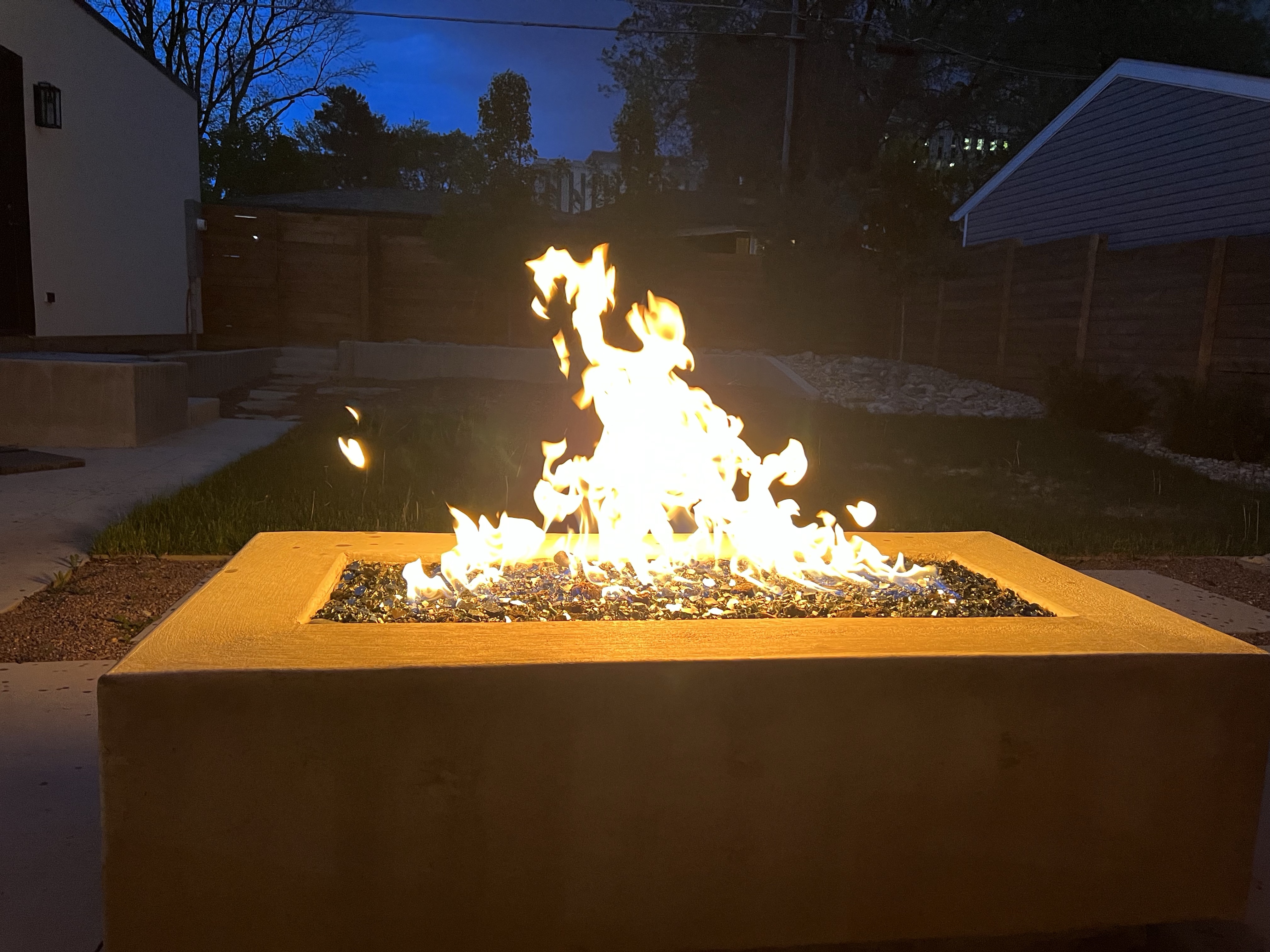
Presence

Photo by James K Min, Denver, CO, 2023

It is not the same as appearance.

Presence is energy.  Like sound, it has a frequency and an amplitude.  Like light, it has a wavelength.  Presence is sensed; it is felt

What does your presence feel like to others?  How does it change according to context, mood, and other factors?  When are you aware of it yourself, and how do you modulate it, if at all?

Whose presence do you crave?  Who soothes, comforts, uplifts, encourages, and quiets you, simply by being with you?  Whose presence do you carry even when you’re apart, because it helps?  How do you do it?  Whose presence do you avoid?  Why?  What do these people teach you about yourself?

How do I already presence well?
–I make eye contact; I shake hands enthusiastically.  I’m relaxed, open, and friendly.  I can have a conversation with practically anyone, as long as we share a language.  I am comfortable with people in general, which makes people comfortable with me.
–I’m a fantastic hugger.
–“I’m mostly peace love and light, and a little go fuck yourself.”  My friendly and open personality does not make me a pushover.  I do not tolerate disrespect or abuse, of myself, my family, or my work teams.  I call it out civilly and if the behavior continues, I consider carefully and end relationships without regret.
–I’m good at 看臉色 ‘kan lian se’ literally ‘seeing facial color’ in Chinese—meaning to attune to people’s nonverbal cues.  I can adjust my posture, tone of voice, facial expressions, and language to match my counterparts. 
–Most of the time I think I balance confidence/competence well with humility.  Strong back, soft front.  If this is how people experience me, then I’m happy.

How could I show up better?
–People have told me I come on too strong, that my energy is too high.  I can be loud and animated.  I gesticulate.  I could do better sometimes attuning to my surroundings and toning it down as needed.
–In certain situations and with certain people, my confidence wobbles.  I second guess myself and may come across as weak, unsure, unreliable.  I can get tongue tied and flustered.  This makes me easy to bully and manipulate.  It happens much less frequently with age, but I still feel vulnerable to it sometimes.  Deep breathing in the moment helps a lot, and also lengthening my spine.

How do we evaluate presence as a society, and what makes it good?

Smiling Strangers.  “You’re so friendly, Cathy, you must be from the Midwest,” said the boy from the East Coast, just as I’m thinking people here look at me like I have two heads when I’m friendly.  In Colorado, however, people still smile and say hi to perfect strangers in public.  It just makes my day, really.  Do these folks realize how much their smiles mean to me?  To anybody?  Do you yours?

The Helpers. Nurses. Social workers. Teachers. Therapists. Charity workers. Volunteers. Moms. Doctors. Who else, especially in your life right now? Come to think of it, is there any profession or work that could not be thought of as helping? We may not always be in a good mood. We are too often exhausted, spent; too many of us are burned out right now. And still, we show up. We help. At our best, when our presence connects us in sincere service, it makes us all better.

How can we be present better to one another collectively?

Love First.  If we have any love in us, how can we pull it up and out, put it in front, and show up for ourselves and others leading with it? Easier said than done. And we won’t be able to do it all the time. Let’s try harder anyway, ya?

Attune and Differentiate. Know yourself. Honor yourself. Show up all you. We can each own all of our strengths, our optimal resonance frequencies, our brightest light. Stand up straight and strong. Then, decide which petals of our identity flower to lead with, discern the context and respond appropriately. This is not about hiding parts of ourselves, rather mindfully showing up to connect, however it works best for us and those around us.

Lead and follow by example: Amplify. When you get feedback that your presence helps someone, take the compliment graciously. When someone’s presence benefits you, let them know. Positive reinforcement–rewarding desired behaviors–is one of the most effective ways to help the behavior recur. Look out for the good, amplify it–the sound and the light.

Honest, mindful, authentic presence. How much better could everything be if we were to offer this more often to more people, ourselves included?

NaBloPoMo 2023: What’s Already Good, and What Could Be Better?

“Tell me about your eating patterns: What’s already healthy, and where is there room for improvement?”

In the last few years, I have found this to be the most agreeable way to start the conversation with patients about nutrition habits. We get defensive about our eating–so fascinating! Behavior change is complex; we all have our hangups, barriers, and motivators, and they all vary with context, always in flux, which can be so frustrating.

Starting from a strengths perspective, looking at what we do well–where our actions already align with our values and goals–frames habit change as taking the next step on an existing path of progress, rather than as self-judgment and remediation. It invites us to approach self-improvement with curiosity, creativity, and experimentation. When I had this idea of already good/could be better a week ago, I knew it had some connection to my book, and now I see it clearly. SO exciting! All of this inner work–the doing and writing about it–these last 8.5 years, has been in service of the Big Fat Hairy Project (BFHP) that could possibly come to fruition in the now foreseeable future… Wow.

This year, I will use NaBloPoMo as a writing lab of sorts. I will try a new challenge of setting 30 public prompts in advance. This will provide both constraint and freedom–oooo, fun–or not, we shall see! I will play around more with poetry, maybe? Storytelling? Resource lists? By the end of the month I want to feel joy, accomplishment, and wonder, having learned more about my process and evolved it a little, and produced some posts worth sharing and referencing. I will do my best to leash my inner critic, muzzle but not blindfold it, honor its innate purpose while keeping it in a corner, out of reach from my writing implements. I give myself permission to interpret my prompts broadly and respond in kind. And who knows, maybe after 30 days of (near) daily writing, I will have established an actual book writing habit!

I intend to approach each topic below from both a personal and a collective perspective. What’s already good about my own sleep, for instance, and also our sleep as a society? What could be better for me, and what would a system look like that facilitates optimal sleep for a population? Oooo, this could be cool. I often think vaguely, obtusely, in this individual/collective mindset, but this may be the first time I apply it to 30 topics in a row, directly and explicitly. Ohmygosh, how exciting.

Let’s see what happens, eh? Giddy up!

NaBloPoMo 2023 Prompts:

  1. Sleep
  2. Exercise
  3. Nutrition
  4. Stress management
  5. Relationships
  6. Reading
  7. Honesty
  8. Mindfulness
  9. Self-Compassion
  10. Polarity management
  11. Forgiveness
  12. Social media
  13. Integrity
  14. Accountability
  15. Balance
  16. Perspective
  17. Leadership
  18. Presence
  19. Romance
  20. Love
  21. Judgment
  22. Commitment
  23. Gratitude
  24. Flexibility
  25. Acceptance
  26. Creativity
  27. Education
  28. Politics
  29. Writing
  30. Debrief

Talismans of Love

Barack Obama carries around charms in his pockets. People give him things when they meet him–little tokens, trinkets, you might say–offered with admiration and meaning, to feel connected. What would we expect a world leader to do with such bits and pieces? He keeps them in a bowl and every day picks a handful to tuck close, to remind him, he says, of why he does what he does. He writes about it in the memoir of his first term, A Promised Land, which I cannot recommend highly enough. What does it say about a man of such high status, who intentionally holds the well wishes of regular people on his person every day? I see it as profound humility and groundedness; I admire it and aspire to cultivate such qualities myself.

What talismans of love do you carry, visible and not?

My senior year of high school, after volleyball season ended, I started wearing one of my mom’s rings from her teen years. When it broke I replaced it with another gold band, another gift from a family member. When I started med school and had some money, I bought an intentional replacement, one with a bamboo motif, signifying my Chinese family roots. Now I also see it as a symbol of strength and flexibility, two practices I value highly, and which Ma exemplifies. I still wear my ‘one breath’ ring, and upgraded to a more solid yin-yang band. Like my wedding rings, these pieces stay on 24/7; if you find me down, you will still/already know some things about me.

When I travel, I wear a necklace with four pendants: Son’s and Daughter’s birthstones, and each of their passions. When Son left for college I got him a keychain admonishing, “Have Fun, Be Safe, Make Good Decisions, Call Your Mother.” He left it at home, but when I text him ‘HaFuBeSaMaGoDe’ he knows what I mean. It’s a shortcut. A reminder. A way to stay connected across time and distance.

Rosaries, malas, crosses, heirlooms. Poems, paper scraps, letters.
Wedding rings. Tattoos.

Symbols. Representations. Expressions, signals. This is what matters to me, the talismans say. We feel seen when someone notices, acknowledges, and admires, reminded again of our choice to mark ourselves. The objects and signs communicate visually, tactilely, beyond what speech can convey. It’s almost visceral.

Comfort. Power. Hope. Agency. Meaningful objects remind us of our core values, direction, and purpose. We get to choose our symbols’ meaning. It may or may not matter whether/how others understand them; they are for ourselves and those with whom we bond over shared significance. We rub, clench, kiss, and hold them, often in the hardest, lowest times of our lives.

What if we try harder to notice and admire one another’s talismans? Get curious and ask the bearers to share their stories, and practice kind, reverent presence with it? How might that make things just a little better?