November 6:  Caring For the Team Makes Me Better

IMG_2624

NaBloPoMo 2019

“How does he treat you?”

I don’t only ask this question of women whom I suspect of being abused at home.  I also ask my medical assistants.  Not about their domestic partners, but about our patients.

In my first practice, I sat/stood to the left of my medical assistant every day for six years.  It was a cozy (cramped) little counter space stacked with charts from end to end, with a couple of high-wheeley chairs.  Each chart stack had a laminated cover on top:  “For Cheng to Review/Sign,” “For Rose,” “Labs,” and “Messages.”  Charts journeyed from my left to my right/Rose’s left, to the bin under the counter to be filed.  It was incredibly efficient, actually.  I had a handwritten emoji system for indicating (dis)satisfaction with cholesterol and diabetes results.  Rose knew all of my patients and how to communicate sentiments and instructions clearly and lovingly.  She had been an MA since I was a kid; she knew what she was doing.  If a patient had a question on the phone, she could put them on hold and clarify with me, or I could just get on the phone and speak to the patient myself.  We were busy and happy, a well-oiled team-machine.

One day as I came up to my spot at the counter, I noticed an unusual sound next to me, like a distant, scratchy loudspeaker.  I turned and saw Rose holding the phone receiver about an inch from her ear.  The sound was my patient, yelling profanities at her so loudly I could hear his words from two feet away.  I can’t remember what the issue was, but he was obviously upset, and taking it out on her.  It surprised me because I had only known him to be sweet, respectful, and grateful.  Maybe he was just having a bad day?  I looked at Rose, who rolled her eyes and exhaled heavily.  I asked her to put him on hold so she could catch me up.  Apparently this had been going on longer than I knew, and she had not told me.  Had I not come upon it in real time, she may never have told me.  She would have simply tolerated it.

I picked up the call and declared myself.  He was the usual, respectful and calm patient I had always known.  I answered his medical questions.  Then I told him firmly that he did not have the right to treat anyone in my office the way he had just treated Rose.  I think there may have been some excuses and then an apology.  I made it clear that if he abused my team again, he would be discharged from the practice.  He agreed and apologized again.

That was my first opportunity to stand up for my team as an attending.  I will forever remember it.  I was a petite, young, Chinese woman doctor, speaking to a white man decades older than myself.  I stood up for my medical assistant, a woman of color and a couple decades older than me.  She had felt powerless to stand up for herself to his verbally vomitous abuse.  All I had to do was pick up the phone and say, “Mr. Soandso, this is Dr. Cheng.”  He never yelled at Rose or anyone in the office again, to my knowledge.  How could I have this much power, and why had nobody asked me to wield it in their defense before?  It was just accepted that patients could yell and scream at our staff, with no consequences?

IMG_2066

We recently discussed abusive patients during our regular doctors’ meeting at my current practice.  Immediately I thought, HELL NO.  The good news was that our team members feel safe reporting incidents to our managers and physicians.  My partners and I have all had to call patients to clarify our expectations of respect.  We understand that illness is stressful.  We understand that our healthcare system, especially at a large, bureaucratic institution, causes frustration, even rage.  However, none of that ever justifies or entitles a patient, or anyone, to belittle, dehumanize, or otherwise degrade another person, and especially not a team member who is doing their best to help–ever.  At this meeting, gratifyingly, we all voiced definitive confirmation that we fully support our team, and we will, without hesitation, educate and/or discharge any patient who violates our team’s right to a collegial and non-threatening work environment.

Even as I write this, I shake a little with rage and outrage at these patients’ behavior.  I can feel tightness and tension in my chest and abdomen, my breath quicker and shallower than its usual resting state.  I wonder if this triggers me because my mom is a nurse and I have seen how patients in the hospital abuse nurses.  I also know how women physicians are mistaken for nurses and thus ignored or dismissed, even by female patients.  I have known racism and sexism first hand.  But as a physician, I’m in a position to not have to tolerate it.  By virtue of two letters after my name, I have the power to protect my team, with authority.  And I work with other physicians who also recognize both this power and its attendant responsibility.

I hope our team feels protected, defended, and loved by us docs.  We may be the default work unit leaders, but they do the lion’s share of work that allows our practice to run as smoothly and successfully as it does.  They are who let me do my work as well as I do.  I depend on them every day.  So caring for them absolutely makes me better, makes us all better.
 

November 5:  Peer Coaches Make Me Better

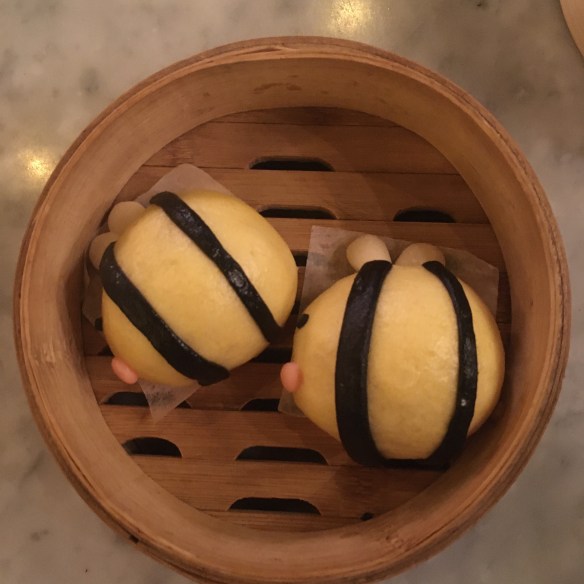
bee bao

NaBloPoMo 2019

When you’re working through a challenge, who helps you?  What is it about them, how are they most helpful?  How not?

Through the years I have learned what I can get from certain people.  I know to call this person when I need validation, that person when I need a devil’s advocate.  I also know which people to avoid altogether—those who cannot be trusted with my vulnerability or confidence.

But when I need to hold space and tension with an issue, to patiently look at it from different angles and process the perspectives, I look to my peer coaches.  I feel gratitude and gladness for these friends today, after my LOH group had our monthly peer coaching call.  As we progress through our 10 month leadership training, we take tenets and skills home from each retreat to practice.  Monthly Zoom calls have no agenda, other than to reconvene, share, and mutually support.  Every time I come away appreciating just a little more how nothing in life—work, personal things, social context—can really be separated from anything else.

These friends are not my first or only coaches, however.  In 2005 I started working with Christine, my life coach.  Every session, 14 years later, is still transformative.  How is this possible?  Curiosity.  Christine coaches every call squarely and unwaveringly from this perspective.  It was not long before I realized how powerfully this method could alter my own encounters with patients.

10-22-19-2

The best coaches have no preformed or decisive answers.  They have the uncanny ability to ask the best questions–Open, Honest Questions (OHQs)–which then lead clients to their own best answers.  They help frame and reframe problems.  They point us to alternate perspectives and help us open our minds to narratives other than the ones we too often grip so desperately.  It was my second year in practice when I started asking coaching questions to patients, and I have never since feared any symptom, syndrome, or answer.  When there is no clear diagnosis or answer for someone’s distress, I can just keep asking until something helpful emerges.  Most often it’s not a single piece of information that gives clarity; rather, it’s the story that materializes.  Coaching skills help me help my patients find and tell their stories of health and wellness, illness and pain, agency and action.

Here are the tenets of true Open, Honest Questions, from the LOH syllabus:

  • The best single mark of an honest, open question is that the questioner does not know the answer and is not leading toward a particular answer.
  • Ask questions aimed at helping the other person come to a deeper understanding (help them access their own inner teacher).
  • Ask questions that are brief and to the point without adding background considerations and rationale—which make a question into a speech.
  • Ask questions that go to the person as well as the problem or story—for example, questions about feelings as well as about facts.
  • Trust your intuition in asking questions. Inviting metaphors or images can open feelings, new lines of thinking, and unexpected possibilities.
  • Try to avoid questions with yes-no, right-wrong answers.
  • Avoid advice disguised as questions.

My best friends are my peer coaches.  And now I have my LOH cohort-mates.  We make no judgments about one another’s circumstances, feelings, or experiences.  We make the most generous assumptions about our motives.  Our role in each other’s lives is almost never to give advice; rather it is to hold space, listen reflectively, offer moral support, hold up core values, and help one another query thoughtfully and honestly.

IMG_1918

Questions asked and reflective statements made on the call today:

  • If you left work tomorrow with enough money to be unemployed for 6 months, what would you do?
  • How does it feel to speak (your issue) out loud?
  • When you think about current state compared to past, how does it feel physically in your body?
  • Sounds like you’re working on a core tension.
  • What do I/you want now?
  • What’s roiling around in you?
  • Who around you can get creative with you?

We each bring diverse questions and challenges to each call.  But somehow we always relate deeply, and listening/querying helps us each learn from every other.  Today I saw central themes emerge around identity, contribution, voice, and meaning.

In the end, I think there are few things more important in life than meaning and connection.  These are the gifts from my peer coaches, and they always make me better, no question.

IMG_2645


Medicine:  Science + Humanity = Professional Pride

IMG_2525

Lots of learning this month, friends.  I’m overwhelmed and overjoyed, and proud of my profession.

It’s too much to write about in one post, but I will try all the same, in order of occurrence.

18 October 2019

Once again I had the privilege of meeting with medical students, this time to discuss their experience of leadership in medicine.  As is my new custom, I started with an appreciative inquiry exercise: What is the best thing about medicine, WHY do you do this?  One of their responses:

“The medical encounter is a unique combination of compassion and intellect—the conversation is my favorite thing, and that I also get to help.”

19 October 2019

Looking through the basement bookshelf, I came across my medical school application from 1994.  The general application included a one page personal statement, in which I wrote:

“Science, and the human body in particular, have always fascinated me… In practice, while I pursue the challenge of each new patient’s illness, I want to share with them my enthusiasm for the science of medicine…  But being a doctor involves more than curing people’s illnesses…  It is the job of the physician to reassure and comfort the patient…  In my practice I will…do my best to communicate with (patients) in terms they will accept.  The best way to comfort people is to relate to them.  I believe this skill will make me understand not only patients’ medical needs, but their emotional and psychological needs as well…  I hope to keep learning from my patients in the future.”

Turns out I’ve been both a science nerd, and also thinking and writing about relationships and connection for a while now, go figure.

IMG_2397

25-26 October 2019

This year’s ACP Illinois Chapter Meeting was the best one in recent years, in my humble opinion.  I’m so proud that under the leadership of our Northern Region Governer, Dr. Suja Mathew, we were able to present a robust clinical education conference, as is the ACP tradition.  Along with sessions on diabetes, heart failure, office orthopaedics, and cancer survivorship, however, we also included sessions on critical social and public health issues, such as diversity/inclusion, the impact of social media, firearm injury and death, medical marijuana, trauma-informed care, and sexual harassment in the workplace.  Esteemed colleagues from across the country came to share their expertise.  Here are just a few examples of Science + Humanity, in action every day in our work:

Diabetes

Science:  We now understand that it’s the wide swings in blood sugar, and especially very low sugar, that lead to end organ damage.  We have new classes of drugs with novel mechanisms of action.  They decrease the burden of glucose control on pancreas cells, and also seem to prevent heart failure in some patients.  Humanity:  All diabetic patients need education—face to face time with a trained professional who can teach them about the disease and how to manage it. Even the most highly educated and most well-informed person cannot automatically know how to be a diabetes patient without the help of these medical team members.  More and more, diabetes care in particular is a team sport, and our collective skills get better every year.

Cancer

Science: We are curing cancer.  There are more survivors now than ever before, thanks to targeted genetic and immunotherapy and minimally invasive surgery, among other treatments.  Humanity:  Survivorship starts at the time of diagnosis, and cancer patients have both unique and diverse needs and concerns.  Complications from treatment such as neuropathy and heart failure can occur years out from treatment, and the psychosocial consequences for patients and their families can be lasting and transformative.  The better we understand this as their care teams, the healthier and happier our patients will be.

Childhood Trauma

Science: Since the 1970s, cumulative evidence shows that Adverse Childhood Experiences and trauma correlate with an increased risk of negative health behaviors, mental illness, chronic diseases such as diabetes and heart disease, decreased academic performance, limited professional productivity, and early death.  And they appear to affect each of these outcomes independently.  In the Tree of ACEs, branches and leaves represent the interpersonal experiences.  We are only starting to understand the roles played by Adverse Collective Historical Events (slavery, genocide, mass incarceration, forced displacements)—the soil, and Adverse Community Environments (poverty, violence)—the roots.  HumanityThe key factor that correlates with escape from the early mortality path from ACEs is a stable and nurturing relationship with an adult caregiver.  As healthcare providers, we have a unique and important part to play in the healing of all ACEs—our patients’ and our own—and all evidence points to the quality of our patient-provider relationships as foundation—no surprise.

Gun Violence

Science: In 2012 33,000 people died from firearm injuries (it was up to 40,000 in 2018); 62% of these deaths were suicides.  That same year there were 62,000 nonfatal firearm injuries, 72% of which were assault, 5% self-inflicted, and 17% unintentional.  Higher rates of gun ownership correlate with higher rates of death from firearm injuries.  States with both background checks and waiting periods have lower rates of suicide by firearm compared to those with background checks only.  It is still unclear whether states with more lax concealed carry laws have different rates of firearm related deaths compared to stricter states.  Humanity: Though mass shootings dominate the media, the majority of deaths from firearms are self-inflicted.  The acute impulsivity of mental illness, combined with an accessible, loaded firearm, destroys lives—whole families and communities at a time.  Our job as physician advocates is to not alienate gun owners, and rather enroll and recruit their help to address the factors that take our friends and loved ones from us.  It’s not an Us vs. Them fight over rights.  It’s a shared challenge to create policy that honors our unique national history and culture, and also effectively addresses our public health crises.  Here is where our highest notions of collaboration, respect, and shared purpose must be exercised.

10-22-19-3

27-30 October 2019

Today I arrived in San Diego for the International Conference on Communication in Healthcare, my first time at this meeting.  Many of the sessions will present research on effective ways to teach communication skills to trainees, factors that impact health literacy, and methods for measuring effective communication.  This conference is all about the science of communication in healthcare.  And it’s also about the humanity.  The first plenary speaker was Dr. Lisa Fitzpatrick, who interviews people on the streets of DC in her series, “Dr. Lisa on the Street.”  The videos show over an over how people feel ignored and dismissed by our healthcare system, and how unsafe it is for them to admit what they don’t know or ask questions.  This is one of the only meetings I have attended at which patients are invited to present and voice their perspective.  At the end of this session one patient attendee stood up and spoke words that will guide me throughout this week and my career:  “Doctors may have all the education in the world, and if you cannot talk to your patients in a way that makes them trust you, it really doesn’t matter.”

Sessions I plan to attend:

Moving Health Care from a Team of Experts to an Expert Team

How to Become an Effective Advocate for Humanism in Your Healthcare Organization

Collaboration and Communication Across Multidisciplinary Healthcare Teams

Civility Ninjas:  A Field Guide to Improving Colleague-Colleague Interactions

Understanding and Addressing Mistrust

Shared Decision-Making as Ethical Practice

Thanks for reading to the end, friends.  I know it was a lot.  As I age I learn to hold patience as well as eagerness, absorbing the input as well as creating my own, integrated outputs for good.  How lucky I am to have so many amazing people to keep me company on the journey!

Four days to NaBloPoMo, my fifth attempt, HOLY COW!  Better get to bed…